Chola Dynasty: Capital, Founder, Kings, Time Period and History
India’s Five-Year Plans: 1st to 12th Plan, Goals, Outcomes, Key Facts

Get in Touch with RASonly!


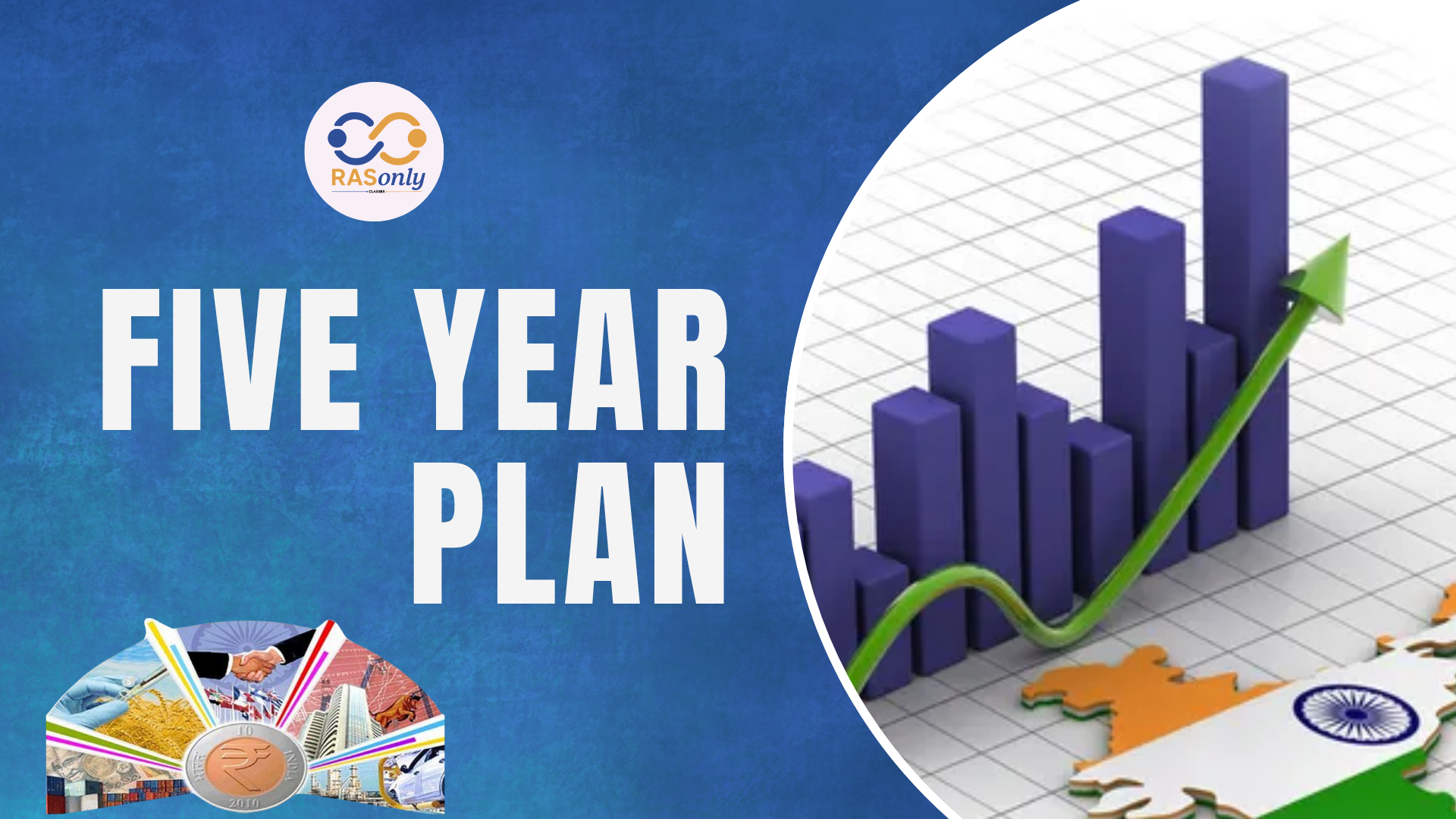
Economic planning in the state of Rajasthan has aimed at achieving higher growth, making better use of potential already created, and improving the living conditions of all people - especially the weaker sections of society. The planning process began soon after India’s independence and has evolved through successive Five-Year Plans and later policy frameworks.
Objectives
Among the main objectives of Rajasthan’s economic planning are:
- To raise the overall rate of economic growth in the state.
- To utilise the state’s resources more fully and effectively.
- To reduce regional imbalances and narrow economic disparities between different parts of the state.
- To improve the socio-economic conditions of weaker and underprivileged sections of the population.
- To ensure basic minimum services (education, health, drinking water, roads, etc) reach all parts of the state.
List of Five-Year Plans in India
| Five-Year Plan | Period | Growth Rate | Salient Features |
|---|---|---|---|
| First Five-Year Plan | 1951–1956 | Actual Growth: 3.6% vs Targeted Growth: 2.1% |
|
| Second Five-Year Plan | 1956–1961 | Actual Growth: 4.3% vs Targeted Growth: 4.5% |
|
| Third Five-Year Plan | 1961–1966 | Actual Growth: 2.8% vs Targeted Growth: 5.6% |
|
| Plan Holidays (Annual Plans) | 1966–1969 | - |
|
| Fourth Five-Year Plan | 1969–1974 | Actual Growth: 3.3% vs Targeted Growth: 5.6% |
|
| Fifth Five-Year Plan | 1974–1979 | Actual Growth: 4.8% vs Targeted Growth: 4.4% |
|
| Rolling Plan | 1979–1980 | - |
|
| Sixth Five-Year Plan | 1980–1985 | Actual Growth: 5.7% vs Targeted Growth: 5.2% |
|
| Seventh Five-Year Plan | 1985–1990 | Actual Growth: 6% vs Targeted Growth: 5% |
|
| Plan Holidays | 1990–1992 | - |
|
| Eighth Five-Year Plan | 1992–1997 | Actual Growth: 6.8% vs Targeted Growth: 5.6% |
|
| Ninth Five-Year Plan | 1997–2002 | Actual Growth: 5.4% vs Targeted Growth: 6.5% |
|
| Tenth Five-Year Plan | 2002–2007 | Actual Growth: 7.6% vs Targeted Growth: 8% |
|
| Eleventh Five-Year Plan | 2007–2012 | Actual Growth: 8% vs Targeted Growth: 9% |
|
| Twelfth Five-Year Plan | 2012–2017 | 2012–13: 5.1%, 2013–14: 6.9%, 2014–15: 7.2%, 2015–16: 7.6%, 2016–17: 7.1% |
|
Conclusion
The Five-Year Plans have been essential in shaping Rajasthan's development by addressing key issues such as economic growth, poverty alleviation, and infrastructure improvement. While progress has been made, ongoing efforts are required to tackle regional imbalances and ensure equitable growth for all sections of society in the state.
FAQs on Five-Year Plans in India
India’s Five-Year Plans began in 1951 with the launch of the First Five-Year Plan.
India implemented 12 Five-Year Plans between 1951 and 2017.
The Third Five-Year Plan (1961–1966) is associated with the Gadgil strategy and aimed at achieving self-reliance and sustained economic growth.
The major objectives included economic growth, poverty reduction, employment generation, self-reliance, industrialisation and balanced regional development.
The 12th Five-Year Plan (2012–2017) was the final Five-Year Plan, with the theme of “Faster, More Inclusive and Sustainable Growth.”
BEST SELLER
🏆 PRELIMS
RAS Pass
Prelims focused Hindi & English
₹399
✓
Prelims Topic-Wise Tests
✓
Subject-Wise Tests
✓
Full-Length Prelims Tests
✓
Daily Current Affairs Tests
✓
Prelims PYQs Tests
✓
Detailed Solutions & Analysis
✓
All Rajasthan Ranking
✓
Unlimited Reattempts
✓
Mains Tests
✓
Hindi & English Tests
✓
All Rajasthan Ranking
Trusted by 5,000+ Students
Post Category
- RAS Salary
- Result
- RAS Admit Card
- RAS Job
- RAS Cutoff
- Preparation Tips
- RAS Answer Key
- RAS Exam Analysis
- RAS Syllabus
- RAS Previous Year Papers
- RPSC RAS Exam Pattern
- RAS Interview
- RAS Exam Date
- RAS Vacancy
- RAS Test Series
- RAS Best Books
- RAS Preparation Resources
- RAS Coaching Centre
- History
- Polity
- Geography
- Economics
- Science
- Art and Culture
- RPSC RAS Application Form
- RPSC RAS Notification
- RAS Eligibility Criteria
- UPSC Exam
- RPSC RAS Mains
Visit Our RASonly Offline Center
Our Expert Faculty

Bhunesh Sir
Current Affairs · 13+ Yrs

Aamir Khan Sir
RAS-2017 · IIM Ahm.

Akash Sir
Polity · 8+ Yrs
Free Resources
Official Mobile App

RASOnly App
by OTSAdda · Free
Full Video Lectures
Mock Tests & PYQs
Daily Current Affairs
AI Mock Interview
Free Download · No subscription needed to install
RAS 2024 Toppers — RASonly
Rank 2
Virendra Charan
Rank 9
Bhoopinder Singh
Rank 26
Aanchal Nagpal
Rank 33
Lokendra Singh
Rank 45
Amar Rathore
Rank 46
Manasvini Verma

Join RASonly WhatsApp Community
Get daily current affairs, exam alerts, free study material and tips from expert faculty — right on WhatsApp.
Join for Free →RASonly Interview Guidance Program

Mr. Ashok Jain
Ex-Chief Secretary Govt of Rajasthan
- IAS officer of the 1981 batch, Rajasthan cadre.
- Passionate about mentoring the next generation of RAS officers with real-world insights.
- Got retired in Dec 2017 from the post of Chief Secretary of the state of Rajasthan.

Mr. Guru Charan Rai
Ex-ASP / SP in Jaisalmer
- Guru Charan Rai, IPS (Retd), retired as Inspector General of Police (Security), Rajasthan, Jaipur in 2017.
- Served as ASP and SP in Jaisalmer, Nagaur, Sri Ganganagar, Sawai Madhopur, Dausa, Sikar, and Karauli.
- He also held key positions as DIGP and IGP in the Law and Order division.

Mr. Rakesh Verma
Ex-IAS Officer, B.Tech, MBA, and M.A. (Economics)
- IAS officer of the 1981 batch and retired in Chief Secretary Rank.
- Civil servant of high repute and vast experience.
- Has been teaching UPSC CSE subjects for the last six years.
Related Post

Daily Current Affairs for RAS Exam Preparation 2026

Ustad Bismillah Khan Yuva Puraskar
October 24, 2026
Marwar Festival 2026
October 24, 2026
Kundan Art Display in Hong Kong
October 23, 2026