State Human Rights Commission

The Protection of Human Rights Act, 1993 allows the formation of both the National Human Rights Commission and a Human Rights Commission at the state level. A State...
Understanding the National Human Rights Commission (NHRC)

On October 12, 1993, the National Human Rights Commission (NHRC) of India came into being. It was created under the law Protection of Human Rights Act (PHRA), 1993, which was...

Local Self-Government in India

Local self-government in India is the system where the communities manage themselves with elected leaders at the local level. It is a Government level that falls below the Union and...

Central Vigilance Commission
Central Vigilance Commission: Role, Structure and Relevance in India’s Governance System

Corruption has been the greatest hindrance to good governance and the confidence of people in India. In response to this, the government has been constructing a number of oversight bodies...

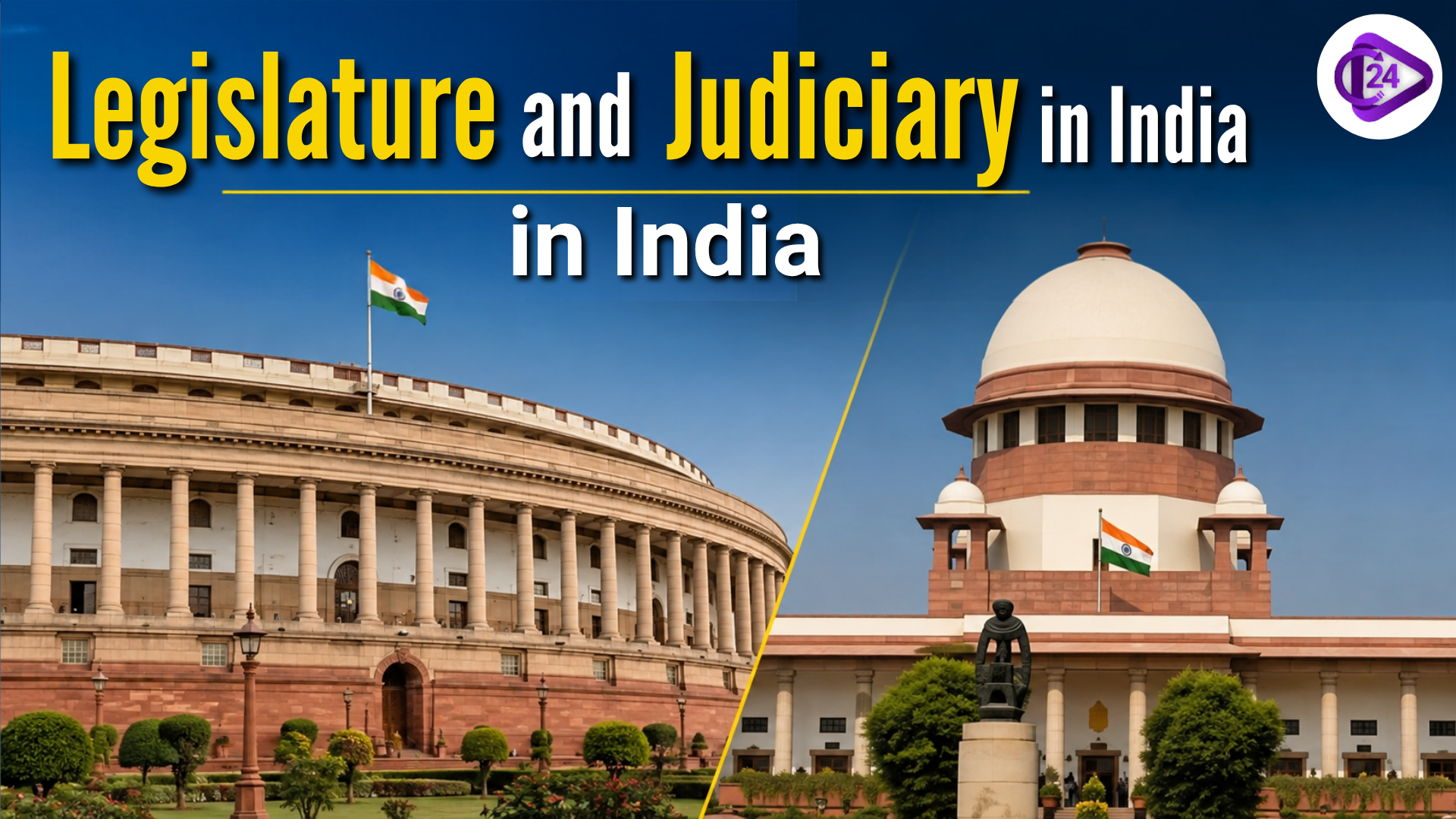
Supreme Court & Judicial Review

Judicial review can be defined as the authority of a court to investigate whether laws or statutes or actions undertaken by the executive or the legislature are in line with...

Parliament of India: Definition, History, Structure, Functions & Powers

The highest legislative organization in the country is the Parliament of India. It unites those elected by the people and is the sole point of focus of the formulation of...

Prime Minister and Council of Ministers

The executive power in the parliamentary system in India is vested in the government - not the head of state. The government is operated jointly by the Prime Minister and...

Comptroller and Auditor General of India (CAG)

The Comptroller and Auditor General of India (CAG), a constitutional body, stands as a bulwark of financial oversight and accountability. By serving as the guardian of the public purse, it...

Election Commission of India
Election Commission of India: Why the ECI’s Structure Matters, What Is the Process

The Election Commission of India plays a central role in maintaining the democratic fabric of the country by supervising, directing and controlling elections to Parliament, to the state legislatures, and...

The President of India (Articles 52-62)

The President of India is the head of state of the Republic of India. The President is the formal head of...

Article 42 in the Constitution of India

Article 42 seeks to ensure humane work conditions and provide for maternity relief. It states that “The State shall make provision...

86th Constitutional Amendment Act
The 86th Constitutional Amendment and Its Impact

Education is not just a privilege—it is a fundamental right in any progressive society. In India, this principle was formally realized through the Right to Education, especially after the 86th...

Request Callback