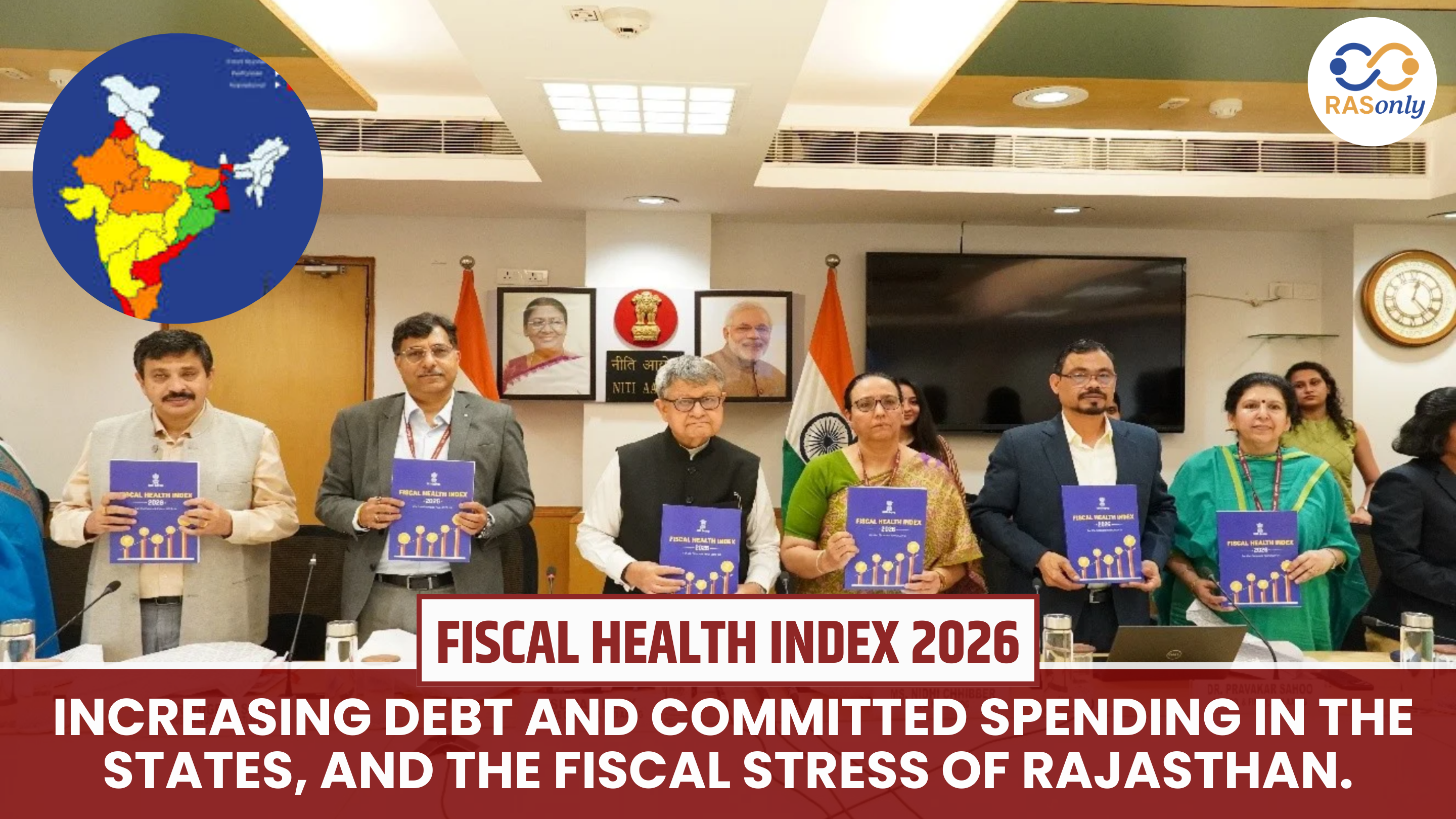
The Fiscal Health Index 2026 by NITI Aayog has indicated that there is a deterioration in the financial state of a number of states. The report indicates that the states are becoming less fiscally flexible due to the growing spending, growing debt, and a heavy load of fixed spending which includes paying salaries, pensions, and interest benefits. In consequence, this is creating less to be developed and invested in capital. In the recent ranking of major states, released in 2023-24, Odisha was ranked first, with Chhattisgarh ranked sixth, Madhya Pradesh tenth and Rajasthan 14th . The report highlights that the issue of consolidating debt and fixed expenses is exerting a long-term strain on the finances of states.
There are some major points used as the findings of the Fiscal Health Index of 2026.
- Odisha was the second-poorest state to perform the best in fiscal health.
- chhattisgarh and Madhya Pradesh were rated better than Rajasthan.
- Rajasthan ranked at the position of 14th most important out of the given list of major states.
- The report is grounded on the financial year 2023-24.
- It also indicates that in most of the states, a big proportion of borrowing is being spent on clearing out the ancient debt instead of on new development spending.
States are financially strained because of this reason.
The report points out that there is increasing financial pressure experienced in many states as an appreciable part of the budget is consumed by the committed expenditure. These include:
- Salaries
- Pensions
- Interest payments
This is making the amount of money that can be used in the capital expenditure and development works to decrease. This lowers the fiscal flexibility and it adds a risk of higher budgetary strain in future. NITI Aayog has thus recommended the states to enhance tax collection, rationalisation in committed expenditure and enhancing the quality of capital expenditure.
Rajasthan’s Fiscal Position
According to the report, the state of Rajasthan is under mounting fiscal pressure. The state has been identified to have major challenges that include:
- Rising fiscal deficit
- Higher debt burden
- There is scarcity of funds in the budget to spend on development.
Rajasthan reached a total expenditure growth of approximately 39 percent between 2019-20 and 2023-24 as well as growth in capital expenditure.
Nevertheless, the quality of expenditure is also influenced since a huge portion of the overall expenditure still goes to the fixed outlays like wages, pensions, and interests.
During the fiscal year of 2023-24, approximately 62 percent of the revenue receipts of the state went to such committed expenditure. The report further mentions that Rajasthan should perform better in terms of its own tax collection, but it has been slower than other large states. Most interestingly, over 87 percent of the total borrowing is being spent on the settlement of the ancient debt and payment of the interest which indicates the extent of fiscal strain in the state.
Wider Policy Concern
- According to the Fiscal Health Index 2026, the issue does not concern the state solely.
- A number of states are experiencing increase in the ratio of debt to GSDP and most of the new borrowing is being used on servicing the old debt.
- This trend undermines fiscal sustainability and limits the capacity of states to invest in the long-term growth.
- This report was further extended to cover to include 18 big states and 10 North-Eastern and Himalayan states, but their rankings were not included together due to structural discrepancy.
The importance of this news to RAS Preparation.
- It is significant to the issues concerning the Economy of Rajasthan, public finance, and fiscal policy.
- It is related to the notion of such concepts as the fiscal deficit, debt sustainability, committed expenditure and capital expenditure.
- It is very applicable to factual and analytical questions about the state finances, as well as the NITI Aayog reports.
- 14th Rank, 62 percent revenue receipts expended on commitment expenditure, and 87 percent borrowing expended on debt servicing are of great importance to prepare prelims.
Conclusion
The Fiscal Health Index 2026 points out that an increased debt, increasing committed spending, and limited financial suppliance are becoming significant issues facing most states. The location of Rajasthan indicates the conflict between the welfare requirements, debt service and development requirements. In competitive examination, the news is relevant as it is a combination of public finance, with Rajasthan specific data and governance issues.
MCQS(RAS prelims )
1. what was the first-ranked state in the 2023 -24 fiscal health index 2026 among the major states?
a) Gujarat
b) Odisha
c) Maharashtra
d) Telangana
Answer: b) Odisha
Explanation : Odisha got the first position in the Fiscal Health Index 2026 2023-24 in the category of large states. It is a pure factual argument in the report and relevant when dealing with objective questions particularly when the ranking of Rajasthan, Madhya Pradesh and Chhattisgarh is compared to the better performing states.
2. The report stated that what percentage of the total borrowing at Rajasthan is being used in settling old debt and interest payments?
a) About 62 percent
b) About 39 percent
c) More than 87 percent
d) About 14 percent
Answer: c)
Explanation The report states that over 87 percent of the total borrowings in Rajasthan is being used to pay back the old debt and interest payables. This is among the greatest signs of fiscal strains as it demonstrates that new borrowings are not being employed in the first place in new development or in productive capital formation.
3. What is the primary fiscal issue identified in the Fiscal Health Index 2026?
a) Too much money is being spent by states on tourism promotion only.
b) States are getting no revenue out of taxation.
c) A significant portion of the state budgets is being spent on salaries, pensions and paying off interest, which leaves less money available to spend on development.
d) There is an absolute cessation in capital expenditure of all states.
Explanation : c)
Explanation : The issue that has been illuminated is that fixed spending on salaries, pensions and interest payments is consuming a sizeable portion of the state budgets. This diminishes fiscal flexibility and leaves less money available to capital spending, infrastructure building, and long term development-focused state expenditure.
राजकोषीय स्वास्थ्य सूचकांक 2026, राज्यों में बढ़ता ऋण और प्रतिबद्ध व्यय, तथा राजस्थान पर बढ़ता राजकोषीय दबाव।
नीति आयोग के राजकोषीय स्वास्थ्य सूचकांक 2026 ने संकेत दिया है कि कई राज्यों की वित्तीय स्थिति कमजोर हो रही है। रिपोर्ट के अनुसार बढ़ते व्यय, बढ़ते ऋण तथा वेतन, पेंशन और ब्याज भुगतान जैसे स्थायी दायित्वों का भारी बोझ राज्यों की राजकोषीय लचीलापन को कम कर रहा है। इसके परिणामस्वरूप विकास कार्यों और पूंजीगत निवेश के लिए उपलब्ध संसाधन घट रहे हैं। प्रमुख राज्यों की नवीनतम रैंकिंग, जो 2023-24 के लिए जारी की गई, उसमें ओडिशा प्रथम स्थान पर रहा, जबकि छत्तीसगढ़ छठे, मध्यप्रदेश दसवें और राजस्थान चौदहवें स्थान पर रहा। रिपोर्ट यह रेखांकित करती है कि ऋण भुगतान और स्थायी व्यय का दबाव राज्यीय वित्त पर दीर्घकालिक बोझ बनता जा रहा है।
राजकोषीय स्वास्थ्य सूचकांक 2026 के प्रमुख निष्कर्ष
- राजकोषीय स्वास्थ्य के मामले में ओडिशा सर्वश्रेष्ठ प्रदर्शन करने वाला प्रमुख राज्य रहा।
- छत्तीसगढ़ और मध्यप्रदेश की स्थिति राजस्थान से बेहतर आंकी गई।
- राजस्थान प्रमुख राज्यों की सूची में 14वें स्थान पर रहा।
- यह रिपोर्ट वित्तीय वर्ष 2023-24 पर आधारित है।
- रिपोर्ट में यह भी कहा गया है कि कई राज्यों में उधारी का बड़ा हिस्सा नए विकास कार्यों के बजाय पुराने ऋण के भुगतान में खर्च हो रहा है।
राज्यों पर वित्तीय दबाव क्यों बढ़ रहा है
रिपोर्ट के अनुसार अनेक राज्यों में बजट का बड़ा हिस्सा प्रतिबद्ध व्यय में जा रहा है। इनमें शामिल हैं:
- वेतन
- पेंशन
- ब्याज भुगतान
इस कारण पूंजीगत व्यय और विकास कार्यों के लिए उपलब्ध धनराशि कम होती जा रही है। इससे राजकोषीय लचीलापन घटता है और भविष्य में बजटीय दबाव और बढ़ने का खतरा पैदा होता है। इसी कारण नीति आयोग ने राज्यों को कर-संग्रह बढ़ाने, प्रतिबद्ध व्यय का युक्तिकरण करने तथा पूंजीगत व्यय की गुणवत्ता सुधारने की सलाह दी है।
राजस्थान की राजकोषीय स्थिति
रिपोर्ट के अनुसार राजस्थान की वित्तीय स्थिति पर दबाव लगातार बढ़ रहा है। राज्य के सामने जिन प्रमुख चुनौतियों की पहचान की गई है, वे हैं:
- बढ़ता राजकोषीय घाटा
- बढ़ता ऋण बोझ
- विकास कार्यों के लिए सीमित राजकोषीय स्थान
2019-20 से 2023-24 के बीच राजस्थान के कुल व्यय में लगभग 39 प्रतिशत की वृद्धि हुई, साथ ही पूंजीगत व्यय में भी बढ़ोतरी दर्ज की गई। फिर भी व्यय की गुणवत्ता प्रभावित रही, क्योंकि कुल व्यय का बड़ा हिस्सा अब भी वेतन, पेंशन और ब्याज जैसे स्थिर दायित्वों पर खर्च हो रहा है।
2023-24 में राज्य की राजस्व प्राप्तियों का लगभग 62 प्रतिशत हिस्सा ऐसे प्रतिबद्ध व्यय में चला गया। रिपोर्ट में यह भी कहा गया है कि राजस्थान को अपने स्वयं के कर-संग्रह में बेहतर प्रदर्शन करना होगा, परंतु इसकी गति कई अन्य बड़े राज्यों की तुलना में धीमी रही है। सबसे महत्वपूर्ण तथ्य यह है कि कुल उधारी का 87 प्रतिशत से अधिक हिस्सा पुराने ऋण और ब्याज भुगतान में खर्च हो रहा है, जो राज्य पर बढ़ते वित्तीय दबाव की गहराई को दर्शाता है।
व्यापक नीतिगत चिंता
राजकोषीय स्वास्थ्य सूचकांक 2026 यह संकेत देता है कि यह समस्या केवल एक राज्य तक सीमित नहीं है। कई राज्यों में ऋण-राज्य सकल घरेलू उत्पाद अनुपात बढ़ रहा है और नई उधारी का बड़ा हिस्सा पुराने दायित्वों की पूर्ति में खर्च हो रहा है। यह प्रवृत्ति राजकोषीय स्थिरता को कमजोर करती है और राज्यों की दीर्घकालिक विकास में निवेश करने की क्षमता को सीमित कर देती है। रिपोर्ट का दायरा बढ़ाकर 18 प्रमुख राज्यों और 10 उत्तर-पूर्वी तथा हिमालयी राज्यों को भी शामिल किया गया, हालांकि संरचनात्मक भिन्नताओं के कारण उनकी रैंकिंग अलग रखी गई।
आरएएस परीक्षा की दृष्टि से इस समाचार का महत्व
- यह राजस्थान की अर्थव्यवस्था, लोक वित्त और राजकोषीय नीति से जुड़े विषयों के लिए महत्वपूर्ण है।
- यह राजकोषीय घाटा, ऋण स्थिरता, प्रतिबद्ध व्यय और पूंजीगत व्यय जैसे प्रमुख सिद्धांतों से संबंधित है।
- यह राज्यीय वित्त और नीति आयोग की रिपोर्टों पर आधारित तथ्यात्मक तथा विश्लेषणात्मक प्रश्नों के लिए अत्यंत उपयोगी है।
- 14वीं रैंक, राजस्व प्राप्तियों का 62 प्रतिशत प्रतिबद्ध व्यय में जाना, तथा 87 प्रतिशत से अधिक उधारी का ऋण भुगतान में उपयोग जैसे तथ्य प्रारंभिक परीक्षा की दृष्टि से अत्यंत महत्वपूर्ण हैं।
निष्कर्ष
राजकोषीय स्वास्थ्य सूचकांक 2026 यह स्पष्ट करता है कि बढ़ता ऋण, बढ़ता प्रतिबद्ध व्यय और घटता राजकोषीय लचीलापन कई राज्यों के सामने गंभीर चुनौती बनते जा रहे हैं। राजस्थान की स्थिति यह दर्शाती है कि कल्याणकारी दायित्वों, ऋण भुगतान और विकास आवश्यकताओं के बीच संतुलन बनाना कितना कठिन हो गया है। प्रतियोगी परीक्षाओं की दृष्टि से यह समाचार महत्वपूर्ण है, क्योंकि इसमें लोक वित्त की प्रमुख अवधारणाओं को राजस्थान-विशिष्ट आँकड़ों और शासन संबंधी चिंताओं के साथ प्रस्तुत किया गया है।
बहुविकल्पीय प्रश्न
1. वर्ष 2023-24 के लिए राजकोषीय स्वास्थ्य सूचकांक 2026 में प्रमुख राज्यों में प्रथम स्थान किस राज्य को प्राप्त हुआ?
a) गुजरात
b) ओडिशा
c) महाराष्ट्र
d) तेलंगाना
उत्तर: b)
व्याख्या: वर्ष 2023-24 के लिए जारी राजकोषीय स्वास्थ्य सूचकांक 2026 में प्रमुख राज्यों में ओडिशा को प्रथम स्थान प्राप्त हुआ। यह एक महत्वपूर्ण तथ्यात्मक बिंदु है और वस्तुनिष्ठ प्रश्नों में विशेष रूप से पूछा जा सकता है, खासकर तब जब राजस्थान, मध्यप्रदेश और छत्तीसगढ़ की रैंक की तुलना बेहतर प्रदर्शन करने वाले राज्यों से की जाए।
2. रिपोर्ट के अनुसार राजस्थान की कुल उधारी का कितना हिस्सा पुराने ऋण और ब्याज भुगतान में खर्च हो रहा है?
a) लगभग 62 प्रतिशत
b) लगभग 39 प्रतिशत
c) 87 प्रतिशत से अधिक
d) लगभग 14 प्रतिशत
उत्तर: c)
व्याख्या: रिपोर्ट के अनुसार राजस्थान की कुल उधारी का 87 प्रतिशत से अधिक हिस्सा पुराने ऋण और ब्याज भुगतान में खर्च हो रहा है। यह वित्तीय दबाव का एक अत्यंत महत्वपूर्ण संकेतक है, क्योंकि इससे स्पष्ट होता है कि नई उधारी का उपयोग मुख्यतः नए विकास कार्यों या उत्पादक पूंजीगत निवेश के लिए नहीं हो रहा है।
3. राजकोषीय स्वास्थ्य सूचकांक 2026 में उठाई गई मुख्य वित्तीय चिंता क्या है?
a) राज्य केवल पर्यटन प्रोत्साहन पर अत्यधिक धन खर्च कर रहे हैं।
b) राज्यों को करों से कोई राजस्व प्राप्त नहीं हो रहा है।
c) राज्य बजट का बड़ा हिस्सा वेतन, पेंशन और ब्याज भुगतान में जा रहा है, जिससे विकास व्यय के लिए कम गुंजाइश बचती है।
d) सभी राज्यों में पूंजीगत व्यय पूरी तरह बंद हो गया है।
उत्तर: c)
व्याख्या: रिपोर्ट की मुख्य चिंता यह है कि वेतन, पेंशन और ब्याज भुगतान जैसे प्रतिबद्ध व्यय राज्य बजट का बड़ा हिस्सा खा रहे हैं। इससे राजकोषीय लचीलापन घटता है और पूंजीगत व्यय, आधारभूत संरचना निर्माण तथा दीर्घकालिक विकासोन्मुख सार्वजनिक निवेश के लिए कम संसाधन उपलब्ध रह जाते हैं