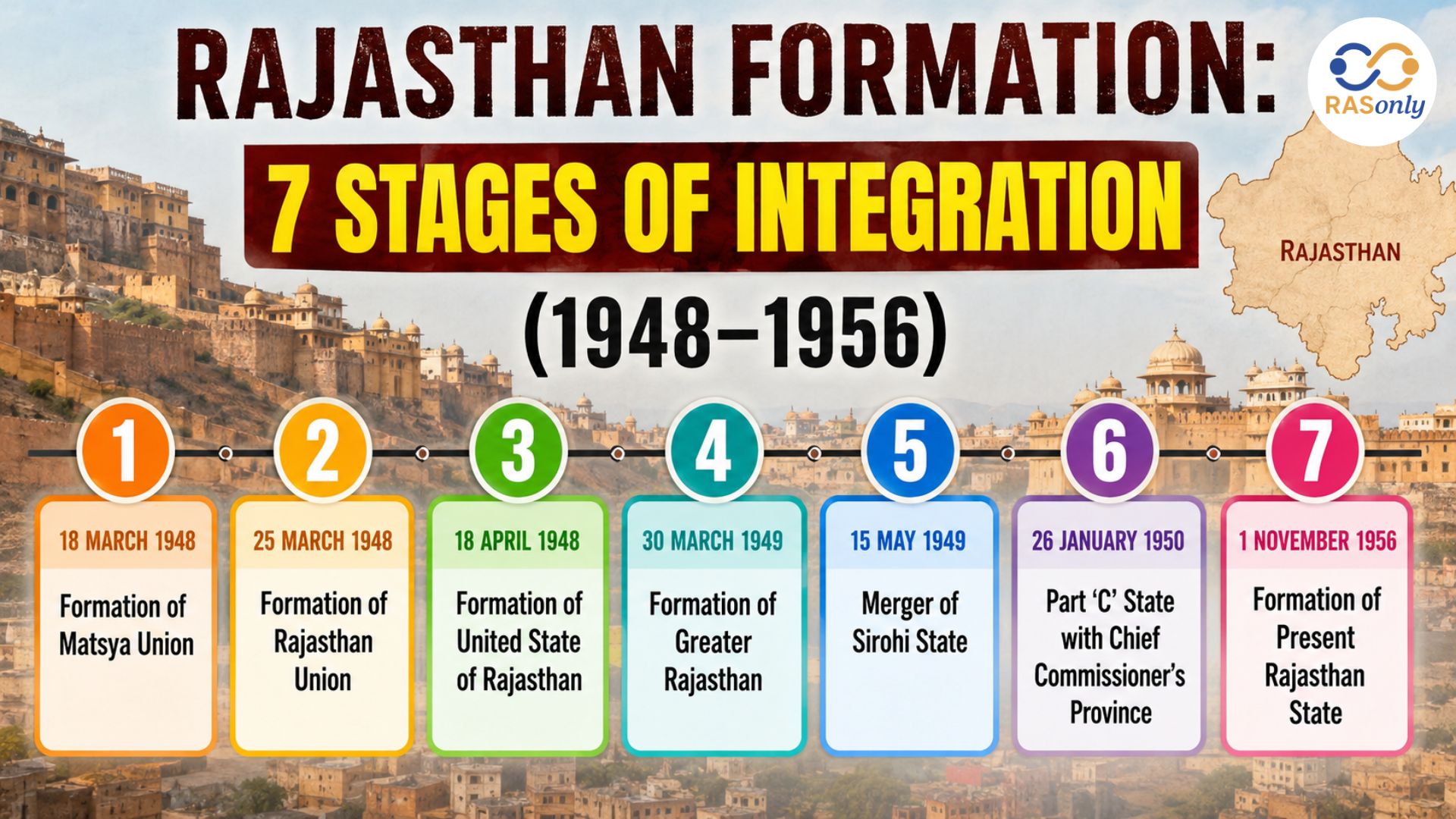
Rajasthan Formation: 7 Stages of Integration (1948–1956)
The formation of Rajasthan is one of the most significant chapters in post-independence Indian history. After India gained independence on 15 August 1947, the process of Rajasthan...
Rajasthan History is one of the most important and high-scoring subjects for RAS 2026 preparation. It covers the rich historical background of the region, including ancient civiliz...
Ancient History is an important part of Indian History and culture-related topics for the General Studies syllabus of the RAS Prelims 2026 exam. Many aspirants skip Ancient History...
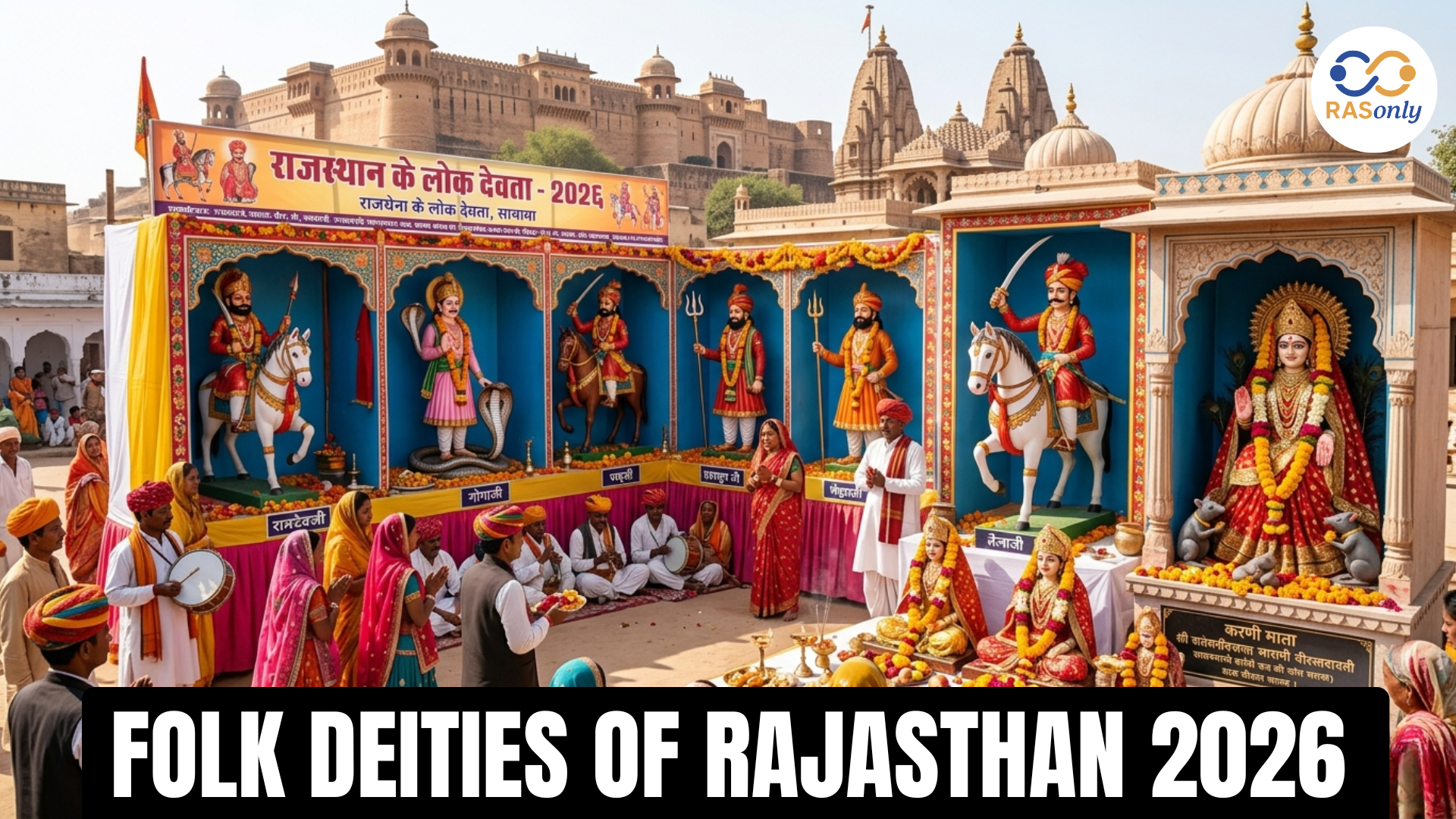
Folk Deities of Rajasthan, popularly known as Lok Devta, represent one of the most unique and powerful aspects of Rajasthan’s cultural and religious landscape. These deities...
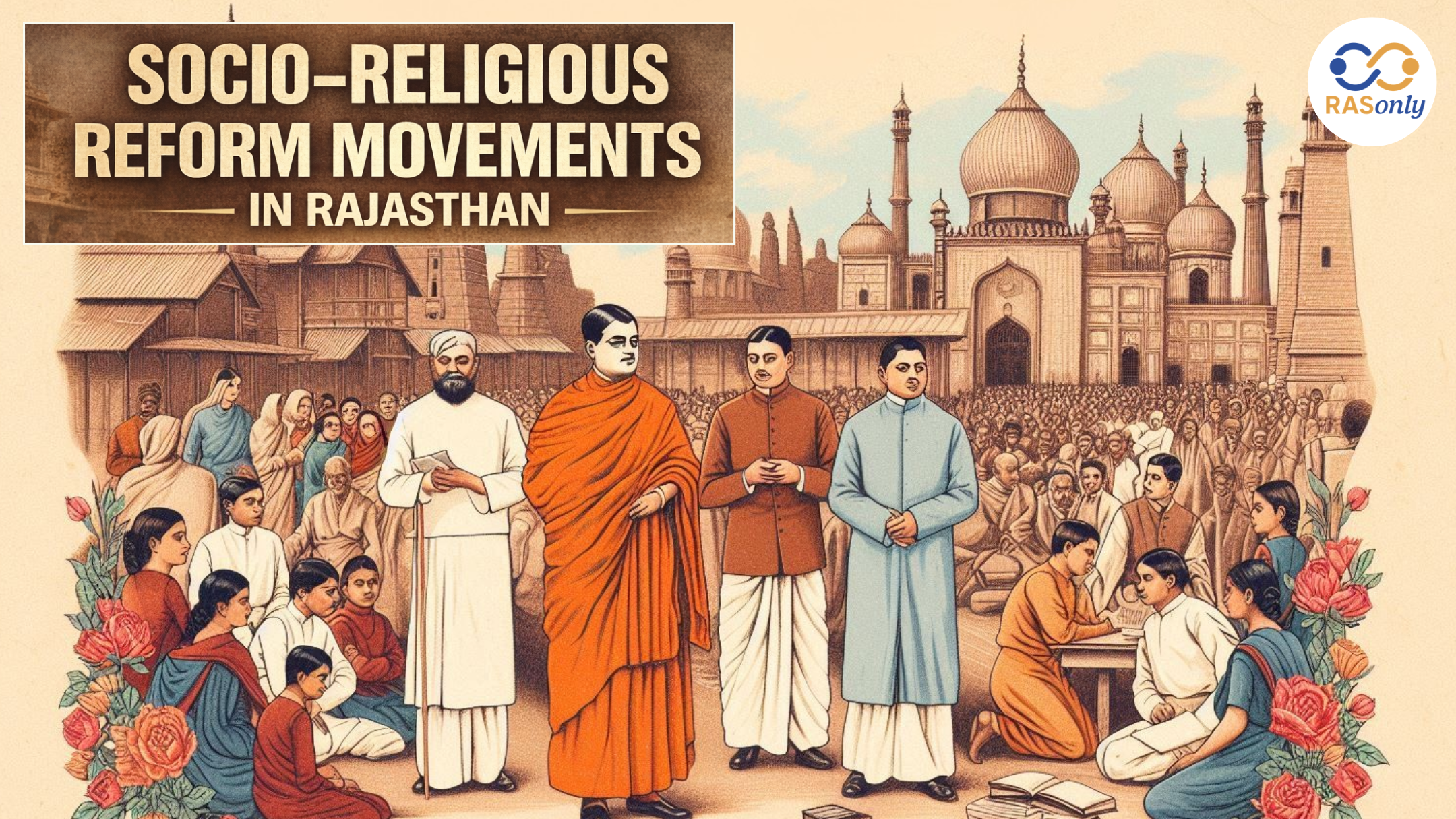
The Socio-Religious Reform Movements in Rajasthan played a transformative role in shaping modern society by challenging caste inequality, feudal oppression, social evils, and ortho...
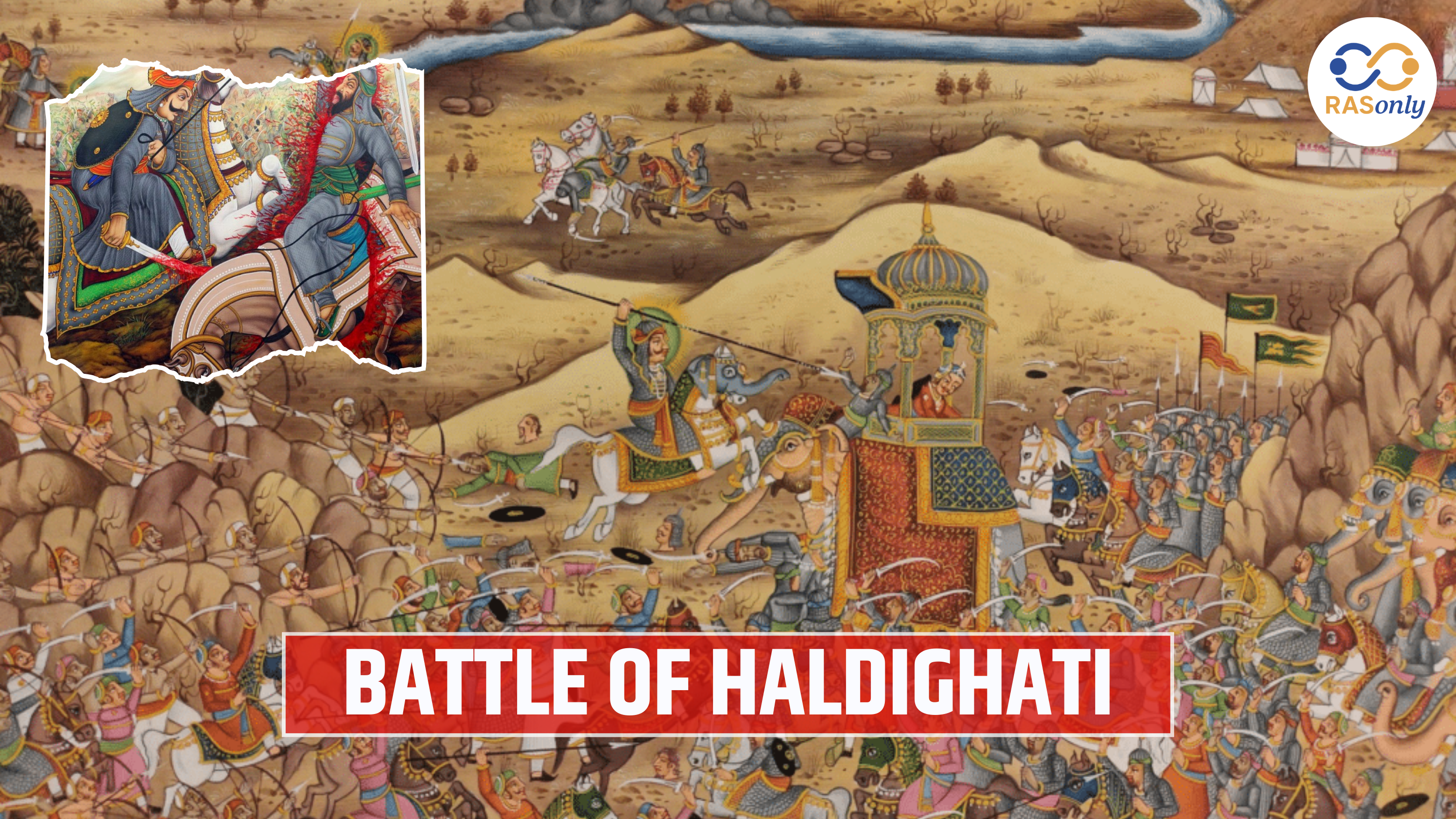
The Battle of Haldighati (1576) is one of the most important topics in Rajasthan History, especially for candidates preparing for RPSC RAS 2026, Rajasthan GK, and competitive exams...
The Modern History of Rajasthan covers the period from the decline of Mughal power in the 18th century to the formation of the modern state of Rajasthan in 1956. During this period...
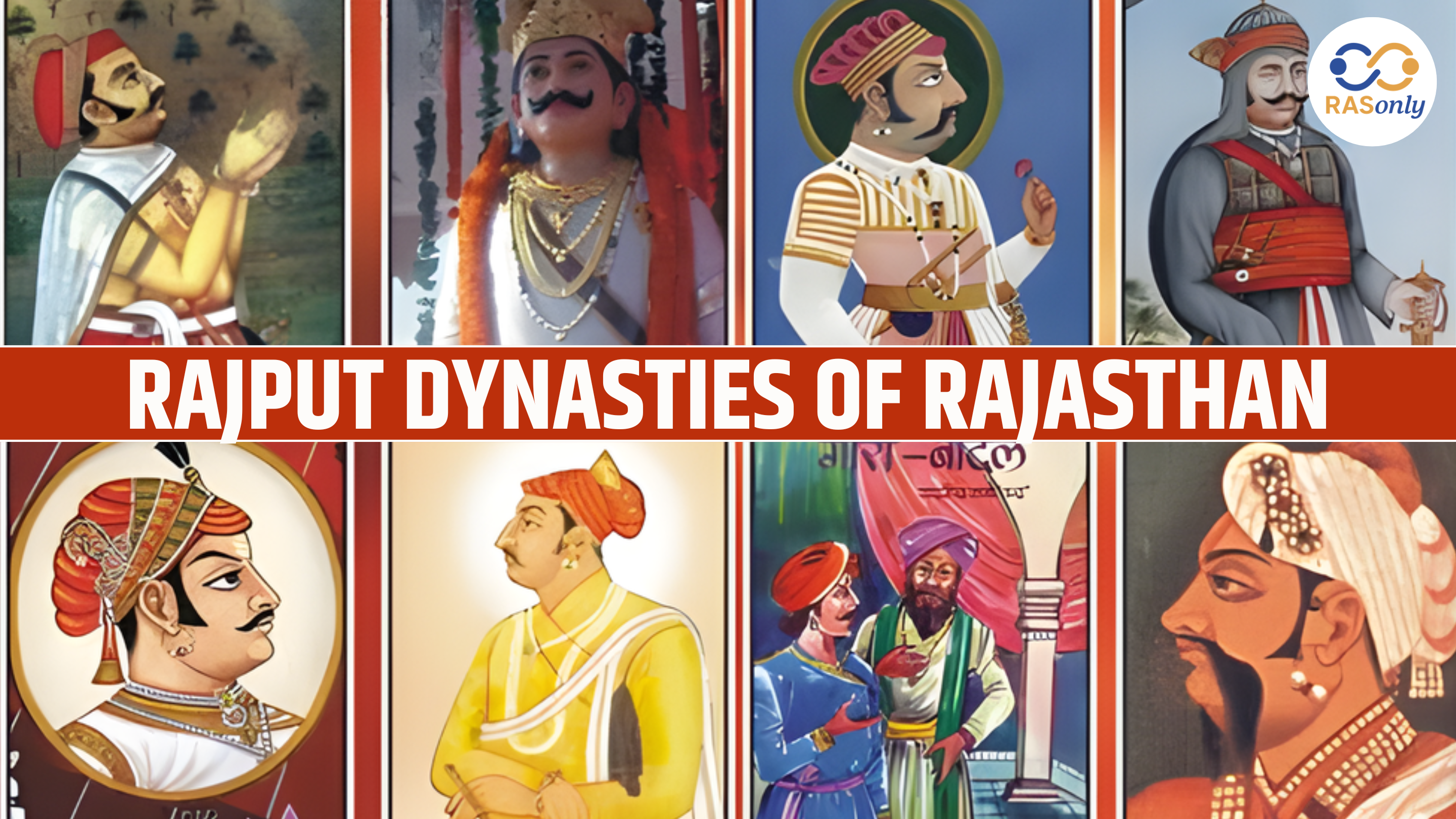
The Rajput Dynasties of Rajasthan played a major role in shaping the political, military, and cultural history of medieval India. The term Rajput is derived from the Sanskrit word...
...
The RAS History Questions are an important part of preparation for the RPSC RAS Exam 2026 conducted by the Rajasthan Public Service Commission (RPSC). History is one of the major s...
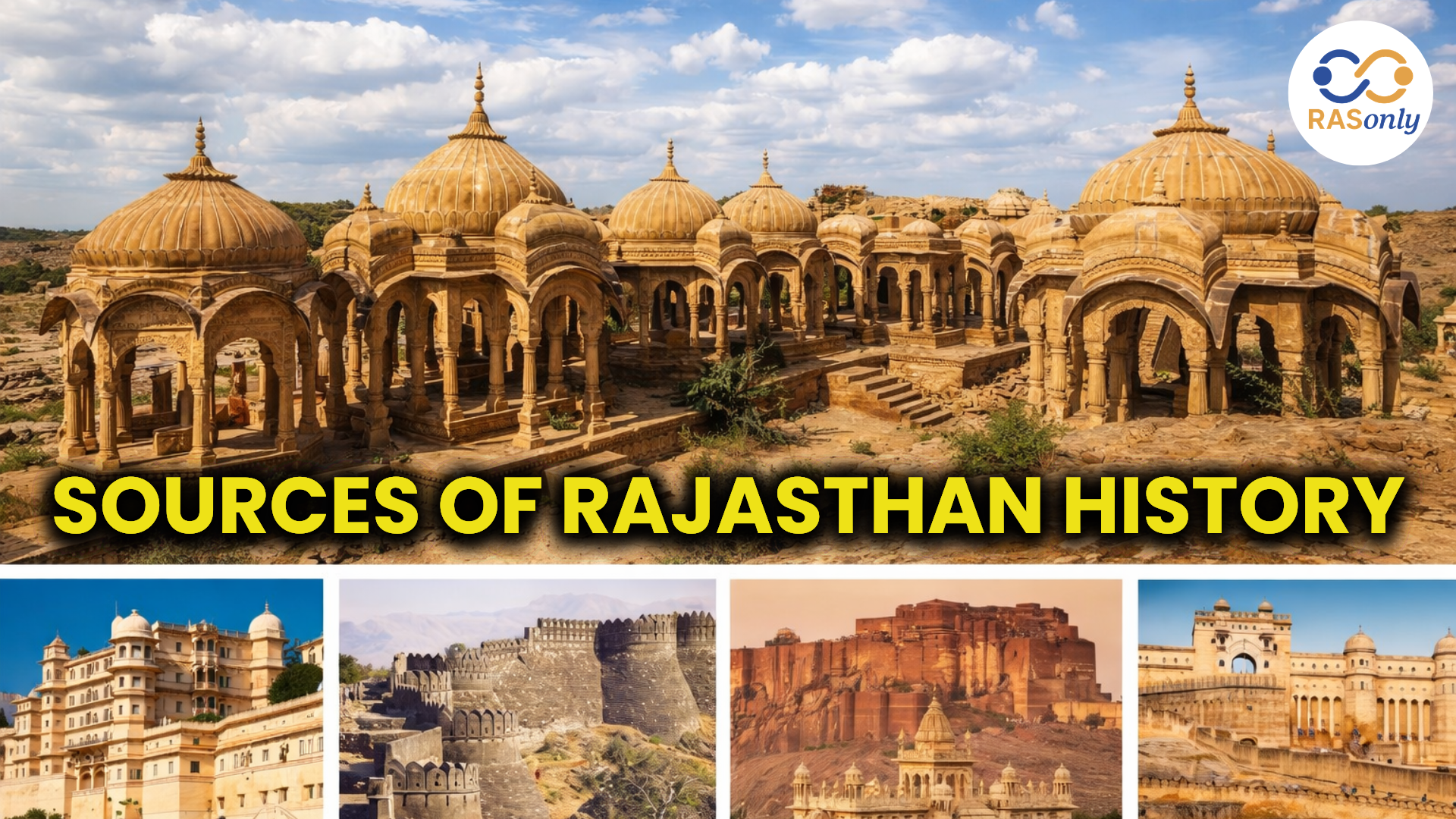
The Sources of Rajasthan History are the primary materials that help historians understand the political, social, economic, and cultural development of Rajasthan from ancient times...
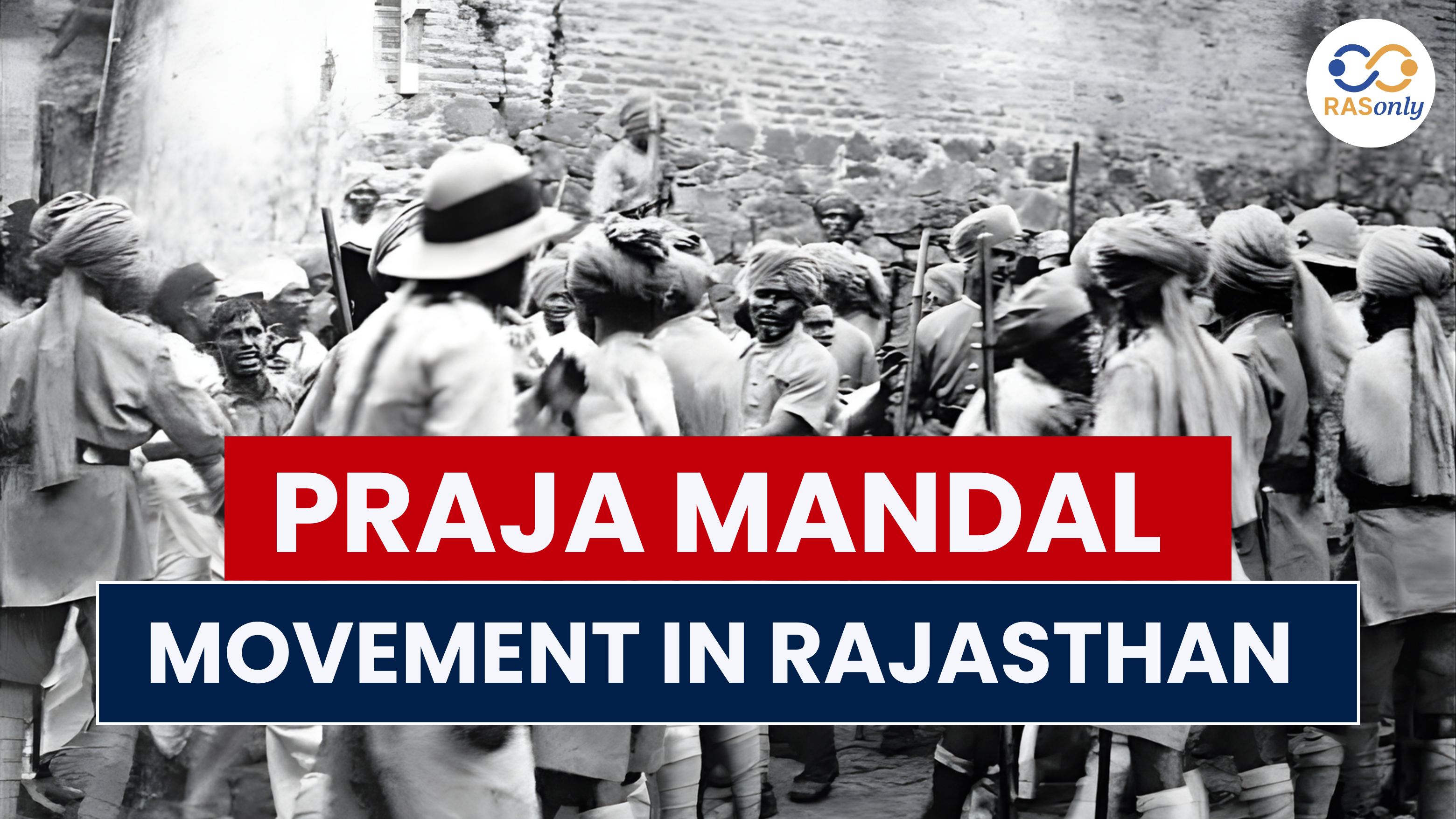
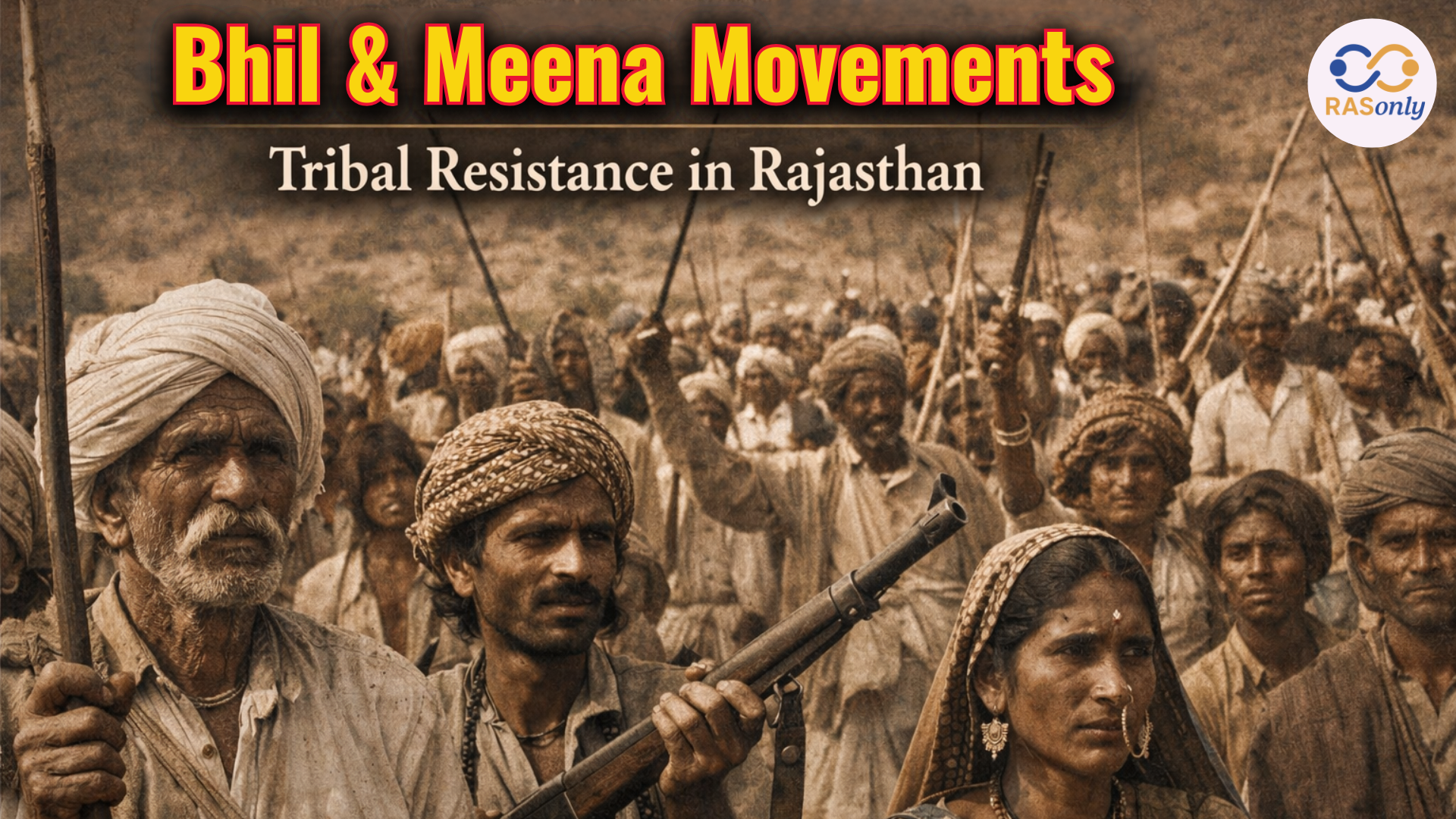
Bhil and Meena movements in Rajasthan represent significant phases of tribal resistance, socio-religious reform, anti-feudal struggle, and political mobilization during the late 19...
Two major spiritual reform movements, the Bhakti and Sufi Movement, deeply influenced medieval Indian society between the 8th and 17th centuries. Emerging during a period of politi...
The British rule in India began as a trading unit, when East India Company was given a Royal Charter by Queen Elizabeth I on 31 December 1600. The British became a trading power bu...
Sikhism emerged in the late 15th century in the Punjab region of South Asia. It was founded by Guru Nanak Dev Ji (1469–1539), who taught a message of equality, compassion, an...
The Vijayanagara Empire, founded by Harihara I and Bukka Raya I in 1336, was a dominant Southern India empire until the late 17th century. It was ruled by four dynasties—Sang...
The Slave Dynasty, also known as the Mamluk Dynasty, was the first ruling dynasty of the Delhi Sultanate in India. It lasted from 1206 to 1290 CE. The dynasty was founded by Qutb-u...
Ashoka was the grandson of Chandragupta Maurya, the founder and first ruler of the Maurya dynasty, who defeated Magadha. Ashoka's father, Bindusara, and mother, Subhadrangi, we...
The Mughal Empire ruled over much of the Indian subcontinent from the early 16th century to the mid-19th century. Founded in 1526 by the prince Babur, a descendant of Turko-Mongol...
Buddhism, which started with Siddhartha Gautama (the Buddha) in the 6th century BCE in Lumbini (modern-day Nepal), is a spiritual movement in northern India that opposed the existi...
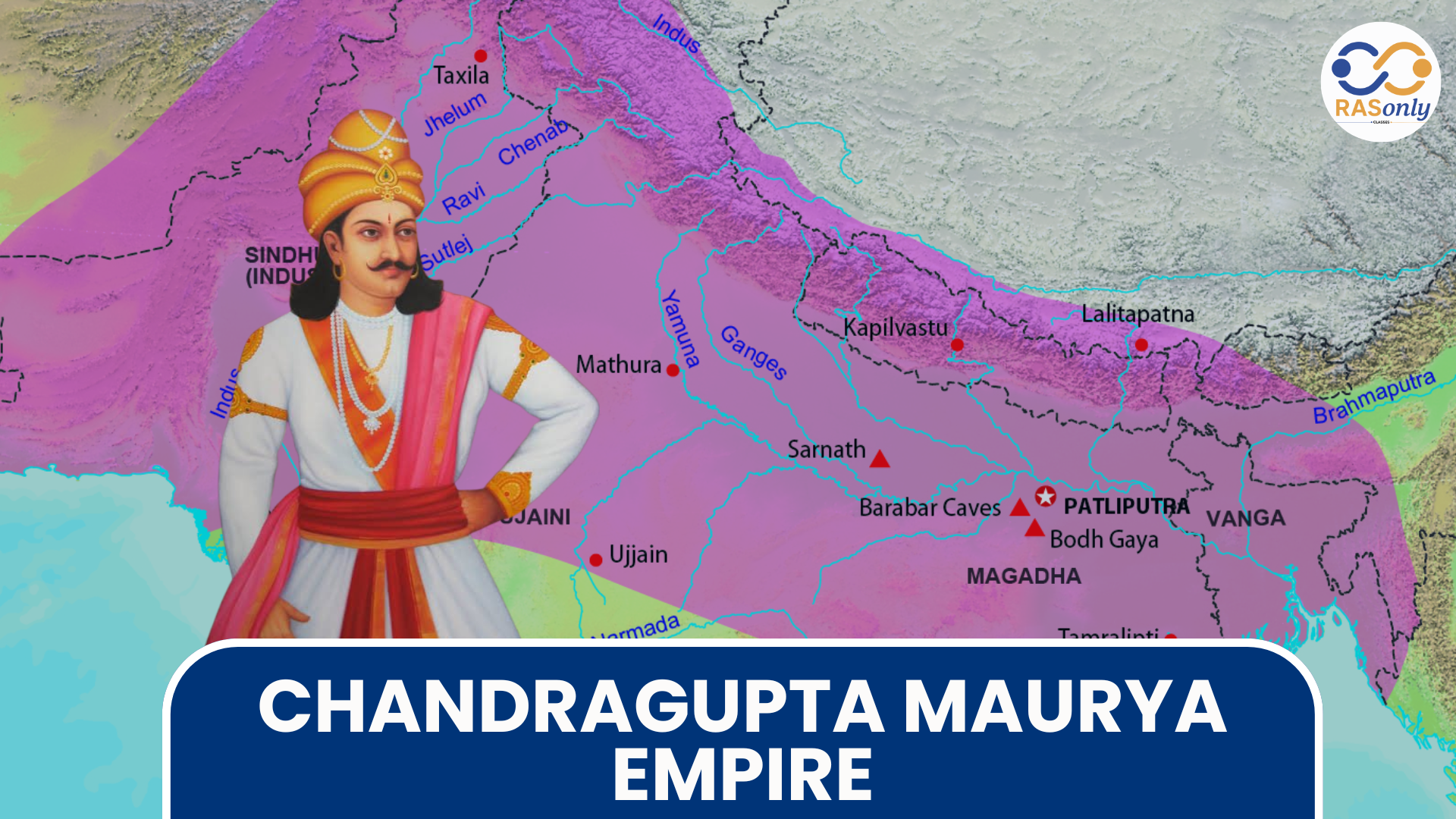
Chandragupta Maurya (c. 321/322–297/298 BCE), called Sandrokottos in Greek sources, was the founder of the Mauryan dynasty and the first ruler to bring large parts of the sub...