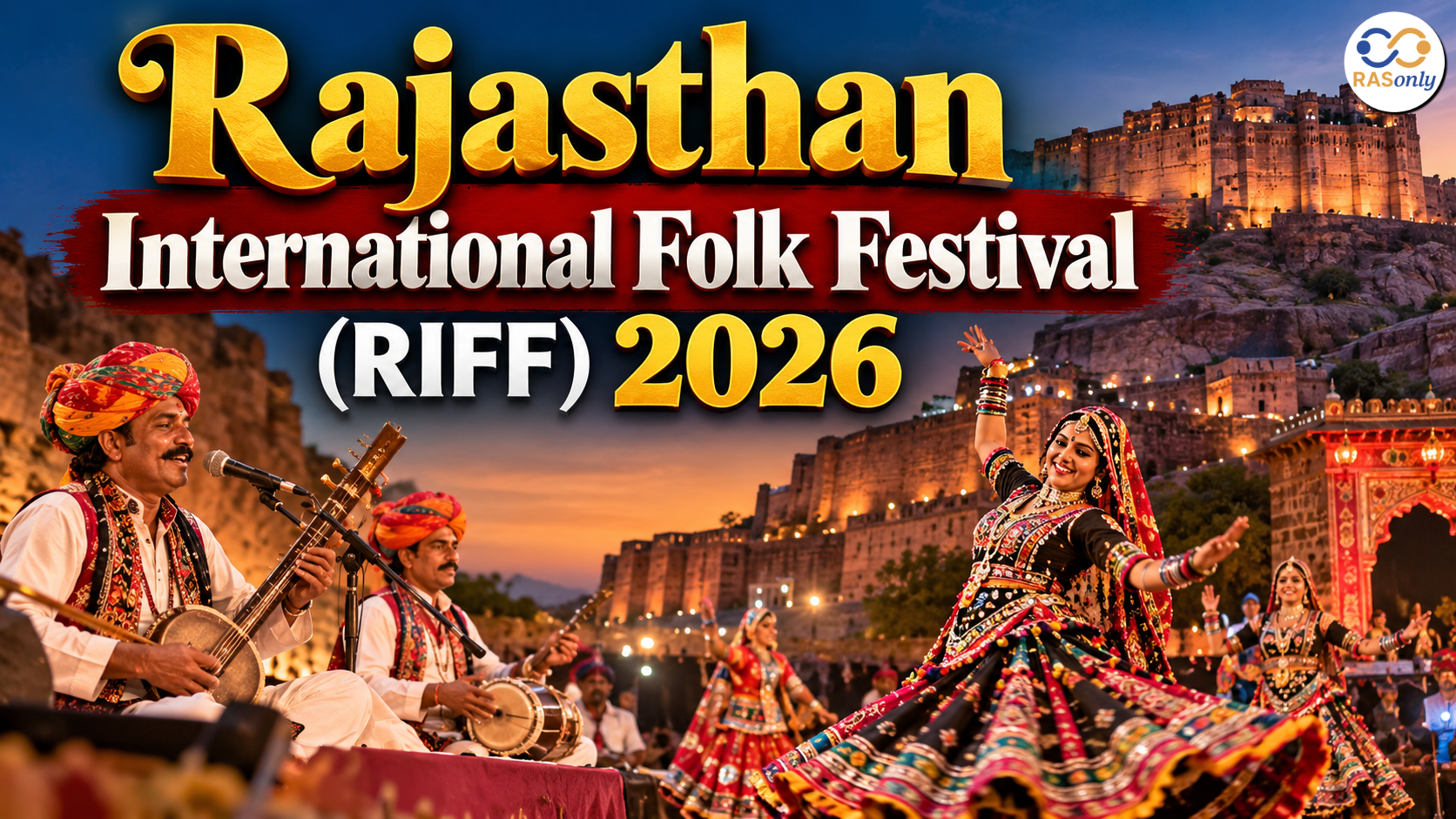
Chola Dynasty: Capital, Founder, Kings, Time Period and History
Global Economic issues and trends: Role of World Bank, IMF and WTO

Get in Touch with RASonly!

The global economy faces slowing growth, rising debt and increasing trade fragmentation. Institutions like the World Bank, IMF and WTO play a crucial role in stabilising markets, supporting developing nations and addressing new challenges such as climate change and digital transformation.


The Global Economic issues and trends sits at an inflection point. After recovering from the pandemic shock and navigating through supply‑chain disruptions and energy upheavals, growth is slowing and uncertainty is mounting. According to the International Monetary Fund (IMF), global GDP growth is projected at about 3.0 % for 2025 and 3.1 % for 2026. Meanwhile, the World Bank warns that escalating trade barriers, structural weaknesses in many developing economies and policy uncertainty may drag growth further. As growth slows, imbalances build and the effectiveness of multilateral institutions becomes more important than ever. This blog explores the key trends and challenges in the global economy and then examines how the World Bank, IMF and the World Trade Organization (WTO) are participating - where they help, where they struggle, and what might lie ahead.
Key Global Economic Issues and Trends
It is useful to sketch the larger landscape before getting down to the functions of each institution: what the overarching winds and structural changes are doing to the global economy nowadays.
Slowing Growth and Weak Recovery
International expansion is low. The July 2025 update by the IMF pegs the growth of the world at approximately 3.0 percent in 2025 which is a minor revision compared to the previous figures, although it is an indication of a slow rate. The World Bank, in its Global Economic Issues and Trends Prospects, warns that growth in many developing economies will remain subdued: for example, regions reliant on commodities or vulnerable to trade shocks face significant headwinds. Slower growth matters because it reduces policy space, raises debt burdens and constrains poverty‑reduction efforts.
Trade Barriers, Policy Uncertainty and Fragmentation
One of the most acute trends is the rollback or slowing of globalization in its previous form. The WTO’s own trade outlook for 2025/2026 revised downward the growth of merchandise trade volumes, showing how increased tariffs and heightened uncertainty are weighing on trade flows. In short, the benefits of cross‑border exchange - goods, services, and investment - are under threat, which in turn hurts growth, job creation and technology diffusion.
Debt, Fiscal Constraints and Vulnerabilities
With growth weak and many economies having run large pandemic‑era budget deficits, debt burdens and fiscal constraints are growing. Lower‑income countries in particular face shrinking fiscal space, high borrowing costs and - at the same time - rising demand for investment in infrastructure, health and climate resilience. These tensions amplify the fragility of the global recovery.
Developing Countries and the Global South: Uneven Outcomes
While the narrative of “emerging markets will carry the world” persists, in fact many developing economies face structural headwinds: commodity dependency, weak institutions, climate vulnerability, and trade exposure. For them, growth is still faster than in advanced economies, but not fast enough to close the gap or compensate for pandemic losses.
New Forces: Technology, Climate and Geopolitics
Finally, several rising forces reshape the global economy. Advances in artificial intelligence and digital services hold potential but also risk widening gaps between advanced and poorer countries. Geopolitical fragmentation (trade blocs, supply‑chain decoupling) and the urgency of climate transition add additional layers of complexity to global economic governance.
The Role of Key Institutions
Given this complex background, the roles of the World Bank, IMF and WTO are central. Each institution has its core mandates, and each is evolving in response to the changing global environment.
The World Bank
The World Bank (more precisely the World Bank Group) is tasked with promoting long‑term development and poverty reduction by providing financial and technical assistance to developing countries.
- Established: The institution that became the World Bank Group was created in 1944 at the Bretton Woods Conference.
- Headquarters: Washington, D.C., United States (address: 1818 H Street N.W., Washington, D.C.)
- President: Ajay Banga - he became the 14th President of the World Bank Group on June 2, 2023.
Key functions:
- Infrastructure, health, education and environment financing.
- Technical support and policy advice: assisting nations to develop the capacity and institutions.
- Generating research and facts to help in policy formulation.
In the current environment:
As growth is slow and most of the low-income countries are limited, the Bank is increasingly critical. It must assist nations to be resilient, invest in green transitions and enhance productivity. Nevertheless, it is not that easy: finding a sufficient amount of funding, making development climate and socially oriented, and making sure that aid is sent to those who need it the most without leaving any debt behind.
Strengths and criticisms:
One strength is its long‑term development focus: unlike short‑term crisis lenders, the Bank can work on structural reform. But critics argue that its decision-making still gives too little voice to developing countries and that the pace of adaptation to new global challenges has been slow.
The IMF
The IMF’s traditional mandate centers on global monetary cooperation, exchange‑rate stability, balance‑of‑payments support and macroeconomic surveillance.
Established: At the Bretton Woods Conference in July 1944, the IMF formally came into existence in 1945. Headquarters: 700 19th Street NW, Washington, D.C., United States. Managing Director: Kristalina Georgieva - in office since October 1, 2019 (re‑elected for a second term starting October 1, 2024).
Key functions:
- Surveillance: Monitoring countries' economic policies and global risks.
- Financing: Providing short-term and medium-term loans to countries facing external or macroeconomic shocks.
- Capacity Development: Helping countries strengthen institutions and policies.
In the current environment:
Given slower growth, elevated debt levels, and risks from trade and currency instability, the IMF’s role remains pivotal. It must help countries navigate external shocks, maintain macro‑stability, and advise on policies that combine growth with sustainability. However, structural issues persist: questions about conditionality, the relevance of its lending toolkit, and its governance.
Strengths and criticisms:
The IMF remains a key global stabilizer. But critics point to its “mission creep” (taking on climate, gender, and social issues beyond its original remit) and to the social consequences of some of its programs (e.g., austerity or structural adjustment).
The WTO
The WTO governs the rules of international trade: tariff reductions, trade‑policy reviews, dispute settlement, and trade facilitation. It is essential for the “predictability” of global trade flows and for helping embed trade rules in the world economy.
- Established: The Agreement Establishing the WTO (the Marrakesh Agreement) was signed 15 April 1994, and the WTO began operations on 1 January 1995.
- Headquarters: Centre William Rappard, Geneva, Switzerland.
- Director‑General: Ngozi Okonjo‑Iweala - she took office on 1 March 2021.
Key functions:
Negotiating trade agreements and updating rules. Monitoring trade policies of members, enabling transparency. Dispute settlement mechanism to enforce trade commitments. Providing technical assistance for trade policy reform in developing countries.
In the current environment:
Trade tensions, rising protectionism and supply chain fragmentation all challenge the WTO’s effectiveness. Merchandise trade growth has been downgraded and uncertainty is high. The WTO must adapt its rulebook to digital trade, services, climate‑linked trade issues, and new patterns of global commerce. A functioning WTO is crucial for emerging economies to gain access and for global trade to remain a driver of growth.
Strengths and criticisms:
WTO membership and dispute‑settlement mechanisms have helped many countries engage in trade. However, the Doha Round stalled, decision-making by consensus has slowed reforms, and the system is under pressure from new bilateral and regional trade deals that may weaken multilateralism.
How These Institutions Interact
These three institutions do not operate in isolation - they increasingly cooperate and coordinate. For instance, the WTO and the World Bank have a cooperation framework, and the IMF and World Bank jointly hold annual meetings of their Boards of Governors. In a world of interconnected finance, trade and development, this coordination is vital.
Why coordination matters:
- A country receiving IMF support for balance‑of‑payments problems may also need trade‑policy adjustment (WTO domain) and structural reform (World Bank domain).
- Global shocks (commodity price swings, inflation, and pandemics) affect trade, capital flows, growth and development simultaneously; a unified response enhances effectiveness.
- Emerging economies require integrated support across finance, trade and development.
Where gaps remain:
- Overlapping mandates risk duplication or institutional confusion unless roles are clearly delineated.
- Governance reform is needed: many developing countries argue they have insufficient voice in decision‑making.
- The new challenges - climate, digitalization, and supply‑chain realignment - are less directly addressed by traditional institutional mandates.
Major Challenges Ahead
Given the broad trends and institutional roles, several specific challenges stand out.
Reforming Institutional Mandates and Governance
All three institutions face calls for reform - from representation of emerging economies, to adapting to new global issues, to clarifying mandates. For example, the IMF may need to rethink how it supports countries with debt burdens or climate risks; the World Bank could improve voice‑and‑influence of developing countries; the WTO must modernise its rule‑book.
Ensuring Inclusive Growth
Slower growth combined with rising inequality presents a risk of social destabilisation. Institutions must not just promote growth but ensure it is inclusive. That means lifting developing economies, focusing on structural transformation (not just financial stabilisation), and supporting sectors like services, digital trade, and green technologies.
Balancing Trade, Finance and Development
The linkage between trade, finance and development is stronger than ever. For example: trade restrictions depress investment; currency instability can hamper growth; development financing must align with climate and infrastructure needs. Institutions must enhance coherence in policy advice and operations across these domains.
Tackling Debt, Climate and Structural Vulnerabilities
Many low‑ and middle‑income countries face debt distress, climate vulnerability and structural weaknesses in productivity. The World Bank and IMF must help countries build resilience while maintaining macro‑stability. Meanwhile the WTO must ensure trade remains open and rules‑based so that countries can access markets to grow out of debt and vulnerability.
Adapting to New Global Realities
AI, digital platforms, supply‑chain diversification, geopolitics and climate change are rewriting the rules of commerce and finance. The institutions must adapt: the WTO for digital trade and services; the World Bank for climate‑resilient infrastructure; the IMF for cross‑border capital flows and non‑traditional shocks.
Why This Matters for India and the Global South
For India - and other countries in the Global South - this framework is particularly relevant. As an emerging economy, India’s growth prospects depend on access to global trade, foreign investment, stable macro‑economics and development financing. In this environment:
- A functioning WTO means better access for Indian exports and reduced trade barriers.
- A stable global financial system backed by the IMF helps reduce risks from capital flight or currency volatility.
- Development support from the World Bank can help investment in infrastructure, health, technology and skills.
Moreover, as Indian policymakers navigate slowing global growth, rising protectionism and climate pressure, leveraging the support and frameworks of these institutions becomes a strategic advantage.
Conclusion
The global economy is facing a complex crossroads: growth is weakening, trade is under strain, debt is mounting and structural shifts are underway. In this context, the roles of the World Bank, IMF and WTO are more important - but also more challenged - than ever. They must adapt to new realities, work more coherently, remain inclusive and remain relevant. For developing countries, especially in Asia, Africa and Latin America, the performance of these institutions will matter deeply: not just for access to resources, but for the quality of growth, the pace of convergence and the resilience of economies.
When you observe the development of the global economy, you should remember: multilateral institutions are not necessarily relics of bureaucracy - they are in the system of which economies remain interconnected, stable and capable of development. Their success or failure will have a ripple effect on the growth paths of the nations, their trade flows and eventually, the lives of hundreds of millions of people.
BEST SELLER
🏆 PRELIMS
RAS Pass
Prelims focused Hindi & English
₹399
✓
Prelims Topic-Wise Tests
✓
Subject-Wise Tests
✓
Full-Length Prelims Tests
✓
Daily Current Affairs Tests
✓
Prelims PYQs Tests
✓
Detailed Solutions & Analysis
✓
All Rajasthan Ranking
✓
Unlimited Reattempts
✓
Mains Tests
✓
Hindi & English Tests
✓
All Rajasthan Ranking
Trusted by 5,000+ Students
Post Category
- RAS Salary
- Result
- RAS Admit Card
- RAS Job
- RAS Cutoff
- Preparation Tips
- RAS Answer Key
- RAS Exam Analysis
- RAS Syllabus
- RAS Previous Year Papers
- RPSC RAS Exam Pattern
- RAS Interview
- RAS Exam Date
- RAS Vacancy
- RAS Test Series
- RAS Best Books
- RAS Preparation Resources
- RAS Coaching Centre
- History
- Polity
- Geography
- Economics
- Science
- Art and Culture
- RPSC RAS Application Form
- RPSC RAS Notification
- RAS Eligibility Criteria
- UPSC Exam
- RPSC RAS Mains
Visit Our RASonly Offline Center
Our Expert Faculty

Bhunesh Sir
Current Affairs · 13+ Yrs

Aamir Khan Sir
RAS-2017 · IIM Ahm.

Akash Sir
Polity · 8+ Yrs
Free Resources
Official Mobile App

RASOnly App
by OTSAdda · Free
Full Video Lectures
Mock Tests & PYQs
Daily Current Affairs
AI Mock Interview
Free Download · No subscription needed to install
RAS 2024 Toppers — RASonly
Rank 2
Virendra Charan
Rank 9
Bhoopinder Singh
Rank 26
Aanchal Nagpal
Rank 33
Lokendra Singh
Rank 45
Amar Rathore
Rank 46
Manasvini Verma

Join RASonly WhatsApp Community
Get daily current affairs, exam alerts, free study material and tips from expert faculty — right on WhatsApp.
Join for Free →RASonly Interview Guidance Program

Mr. Ashok Jain
Ex-Chief Secretary Govt of Rajasthan
- IAS officer of the 1981 batch, Rajasthan cadre.
- Passionate about mentoring the next generation of RAS officers with real-world insights.
- Got retired in Dec 2017 from the post of Chief Secretary of the state of Rajasthan.

Mr. Guru Charan Rai
Ex-ASP / SP in Jaisalmer
- Guru Charan Rai, IPS (Retd), retired as Inspector General of Police (Security), Rajasthan, Jaipur in 2017.
- Served as ASP and SP in Jaisalmer, Nagaur, Sri Ganganagar, Sawai Madhopur, Dausa, Sikar, and Karauli.
- He also held key positions as DIGP and IGP in the Law and Order division.

Mr. Rakesh Verma
Ex-IAS Officer, B.Tech, MBA, and M.A. (Economics)
- IAS officer of the 1981 batch and retired in Chief Secretary Rank.
- Civil servant of high repute and vast experience.
- Has been teaching UPSC CSE subjects for the last six years.
Related Post
Daily Current Affairs for RAS Exam Preparation 2026

Ustad Bismillah Khan Yuva Puraskar
October 24, 2026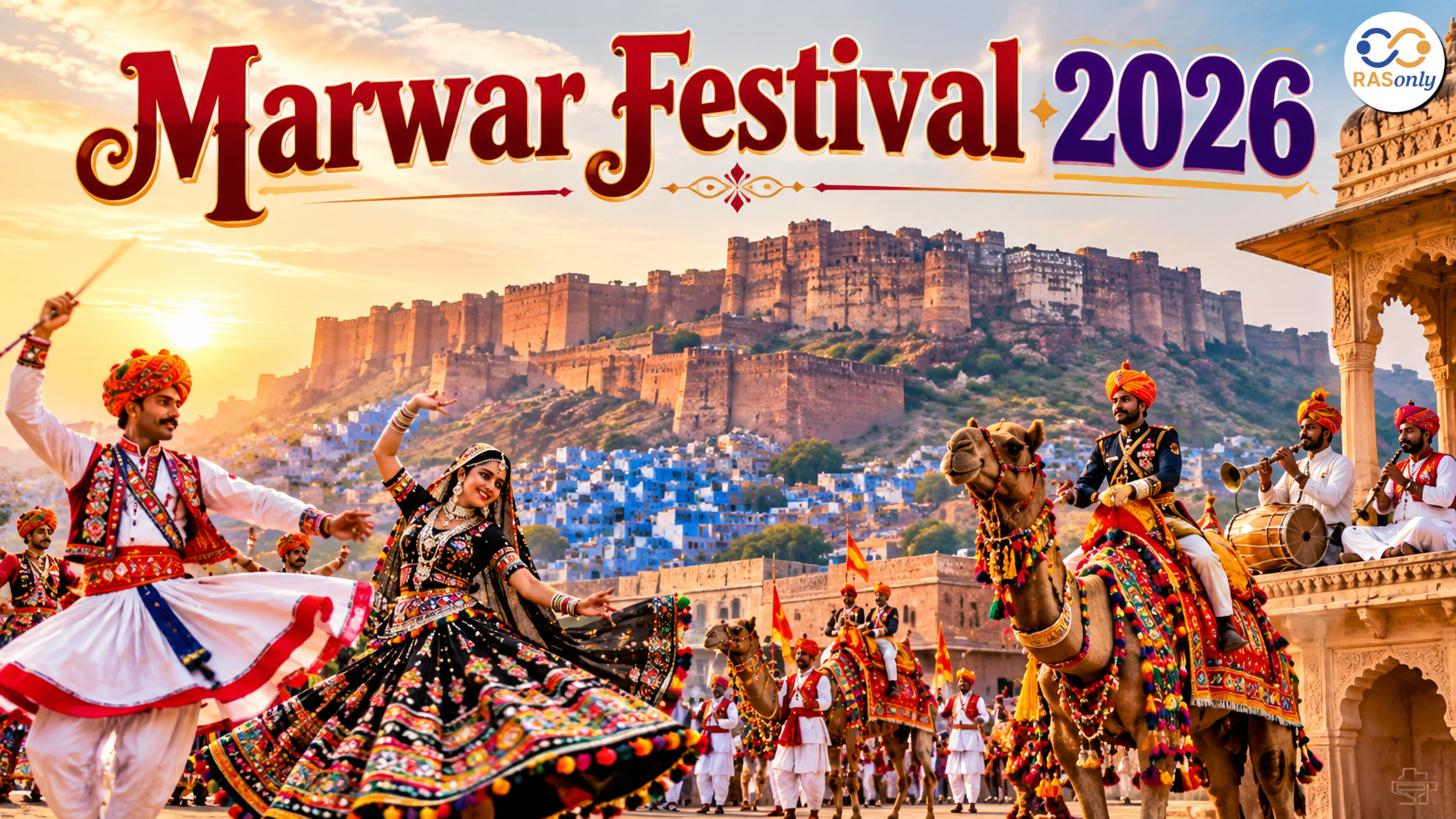
Marwar Festival 2026
October 24, 2026
Kundan Art Display in Hong Kong
October 23, 2026