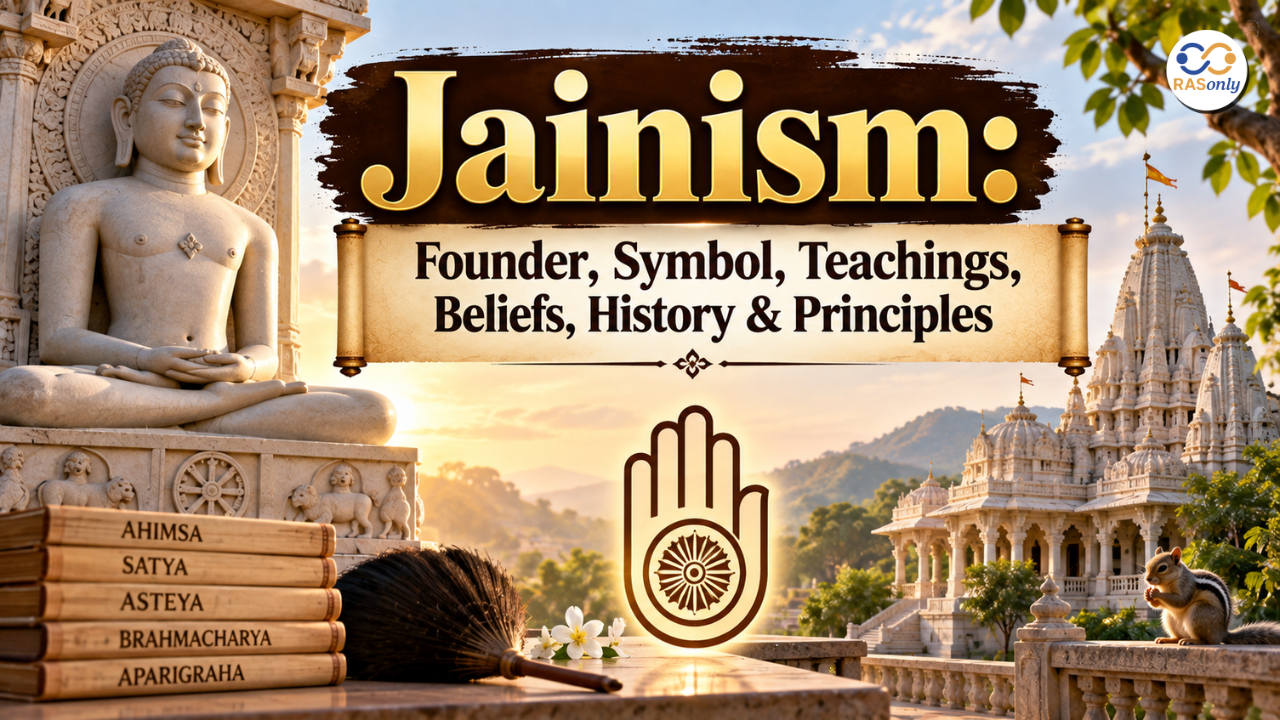
Jainism: Founder, Symbol, Teachings, Beliefs, History & Principles
Socio-Religious Reform Movements in Rajasthan 2026: History, Causes, Leaders, Impact & Importance (RAS)

Get in Touch with RASonly!

Socio-religious reform movements in Rajasthan played a key role in eliminating social evils, promoting equality, and spreading education across society. These movements strengthened women's empowerment, social justice, and political awareness, shaping modern Rajasthan. They remain a crucial topic for understanding Rajasthan GK, history, and governance for RPSC RAS 2026.

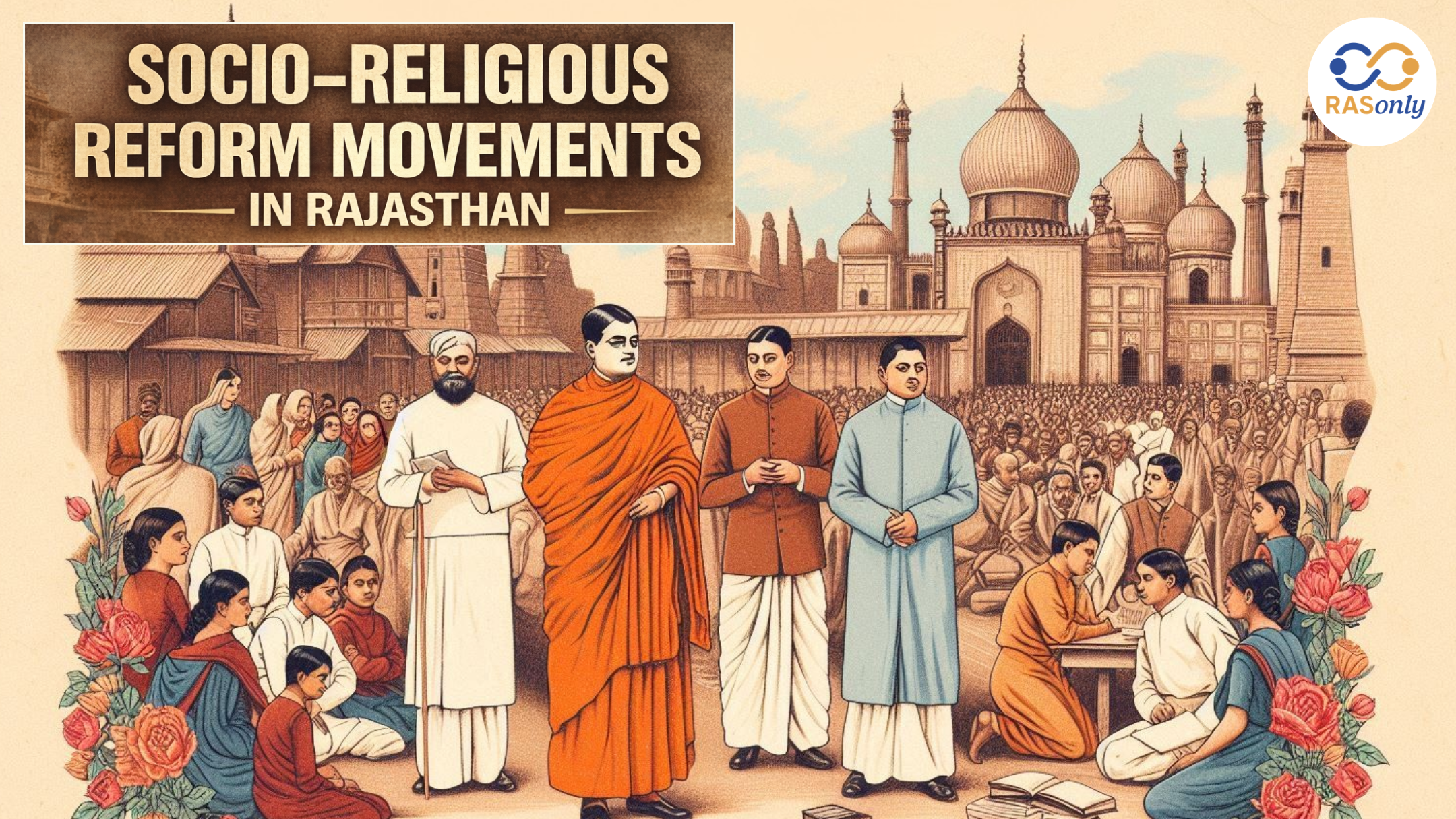
The Socio-Religious Reform Movements in Rajasthan played a transformative role in shaping modern society by challenging caste inequality, feudal oppression, social evils, and orthodox religious practices. These movements mainly emerged during the 19th and early 20th centuries, when Rajasthan society was deeply influenced by rigid traditions, illiteracy, and social discrimination.
According to RPSC RAS 2026, Rajasthan GK, History, and Social Reform Movements, Women played a crucial role in socio-religious reform movements, both as participants and beneficiaries. These reforms improved their status and increased their participation in social and public life. This is a very crucial topic as it describes how Rajasthan shifted into social justice, equality, women's empowerment, and the values of modern governance. Not only did these reform movements transform religious beliefs, but they also led to education, political awareness, and the national movement, and therefore were an important aspect of the socio-cultural development of Rajasthan.
Meaning and Concept of Socio-Religious Reform Movements
The socio-religious reform movements refer to organized efforts aimed at reforming both social customs and religious beliefs to create a more equal, rational, and progressive society. These movements targeted issues like untouchability, caste rigidity, child marriage, Sati, gender inequality, and lack of education.
These reforms in Rajasthan integrated spiritual doctrines with social reform, which advocated human equality, morality, and rationality. They served to transform the traditional intolerance of the society into a more open, contemporary, and socially conscious organization, which is one of the major themes in the history and governance of Rajasthan.
Major Socio-Religious Reform Movements in Rajasthan
Socio-religious reform movements took place in Rajasthan, which changed the society by questioning caste hierarchy, feudal oppression, superstition, and social inequality. These movements encouraged social justice, equality, education, and moral religious practices and assisted Rajasthan to evolve towards a modern and progressive society.
They were not isolated events but interconnected efforts that influenced governance, rural society, education, and political awareness, making them highly relevant for RPSC RAS 2026, Rajasthan GK, and history preparation.
Arya Samaj Movement in Rajasthan
Arya Samaj Movement in Rajasthan was a strong religious reform and social change movement, particularly following its formation in Ajmer in 1883. It was influenced by Swami Dayanand Saraswati and advocated Vedic values, rationalism, and social equality against old traditions and superstition.
This movement played a major role in spreading modern education, women's empowerment, and anti-caste ideology, making it one of the most impactful reform movements in Rajasthan’s history. It also contributed to the rise of national consciousness and social awareness.
Key Contributions
-
Opposition to idol worship and superstition
-
Promotion of women’s education and widow remarriage
-
Campaign against child marriage and untouchability
-
Establishment of schools, gurukuls, and educational institutions
-
Encouragement of scientific and rational thinking
Bhakti Movement Influence in Rajasthan
The Bhakti Movement in Rajasthan laid the early foundation for socio-religious reform through saints like Dadu Dayal and Meera Bai, who emphasized devotion, equality, and spiritual unity. Their teachings challenged rigid caste systems and promoted direct connection with God without rituals or intermediaries.
This movement contributed to the formation of a culture of social harmony, inclusiveness, and moral values, which was subsequently supported by subsequent reform movements. It was important in the development of the cultural and spiritual identity of Rajasthan.
Key Features
- Promotion of equality and social unity
- Rejection of caste discrimination and rituals
- Focus on devotion (Bhakti) and inner spirituality
- Simple living and ethical values
- Strengthening social harmony and brotherhood
Peasant Movements as Social Reform Movements
The peasant movements in Rajasthan were not only economic protests but also important social reform movements that challenged feudal exploitation, unjust taxation, and forced labor (Begar system). These movements awakened rural society and promoted rights, dignity, and equality among farmers.
Such movements as Bijolia, Begun, and Shekhawati helped to promote political awareness and the opposition against injustice, and were useful to both social reform and the freedom struggle.
Key Contributions
- Protest against Begar (forced labor system)
- Resistance against heavy taxes and feudal oppression
- Social awakening among rural and agrarian communities
- Promotion of rights, equality, and justice
Reform Against Social Evils in Rajasthan
The reform movements in Rajasthan were also working on eliminating harmful social practices like Sati, child marriage, the purdah system, and gender discrimination. These efforts were supported by reformers as well as progressive rulers who introduced legal measures and awareness campaigns.
The reforms contributed significantly to the betterment of the state of women, alleviation of social inequality, and modernization of the society, which made Rajasthan more compatible with human rights and ethical governance principles.
Key Reforms
- Ban on Sati (Mewar, 1861)
- Awareness campaigns against child marriage
- Promotion of women’s education and rights
- Efforts to reduce caste-based and gender inequality
Key Reformers of Rajasthan
The socio-religious change in Rajasthan was initiated by the reformers who created awareness and opposed the old traditions. Their thoughts had impacts on social structure, education, and religion, as well as governance.
These leaders combined spiritual teachings with social reform, creating a long-lasting impact on Rajasthan’s society and contributing to the development of modern democratic values.
Important Reformers
| Reformer | Contribution |
|---|---|
| Swami Dayanand Saraswati | Arya Samaj, Vedic reform, anti-caste movement |
| Dadu Dayal | Promoted equality and Bhakti philosophy |
| Meera Bai | Spiritual devotion and social equality |
| Local reformers | Awareness, education, and social change |
Role of Education in Social Reform
Education was very instrumental in influencing the socio-religious reform movements in Rajasthan through the creation of awareness, rationalism, and the introduction of modern values. It enabled people to question outdated traditions and adopt progressive ideas.
The growth of schools and institutions helped in improving literacy, women's empowerment, and social consciousness, which accelerated the pace of reform and modernization in Rajasthan.
Key Impacts
- Spread of modern and scientific knowledge
- Increase in literacy and awareness
- Promotion of women's empowerment
- Decline in blind faith and superstition
- Development of critical thinking
Impact of Socio-Religious Reform Movements
Socio-religious movements of reforms in Rajasthan introduced much change by providing equality, education, and social justice. They aided in cutting down the social evils and resulted in a more progressive society.
These movements also contributed to political awareness, national consciousness, and democratic values, shaping the future of Rajasthan’s governance and society.
Major Impacts
- Reduction in caste discrimination and untouchability
- Decline of harmful social practices
- Improvement in women’s social status
- Expansion of education and awareness
- Rise of political and national consciousness
Limitations of Reform Movements
Despite their success, socio-religious reform movements faced several challenges due to deep-rooted traditions, social resistance, and limited reach in rural areas. These factors slowed down the pace of reform. Feudal dominance and lack of education also created barriers, making it difficult for reforms to fully transform society at the grassroots level.
Key Limitations
| Issue | Explanation |
|---|---|
| Social Resistance | Opposition from orthodox groups |
| Limited Reach | Rural backwardness |
| Low Literacy | Lack of awareness |
| Feudal Control | Dominance of landlords |
Link with the National Movement
The socio-religious reform movements were significant in equipping the Rajasthan society with the Indian national movement by developing awareness and unity among people. They promoted political activism, opposition to oppression, and the notion of liberty, which connected social reform to the bigger cause of independence.
Key Contributions
- Rise of nationalism and political awareness
- Social unity and collective identity
- Participation in the freedom movement
- Development of democratic values
Women and Social Reform in Rajasthan
Women took a very active part in socio-religious reform movements as actors as well as beneficiaries. These reforms made their situation better and their involvement in social and public life more active.
Efforts were made to promote education, rights, and equality for women, which contributed to long-term social development and empowerment.
Key Changes
- Increase in women’s education
- Awareness against social evils
- Participation in reform movements
- Improvement in social and economic status
Role of Press and Communication in Reform
The spread of reform ideas was also supported by print media, pamphlets, and public discussions, which helped in reaching a wider audience across Rajasthan.
This communication helped to create awareness, reformist ideas, and national consciousness, particularly among educated parts of the population.
Importance for RPSC RAS 2026
Socio-religious reform movements are highly important for Rajasthan GK, History, and Social Issues, making them a key topic for both Prelims and Mains.
Understanding this topic helps in analyzing how Rajasthan evolved socially and politically, which is essential for writing high-quality answers in exams.
Exam Relevance
Prelims
- Reformers, movements, years
- Key facts and concepts
Mains
- Social reform analysis
- Impact and evaluation
Rajasthan GK
- Regional movements
- Social transformation
Conclusion
The role of socio-religious reform movements in Rajasthan was vital towards changing a traditional and strict society to a more open, progressive, and conscious social fabric. Those movements fought against social evils existing in society, encouraged education, equality, and rationality, and established the principles of modern government and democracy.
Overall, these reforms had not only enhanced the social and religious life of Rajasthan, but also led to the awareness of politics, empowerment of women, and national consciousness, and are therefore of great importance in considering the historical and administrative development of Rajasthan as part of RPSC RAS 2026.
FAQ
Socio-religious reform movements were efforts aimed at removing social evils like caste discrimination, child marriage, and superstition while promoting equality, education, and ethical religious practices.
Swami Dayanand Saraswati is considered one of the most important reformers due to his role in spreading Arya Samaj and promoting social and religious reforms.
Arya Samaj promoted Vedic values, opposed social evils, encouraged women’s education, and played a major role in social and educational reform.
They reduced social evils, improved women’s status, increased education, and created awareness, leading to a more progressive and democratic society.
They are important because they are part of Rajasthan GK, history, and social issues, and are frequently asked in both Prelims and Mains exams.

BEST SELLER
🏆 PRELIMS
RAS Pass
Prelims focused Hindi & English
₹399
✓
Prelims Topic-Wise Tests
✓
Subject-Wise Tests
✓
Full-Length Prelims Tests
✓
Daily Current Affairs Tests
✓
Prelims PYQs Tests
✓
Detailed Solutions & Analysis
✓
All Rajasthan Ranking
✓
Unlimited Reattempts
✓
Mains Tests
✓
Hindi & English Tests
✓
All Rajasthan Ranking
Trusted by 5,000+ Students
Post Category
- RAS Salary
- Result
- RAS Admit Card
- RAS Job
- RAS Cutoff
- Preparation Tips
- RAS Answer Key
- RAS Exam Analysis
- RAS Syllabus
- RAS Previous Year Papers
- RPSC RAS Exam Pattern
- RAS Interview
- RAS Exam Date
- RAS Vacancy
- RAS Test Series
- RAS Best Books
- RAS Preparation Resources
- RAS Coaching Centre
- History
- Polity
- Geography
- Economics
- Science
- Art and Culture
- RPSC RAS Application Form
- RPSC RAS Notification
- RAS Eligibility Criteria
- UPSC Exam
- RPSC RAS Mains
Visit Our RASonly Offline Center
Our Expert Faculty

Bhunesh Sir
Current Affairs · 13+ Yrs

Aamir Khan Sir
RAS-2017 · IIM Ahm.
Akash Sir
Polity · 8+ Yrs
Free Resources
Official Mobile App

RASOnly App
by OTSAdda · Free
Full Video Lectures
Mock Tests & PYQs
Daily Current Affairs
AI Mock Interview
Free Download · No subscription needed to install
RAS 2024 Toppers — RASonly
Rank 2
Virendra Charan
Rank 9
Bhoopinder Singh
Rank 26
Aanchal Nagpal
Rank 33
Lokendra Singh
Rank 45
Amar Rathore
Rank 46
Manasvini Verma

Join RASonly WhatsApp Community
Get daily current affairs, exam alerts, free study material and tips from expert faculty — right on WhatsApp.
Join for Free →RASonly Interview Guidance Program

Mr. Ashok Jain
Ex-Chief Secretary Govt of Rajasthan
- IAS officer of the 1981 batch, Rajasthan cadre.
- Passionate about mentoring the next generation of RAS officers with real-world insights.
- Got retired in Dec 2017 from the post of Chief Secretary of the state of Rajasthan.

Mr. Guru Charan Rai
Ex-ASP / SP in Jaisalmer
- Guru Charan Rai, IPS (Retd), retired as Inspector General of Police (Security), Rajasthan, Jaipur in 2017.
- Served as ASP and SP in Jaisalmer, Nagaur, Sri Ganganagar, Sawai Madhopur, Dausa, Sikar, and Karauli.
- He also held key positions as DIGP and IGP in the Law and Order division.

Mr. Rakesh Verma
Ex-IAS Officer, B.Tech, MBA, and M.A. (Economics)
- IAS officer of the 1981 batch and retired in Chief Secretary Rank.
- Civil servant of high repute and vast experience.
- Has been teaching UPSC CSE subjects for the last six years.
Daily Current Affairs for RAS Exam Preparation 2026

United Nations General Assembly
September 22, 2026
ISSF Junior World Cup Shotgun 2026
September 22, 2026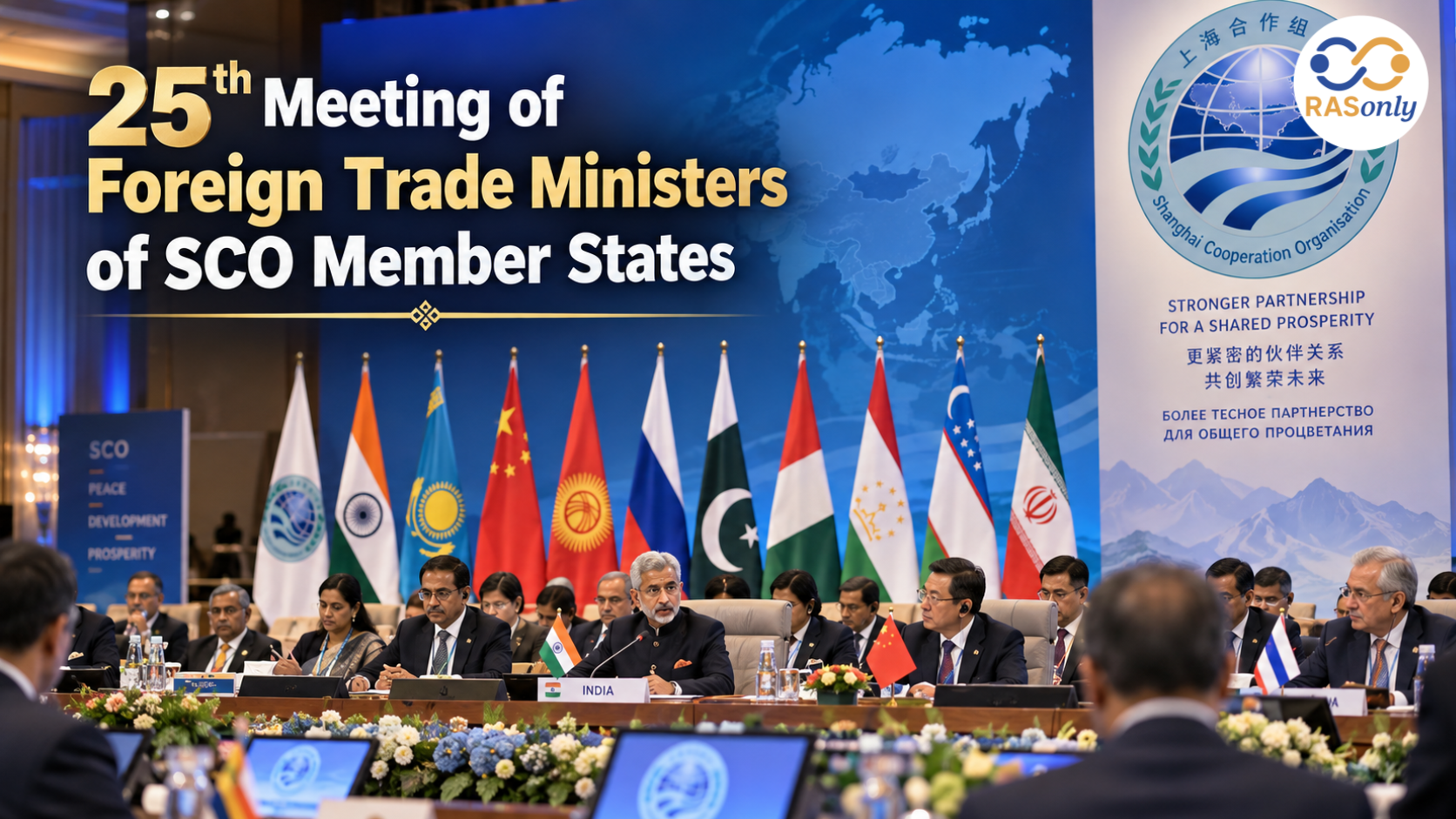
25th SCO Foreign Trade Ministers' Meeting
September 19, 2026