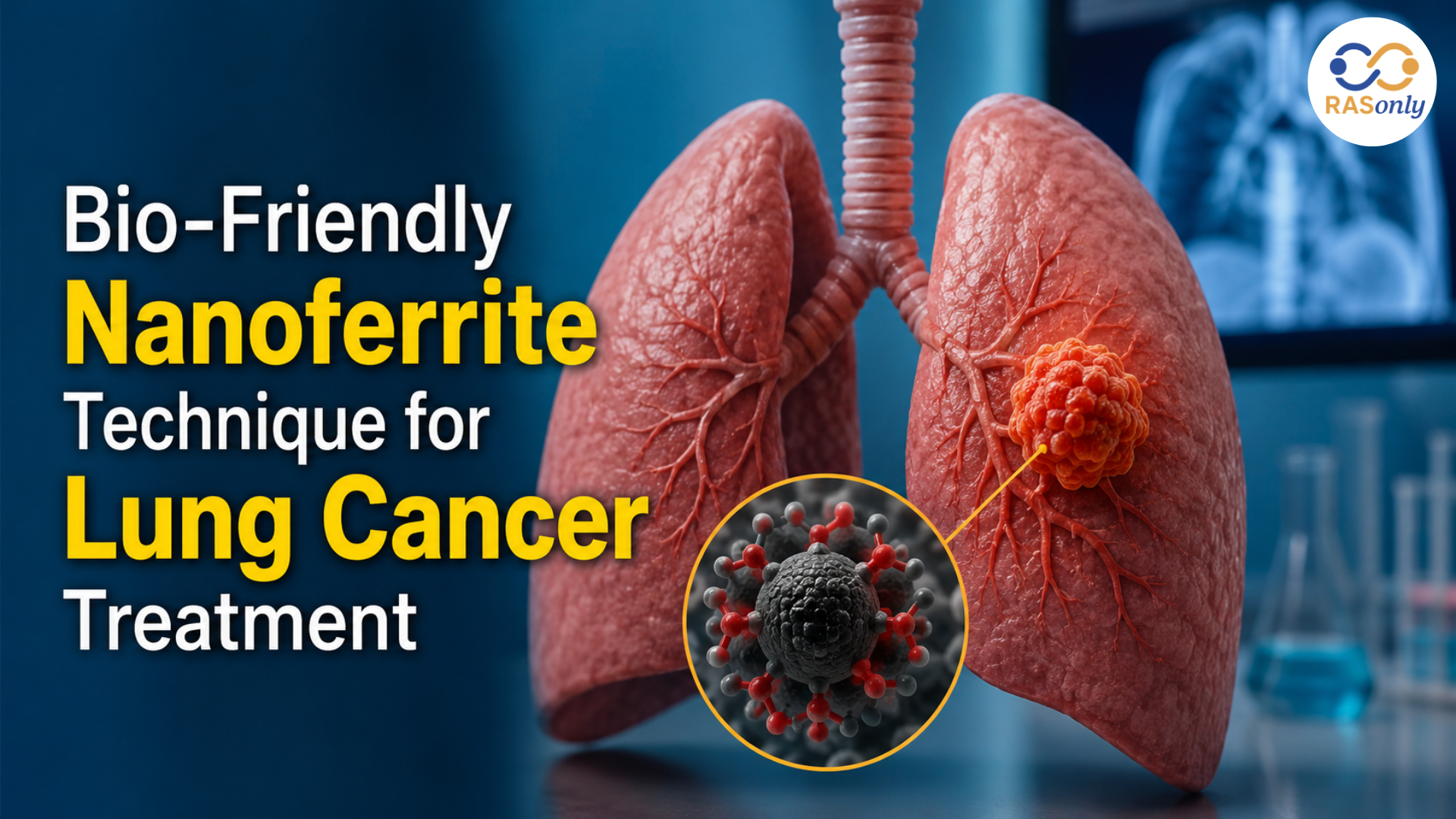
A new method to treat lung cancer, which is bio-friendly, has been developed by Indian scientists. The scientists from Mohanlal Sukhadia University, Udaipur, have been conducting the research in collaboration with RNT Medical College, IIT Guwahati and Bhabha Atomic Research Centre. It is a magnetic hyperthermia technique, which targets cancer-infested areas within the interior of the body by using bio-friendly nanoferrites. The study suggests that the cancer cells in the lungs can be killed without significant damage to healthy cells. The results of the research have been published in the International Journal of Alloys and Compounds. The research is currently working well at the laboratory cell level and could be further optimized for clinical trials with humans.
This new technique features three key aspects:
The study is conducted on the treatment of lung cancer.
- It employs the use of ‘nanoferrites' that are environmentally friendly and have a targeted approach to cancer drugs.
- The technique is used on magnetic hyperthermia.
- Researchers created very tiny magnetic particles, like those of zinc, magnesium, calcium and iron.
- These particles can be injected into the affected area of the cancer.
- A controlled heat is then generated using an external magnetic field.
- The regulated heat may be beneficial in killing cancer cells.
- The research has demonstrated its success at the laboratory cell level.
- The technique may prove to be useful for clinical trials with humans in the future if further improved.
- This study has been published in International Journal of Alloys and Compounds.
Objectives and Benefits
Objectives
To create a safer approach to the treatment of lung cancer.
- To minimize significant side effects in cancer treatment.
- To target only cancer affected cells or tumour areas.
- To prevent unnecessary damage to healthy cells in the body.
- To reduce the pain and cost of cancer treatment.
- To discover the application of nanotechnology in medicine.
- To develop the technique for future clinical studies.
Benefits
- The treatment may be less painful and more affordable.
- The technique has proven to kill almost 55% of the lung cancer cells.
- It was safe in the study without causing harmful effects in healthy kidney cells.
- Can enable treatment of the tumour.
- It can help to lessen the side effects of chemotherapy.
- It can contribute to the development of cancer treatment modalities which are more conducive to the environment.
- It enhances India's medical nanotechnology research capability.
Magnetic Hyperthermia-Based Technique
The new technique is a magnetic hyperthermia technique. In this technique, researchers create really small magnetic particles from chosen components, like zinc, magnesium, calcium and iron. These particles are injected into the part of the body where the cancer exists. Next, an external magnetic field is applied that produces controlled heat in the affected area. When the researcher performed this test, he discovered the temperature can rise to 41°C-45°C within 5-7 minutes. This temperature range is thought to be enough to kill cancer cells.
Future Scope of the Research
The research is still in its very early stages and has been successful in lab testing on cells. Scientists hope to refine the technique further in the future, making it available to be tested on humans. If the future trials are successful, this could be an important development in the struggle to provide a more economical, targeted and less painful treatment for lung cancer.
This topic is relevant to the exams:
- The topic is very significant for science & technology current affairs.
- It is related to health, biotechnology, nanotechnology and cancer treatment.
- It showcases the contribution of Indian research institutes to medical innovations.
- It may be questioned in the applications of nanotechnology in medicine.
- It is relevant for topics such as cancer therapy, magnetic hyperthermia, bio-friendly medical technology.
- It can be beneficial for RAS Prelims science and technology, health innovations and current research developments.
Conclusion
This is an important scientific advancement in India as it is a method based on nanoferrite to treat lung cancer in a bio-friendly manner. It works by magnetic hyperthermia, which is a method of destroying cancerous cells with controlled heat generated, while minimizing the damage to healthy cells. The study is still in a lab environment, but promises a more effective and affordable cancer treatment in the future with reduced pain.
MCQs
MCQ 1: What is the primary scientific method that the bio-friendly approach to lung cancer treatment is largely dependent on in the research?
A. Gene editing
B. Stem cell therapy
C. Magnetic hyperthermia
D. Radiation imaging
Answer: C
Explanation: Magnetic hyperthermia is the new bio-friendly technique of treatment of lung cancer. In this method, magnetic particles are sent to the cancer-affected area and an external magnetic field is used to generate controlled heat. This heat can be effective in killing cancerous cells without harming healthy cells.
MCQ 2: Based on the research, what was the range of temperature attainable within 5 to 7 minutes according to the technique?
A. 30°C to 35°C
B. 41°C to 45°C
C. 50°C to 55°C
D. 60°C to 65°C
Answer: B
Explanation : The research revealed that this technique could attain the temperature of 41°C to 45°C in 5-7 minutes. This is a controlled heat range that is believed to be adequate to kill the cancerous area. The technique is related to targeted cancer therapy with magnetic hyperthermia.
MCQ 3: What is one of the expected advantages of the lung cancer treatment technique, which uses the bio-friendly nanoferrite?
A. It takes the place of all the current cancer therapies at once.
B. It is already approved for human use, on a large scale basis.
C. It eliminates the need for any clinical trials.
D. May minimise side effects as it only treats the tumour region.
Answer: D
The significance of this technique may be that it could only affect the tumour region and so could minimize side effects caused by other therapies, like chemotherapy. The research is still at the laboratory level and needs further improvement before going for human clinical trials.
फेफड़ों के कर्क रोग के उपचार के लिए जैव अनुकूल नैनोफेराइट तकनीक
भारतीय वैज्ञानिकों ने फेफड़ों के कर्क रोग के उपचार के लिए एक नई जैव अनुकूल तकनीक विकसित की है। यह शोध मोहनलाल सुखाड़िया विश्वविद्यालय, उदयपुर के वैज्ञानिकों द्वारा आरएनटी चिकित्सकीय महाविद्यालय, भारतीय प्रौद्योगिकी संस्थान गुवाहाटी और भाभा परमाणु अनुसंधान केंद्र के सहयोग से किया गया है। यह तकनीक चुंबकीय अतितापन पर आधारित है और शरीर के भीतर कर्क रोग प्रभावित क्षेत्रों को निशाना बनाने के लिए जैव अनुकूल नैनोफेराइट का उपयोग करती है। अध्ययन से संकेत मिलता है कि स्वस्थ कोशिकाओं को गंभीर क्षति पहुंचाए बिना फेफड़ों के कर्क रोग की कोशिकाओं को नष्ट किया जा सकता है। यह शोध मिश्रधातु और यौगिकों से संबंधित अंतरराष्ट्रीय शोध पत्रिका में प्रकाशित हुआ है। वर्तमान में यह शोध प्रयोगशाला स्तर पर कोशिकाओं पर सफल रहा है और भविष्य में मानव नैदानिक परीक्षणों के लिए इसे और बेहतर बनाया जा सकता है।
नई तकनीक की प्रमुख विशेषताएं
• यह शोध फेफड़ों के कर्क रोग के उपचार पर केंद्रित है।
• इसमें लक्षित कर्क रोग उपचार के लिए जैव अनुकूल नैनोफेराइट का उपयोग किया गया है।
• यह तकनीक चुंबकीय अतितापन पर आधारित है।
• शोधकर्ताओं ने जस्ता, मैग्नीशियम, कैल्शियम और लौह जैसे तत्वों से अत्यंत सूक्ष्म चुंबकीय कण तैयार किए।
• इन कणों को कर्क रोग प्रभावित क्षेत्र तक पहुंचाया जा सकता है।
• इसके बाद बाहरी चुंबकीय क्षेत्र के माध्यम से नियंत्रित ऊष्मा उत्पन्न की जाती है।
• नियंत्रित ऊष्मा कर्क रोग कोशिकाओं को नष्ट करने में सहायक हो सकती है।
• शोध ने प्रयोगशाला स्तर पर कोशिकाओं पर सफलता दिखाई है।
• आगे सुधार के बाद यह तकनीक भविष्य में मानव नैदानिक परीक्षणों के लिए उपयोगी हो सकती है।
• यह अध्ययन मिश्रधातु और यौगिकों से संबंधित अंतरराष्ट्रीय शोध पत्रिका में प्रकाशित हुआ है।
उद्देश्य और लाभ
उद्देश्य
• फेफड़ों के कर्क रोग के उपचार के लिए अधिक सुरक्षित विधि विकसित करना।
• कर्क रोग उपचार के दौरान गंभीर दुष्प्रभावों को कम करना।
• केवल कर्क रोग प्रभावित कोशिकाओं या अर्बुद क्षेत्रों को निशाना बनाना।
• शरीर की स्वस्थ कोशिकाओं को अनावश्यक क्षति से बचाना।
• कर्क रोग उपचार को कम पीड़ादायक और अधिक किफायती बनाना।
• चिकित्सा में नैनो प्रौद्योगिकी के उपयोग की संभावनाओं को बढ़ाना।
• तकनीक को भविष्य के नैदानिक अध्ययनों के लिए विकसित करना।
लाभ
• उपचार कम पीड़ादायक और अधिक किफायती हो सकता है।
• इस तकनीक ने फेफड़ों के कर्क रोग की लगभग 55% कोशिकाओं को नष्ट करने में सफलता दिखाई है।
• अध्ययन में स्वस्थ गुर्दे की कोशिकाओं पर हानिकारक प्रभाव नहीं दिखा।
• यह अर्बुद केंद्रित उपचार को संभव बना सकती है।
• यह रासायनिक उपचार से जुड़े दुष्प्रभावों को कम करने में सहायक हो सकती है।
• यह अधिक जैव अनुकूल कर्क रोग उपचार पद्धतियों के विकास में योगदान दे सकती है।
• यह भारत की चिकित्सकीय नैनो प्रौद्योगिकी अनुसंधान क्षमता को मजबूत करती है।
चुंबकीय अतितापन आधारित तकनीक
नई तकनीक चुंबकीय अतितापन पर आधारित है। इस विधि में शोधकर्ता जस्ता, मैग्नीशियम, कैल्शियम और लौह जैसे चुने हुए तत्वों से अत्यंत सूक्ष्म चुंबकीय कण तैयार करते हैं। इन कणों को शरीर के उस भाग में पहुंचाया जाता है, जहां कर्क रोग मौजूद होता है। इसके बाद बाहरी चुंबकीय क्षेत्र लगाया जाता है, जिससे प्रभावित क्षेत्र में नियंत्रित ऊष्मा उत्पन्न होती है। परीक्षण में पाया गया कि 5 से 7 मिनट के भीतर तापमान 41°C से 45°C तक पहुंच सकता है। यह तापमान सीमा कर्क रोग कोशिकाओं को नष्ट करने के लिए पर्याप्त मानी जाती है।
शोध की भविष्य की संभावनाएं
यह शोध अभी प्रारंभिक चरण में है और प्रयोगशाला स्तर पर कोशिकाओं पर सफल रहा है। वैज्ञानिक भविष्य में इस तकनीक को और परिष्कृत करना चाहते हैं, ताकि इसे मानव परीक्षणों के लिए तैयार किया जा सके। यदि भविष्य के परीक्षण सफल रहते हैं, तो यह फेफड़ों के कर्क रोग के अधिक किफायती, लक्षित और कम पीड़ादायक उपचार की दिशा में महत्वपूर्ण विकास हो सकता है।
परीक्षा के लिए महत्व
• यह विषय विज्ञान और प्रौद्योगिकी समसामयिकी के लिए महत्वपूर्ण है।
• यह स्वास्थ्य, जैव प्रौद्योगिकी, नैनो प्रौद्योगिकी और कर्क रोग उपचार से संबंधित है।
• यह चिकित्सकीय नवाचारों में भारतीय अनुसंधान संस्थानों के योगदान को दर्शाता है।
• इसे चिकित्सा में नैनो प्रौद्योगिकी के अनुप्रयोगों के अंतर्गत पूछा जा सकता है।
• यह कर्क रोग उपचार, चुंबकीय अतितापन और जैव अनुकूल चिकित्सकीय तकनीक जैसे विषयों से संबंधित है।
• यह राजस्थान प्रशासनिक सेवा प्रारंभिक परीक्षा में विज्ञान और प्रौद्योगिकी, स्वास्थ्य नवाचारों और वर्तमान अनुसंधान विकास के लिए उपयोगी हो सकता है।
निष्कर्ष
फेफड़ों के कर्क रोग के उपचार के लिए जैव अनुकूल नैनोफेराइट आधारित विधि भारत में एक महत्वपूर्ण वैज्ञानिक प्रगति है। यह चुंबकीय अतितापन के माध्यम से नियंत्रित ऊष्मा उत्पन्न कर कर्क रोग कोशिकाओं को नष्ट करने का प्रयास करती है, जबकि स्वस्थ कोशिकाओं को होने वाली क्षति को कम करती है। शोध अभी प्रयोगशाला स्तर पर है, लेकिन भविष्य में यह अधिक प्रभावी, किफायती और कम पीड़ादायक कर्क रोग उपचार की दिशा में आशाजनक हो सकता है।
बहुविकल्पीय प्रश्न
प्रश्न 1
प्रश्न: शोध में वर्णित फेफड़ों के कर्क रोग उपचार की जैव अनुकूल विधि मुख्य रूप से किस वैज्ञानिक तकनीक पर आधारित है?
A. जीन संपादन
B. मूल कोशिका उपचार
C. चुंबकीय अतितापन
D. विकिरण चित्रण
उत्तर: C
व्याख्या: फेफड़ों के कर्क रोग के उपचार की नई जैव अनुकूल तकनीक चुंबकीय अतितापन पर आधारित है। इस विधि में चुंबकीय कणों को कर्क रोग प्रभावित क्षेत्र तक पहुंचाया जाता है और बाहरी चुंबकीय क्षेत्र से नियंत्रित ऊष्मा उत्पन्न की जाती है। यह ऊष्मा स्वस्थ कोशिकाओं को कम नुकसान पहुंचाते हुए कर्क रोग कोशिकाओं को नष्ट करने में सहायक हो सकती है।
प्रश्न 2
प्रश्न: शोध के अनुसार इस तकनीक से 5 से 7 मिनट के भीतर तापमान किस सीमा तक पहुंच सकता है?
A. 30°C से 35°C
B. 41°C से 45°C
C. 50°C से 55°C
D. 60°C से 65°C
उत्तर: B
व्याख्या: शोध से पता चला कि यह तकनीक 5 से 7 मिनट के भीतर तापमान को 41°C से 45°C तक पहुंचा सकती है। नियंत्रित ऊष्मा की यह सीमा कर्क रोग प्रभावित क्षेत्र की कोशिकाओं को नष्ट करने के लिए पर्याप्त मानी जाती है। यह तकनीक चुंबकीय अतितापन आधारित लक्षित कर्क रोग उपचार से संबंधित है।
प्रश्न 3
प्रश्न: जैव अनुकूल नैनोफेराइट आधारित फेफड़ों के कर्क रोग उपचार तकनीक का एक संभावित लाभ क्या है?
A. यह सभी वर्तमान कर्क रोग उपचारों का तुरंत स्थान लेती है।
B. इसे बड़े पैमाने पर मानव उपयोग के लिए पहले ही स्वीकृति मिल चुकी है।
C. यह किसी भी नैदानिक परीक्षण की आवश्यकता समाप्त कर देती है।
D. यह केवल अर्बुद क्षेत्र को निशाना बनाकर दुष्प्रभावों को कम कर सकती है।
उत्तर: D
व्याख्या: इस तकनीक का एक महत्वपूर्ण संभावित लाभ यह है कि यह केवल अर्बुद क्षेत्र को प्रभावित कर सकती है, जिससे रासायनिक उपचार जैसे उपचारों से होने वाले दुष्प्रभाव कम हो सकते हैं। यह शोध अभी प्रयोगशाला स्तर पर है और मानव नैदानिक परीक्षणों से पहले इसमें और सुधार की आवश्यकता है