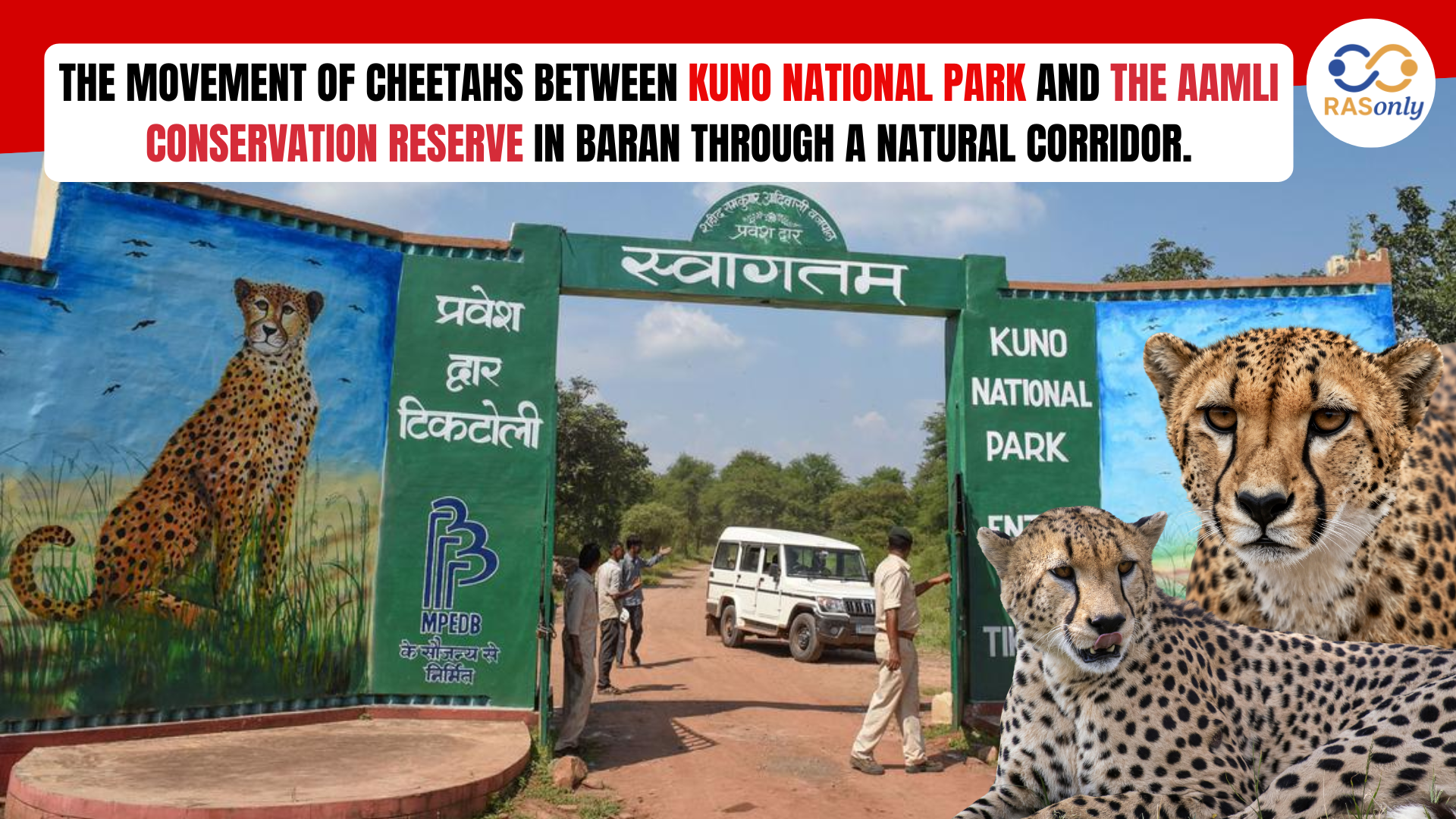
Cheetah KP-2 has relocated out of Kuno National Park (Madhya Pradesh), into Rajasthan, and into the Aamli Conservation Reserve in Baran district, via a natural passage. The cheetah was observed at around 11.00 AM on Saturday in the reserve, which is said to be approximately 70km away in Kuno. KP-2 is being monitored by teams of the local forest department and Kuno National Park teams. The movement emphasizes on the continued wildlife movement between Kuno and the adjacent conservation areas in Baran.
Key Facts from the Sighting
- Site of observation: The Aamli Conservation Reserve in Baran district, (Rajasthan)
- Name of animal: Cheetah KP-2.
- Path: Natural route between Kuno National Park.
- Time of sight: Approx. 11: 00 AM on Saturday.
- The team in charge of monitoring: Kuno National Park team and the local forest department team.
Previous Movement Noted
- Another time, in November-December last year, cheetah KP-2 spent 17 days in the Ramgarh location.
- Then KP-2 was tranquilised by the Kuno team and returned to it.
Corridor Linkage Mentioned
- Kuno National Park is said to be next to Shahabad, Baran Aamli, and Ramgarh conservation reserves of Baran.
- This connectivity has led to the fact that, even now, wildlife moves using the natural corridor.
Objectives and Benefits
Objectives
- Continuous monitoring of KP-2 is necessary to monitor safety and movement.
- Safe Wildlife Passage Support Identified natural corridors with safe wildlife passage.
- Enhance coordination among the interstate park/reserve teams to respond in time.
Benefits
- Improved knowledge of the patterns of movement of wildlife in linked landscapes.
- Enhanced on-ground preparedness toward monitoring and control in conservation reserves.
- Strengthens the need of large carnivores to have
- and connectivity.
Conclusion
The view of KP-2 cheetah in Baran Aamli Conservation Reserve has shown that there is movement of wildlife actively through the natural corridor between Kuno National Park and surrounding conservation reserves. The presence of Kuno and local forest teams in constant observation, as well as the previous 17 day stay in Ramgarh, highlights the necessity of the coordinated management in the form of a corridor.
MCQs (English)
1. Cheetah KP-2 was seen in Rajasthan at:
a) Baran Shahabad Conservation Reserve.
b) Aamli Conservation Reserve (Baran).
c) Ramgarh Conservation Reserve (Baran)
d) Kuno National Park (Madhya Pradesh)
Answer: b
2. At what time on Saturday did you see KP-2?
a) 7:00 AM
b) 9:30 AM
c) 11:00 AM
d) 3:00 PM
Answer: c
3. In November-December, KP-2 remained in that region not less than 17 days after it was tranquilised?
a) Shahabad area
b) Aamli area
c) Ramgarh area
d) Kuno core area
Answer: c
प्राकृतिक कॉरिडोर के माध्यम से कूनो नेशनल पार्क और बारां के आमली कंजर्वेशन रिजर्व के बीच चीतों की आवाजाही
चीता केपी-2 कूनो नेशनल पार्क (मध्यप्रदेश) से निकलकर प्राकृतिक कॉरिडोर के माध्यम से राजस्थान में प्रवेश करते हुए बारां जिले के आमली कंजर्वेशन रिजर्व तक पहुंच गया। इस चीते को शनिवार को लगभग सुबह 11:00 बजे रिजर्व क्षेत्र में देखा गया। यह स्थान कूनो से लगभग 70 किलोमीटर दूर बताया गया है। केपी-2 की निगरानी कूनो नेशनल पार्क की टीम और स्थानीय वन विभाग की टीम द्वारा की जा रही है। यह घटना कूनो और बारां के निकटवर्ती संरक्षण क्षेत्रों के बीच वन्यजीवों की निरंतर आवाजाही को रेखांकित करती है।
दिखने से जुड़े प्रमुख तथ्य
- देखे जाने का स्थान: आमली कंजर्वेशन रिजर्व, बारां जिला (राजस्थान)
- वन्यजीव: चीता केपी-2
- मार्ग: कूनो नेशनल पार्क से प्राकृतिक कॉरिडोर
- देखे जाने का समय: शनिवार को लगभग 11:00 बजे
- निगरानी: कूनो नेशनल पार्क टीम एवं स्थानीय वन विभाग टीम
पूर्व की गतिविधि का उल्लेख
पिछले वर्ष नवंबर–दिसंबर में चीता केपी-2 रामगढ़ क्षेत्र में 17 दिनों तक रहा था।
इसके बाद कूनो टीम ने उसे ट्रैंकुलाइज करके वापस ले गई थी।
कॉरिडोर कनेक्टिविटी (जुड़ाव) का उल्लेख
- कूनो नेशनल पार्क के आसपास बारां के शाहाबाद, आमली और रामगढ़ कंजर्वेशन रिजर्व स्थित बताए गए हैं।
इस भौगोलिक जुड़ाव के कारण प्राकृतिक कॉरिडोर से वन्यजीवों की आवाजाही जारी रहती है।
उद्देश्य और लाभ
उद्देश्य
- केपी-2 की लगातार निगरानी करना ताकि उसकी सुरक्षा और गतिविधियों पर नजर रखी जा सके।
- चिन्हित प्राकृतिक कॉरिडोर के माध्यम से सुरक्षित वन्यजीव आवाजाही को समर्थन देना।
- अंतर-राज्य पार्क/रिजर्व टीमों के बीच समन्वय बढ़ाना, ताकि समय पर प्रतिक्रिया सुनिश्चित हो सके।
लाभ
- जुड़े हुए परिदृश्यों (लैंडस्केप) में वन्यजीवों की आवागमन प्रवृत्तियों को बेहतर समझ।
- कंजर्वेशन रिजर्व में निगरानी एवं प्रबंधन के लिए क्षेत्र-स्तरीय तैयारी में सुधार।
- बड़े मांसाहारी वन्यजीवों के लिए आवास-सम्पर्क (कनेक्टिविटी) की आवश्यकता को मजबूत आधार मिलता है।
निष्कर्ष
बारां के आमली कंजर्वेशन रिजर्व में चीता केपी-2 का दिखना यह दर्शाता है कि कूनो नेशनल पार्क और आसपास के संरक्षण क्षेत्रों के बीच प्राकृतिक कॉरिडोर के माध्यम से वन्यजीवों की सक्रिय आवाजाही हो रही है। कूनो तथा स्थानीय वन विभाग टीमों की निरंतर निगरानी और रामगढ़ में 17 दिनों के पूर्व प्रवास का उल्लेख यह स्पष्ट करता है कि कॉरिडोर-आधारित समन्वित प्रबंधन की आवश्यकता बनी हुई है।
MCQs (हिंदी)
1. चीता केपी-2 राजस्थान में किस स्थान पर देखा गया?
a) शाहाबाद कंजर्वेशन रिजर्व (बारां)
b) आमली कंजर्वेशन रिजर्व (बारां)
c) रामगढ़ कंजर्वेशन रिजर्व (बारां)
d) कूनो नेशनल पार्क (मध्यप्रदेश)
उत्तर: b
2. शनिवार को केपी-2 को लगभग किस समय देखा गया?
a) सुबह 7:00 बजे
b) सुबह 9:30 बजे
c) सुबह 11:00 बजे
d) दोपहर 3:00 बजे
उत्तर: c
3. नवंबर–दिसंबर में केपी-2 किस क्षेत्र में 17 दिनों तक रहा था, जिसके बाद उसे ट्रैंकुलाइज कर वापस ले जाया गया?
a) शाहाबाद क्षेत्र
b) आमली क्षेत्र
c) रामगढ़ क्षेत्र
d) कूनो कोर क्षेत्र
उत्तर: c