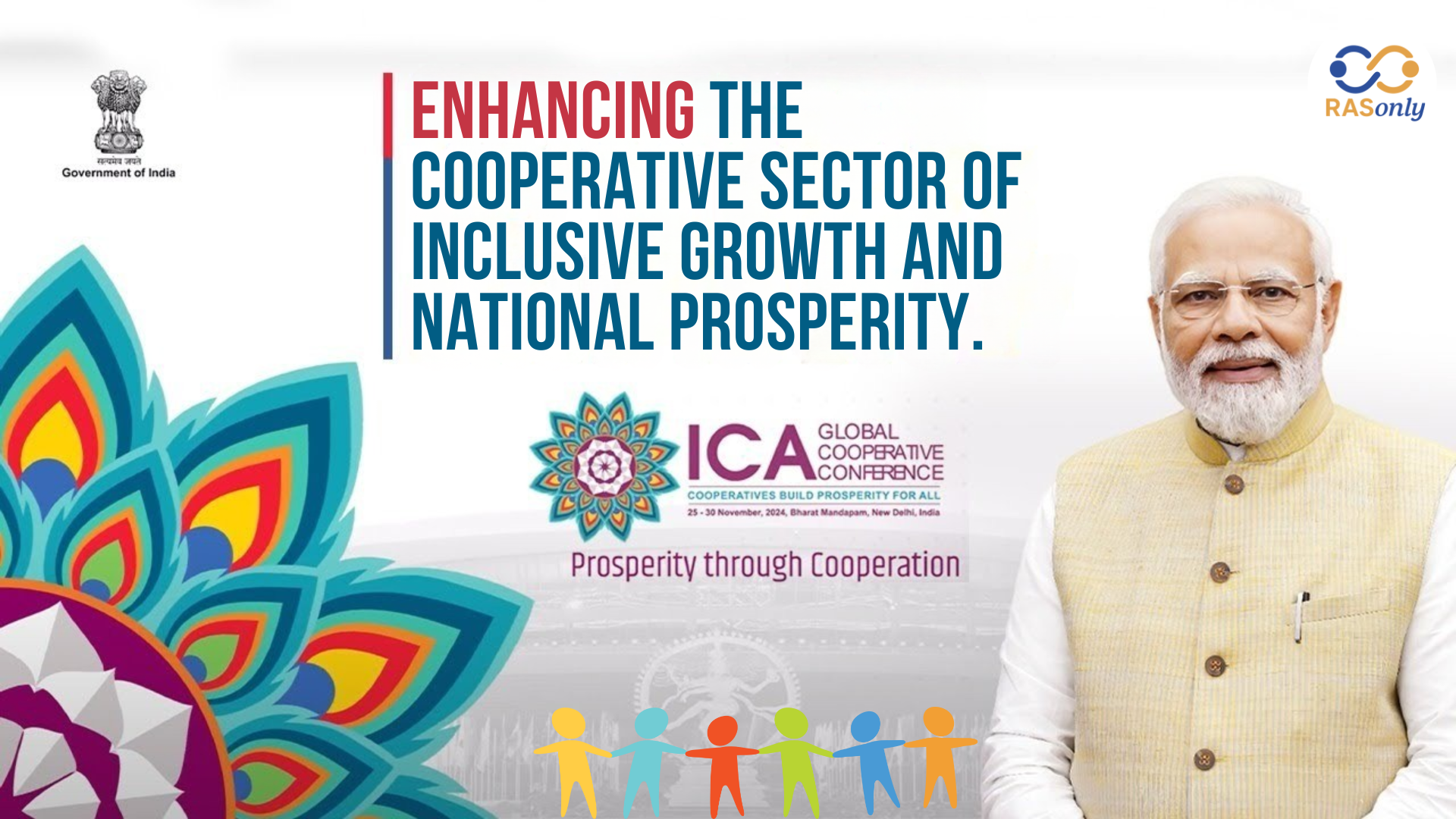
In Udaipur, Rajasthan the Ministry of Cooperation, Government of India conducted a two-day conference called Cooperation for Prosperity. The conference, which had the objective of enhancing the cooperative sector, saw top officials and stakeholders assembled to deliberate on the reforms, collaboration and plans on how to improve the contribution of the sector in the economic growth in India.
Main Characteristics of the Conference.
- Opening and Keynote: A. Kumar Bhutani Secretary of the Ministry of Cooperation opened the conference and was present with a number of state officials and registrars.
- Regulatory Reforms: The regulatory changes were discussed in order to simplify regulations and enhance the banking structures to achieve increased efficiency of the cooperative sector.
- Model of Success: Banaskantha district in Gujarat was chosen as one of the examples of effective cooperative work especially in the dairy and plantation spheres.
- Cooperative Banking Expansion: The conference discussed matters concerning cooperative banking such as RBI decision of allowing cooperative banks to open branches without permission.
Objectives and Benefits
Objectives
- Improve Co-ordination: Improve coordination between various institutions in order to optimize the potential of the sector.
- Streamline Regulations: streamline the current regulations and make them more accessible and effective.
- Empower States: Promote state adaptation of the policies of the country to their demands and make them local.
Benefit
- Inclusive Growth: Give cooperative organizations an opportunity to play a key role in the national economy.
- Increase Rural Economy: Raise income and livelihoods in the rural regions, particularly in rural sectors such as dairy and agriculture.
- Sustainable development: Provide a more cooperative attitude towards rural development and agriculture, which promotes the sustainability in the long run.
Conclusion
According to the Cooperation for Prosperity conference, the main strategies were established to ensure that the cooperative sector becomes a significant portion of the GDP of India by 2047. The cooperative sector will be central to the inclusive growth and prosperity of India as a result of encouraging coordination, banking reforms, and regulatory adjustments.
MCQs
MCQ 1:What was the major theme of the two-day conference held by the ministry of Cooperation?
a) Nurturing agricultural reforms.
b) reinforcing the cooperative sector by regulation and banking reforms.
c) Specialisation in developing tourism and hospitality.
d) Foreign investment in cooperatives.
Answer: b
Purpose: The main idea of the conference was to address the need to enhance the cooperative sector through streamlining regulations, enhancing banking reforms, and creating coordination among different institutions to unlock the potential of the sector.
MCQ 2:What state was identified as a successful example in terms of cooperative model at the conference?
a) Rajasthan
b) Uttar Pradesh
c) Gujarat
d) Bihar
Answer: c
Explanation: The district of banaskantha in Gujarat has been pointed out as a successful model of cooperation especially in the dairy and tree plantation sector although the area is a desert.
MCQ 3: What is the target of the ministry of cooperation with regards to the contribution of the cooperative sector to the GDP of India by 2047?
a) To decline the input of cooperatives.
b) To ensure that there is no decrease in contribution.
c) To make cooperatives three times more valuable.
d) To redirect cooperatives to the contributions of the private sector.
Answer: c
Rationale: The Ministry of Cooperation expects to increase the contribution of the cooperative sector to the Indian GDP three times to 2047 as a part of its long-term economic plan.
समावेशी विकास और राष्ट्रीय समृद्धि में सहकारी क्षेत्र को सुदृढ़ बनाना।
उदयपुर, राजस्थान में भारत सरकार के सहकारिता मंत्रालय ने "समृद्धि के लिए सहयोग" नामक दो दिवसीय सम्मेलन का आयोजन किया। इस सम्मेलन का उद्देश्य सहकारी क्षेत्र को मजबूत करना था, जिसमें शीर्ष अधिकारियों और हितधारकों ने बैठक कर क्षेत्र के योगदान को बढ़ाने के लिए सुधारों, सहयोग और योजनाओं पर चर्चा की, ताकि यह भारत की आर्थिक वृद्धि में एक अहम भूमिका निभा सके।
सम्मेलन की प्रमुख विशेषताएँ
- उद्घाटन और मुख्य भाषण: सहकारिता मंत्रालय के सचिव ए. कुमार भुतानी ने सम्मेलन का उद्घाटन किया और इसमें कई राज्य अधिकारियों और रजिस्ट्रारों ने भाग लिया।
- नियामक सुधार: सम्मेलन में यह चर्चा की गई कि नियमों को सरल बनाने और सहकारी क्षेत्र की बैंकिंग संरचनाओं को मजबूत करने के लिए क्या बदलाव किए जा सकते हैं, ताकि क्षेत्र की कार्यक्षमता बढ़ सके।
- सफलता का मॉडल: गुजरात के बनासकांठा जिले को सहकारी कार्य के प्रभावी उदाहरण के रूप में प्रस्तुत किया गया, खासकर डेयरी और वृक्षारोपण के क्षेत्रों में।
- सहकारी बैंकिंग का विस्तार: सम्मेलन में सहकारी बैंकिंग से संबंधित मुद्दों पर चर्चा की गई, जैसे कि भारतीय रिज़र्व बैंक (RBI) का यह निर्णय कि सहकारी बैंक बिना अनुमति के 10 शाखाएँ खोल सकते हैं।
उद्देश्य और लाभ
उद्देश्य
- सहयोग बढ़ाना: विभिन्न संस्थाओं के बीच बेहतर समन्वय स्थापित करना, ताकि क्षेत्र की पूरी क्षमता का अधिकतम उपयोग किया जा सके।
- नियमों का सरलीकरण: वर्तमान नियमों को सरलीकृत करना और उन्हें अधिक सुलभ और प्रभावी बनाना।
- राज्यों को सशक्त बनाना: राष्ट्रीय नीतियों को राज्यों की आवश्यकताओं के अनुसार अनुकूलित करना और उन्हें स्थानीय बनाना।
लाभ
- समावेशी वृद्धि: सहकारी संगठनों को राष्ट्रीय अर्थव्यवस्था में महत्वपूर्ण भूमिका निभाने का अवसर मिलेगा।
- ग्रामीण अर्थव्यवस्था का विकास: ग्रामीण क्षेत्रों में आय और आजीविका को बढ़ावा मिलेगा, विशेषकर डेयरी और कृषि क्षेत्रों में।
- सतत विकास: ग्रामीण विकास और कृषि में अधिक सहकारी दृष्टिकोण अपनाया जाएगा, जो दीर्घकालिक रूप से सततता को बढ़ावा देगा।
निष्कर्ष
"समृद्धि के लिए सहयोग" सम्मेलन में सहकारी क्षेत्र को भारत के सकल घरेलू उत्पाद (GDP) में 2047 तक महत्वपूर्ण योगदान सुनिश्चित करने के लिए मुख्य रणनीतियाँ स्थापित की गईं। सहकारी क्षेत्र समन्वय, बैंकिंग सुधार और नियामक समायोजन के माध्यम से भारत की समावेशी वृद्धि और समृद्धि के लिए केंद्रीय भूमिका निभाएगा।
MCQ 1:
सहकारिता मंत्रालय द्वारा आयोजित दो दिवसीय सम्मेलन का मुख्य विषय क्या था?
a) कृषि सुधारों को बढ़ावा देना।
b) नियमन और बैंकिंग सुधारों के माध्यम से सहकारी क्षेत्र को सुदृढ़ करना।
c) पर्यटन और आतिथ्य विकास में विशेषज्ञता।
d) सहकारिता में विदेशी निवेश।
उत्तर: b
व्याख्या: सम्मेलन का मुख्य उद्देश्य सहकारी क्षेत्र को सुदृढ़ करना था, इसके लिए नियमों को सरल बनाने, बैंकिंग सुधारों को बढ़ावा देने और विभिन्न संस्थाओं के बीच समन्वय स्थापित करने पर चर्चा की गई ताकि इस क्षेत्र की पूरी क्षमता का उपयोग किया जा सके।
MCQ 2:
सम्मेलन में सहकारी मॉडल के रूप में किस राज्य को सफल उदाहरण के रूप में प्रस्तुत किया गया था?
a) राजस्थान
b) उत्तर प्रदेश
c) गुजरात
d) बिहार
उत्तर: c
व्याख्या: गुजरात के बनासकांठा जिले को सहकारी कार्य के एक सफल मॉडल के रूप में प्रस्तुत किया गया, खासकर डेयरी और वृक्षारोपण क्षेत्रों में, भले ही यह क्षेत्र रेगिस्तान है।
MCQ 3:
सहकारिता मंत्रालय का लक्ष्य 2047 तक भारतीय जीडीपी में सहकारी क्षेत्र के योगदान के संबंध में क्या है?
a) सहकारिता का योगदान घटाना।
b) यह सुनिश्चित करना कि योगदान में कोई कमी न हो।
c) सहकारिता को तीन गुना अधिक मूल्यवान बनाना।
d) सहकारिता को निजी क्षेत्र के योगदान की दिशा में मोड़ना।
उत्तर: c
व्याख्या: सहकारिता मंत्रालय का लक्ष्य 2047 तक सहकारी क्षेत्र के योगदान को भारतीय जीडीपी में तीन गुना बढ़ाना है, जो इसके दीर्घकालिक आर्थिक योजना का हिस्सा है