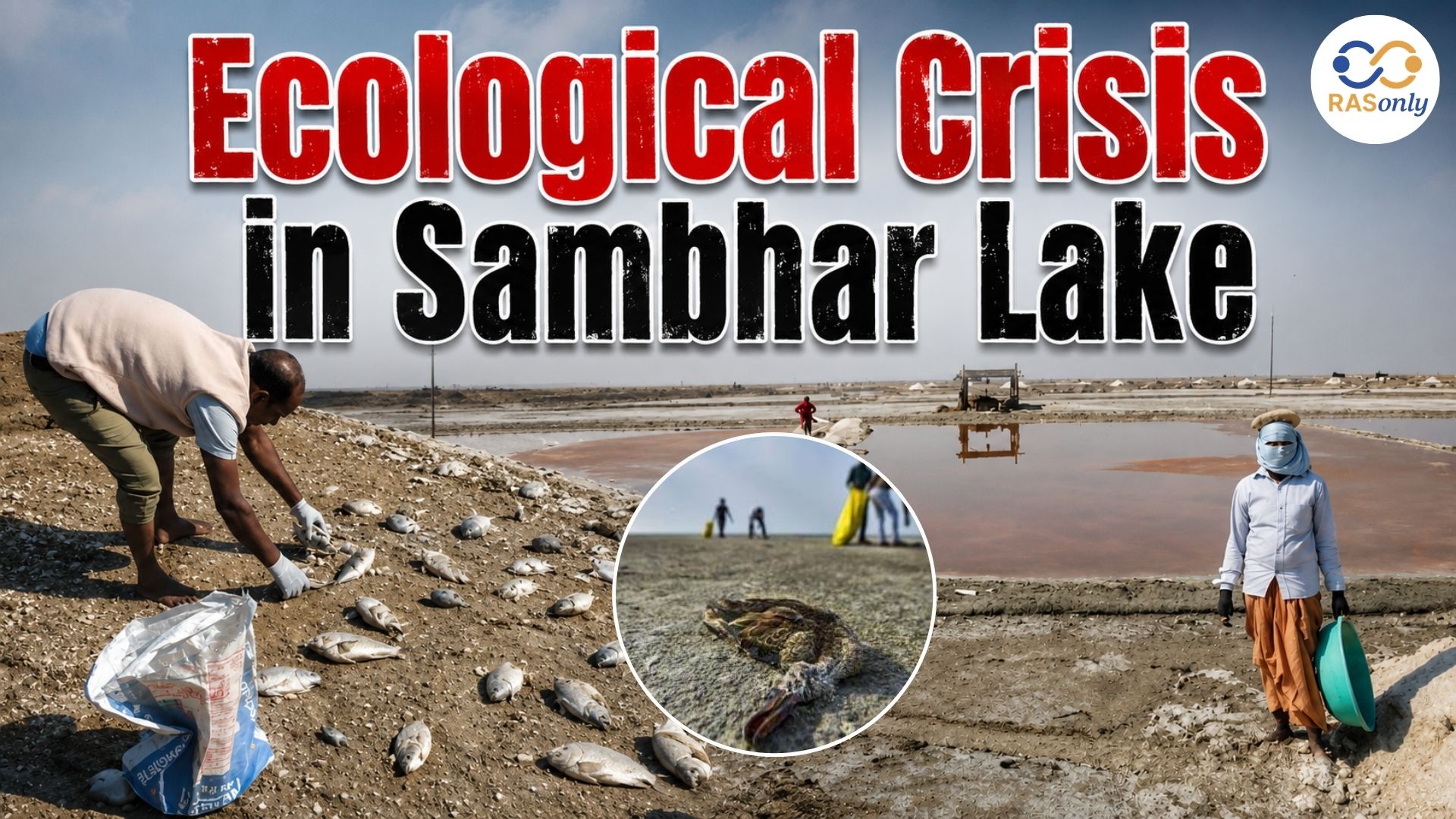
Sambhar Lake, India’s largest inland saltwater lake, is facing a serious ecological crisis due to illegal salt mining, excessive groundwater extraction, declining water levels, pollution, and irregular rainfall. In recent years, the threats to biodiversity, groundwater quality, and the health of local communities have come to the fore.
Key Findings of the Study
- Research conducted by the Chemistry Department of Shri B.R. Mirdha Government College, Nagaur, revealed increasing groundwater contamination in the Sambhar region.
- The dissolution of fluoride-containing minerals in granite and sedimentary rocks has led to high fluoride levels.
- Over-extraction of saline groundwater for salt production has upset the natural balance of groundwater.
- Salinity and sodicity have been impacting agricultural productivity and soil quality.
Impact on Ecology and Biodiversity
- The natural water area of Sambhar Lake is continuously shrinking due to human activities and reduced water inflow.
- There are growing artificial salt pans which are impacting the natural ecosystem of the lake.
- HABs are a serious environmental issue.
- In 2022, about 43% of the lake's natural water area was impacted by algal blooms, which lowered oxygen levels and disrupted the aquatic food chain.
- Ecological imbalance is threatening migratory birds, such as flamingos.
Major Environmental Concerns
- Diminishing groundwater levels surrounding the lake.
- Contamination of groundwater with fluoride.
- Loss of biodiversity and habitat degradation.
- Interruption of the natural flow of water.
- Rising pressure due to uncontrolled salt mining.
Recommended Solutions
Experts have suggested:
- Groundwater management approaches that are sustainable.
- Harvesting and storing surface water resources for rain.
- Water purification systems in the community.
- Advanced technologies such as use of microbial defluoridation and water treatment using nanotechnology.
- Control of salt mining operations to preserve the ecosystem.
Importance of Sambhar Lake
Sambhar Lake is an important wetland ecosystem of Rajasthan and is a significant salt-producing region of India. It provides habitat for migrating birds and helps maintain ecosystem balance, while also playing a significant role in the local economy. The lake needs to be conserved to protect biodiversity and support sustainable development.
Conclusion
The ecological crisis of Sambhar Lake highlights the need for a balance between economic activities and environmental conservation. To ensure the conservation of this valuable wetland system for future generations, it is required that salt mining, the groundwater system and scientific conservation practices are properly regulated.
MCQs
Q1. Sambhar Lake is located in which Indian state?
A) Gujarat
B) Rajasthan
C) Haryana
D) Madhya Pradesh
Answer: B) Rajasthan
Q2. Sambhar Lake is India’s largest:
A) Freshwater lake
B) Artificial lake
C) Inland saltwater lake
D) Mountain lake
Answer: C) Inland saltwater lake
Q3. Which mineral contamination has increased in groundwater around the Sambhar region?
A) Iron
B) Fluoride
C) Zinc
D) Copper
Answer: B) Fluoride
Q4. What percentage of Sambhar Lake’s natural water area was affected by algal bloom in 2022?
A) 25%
B) 35%
C) 43%
D) 60%
Answer: C) 43%
सांभर झील में पारिस्थितिक संकट
भारत की सबसे बड़ी अंतर्देशीय खारे पानी की झील सांभर झील गंभीर पारिस्थितिक संकट का सामना कर रही है। अवैध नमक खनन, अत्यधिक भूजल दोहन, घटता जल स्तर, प्रदूषण और अनियमित वर्षा के कारण झील का प्राकृतिक संतुलन प्रभावित हो रहा है। हाल के वर्षों में जैव विविधता, भूजल गुणवत्ता और स्थानीय समुदायों के स्वास्थ्य पर बढ़ते खतरे सामने आए हैं।
अध्ययन के प्रमुख निष्कर्ष
- नागौर स्थित श्री बी.आर. मिर्धा राजकीय महाविद्यालय के रसायन विज्ञान विभाग द्वारा किए गए शोध में सांभर क्षेत्र के भूजल प्रदूषण की गंभीर स्थिति सामने आई है।
- ग्रेनाइट और तलछटी चट्टानों में मौजूद फ्लोराइड युक्त खनिजों के घुलने से भूजल में फ्लोराइड की मात्रा बढ़ रही है।
- नमक उत्पादन के लिए खारे भूजल के अत्यधिक दोहन से प्राकृतिक भूजल संतुलन बिगड़ रहा है।
- बढ़ती लवणता (Salinity) और सोडिसिटी (Sodicity) के कारण कृषि उत्पादन और मिट्टी की गुणवत्ता प्रभावित हो रही है।
पारिस्थितिकी और जैव विविधता पर प्रभाव
- मानव गतिविधियों और जल प्रवाह में कमी के कारण सांभर झील का प्राकृतिक जल क्षेत्र लगातार सिकुड़ रहा है।
- झील क्षेत्र में कृत्रिम नमक पैन की संख्या बढ़ रही है, जिससे प्राकृतिक पारिस्थितिकी तंत्र प्रभावित हो रहा है।
- हानिकारक शैवाल प्रस्फुटन (Harmful Algal Blooms - HABs) एक गंभीर पर्यावरणीय समस्या बन गया है।
- वर्ष 2022 में झील के प्राकृतिक जल क्षेत्र का लगभग 43% हिस्सा शैवाल प्रस्फुटन से प्रभावित हुआ, जिससे पानी में ऑक्सीजन की मात्रा कम हुई और जलीय खाद्य शृंखला बाधित हुई।
- पारिस्थितिक असंतुलन के कारण फ्लेमिंगो जैसे प्रवासी पक्षियों पर खतरा बढ़ रहा है।
प्रमुख पर्यावरणीय चिंताएं
- झील के आसपास भूजल स्तर में लगातार गिरावट।
- भूजल में फ्लोराइड प्रदूषण की वृद्धि।
- जैव विविधता का नुकसान और आवास क्षरण।
- प्राकृतिक जल प्रवाह में बाधा।
- अनियंत्रित नमक खनन का बढ़ता दबाव।
सुझाए गए समाधान
विशेषज्ञों ने निम्न उपायों की सिफारिश की है:
- सतत भूजल प्रबंधन प्रणाली अपनाना।
- वर्षा जल संचयन और सतही जल स्रोतों का संरक्षण।
- सामुदायिक स्तर पर जल शोधन प्रणाली विकसित करना।
- माइक्रोबियल डी-फ्लोरिडेशन और नैनो टेक्नोलॉजी आधारित जल उपचार जैसी आधुनिक तकनीकों का उपयोग।
- झील के पारिस्थितिकी तंत्र की रक्षा के लिए नमक खनन गतिविधियों को नियंत्रित करना।
सांभर झील का महत्व
सांभर झील राजस्थान का एक महत्वपूर्ण आर्द्रभूमि (Wetland) पारिस्थितिकी तंत्र है और भारत के प्रमुख नमक उत्पादक क्षेत्रों में शामिल है। यह प्रवासी पक्षियों को आवास प्रदान करती है तथा क्षेत्रीय पारिस्थितिक संतुलन बनाए रखने में महत्वपूर्ण भूमिका निभाती है। जैव विविधता संरक्षण और सतत विकास के लिए झील का संरक्षण आवश्यक है।
निष्कर्ष
सांभर झील का पारिस्थितिक संकट आर्थिक गतिविधियों और पर्यावरण संरक्षण के बीच संतुलन की आवश्यकता को दर्शाता है। आने वाली पीढ़ियों के लिए इस महत्वपूर्ण आर्द्रभूमि को सुरक्षित रखने हेतु नमक खनन, भूजल प्रबंधन और वैज्ञानिक संरक्षण उपायों को प्रभावी रूप से लागू करना आवश्यक है।
MCQs
Q1. सांभर झील किस भारतीय राज्य में स्थित है?
A) गुजरात
B) राजस्थान
C) हरियाणा
D) मध्य प्रदेश
उत्तर: B) राजस्थान
Q2. सांभर झील भारत की सबसे बड़ी कौन-सी झील है?
A) मीठे पानी की झील
B) कृत्रिम झील
C) अंतर्देशीय खारे पानी की झील
D) पर्वतीय झील
उत्तर: C) अंतर्देशीय खारे पानी की झील
Q3. सांभर क्षेत्र के भूजल में किस खनिज प्रदूषण की मात्रा बढ़ी है?
A) लोहा
B) फ्लोराइड
C) जिंक
D) तांबा
उत्तर: B) फ्लोराइड
Q4. वर्ष 2022 में सांभर झील के प्राकृतिक जल क्षेत्र का कितना प्रतिशत हिस्सा शैवाल प्रस्फुटन से प्रभावित हुआ था?
A) 25%
B) 35%
C) 43%
D) 60%
उत्तर: C) 43%
