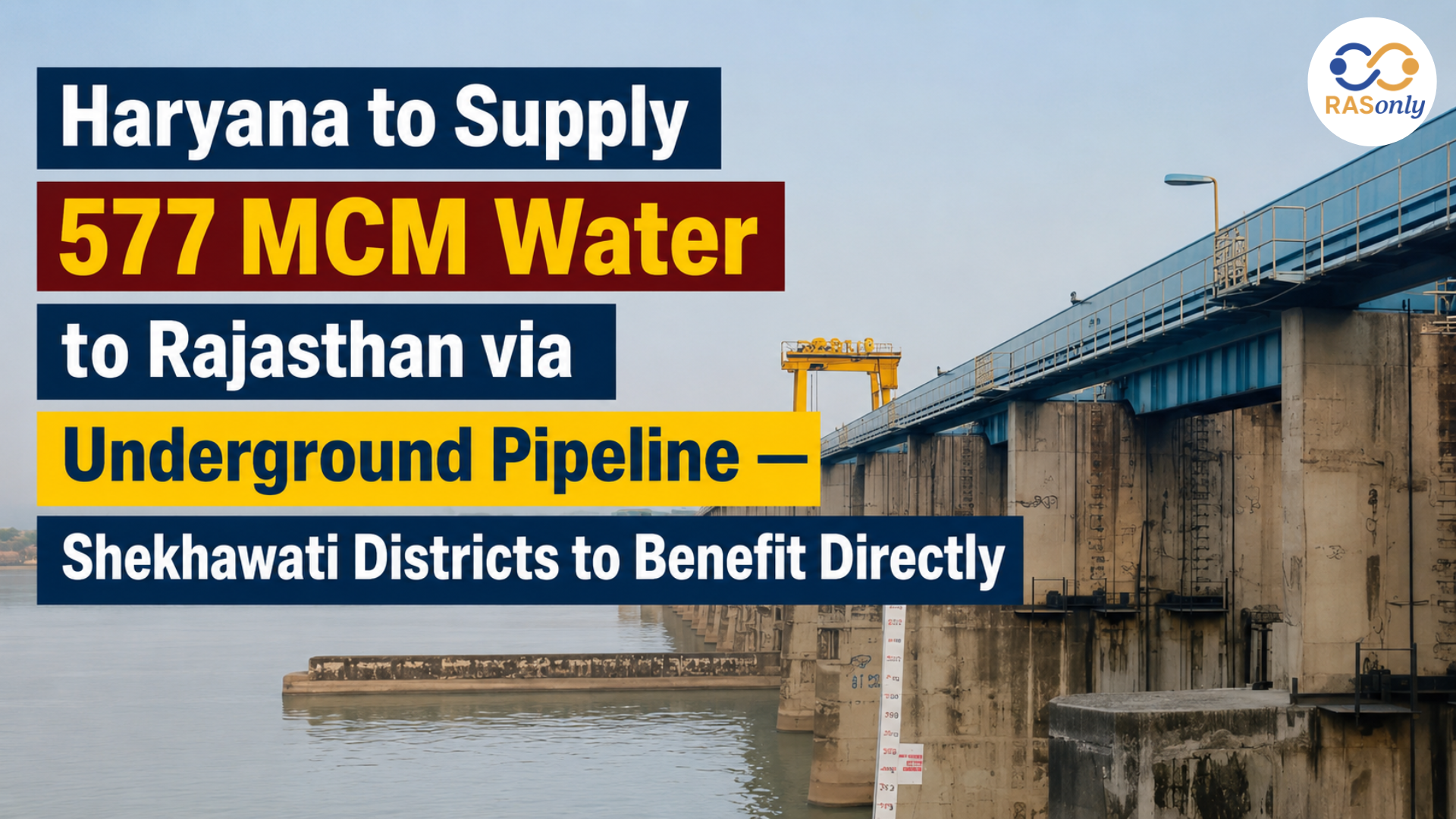
A major step forward has been taken under the Yamuna Water Agreement between Rajasthan and Haryana. Water is to be supplied to the desert districts of the Shekhawati region — Churu, Sikar, and Jhunjhunu — through an underground pipeline from the Hathnikund Barrage. A high-level meeting was held in New Delhi between Union Jal Shakti Minister C. R. Patil, Rajasthan Chief Minister Bhajanlal Sharma, and Haryana Chief Minister Nayab Singh Saini, where implementation timelines and guidelines for the pipeline project were finalised, giving fresh momentum to this long-awaited initiative.
Highlights of the Yamuna Water Pipeline Project
- A joint DPR (Detailed Project Report) has been prepared and shared with the Haryana government for laying the underground pipeline under the Yamuna Water Agreement.
- Haryana has provided information on most tapping points for supplying drinking water to certain areas.
- The DPR will soon be uploaded on the Central Water Commission's (CWC) online portal for review and approval.
- Ground-level construction will begin immediately after CWC approval.
- The project will supply 577 MCM (Million Cubic Metres) of water for drinking and other needs.
- Water from Hathnikund Barrage will be supplied from July to October through underground pipelines to Churu, Sikar, Jhunjhunu and other Shekhawati districts.
- After the completion of Renuka, Lakhwar, and Kishau storage projects in the Upper Yamuna Basin, Rajasthan will receive water through the same pipeline system throughout the year.
- At the same meeting, consensus was also reached on accelerating the Regional Rapid Transit System (RRTS) project to connect Rajasthan to Delhi via Haryana.
Background: The MoU and Agreement
An MoU was signed between Rajasthan and Haryana on 17 February 2024, under which the allocated Yamuna water from Hathnikund Barrage will be channelled through an underground pipeline to the Shekhawati region. This agreement was the foundation of the current project, and the high-level meeting in New Delhi has now given the implementation process a clear direction and timeline.
Major Benefits for the Region
The Shekhawati region — comprising Churu, Sikar, and Jhunjhunu — has long faced an acute drinking water crisis. This project offers a permanent, infrastructure-backed solution:
- 577 MCM of water will be made available for drinking and related needs.
- Direct benefit to the desert districts that depend heavily on groundwater and seasonal sources.
- Once the Upper Yamuna storage dams (Renuka, Lakhwar, Kishau) are complete, year-round water supply will be possible through the same pipeline system.
- The RRTS connectivity will further boost regional development, linking Rajasthan directly to Delhi via Haryana.
Governance and Implementation
- The joint DPR has been finalised and shared; Haryana has provided tapping point data.
- CWC portal upload and review is the next immediate step.
- Ground work will begin immediately after the CWC approval.
- During the New Delhi meeting, there was excellent coordination between the states and the central government led by CM Bhajanlal Sharma.
Importance for the RAS Exam
- Important for Rajasthan Current Affairs, water resource management and inter-state water agreement.
- A very important point for learning the provisions and implementation of the Yamuna Water Treaty in Rajasthan.
- Relates to issues of development in the desert region, drinking water security, and infrastructure projects.
- Governance and Administration sections play an important role in the Central Water Commission (CWC) and DPR process.
- RRTS connectivity brings an extra dimension of transport and infrastructure to public administration topics.
- The three storage projects of the Upper Yamuna Basin namely Renuka, Lakhwar and Kishau are significant in terms of water resource issues in the basin.
Conclusion
Yamuna Water Pipeline Project is a landmark project that will completely eradicate the drinking water scarcity problem of Shekhawati region of Rajasthan. The project is progressing smartly towards implementation on the ground with a joint DPR ready, Haryana's cooperation secured and the review by the Central Water Commission in the process. The 577 MCM of water supply from an underground pipeline from the Hathnikund barrage to three districts – Churu, Sikar and Jhunjhunu – is a testament not only to infrastructure, but also the transformative role water can play in ensuring water security and development in one of the driest areas in Rajasthan.
MCQs
1. How much water (in MCM) is to be supplied to Rajasthan's Shekhawati region under the Yamuna Water Agreement pipeline project?
a. 377 MCM
b. 477 MCM
c. 577 MCM
d. 677 MCM
Answer: c
Explanation: Under the Yamuna Water Agreement between Rajasthan and Haryana, 577 MCM (Million Cubic Metres) of water will be made available for drinking and other purposes. This water will be sourced from the Hathnikund Barrage and transported to the Shekhawati districts — Churu, Sikar, and Jhunjhunu — via an underground pipeline, primarily during the July to October period.
2. When was the MoU signed between Rajasthan and Haryana regarding the Yamuna Water Agreement?
a. 17 February 2022
b. 17 February 2023
c. 17 February 2024
d. 17 February 2025
Answer: c
Explanation: The MoU between Rajasthan and Haryana was signed on 17 February 2024. Under this agreement, the Yamuna water allocated from Hathnikund Barrage is to be supplied to Rajasthan's Shekhawati region through an underground pipeline system. A joint DPR has since been prepared and shared with Haryana, and the CWC review process is underway.
3. Which three storage projects in the Upper Yamuna Basin, when completed, will enable year-round water supply to Rajasthan through the pipeline?
a. Tehri, Koteshwar, and Rishikesh
b. Renuka, Lakhwar, and Kishau
c. Pong, Bhakra, and Ranjit Sagar
d. Bisalpur, Mahi Bajaj Sagar, and Jakham
Answer: b
Explanation: The Renuka, Lakhwar, and Kishau storage projects are being constructed in the Upper Yamuna Basin. Once complete, these projects will significantly increase water availability from the Hathnikund Barrage, enabling Rajasthan to receive Yamuna water through the same underground pipeline system not just during July to October, but throughout the year — providing a long-term solution to the water needs of the Shekhawati region.
हरियाणा से राजस्थान में भूमिगत पाइपलाइन से होगी 577 MCM पानी की सप्लाई — इन जिलों को मिलेगा सीधा लाभ
राजस्थान और हरियाणा के बीच हुए यमुना जल समझौते के तहत शेखावाटी क्षेत्र के मरुस्थलीय जिलों — चूरू, सीकर और झुंझुनूं — में हथिनीकुंड बैराज से भूमिगत पाइपलाइन के जरिए पानी पहुंचाने की बड़ी परियोजना को मजबूत गति मिली है। नई दिल्ली में केंद्रीय जल शक्ति मंत्री सी. आर. पाटिल, राजस्थान के मुख्यमंत्री भजनलाल शर्मा और हरियाणा के मुख्यमंत्री नायब सिंह सैनी के बीच हुई उच्चस्तरीय बैठक में पाइपलाइन परियोजना के लिए दिशानिर्देश और समयसीमा तय कर क्रियान्वयन को और गति देने पर सहमति बनी।
परियोजना की प्रमुख बातें
- यमुना जल समझौते के तहत पाइपलाइन बिछाने के लिए संयुक्त डीपीआर तैयार कर हरियाणा सरकार के साथ साझा की जा चुकी है।
- हरियाणा की ओर से अधिकांश टैपिंग पॉइंट्स की सूचना उपलब्ध करा दी गई है।
- डीपीआर को शीघ्र ही केंद्रीय जल आयोग (CWC) के ऑनलाइन पोर्टल पर अपलोड किया जाएगा।
- CWC की मंजूरी मिलते ही धरातल पर कार्य प्रारंभ हो जाएगा।
- इस परियोजना से 577 एमसीएम पानी पेयजल और अन्य आवश्यकताओं के लिए उपलब्ध होगा।
- हथिनीकुंड बैराज से जुलाई से अक्टूबर तक भूमिगत पाइपलाइन से चूरू, सीकर, झुंझुनूं तथा अन्य शेखावाटी जिलों को पानी मिलेगा।
- ऊपरी यमुना बेसिन में रेणुका, लखवार और किशाऊ भंडारण परियोजनाओं के पूर्ण होने के बाद इसी पाइपलाइन से पूरे वर्ष पानी मिलता रहेगा।
- बैठक में रीजनल रैपिड ट्रांजिट सिस्टम (आरआरटीएस) के जरिए हरियाणा के रास्ते दिल्ली से राजस्थान को जोड़ने की परियोजना को भी तेजी से आगे बढ़ाने पर सहमति बनी।
पृष्ठभूमि: एमओयू और समझौता
राजस्थान और हरियाणा के बीच 17 फरवरी 2024 को एमओयू हस्ताक्षरित हुआ था, जिसके तहत हथिनीकुंड बैराज से आवंटित यमुना जल को भूमिगत पाइपलाइन द्वारा शेखावाटी क्षेत्र तक पहुंचाया जाना है। नई दिल्ली में हुई उच्चस्तरीय बैठक ने इस परियोजना को एक स्पष्ट दिशा और समयसीमा प्रदान की है।
क्षेत्र को प्रमुख लाभ
शेखावाटी क्षेत्र — चूरू, सीकर और झुंझुनूं — लंबे समय से पेयजल संकट से जूझ रहा है। यह परियोजना एक स्थायी समाधान के रूप में सामने आई है:
- 577 एमसीएम पानी पेयजल और संबंधित जरूरतों के लिए उपलब्ध होगा।
- भूजल और मौसमी स्रोतों पर निर्भर मरुस्थलीय जिलों को सीधा लाभ।
- ऊपरी यमुना के बांध पूर्ण होने पर इसी पाइपलाइन से वर्षभर जल आपूर्ति संभव होगी।
- आरआरटीएस कनेक्टिविटी से राजस्थान का दिल्ली से सीधा संपर्क और क्षेत्रीय विकास को बढ़ावा मिलेगा।
शासन और क्रियान्वयन
- संयुक्त डीपीआर तैयार होकर हरियाणा को साझा की जा चुकी है।
- हरियाणा ने टैपिंग पॉइंट्स की जानकारी दे दी है।
- CWC पोर्टल पर अपलोड और समीक्षा अगला चरण है।
- CWC की मंजूरी के बाद बिना देरी धरातल पर कार्य शुरू होगा।
- मुख्यमंत्री भजनलाल शर्मा के नेतृत्व में केंद्र और दोनों राज्यों के बीच मजबूत समन्वय का प्रदर्शन।
RAS परीक्षा के लिए महत्व
- राजस्थान समसामयिकी, जल संसाधन प्रबंधन और अंतरराज्यीय जल समझौतों के लिए प्रासंगिक।
- यमुना जल संधि के प्रावधानों और राजस्थान में उनके क्रियान्वयन को समझने के लिए महत्वपूर्ण।
- मरुस्थलीय क्षेत्र विकास, पेयजल सुरक्षा और बुनियादी ढांचा परियोजनाओं से जुड़ा।
- केंद्रीय जल आयोग (CWC) और डीपीआर प्रक्रिया शासन व प्रशासन विषय के लिए उपयोगी।
- आरआरटीएस परिवहन और बुनियादी ढांचे के लिए लोक प्रशासन के प्रश्नों हेतु सहायक।
- रेणुका, लखवार, किशाऊ परियोजनाएं ऊपरी यमुना बेसिन से जुड़े जल संसाधन प्रश्नों के लिए महत्वपूर्ण।
निष्कर्ष
यमुना जल पाइपलाइन परियोजना राजस्थान के शेखावाटी क्षेत्र के पेयजल संकट को स्थायी रूप से हल करने की दिशा में एक ऐतिहासिक पहल है। संयुक्त डीपीआर तैयार होने, हरियाणा के सहयोग और केंद्रीय जल आयोग की समीक्षा प्रक्रिया शुरू होने के साथ यह परियोजना अब धरातल पर उतरने की कगार पर है। हथिनीकुंड बैराज से 577 एमसीएम पानी भूमिगत पाइपलाइन से चूरू, सीकर और झुंझुनूं तक पहुंचाना न केवल एक बुनियादी ढांचागत उपलब्धि है, बल्कि यह राजस्थान के सर्वाधिक जल-संकटग्रस्त क्षेत्र में जल सुरक्षा और विकास की दिशा में एक परिवर्तनकारी कदम है।
बहुविकल्पीय प्रश्न
1. यमुना जल समझौता पाइपलाइन परियोजना के तहत राजस्थान के शेखावाटी क्षेत्र को कितना पानी (एमसीएम में) मिलेगा?
a. 377 एमसीएम
b. 477 एमसीएम
c. 577 एमसीएम
d. 677 एमसीएम
उत्तर: c
व्याख्या: राजस्थान और हरियाणा के बीच यमुना जल समझौते के तहत 577 एमसीएम (मिलियन क्यूबिक मीटर) पानी पेयजल और अन्य आवश्यकताओं के लिए उपलब्ध होगा। यह पानी हथिनीकुंड बैराज से भूमिगत पाइपलाइन के जरिए मुख्यतः जुलाई से अक्टूबर के दौरान चूरू, सीकर और झुंझुनूं जिलों तक पहुंचाया जाएगा।
2. राजस्थान और हरियाणा के बीच यमुना जल समझौते पर एमओयू कब हस्ताक्षरित हुआ?
a. 17 फरवरी 2022
b. 17 फरवरी 2023
c. 17 फरवरी 2024
d. 17 फरवरी 2025
उत्तर: c
व्याख्या: राजस्थान और हरियाणा के बीच यमुना जल समझौते पर एमओयू 17 फरवरी 2024 को हस्ताक्षरित हुआ। इस समझौते के तहत हथिनीकुंड बैराज से आवंटित यमुना जल को भूमिगत पाइपलाइन से शेखावाटी क्षेत्र तक पहुंचाया जाना है। संयुक्त डीपीआर तैयार होकर हरियाणा को सौंपी जा चुकी है और CWC की समीक्षा प्रक्रिया जारी है।
3. ऊपरी यमुना बेसिन में कौन-सी तीन भंडारण परियोजनाएं पूर्ण होने पर राजस्थान को वर्षभर पाइपलाइन से पानी मिल सकेगा?
a. टिहरी, कोटेश्वर और ऋषिकेश
b. रेणुका, लखवार और किशाऊ
c. पोंग, भाखड़ा और रणजीत सागर
d. बीसलपुर, माही बजाज सागर और जाखम
उत्तर: b
व्याख्या: ऊपरी यमुना बेसिन में रेणुका, लखवार और किशाऊ भंडारण परियोजनाओं का निर्माण किया जा रहा है। इनके पूर्ण होने के बाद हथिनीकुंड बैराज से जल उपलब्धता में उल्लेखनीय वृद्धि होगी, जिससे राजस्थान को केवल जुलाई से अक्टूबर के बजाय इसी भूमिगत पाइपलाइन प्रणाली से पूरे वर्ष यमुना जल मिल सकेगा — शेखावाटी क्षेत्र की जल जरूरतों का दीर्घकालिक समाधान होगा