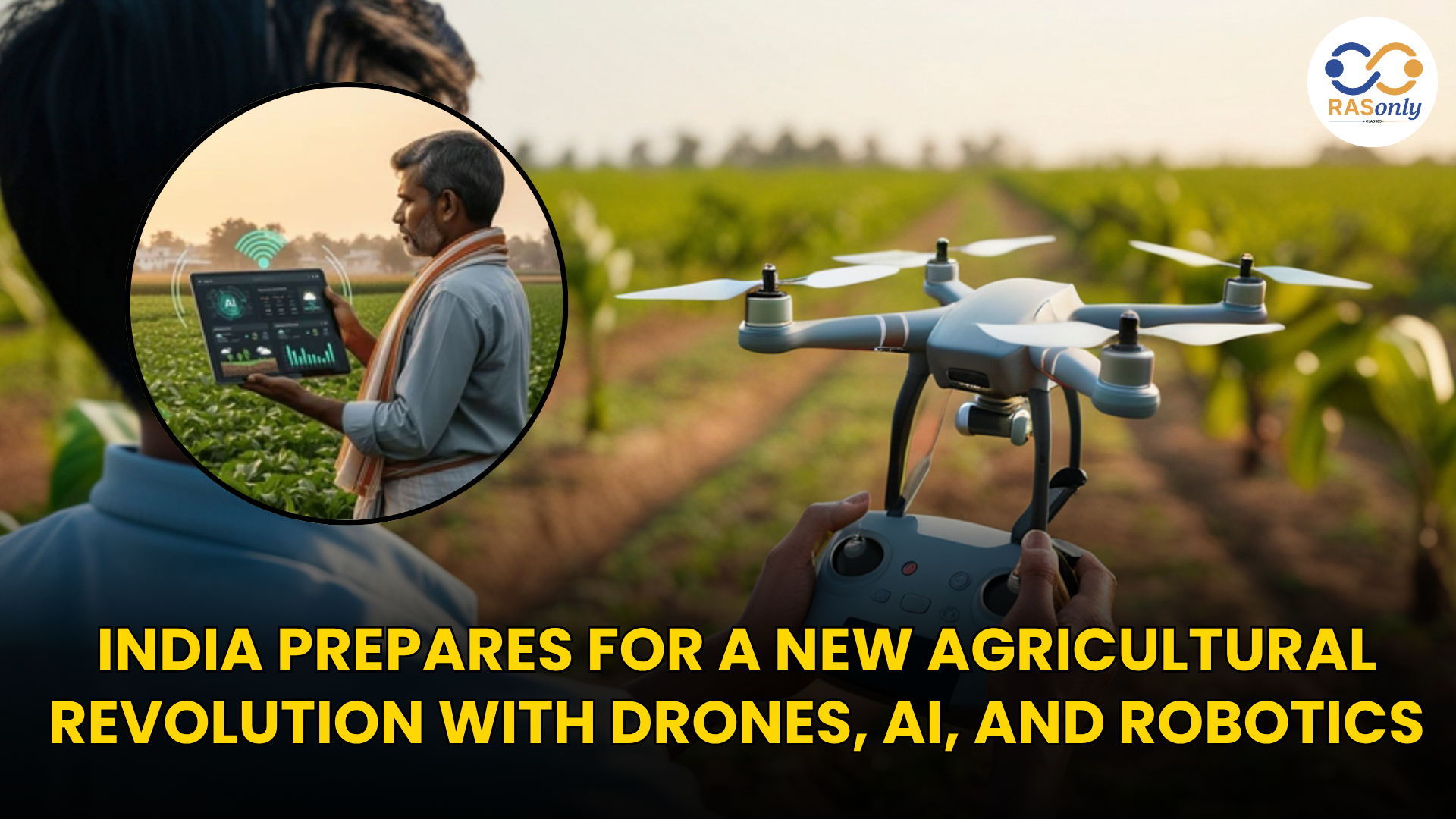
The NITI Aayog has prepared a comprehensive roadmap for India’s future agriculture revolution, focusing on integrating Artificial Intelligence (AI), drones, and robotics into the agricultural ecosystem.
This initiative aims to reduce farm costs by 40% and increase productivity by up to 60% through advanced technologies, making farming more efficient, data driven, and sustainable.
By 2030, the goal is to establish “Smart Villages” equipped with digital infrastructure, precision farming tools, and AI based monitoring systems, enabling farmers to enhance income and resilience against climate change.
Key Highlights
Implementing Agency: NITI Aayog
Objective: Doubling farmers’ income and promoting tech enabled farming
Key Technologies: Drones, Artificial Intelligence (AI), Robotics, Big Data, and IoT (Internet of Things)
Timeline: 2026–2030
Expected Outcomes: 40% reduction in input cost and 60% rise in productivity
Future Technologies: From Lab to Land
1. Drone Farming:Each drone can spray 50 acres in one day. Reduces fertilizer and pesticide use by up to 80%.
2. Robotics: Automation of harvesting, sowing, and weeding,Minimizes labour dependency and time loss.
3. Artificial Intelligence (AI): Data driven decision making using sensors, cameras, and weather analytics. Provides 24×7 mobile based crop monitoring.
4. Precision Farming: Optimizes every inch of farmland using GPS and satellite data.Enhances yield and water efficiency.
5. Big Data & Analytics : Predicts crop disease and weather risks.Enables early warning systems for farmers.
6. Internet of Things (IoT): Real time tracking of soil health, moisture, and irrigation. Connects farms through mobile enabled sensors.
Roadmap and Year wise Targets
- 2026: Pilot projects to integrate drones and AI in farming.
- 2027: 50% villages to adopt digital agriculture platforms.
- 2028: Expansion of robotics and AI systems in 70% of farmlands.
- 2029: 1 lakh smart farm units to be deployed.
- 2030: Smart Villages and complete digital agriculture ecosystem nationwide.
Infrastructure and Fund Model
- Tech Fund: ₹50,000 crore
- Agritech Support: Subsidies and training programs
- Private Sector Role: PPP model for technology transfer
- Nodal Ministries: Agriculture, Electronics & IT
Farmer Benefits
- 40% reduction in cost (fertilizer, pesticide, labour).
- 60% increase in productivity.
- 90% improvement in water use efficiency (drip and precision irrigation).
- 100% real time data tracking of soil and weather.
Conclusion
India’s next agricultural revolution will be driven by AI, drones, and robotics, transforming traditional farming into smart, climate resilient, and high yield agriculture.
The roadmap aims to make India a global leader in agri tech by 2030, ensuring sustainable income and productivity for every farmer.
MCQs( Ras prelims )
1. Which institution has prepared the roadmap for India’s new agricultural revolution using AI and drones?
A. Ministry of Agriculture
B. NITI Aayog
C. ICAR
D. NABARD
Answer: B. NITI Aayog
2. By what percentage does the NITI Aayog’s new agriculture model aim to reduce farm costs?
A. 20%
B. 40%
C. 50%
D. 60%
Answer: B. 40%
3. What is the final target year for achieving Smart Villages under India’s Agricultural Technology Mission?
A. 2027
B. 2028
C. 2029
D. 2030
Answer: D. 2030
नीति आयोग द्वारा तैयार नई कृषि तकनीकी रोडमैप
नीति आयोग ने एक नया कृषि तकनीकी रोडमैप तैयार किया है जिसके तहत भारत में खेती को ड्रोन, आर्टिफिशियल इंटेलिजेंस (AI) और रोबोटिक्स की मदद से आधुनिक बनाया जाएगा।
इस योजना का उद्देश्य कृषि लागत को 40% तक घटाना और उत्पादकता को 60% तक बढ़ाना है।
वर्ष 2030 तक भारत के गांवों को स्मार्ट विलेज के रूप में विकसित किया जाएगा जहाँ डिजिटल खेती, एआई निगरानी और स्वचालित कृषि प्रणालियाँ लागू होंगी।
मुख्य बिंदु
प्रमुख संस्था: नीति आयोग
उद्देश्य: किसानों की आय बढ़ाना और तकनीकी खेती को बढ़ावा देना
मुख्य तकनीकें: ड्रोन, एआई, रोबोटिक्स, बिग डेटा, इंटरनेट ऑफ थिंग्स (IoT)
समयसीमा: 2026 से 2030
प्रभाव: लागत में 40% कमी और उत्पादन में 60% वृद्धि
भविष्य की तकनीकें – खेत से लैब तक
1. ड्रोन फार्मिंग: एक ड्रोन एक दिन में 50 एकड़ तक स्प्रे कर सकता है।खाद एवं कीटनाशक की खपत में 80% तक कमी।
2. रोबोटिक्स: फसल की कटाई, बुवाई और निराई में स्वचालन। मजदूरों पर निर्भरता कम और समय की बचत।
3. आर्टिफिशियल इंटेलिजेंस (AI): सेंसर और कैमरों के माध्यम से डेटा आधारित निर्णय प्रणाली। 24 घंटे मोबाइल पर निगरानी की सुविधा।
4. प्रिसिजन फार्मिंग: जीपीएस और सैटेलाइट डेटा के माध्यम से हर इंच भूमि का विश्लेषण। जल उपयोग दक्षता और फसल गुणवत्ता में वृद्धि।
5. बिग डेटा एनालिटिक्स: रोग, मौसम और फसल जोखिमों की भविष्यवाणी। किसानों को समय से चेतावनी प्रणाली।
6. इंटरनेट ऑफ थिंग्स (IoT): मिट्टी की नमी और तापमान का रीयलटाइम डेटा। खेतों को मोबाइल से जोड़ा जाएगा।
वर्षवार लक्ष्य
- 2026: ड्रोन व एआई आधारित खेती के पायलट प्रोजेक्ट।
- 2027: 50% गांव डिजिटल खेती से जुड़ेंगे।
- 2028: 70% खेतों में रोबोटिक्स व एआई सिस्टम लागू होंगे।
- 2029: 1 लाख स्मार्ट फार्म यूनिट्स की तैनाती।
- 2030: सम्पूर्ण भारत में स्मार्ट विलेज मॉडल लागू।
कृषि अवसंरचना एवं फंड मॉडल
- टेक फंड: ₹50,000 करोड़
- कृषि समर्थन: सब्सिडी व प्रशिक्षण कार्यक्रम
- निजी भागीदारी: पीपीपी मॉडल से तकनीकी हस्तांतरण
- प्रमुख मंत्रालय: कृषि एवं इलेक्ट्रॉनिक्स मंत्रालय
किसानों को लाभ
- खेती की लागत में 40% कमी (खाद, पानी, मजदूरी)।
- उत्पादकता में 60% वृद्धि।
- जल उपयोग दक्षता में 90% सुधार।
- 100% डेटा ट्रैकिंग सिस्टम – मिट्टी और मौसम आधारित निर्णय।
निष्कर्ष
भारत की आगामी कृषि क्रांति ड्रोन, एआई और रोबोटिक्स तकनीक पर आधारित होगी।
यह पहल खेती को स्मार्ट, पर्यावरणअनुकूल और उच्च उत्पादकता वाली बनाएगी।
2030 तक भारत का लक्ष्य विश्व का अग्रणी एग्रीटेक मॉडल बनना है जिससे किसानों की आय स्थायी रूप से बढ़ेगी।
MCQs (हिंदी खंड)
1. नई कृषि क्रांति के रोडमैप को किस संस्था ने तैयार किया है?
A. कृषि मंत्रालय
B. नीति आयोग
C. आईसीएआर
D. नाबार्ड
उत्तर: B. नीति आयोग
2. नीति आयोग की नई कृषि नीति के अनुसार खेती की लागत कितने प्रतिशत घटाने का लक्ष्य है?
A. 20%
B. 40%
C. 50%
D. 60%
उत्तर: B. 40%
3. भारत में “स्मार्ट विलेज” मॉडल लागू करने का लक्ष्य किस वर्ष तक निर्धारित किया गया है?
A. 2027
B. 2028
C. 2029
D. 2030
उत्तर: D. 2030