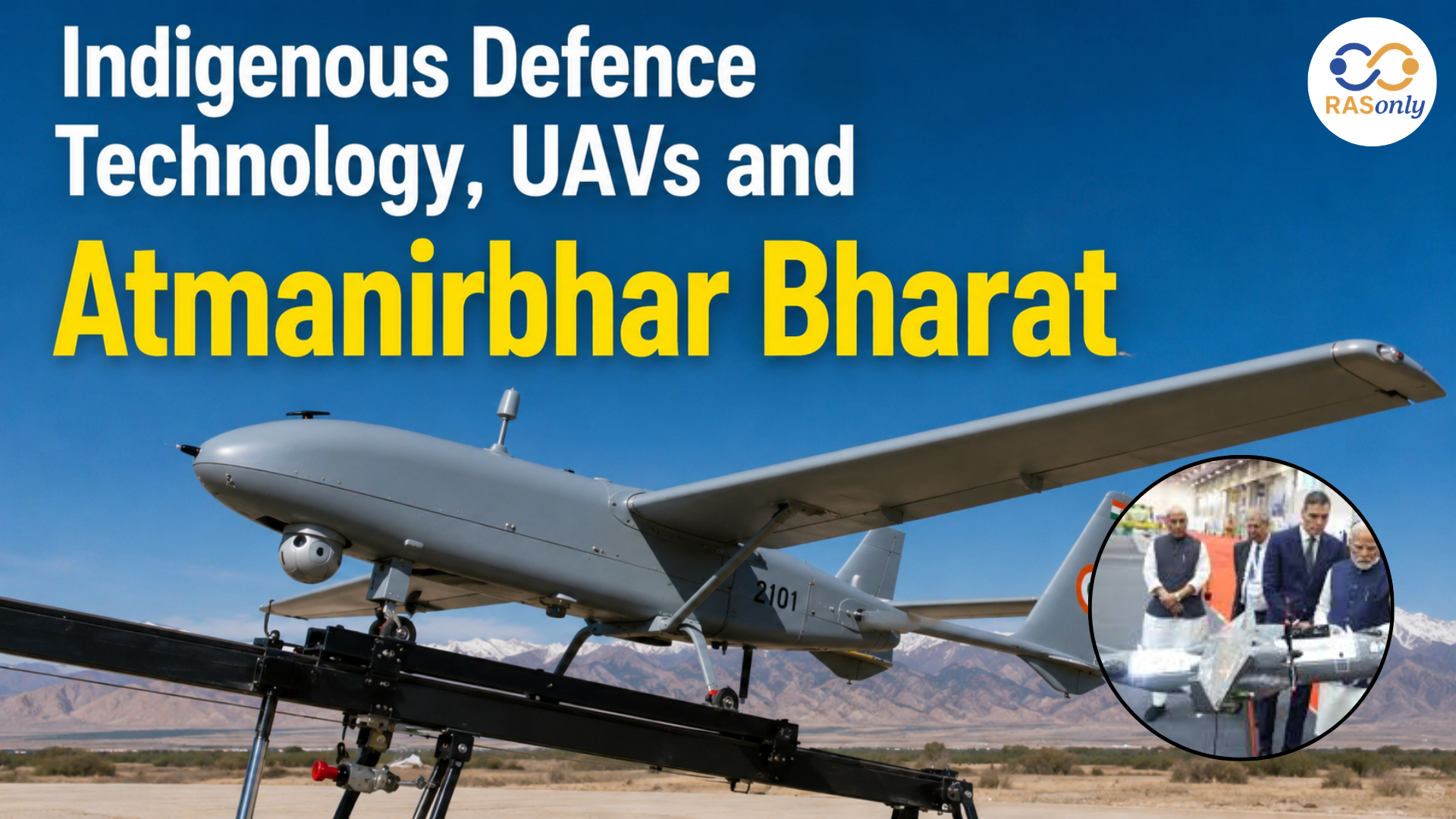
The successful test of the Divyastra MK-1 UAV in Jodhpur is a significant boost to India's efforts in indigenous defence technology. The test was carried out in front of military officials, with the UAV being sent into the air from a mobile launcher mounted on an SUV. The Divyastra MK-1 can be flown up to 500 km without any human intervention. It has been designed for missions like surveillance, intelligence collection, target identification and precision strike. The successful test in desert-like environment showcases India's advancement in the field of advanced unmanned military systems and contributes to the overall vision of 'Atmanirbhar Bharat' in the defence sector.
Key Features of Divyastra MK-1 UAV
- Divyastra MK-1 is an Unmanned Aerial Vehicle (UAV) designed and developed in the country.
- It was tested in Jodhpur with military officers and successfully achieved.
- It was launched from the mobile launcher on an SUV.
- It has a range of up to 500 km.
- It can work without the human supervision at all times.
- It has electro-optical and infrared sensors.
- It also has a communication relay system.
- A range of payload types can be accommodated, depending on the mission.
- It can be useful for surveillance missions, intelligence gathering, target identification and precision strike missions.
- The electronic propulsion and semi-autonomous feature were tested.
- This test was performed under severe wind and temperature conditions: 53°C and 50 km/h respectively.
Difference Between Drone and Suicide Drone
General Drone
- The primary use of a normal drone is for surveillance and monitoring.
- It may be recoverable after the mission.
- It may be used again for future operations.
Suicide Drone or Loitering Munition
- A suicide drone is simply a drone that is specifically programmed to destroy the target as well as itself.
- It is armed with an explosive payload.
- Once it is launched, it can stay in the air for a while, looking for its prey.
- After the target is identified, it will crash into the target and explode.
- It is irretrievable following the strike.
Defence Significance
Strategic Importance
- The successful test will further boost indigenous defence technology in India.
- It enhances India's expertise in Unmanned warfare systems.
- It can be used to assist field operations in challenging environments and extreme weather.
- This is a mobile launch feature that adds flexibility on the battlefield.
- It is semi-autonomous which means it does not rely on all the time for man to control it.
Relevance for Rajasthan
- The city of Jodhpur is strategically important because of its location in the western part of Rajasthan.
- With the successful test in high temperature and strong wind, the UAV is proved to be suitable for desert and semi-arid areas.
- These trials are crucial for India's defense capabilities on the western front.
Conclusion
The successful test of Divyastra MK-1 in Jodhpur is an important step in India’s journey towards self-reliance in defence technology. It is useful for modern battlefield requirements because of its range, sensor systems, mobile-launching and semi-autonomous operation. This is significant for the preparation of defence technology, internal security, Atmanirbhar Bharat and the strategic importance of Rajasthan for the preparation of RAS.
MCQs
- With respect to Divyastra MK-1, which of the following statements is true?
1.It has been successfully tested in Jodhpur.
2. It can operate up to a range of 500 km.
3. Needs constant supervision when operating.
Which of the statements given above is/are correct?
A. 1 and 2 only
B. 2 and 3 only
C. 1 and 3 only
D. 1, 2 and 3
Answer: A. 1 and 2 only
Explanation: It is successfully tested in Jodhpur and has a range of up to 500 km Divyastra MK-1. The report notes that it works semi-autonomously, and does not need constant human oversight. Thus, statements 1 and 2 are true and statement 3 is false.
- Of the following features, which one was associated with the successful test of Divyastra MK-1?
A. Liquid fuel rocket propulsion
B. Electro-optical sensors, infrared sensors and communication relay system
C. Manned cockpit and manual firing of artillery.
D. Nuclearpower and Satellite-only operation.
Answer: B. Electro-optical sensors, infrared sensors and communication relay system.
Explanation: Divyastra's sensors are electro-optical and infrared, and it has a communication relay system. Some of these qualities make it ideal for surveillance, intelligence, target identification and precision operations. The other options talk about attributes that do not relate to the UAV in the story cited in the news.
- What is the primary difference between a normal drone and a suicide drone or loitering munition?
A. A normal drone is always used within water and a suicide drone is only used in space.
B. The main difference between a normal drone and a suicide drone is that the latter is meant to destroy the target and itself upon being attacked.
C. A normal drone won't have sensors, and a suicide drone will have just cameras.
D. The normal drone only can be fired from the air, and the suicide drone only can be fired from the ship.
Answer: B. A normal drone is primarily re-usable, a suicide drone destroys the target with itself.
Explanation : Normal drone is primarily used for surveillance and its recovery and reuse are normally possible. Suicide drone (also called loitering munition) is a drone that has an explosive warhead and is meant to crash into the target and explode. Its primary mission is to destroy these targets – it's not recovery.
स्वदेशी रक्षा तकनीक, यूएवी और आत्मनिर्भर भारत
भारत की स्वदेशी रक्षा तकनीक को मजबूत करने की दिशा में जोधपुर में ‘दिव्यास्त्र एमके-1’ यूएवी का सफल परीक्षण एक महत्वपूर्ण उपलब्धि है। यह परीक्षण सैन्य अधिकारियों की उपस्थिति में किया गया, जिसमें इस मानव रहित यान को एसयूवी पर लगे मोबाइल लॉन्चर से प्रक्षेपित किया गया। ‘दिव्यास्त्र एमके-1’ बिना लगातार मानवीय नियंत्रण के 500 km तक संचालित हो सकता है। इसे निगरानी, खुफिया जानकारी जुटाने, लक्ष्य पहचान और सटीक प्रहार जैसे अभियानों के लिए विकसित किया गया है। रेगिस्तानी परिस्थितियों में इसका सफल परीक्षण भारत की उन्नत मानव रहित सैन्य प्रणालियों की क्षमता को दर्शाता है और रक्षा क्षेत्र में आत्मनिर्भर भारत के लक्ष्य को मजबूती देता है।
दिव्यास्त्र एमके-1 यूएवी की प्रमुख विशेषताएँ
- दिव्यास्त्र एमके-1 एक स्वदेशी मानव रहित हवाई वाहन है।
- इसका सफल परीक्षण जोधपुर में सैन्य अधिकारियों के समक्ष किया गया।
- इसे एसयूवी पर लगे मोबाइल लॉन्चर से प्रक्षेपित किया गया।
- इसकी मारक/संचालन सीमा 500 km तक है।
- यह लगातार मानवीय नियंत्रण के बिना काम कर सकता है।
- इसमें इलेक्ट्रो-ऑप्टिकल और इन्फ्रारेड सेंसर लगे हैं।
- इसमें संचार रिले प्रणाली भी मौजूद है।
- मिशन की आवश्यकता के अनुसार इसमें अलग-अलग प्रकार के पेलोड लगाए जा सकते हैं।
- यह निगरानी, खुफिया जानकारी जुटाने, लक्ष्य पहचान और सटीक प्रहार अभियानों में उपयोगी है।
- परीक्षण के दौरान इसकी इलेक्ट्रॉनिक प्रणोदन प्रणाली और अर्ध-स्वायत्त क्षमता का मूल्यांकन किया गया।
- यह परीक्षण 53°C तापमान और 50 km/h हवा की गति जैसी कठिन परिस्थितियों में किया गया।
सामान्य ड्रोन और आत्मघाती ड्रोन में अंतर
सामान्य ड्रोन
- सामान्य ड्रोन का मुख्य उपयोग निगरानी और मॉनिटरिंग के लिए होता है।
- मिशन पूरा होने के बाद इसे सामान्यतः वापस प्राप्त किया जा सकता है।
- इसे भविष्य के अभियानों में दोबारा उपयोग किया जा सकता है।
आत्मघाती ड्रोन या लोइटरिंग म्यूनिशन
- आत्मघाती ड्रोन को लक्ष्य के साथ स्वयं को भी नष्ट करने के लिए बनाया जाता है।
- इसमें विस्फोटक पेलोड लगा होता है।
- प्रक्षेपण के बाद यह कुछ समय तक हवा में रहकर लक्ष्य की खोज कर सकता है।
- लक्ष्य की पहचान होने के बाद यह उससे टकराकर विस्फोट करता है।
- प्रहार के बाद इसे वापस प्राप्त नहीं किया जा सकता।
रक्षा दृष्टि से महत्व
रणनीतिक महत्व
- यह सफल परीक्षण भारत की स्वदेशी रक्षा तकनीक को मजबूती देता है।
- इससे मानव रहित युद्ध प्रणालियों में भारत की क्षमता बढ़ती है।
- यह कठिन भू-भाग और कठोर जलवायु परिस्थितियों में सैन्य अभियानों की सहायता कर सकता है।
- मोबाइल लॉन्च क्षमता युद्धक्षेत्र में लचीलापन बढ़ाती है।
- इसकी अर्ध-स्वायत्त कार्यप्रणाली लगातार मानवीय नियंत्रण पर निर्भरता को कम करती है।
राजस्थान के लिए प्रासंगिकता
- जोधपुर पश्चिमी राजस्थान में स्थित होने के कारण रणनीतिक दृष्टि से महत्वपूर्ण है।
- उच्च तापमान और तेज हवा में सफल परीक्षण यह दर्शाता है कि यह यूएवी रेगिस्तानी और अर्द्ध-शुष्क क्षेत्रों के लिए उपयुक्त है।
- ऐसे परीक्षण पश्चिमी सीमाओं पर भारत की रक्षा तैयारियों के लिए महत्वपूर्ण हैं।
निष्कर्ष
जोधपुर में ‘दिव्यास्त्र एमके-1’ का सफल परीक्षण भारत की रक्षा तकनीक में आत्मनिर्भरता की दिशा में एक महत्वपूर्ण कदम है। इसकी 500 km तक संचालन क्षमता, सेंसर प्रणाली, मोबाइल लॉन्च सुविधा और अर्ध-स्वायत्त संचालन इसे आधुनिक युद्धक्षेत्र की आवश्यकताओं के लिए उपयोगी बनाते हैं। RAS परीक्षा की दृष्टि से यह विषय रक्षा तकनीक, आंतरिक सुरक्षा, आत्मनिर्भर भारत और राजस्थान की रणनीतिक प्रासंगिकता से जुड़ा हुआ है।
MCQs
1. दिव्यास्त्र एमके-1 के संदर्भ में निम्नलिखित कथनों पर विचार कीजिए:
- इसका सफल परीक्षण जोधपुर में किया गया।
- यह 500 km तक संचालित हो सकता है।
- इसके संचालन के लिए लगातार मानवीय नियंत्रण आवश्यक है।
उपर्युक्त में से कौन-सा/से कथन सही है/हैं?
A. केवल 1 और 2
B. केवल 2 और 3
C. केवल 1 और 3
D. 1, 2 और 3
उत्तर: A. केवल 1 और 2
व्याख्या: दिव्यास्त्र एमके-1 का सफल परीक्षण जोधपुर में किया गया और इसकी संचालन सीमा 500 km तक बताई गई है। यह लगातार मानवीय नियंत्रण पर निर्भर नहीं है, क्योंकि इसमें अर्ध-स्वायत्त संचालन क्षमता है। इसलिए कथन 1 और 2 सही हैं, जबकि कथन 3 गलत है।
2. दिव्यास्त्र एमके-1 के सफल परीक्षण से संबंधित कौन-सी विशेषताएँ सही हैं?
A. सौर प्रणोदन और जल के भीतर लॉन्च प्रणाली
B. इलेक्ट्रो-ऑप्टिकल सेंसर, इन्फ्रारेड सेंसर और संचार रिले प्रणाली
C. मानवयुक्त कॉकपिट और मैनुअल आर्टिलरी फायरिंग प्रणाली
D. परमाणु प्रणोदन और केवल उपग्रह आधारित संचालन
उत्तर: B. इलेक्ट्रो-ऑप्टिकल सेंसर, इन्फ्रारेड सेंसर और संचार रिले प्रणाली
व्याख्या: दिव्यास्त्र एमके-1 में इलेक्ट्रो-ऑप्टिकल और इन्फ्रारेड सेंसर के साथ संचार रिले प्रणाली मौजूद है। ये विशेषताएँ इसे निगरानी, खुफिया जानकारी जुटाने, लक्ष्य पहचान और सटीक प्रहार जैसे अभियानों के लिए उपयोगी बनाती हैं। अन्य विकल्पों में दी गई विशेषताएँ इस यूएवी से संबंधित नहीं हैं।
3. सामान्य ड्रोन और आत्मघाती ड्रोन या लोइटरिंग म्यूनिशन में मुख्य अंतर क्या है?
A. सामान्य ड्रोन हमेशा पानी के भीतर प्रयोग होता है, जबकि आत्मघाती ड्रोन केवल अंतरिक्ष में प्रयोग होता है।
B. सामान्य ड्रोन सामान्यतः पुनः उपयोग योग्य होता है, जबकि आत्मघाती ड्रोन लक्ष्य के साथ स्वयं को भी नष्ट कर देता है।
C. सामान्य ड्रोन में सेंसर नहीं होते, जबकि आत्मघाती ड्रोन में केवल कैमरे होते हैं।
D. सामान्य ड्रोन केवल विमान से छोड़ा जाता है, जबकि आत्मघाती ड्रोन केवल जहाज से छोड़ा जाता है।
उत्तर: B. सामान्य ड्रोन सामान्यतः पुनः उपयोग योग्य होता है, जबकि आत्मघाती ड्रोन लक्ष्य के साथ स्वयं को भी नष्ट कर देता है।
व्याख्या: सामान्य ड्रोन का मुख्य उपयोग निगरानी के लिए होता है और इसे मिशन के बाद सामान्यतः वापस प्राप्त कर दोबारा उपयोग किया जा सकता है। आत्मघाती ड्रोन या लोइटरिंग म्यूनिशन में विस्फोटक पेलोड होता है और यह लक्ष्य से टकराकर विस्फोट करता है। इसलिए इसका मुख्य उद्देश्य लक्ष्य को नष्ट करना होता है, न कि वापस प्राप्त होना।