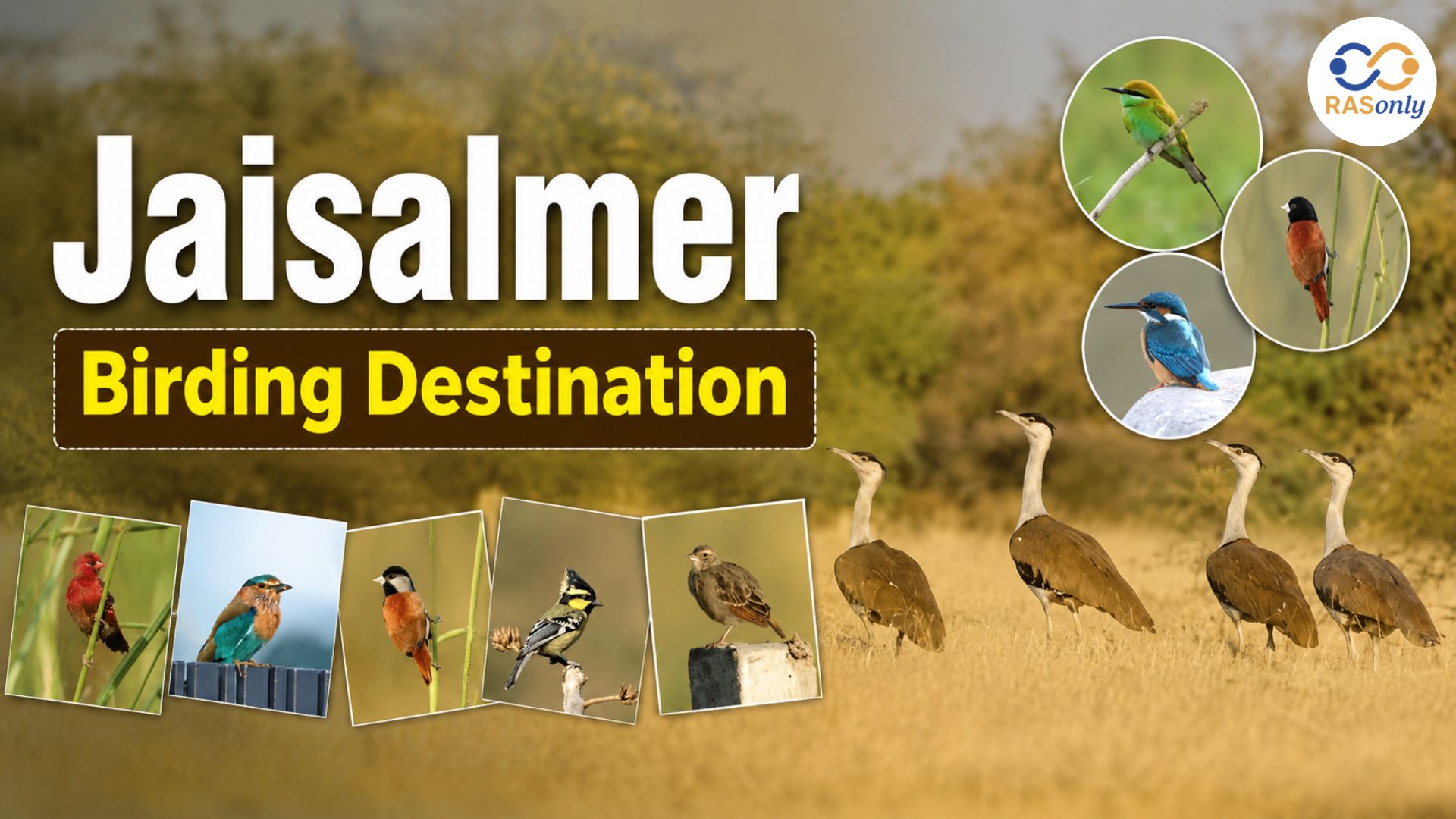
Jaisalmer in Rajasthan is emerging as a major hub for nature tourism, biodiversity conservation, and scientific research due to the increasing number of migratory birds and progress in Great Indian Bustard (Godawan) conservation.
Background
Between October and March, thousands of migratory birds from Central Asia and Northern Eurasia arrive in Jaisalmer. This region is considered an important wintering stopover on the Central Asian Flyway (CAF).
Key Points
Desert Birding Destination
- More than 300 bird species have been recorded in Jaisalmer.
- The Desert National Park and the surrounding desert terrain provide a suitable habitat for birds.
Importance of the Central Asian Flyway
- Migratory birds from Siberia, Mongolia, Kazakhstan, Russia, Central Asia, and Northern Eurasia come here to spend the winter.
- It is a crucial stopover on the global migratory flyway.
Great Indian Bustard (Godawan) Conservation
- In the 2025 scientific census, 198 Great Indian Bustards (Godawan) were recorded.
- Among these, approximately 130 were found in natural habitats, and the remaining were in conservation breeding centers.
- As of June 2026, 94 Great Indian Bustards have been recorded in conservation breeding centers.
Major Migratory Birds
- Demoiselle Crane (Kurjan)
- Macqueen's Bustard
- Steppe Eagle
- Imperial Eagle
- Laggar Falcon
- Egyptian Vulture
- Sandgrouse
- Desert Lark
- Bee-eater
- Flamingos are also sighted during favorable years.
Important Facts for Prelims Examination
|
|
|
|
|
|
|
|
|
|
|
|
|
|
|
|
|
|
|
|
|
|
|
|
|
|
|
|
|
|
Why Jaisalmer is a Preferred Habitat
Experts attribute Jaisalmer’s suitability for migratory birds to several natural factors:
- Natural Grasslands: These provide an optimal environment for feeding and foraging for numerous bird species.
- Open Sandy Plains: They offer an ideal habitat for desert-dwelling birds and raptors (birds of prey).
- Post-Monsoon Water Bodies: Temporary wetlands and water bodies formed after monsoonal rains supply vital water and feeding resources.
- Low Anthropogenic Interference: The Desert National Park and several surrounding zones remain relatively undisturbed, offering birds a secure environment.
Desert National Park (DNP)
The Desert National Park is the most critical desert protected area in Rajasthan.
- Location: Jaisalmer and Barmer districts.
- Establishment: 1980.
- Key Features: Represents the unique ecosystem of the Thar Desert, serves as the prime natural habitat of the Great Indian Bustard, and houses distinct sand dunes, grasslands, and local/migratory avifauna.
Opportunities for Nature Tourism
The increasing population of migratory birds is opening new avenues in Jaisalmer for:
- Bird Watching and Wildlife Photography
- Eco-tourism and Conservation-based Tourism
- Biodiversity Research
- Local Employment Generation and Rural Tourism
Key Conservation Challenges
Despite its potential, bird conservation in Jaisalmer faces serious bottlenecks:
- High-Tension Power Lines: Overhead power cables pose a fatal collision risk, especially for heavy-flying birds like the Great Indian Bustard.
- Pressure on Wetlands: The shrinkage of seasonal water bodies due to human encroachment disrupts migratory cycles.
- Degradation of Grasslands: Overgrazing, encroachment, and land-use change are shrinking natural habitats.
- Unregulated Tourism: Surging tourist activities can potentially disturb the breeding and resting sites of sensitive species.
- Climate Change: Rising temperatures and shifting rainfall patterns alter the migratory schedule of these birds.
Conclusion
Jaisalmer has evolved beyond being a mere cultural tourism destination into a vital node for desert biodiversity and intensive conservation programs like that of the Great Indian Bustard. If grasslands are protected, wetlands are rejuvenated, high-tension power lines are managed scientifically (such as underground cabling), and sustainable eco-tourism is promoted, Jaisalmer can secure global recognition as a premier desert birding and wildlife conservation hub.
MCQs
Q1. Jaisalmer is considered an important wintering stopover for migratory birds under which of the following global migratory routes?
A. East Atlantic Flyway
B. Central Asian Flyway (CAF)
C. East Asian–Australasian Flyway
D. Pacific Flyway
Answer: B. Central Asian Flyway (CAF)
Explanation:
Jaisalmer lies on the Central Asian Flyway (CAF), one of the world's major migratory bird routes. Every year from October to March, thousands of migratory birds from Siberia, Mongolia, Kazakhstan, Russia, Central Asia, and Northern Eurasia use this region as a wintering and stopover site.
Q2. Consider the following statements regarding the Great Indian Bustard (Godawan):
- The Great Indian Bustard is the State Bird of Rajasthan.
- According to the 2025 scientific census, 198 Great Indian Bustards were recorded.
- Desert National Park is one of the most important natural habitats of the Great Indian Bustard.
Which of the statements given above is/are correct?
A. 1 and 2 only
B. 2 and 3 only
C. 1 and 3 only
D. 1, 2 and 3
Answer: D. 1, 2 and 3
Explanation:
All three statements are correct:
- Great Indian Bustard (Godawan) is the State Bird of Rajasthan.
- The 2025 scientific census recorded 198 Godawans.
- Desert National Park (Jaisalmer–Barmer) is the principal natural habitat and the most important conservation landscape for this critically endangered species.
Q3. Which of the following is NOT considered a major conservation challenge for migratory birds and the Great Indian Bustard in Jaisalmer?
A. High-tension overhead power lines
B. Degradation of natural grasslands
C. Expansion of seasonal wetlands due to excessive rainfall
D. Unregulated tourism activities
Answer: C. Expansion of seasonal wetlands due to excessive rainfall
Explanation:
The major conservation challenges in Jaisalmer include:
- High-tension power lines, which cause fatal bird collisions.
- Grassland degradation due to overgrazing and land-use change.
- Pressure on wetlands because of encroachment and shrinking water bodies.
- Unregulated tourism and climate change, which disturb breeding and migration patterns.
The expansion of seasonal wetlands due to excessive rainfall is not identified as a conservation challenge in the given context; instead, shrinking wetlands pose the real threat.
जैसलमेर पक्षी दर्शन स्थल: मध्य एशियाई फ्लाईवे, प्रवासी पक्षी और गोडावण संरक्षण
जैसलमेर (राजस्थान) प्रवासी पक्षियों की बढ़ती संख्या और ग्रेट इंडियन बस्टर्ड (गोडावण) संरक्षण में हो रही प्रगति के कारण प्रकृति पर्यटन, जैव विविधता संरक्षण और वैज्ञानिक अनुसंधान के एक प्रमुख केंद्र के रूप में उभर रहा है।
पृष्ठभूमि
अक्टूबर और मार्च के बीच, मध्य एशिया और उत्तरी यूरेशिया से हजारों प्रवासी पक्षी जैसलमेर पहुंचते हैं। इस क्षेत्र को मध्य एशियाई फ्लाईवे (CAF) पर एक महत्वपूर्ण शीतकालीन पड़ाव माना जाता है।
मुख्य बिंदु
मरुस्थल पक्षी दर्शन स्थल
- जैसलमेर में 300 से अधिक पक्षी प्रजातियाँ दर्ज की गई हैं।
- डेजर्ट नेशनल पार्क (मरुभूमि राष्ट्रीय उद्यान) और आसपास का रेगिस्तानी इलाका पक्षियों के लिए एक उपयुक्त आवास प्रदान करता है।
मध्य एशियाई फ्लाईवे का महत्व
- साइबेरिया, मंगोलिया, कजाकिस्तान, रूस, मध्य एशिया और उत्तरी यूरेशिया के प्रवासी पक्षी यहाँ सर्दियाँ बिताने आते हैं।
- यह वैश्विक प्रवासी फ्लाईवे पर एक अत्यंत महत्वपूर्ण पड़ाव है।
ग्रेट इंडियन बस्टर्ड (गोडावण) संरक्षण
- वर्ष 2025 की वैज्ञानिक जनगणना में 198 ग्रेट इंडियन बस्टर्ड (गोडावण) दर्ज किए गए थे।
- इनमें से लगभग 130 प्राकृतिक आवासों में पाए गए थे, और शेष संरक्षण प्रजनन केंद्रों (conservation breeding centers) में थे।
- जून 2026 तक, संरक्षण प्रजनन केंद्रों में 94 ग्रेट इंडियन बस्टर्ड दर्ज किए जा चुके हैं।
प्रमुख प्रवासी पक्षी
- डेमोइसेल क्रेन (कुरजां)
- मैक्वीन्स बस्टर्ड (Macqueen's Bustard)
- स्टेप ईगल (Steppe Eagle)
- इम्पीरियल ईगल (Imperial Eagle)
- लग्गर फाल्कन (Laggar Falcon)
- मिस्र का गिद्ध (Egyptian Vulture)
- सैंडग्राउज (Sandgrouse)
- डेजर्ट लार्क (Desert Lark)
- बी-ईटर (Bee-eater)
- अनुकूल वर्षों के दौरान फ्लेमिंगो (राजहंस) भी देखे जाते हैं।
प्रारंभिक परीक्षा (Prelims) के लिए महत्वपूर्ण तथ्य
|
|
|
|
|
|
|
|
|
|
|
|
|
|
|
|
|
|
|
|
|
|
|
|
|
|
|
|
|
|
जैसलमेर एक पसंदीदा आवास क्यों है?
विशेषज्ञ प्रवासी पक्षियों के लिए जैसलमेर की उपयुक्तता का श्रेय कई प्राकृतिक कारकों को देते हैं:
- प्राकृतिक घास के मैदान: ये कई पक्षी प्रजातियों को भोजन तलाशने और चरने के लिए एक आदर्श वातावरण प्रदान करते हैं।
- खुले रेतीले मैदान: ये रेगिस्तान में रहने वाले पक्षियों और शिकार करने वाले पक्षियों (raptors) के लिए एक आदर्श आवास प्रदान करते हैं।
- मानसून के बाद के जल निकाय: मानसूनी बारिश के बाद बनने वाले अस्थायी आर्द्रभूमि (wetlands) और जल निकाय महत्वपूर्ण जल और भोजन संसाधन प्रदान करते हैं।
- कम मानवीय हस्तक्षेप: डेजर्ट नेशनल पार्क और कई आसपास के क्षेत्र अपेक्षाकृत अछूते हैं, जो पक्षियों को एक सुरक्षित वातावरण प्रदान करते हैं।
डेजर्ट नेशनल पार्क (DNP)
डेजर्ट नेशनल पार्क राजस्थान में सबसे महत्वपूर्ण मरुस्थलीय संरक्षित क्षेत्र है।
- स्थान: जैसलमेर और बाड़मेर जिले।
- स्थापना: 1980.
- प्रमुख विशेषताएं: यह थार मरुस्थल के अद्वितीय पारिस्थितिकी तंत्र का प्रतिनिधित्व करता है, ग्रेट इंडियन बस्टर्ड के प्रमुख प्राकृतिक आवास के रूप में कार्य करता है, और यहाँ विशिष्ट रेत के टीले, घास के मैदान और स्थानीय/प्रवासी पक्षी पाए जाते हैं।
प्रकृति पर्यटन के अवसर
प्रवासी पक्षियों की बढ़ती आबादी जैसलमेर में नए रास्ते खोल रही है:
- पक्षी दर्शन (Bird Watching) और वन्यजीव फोटोग्राफी
- पर्यावरण-पर्यटन (Eco-tourism) और संरक्षण-आधारित पर्यटन
- जैव विविधता अनुसंधान
- स्थानीय रोजगार सृजन और ग्रामीण पर्यटन
प्रमुख संरक्षण चुनौतियाँ
अपनी क्षमता के बावजूद, जैसलमेर में पक्षी संरक्षण को गंभीर बाधाओं का सामना करना पड़ रहा है:
- हाई-टेंशन बिजली लाइनें: ओवरहेड बिजली के तार पक्षियों के टकराने का एक घातक जोखिम पैदा करते हैं, विशेष रूप से ग्रेट इंडियन बस्टर्ड जैसे भारी उड़ान वाले पक्षियों के लिए।
- आर्द्रभूमि (Wetlands) पर दबाव: मानवीय अतिक्रमण के कारण मौसमी जल निकायों का सिकुड़ना प्रवासी चक्र को बाधित करता prey है।
- घास के मैदानों का क्षरण: अत्यधिक चराई, अतिक्रमण और भूमि-उपयोग में बदलाव के कारण प्राकृतिक आवास सिकुड़ रहे हैं।
- अनियंत्रित पर्यटन: बढ़ती पर्यटन गतिविधियाँ संवेदनशील प्रजातियों के प्रजनन और आराम करने के स्थानों को संभावित रूप से बाधित कर सकती हैं।
- जलवायु परिवर्तन: बढ़ता तापमान और वर्षा के बदलते पैटर्न इन पक्षियों के प्रवास की समय-सारणी को बदल देते हैं।
निष्कर्ष
जैसलमेर महज एक सांस्कृतिक पर्यटन स्थल से आगे बढ़कर मरुस्थलीय जैव विविधता और ग्रेट इंडियन बस्टर्ड जैसे गहन संरक्षण कार्यक्रमों के लिए एक महत्वपूर्ण केंद्र के रूप में विकसित हुआ है। यदि घास के मैदानों को संरक्षित किया जाए, आर्द्रभूमियों को पुनर्जीवित किया जाए, हाई-टेंशन बिजली लाइनों का वैज्ञानिक रूप से प्रबंधन किया जाए (जैसे कि भूमिगत केबल बिछाना), और स्थायी पर्यावरण-पर्यटन को बढ़ावा दिया जाए, तो जैसलमेर एक प्रमुख मरुस्थलीय पक्षी दर्शन और वन्यजीव संरक्षण केंद्र के रूप में वैश्विक मान्यता सुरक्षित कर सकता है।
बहुविकल्पीय प्रश्न (MCQs)
प्रश्न 1. जैसलमेर को निम्नलिखित में से किस वैश्विक प्रवासी मार्ग के तहत प्रवासी पक्षियों के लिए एक महत्वपूर्ण शीतकालीन पड़ाव माना जाता है?
A. पूर्वी अटलांटिक फ्लाईवे
B. मध्य एशियाई फ्लाईवे (CAF)
C. पूर्वी एशियाई-ऑस्ट्रेलेशियाई फ्लाईवे
D. प्रशांत फ्लाईवे
उत्तर: B. मध्य एशियाई फ्लाईवे (CAF)
व्याख्या: जैसलमेर मध्य एशियाई फ्लाईवे (CAF) पर स्थित है, जो दुनिया के प्रमुख प्रवासी पक्षी मार्गों में से एक है। हर साल अक्टूबर से मार्च तक, साइबेरिया, मंगोलिया, कजाकिस्तान, रूस, मध्य एशिया और उत्तरी यूरेशिया से हजारों प्रवासी पक्षी इस क्षेत्र का उपयोग शीतकालीन और पड़ाव स्थल के रूप में करते हैं।
प्रश्न 2. ग्रेट इंडियन बस्टर्ड (गोडावण) के संबंध में निम्नलिखित कथनों पर विचार कीजिए:
- ग्रेट इंडियन बस्टर्ड राजस्थान का राज्य पक्षी है।
- 2025 की वैज्ञानिक जनगणना के अनुसार, 198 ग्रेट इंडियन बस्टर्ड दर्ज किए गए थे।
- डेजर्ट नेशनल पार्क ग्रेट इंडियन बस्टर्ड के सबसे महत्वपूर्ण प्राकृतिक आवासों में से एक है।
उपरोक्त दिए गए कथनों में से कौन सा/से सही है/हैं?
A. केवल 1 और 2
B. केवल 2 और 3
C. केवल 1 and 3
D. 1, 2 और 3
उत्तर: D. 1, 2 और 3
व्याख्या: तीनों कथन सही हैं:
- ग्रेट इंडियन बस्टर्ड (गोडावण) राजस्थान का राज्य पक्षी है।
- 2025 की वैज्ञानिक जनगणना में 198 गोडावण दर्ज किए गए थे।
- डेजर्ट नेशनल पार्क (जैसलमेर-बाड़मेर) इस गंभीर रूप से लुप्तप्राय (critically endangered) प्रजाति का मुख्य प्राकृतिक आवास और सबसे महत्वपूर्ण संरक्षण क्षेत्र है।
प्रश्न 3. निम्नलिखित में से किसे जैसलमेर में प्रवासी पक्षियों और ग्रेट इंडियन बस्टर्ड के लिए एक प्रमुख संरक्षण चुनौती नहीं माना जाता है?
A. हाई-टेंशन ओवरहेड बिजली लाइनें
B. प्राकृतिक घास के मैदानों का क्षरण
C. अत्यधिक वर्षा के कारण मौसमी आर्द्रभूमि का विस्तार
D. अनियंत्रित पर्यटन गतिविधियाँ
उत्तर: C. अत्यधिक वर्षा के कारण मौसमी आर्द्रभूमि का विस्तार
व्याख्या: जैसलमेर में प्रमुख संरक्षण चुनौतियों में शामिल हैं:
- हाई-टेंशन बिजली लाइनें, जो पक्षियों के टकराने से होने वाली मौतों का कारण बनती हैं।
- अत्यधिक चराई और भूमि-उपयोग परिवर्तन के कारण घास के मैदानों का क्षरण।
- अतिक्रमण और सिकुड़ते जल निकायों के कारण आर्द्रभूमि पर दबाव।
- अनियंत्रित पर्यटन और जलवायु परिवर्तन, जो प्रजनन और प्रवास के पैटर्न को बाधित करते हैं।
दिए गए संदर्भ में अत्यधिक वर्षा के कारण मौसमी आर्द्रभूमि के विस्तार को एक संरक्षण चुनौती के रूप में नहीं पहचान गया है; इसके विपरीत, सिकुड़ती आर्द्रभूमियाँ वास्तविक खतरा पैदा करती हैं।