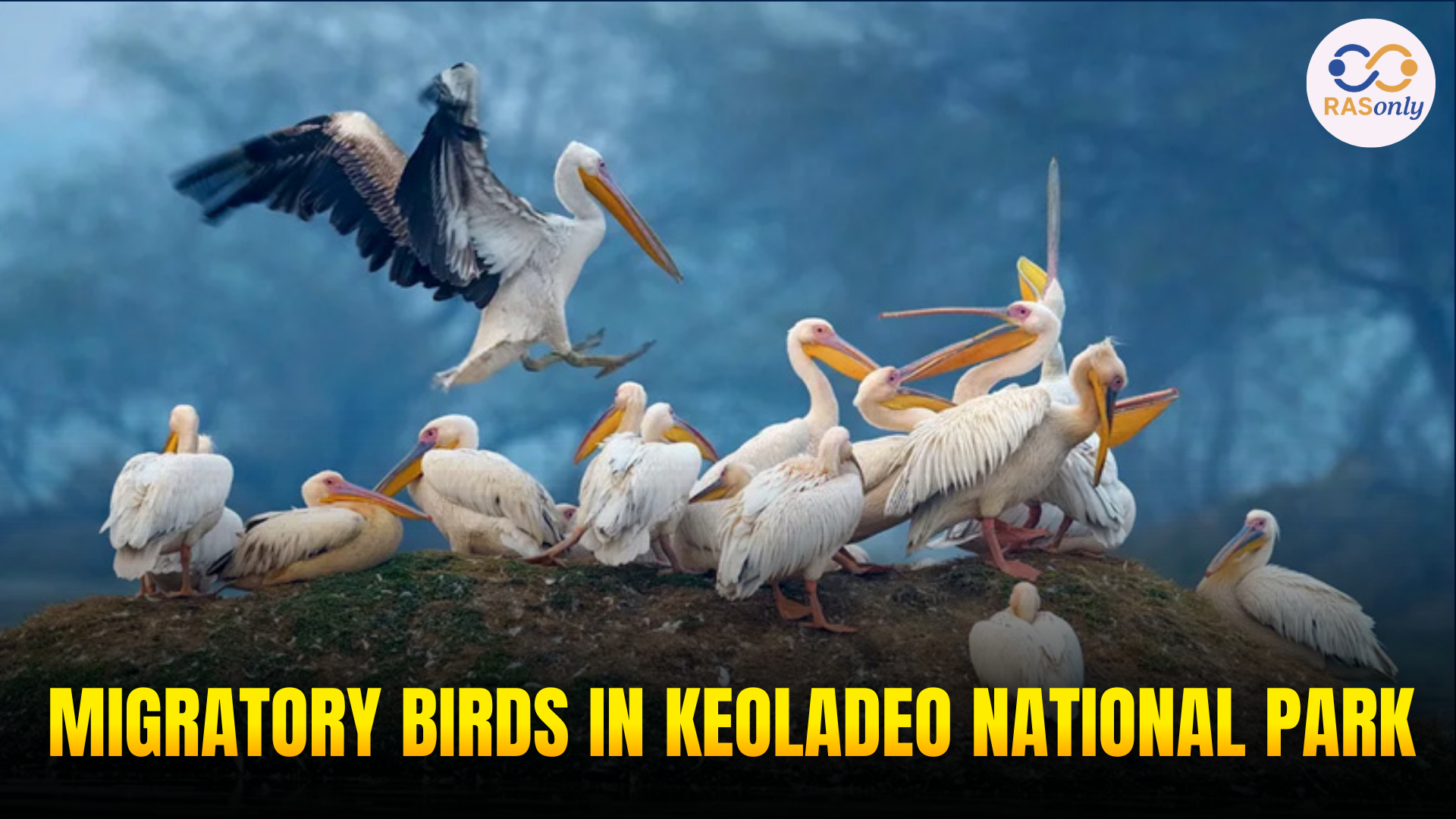
Keoladeo National Park in Bharatpur, a UNESCO World Heritage Site, has once again become a vibrant winter refuge for thousands of migratory birds. According to the Asian Waterbird Census-2025, colourful species such as the Northern Pintail, Red-crested Pochard, Gadwall, Common Coot, and Common Pochard have been recorded in significant numbers. The strong presence of the Northern Pintail especially indicates healthy wetland conditions. However, the census also raises concerns regarding the decline of several rare species, likely driven by climate change and shifting wetland dynamics. Overall, while the park continues to serve as an important wintering habitat, emerging ecological challenges highlight the need for stronger conservation efforts.
Essential Results of the Bird Census
Increase in Some Species
- Gadwall and Northern Pintail populations increased noticeably.
- Many migratory duck species were recorded in healthy numbers.
- Marsh-rich zones provided ideal feeding and resting sites this year.
Decline of Rare Birds
- Several rare species were not recorded in the census.
- The Oriental Stork, seen occasionally in the past, was completely absent this year.
- Experts warn that long-term decline may indicate habitat stress and climatic imbalance.
Species Count Reported by Census
- 38,736 total birds counted
- 2,577 Red-crested Pochard
- 4,919 Northern Pintail
- 6,181 Shoveller ducks
- 7,122 Common Coot
These figures reveal both encouraging and concerning trends within migratory bird diversity.
Reasons Behind Shifting Bird Patterns
Climate and Habitat Factors
- Climate change is altering water availability and wetland ecology.
- Irregular rainfall and temperature fluctuations affect migratory routes.
- Human disturbances near wetlands can contribute to habitat degradation.
- Food scarcity in shallow-water zones may force birds toward alternate sites.
Conclusion
The Asian Waterbird Census-2025 findings for Keoladeo National Park present a mixed picture. While species such as the Northern Pintail and Red-crested Pochard show strong numbers, the absence of rare birds signals ecological stress. Strengthened conservation, wetland restoration, and climate-responsive management are essential to preserve the park’s global reputation as a vital sanctuary for migratory birds.
MCQs (English)
MCQ 1
Which species was significantly present in the Asian Waterbird Census-2025 at Keoladeo National Park?
A. Oriental Stork
B. Northern Pintail
C. Siberian Crane
D. Flamingo
Correct Answer: B. Northern Pintail
Explanation
The Northern Pintail showed one of the strongest population counts in the 2025 census, indicating favourable wetland conditions. In contrast, species such as the Oriental Stork and Siberian Crane, historically seen in the region, were not recorded this year. The high number of Northern Pintails reflects suitable feeding areas and stable habitat quality within Keoladeo National Park.
MCQ 2
What was identified as a major reason for the decline of rare bird species at Keoladeo?
A. Increased tourism activities
B. Climate change and altered wetland patterns
C. Overpopulation of predators
D. Noise pollution from nearby traffic
Correct Answer: B. Climate Change and Altered Wetland Patterns
Explanation
The census report highlights that climate change has disrupted rainfall patterns, water levels, and wetland ecology, which directly affect habitat suitability for rare bird species. These environmental changes reduce food availability and nesting conditions. While tourism or noise may influence bird behaviour, the primary cause identified is climate-driven ecological stress.
MCQ 3
Which bird had the highest recorded count among the listed species in the census data?
A. Common Coot
B. Northern Pintail
C. Shoveller
D. Red-crested Pochard
Correct Answer: A. Common Coot
Explanation
The Common Coot recorded 7,122 individuals, the highest among the listed species. Its numbers exceeded those of Northern Pintail (4,919), Shoveller (6,181), and Red-crested Pochard (2,577). This suggests that habitat conditions during the winter season were especially favourable for the Common Coot, enabling a larger population to thrive within the park.
घाना (केवलादेव राष्ट्रीय उद्यान) में प्रवासी पक्षियों की उपस्थिति
भरतपुर स्थित केवलादेव राष्ट्रीय उद्यान, जो UNESCO विश्व धरोहर स्थल है, एक बार फिर हजारों प्रवासी पक्षियों का जीवंत शीतकालीन आवास बन गया है। एशियन वॉटरबर्ड सेंसेस-2025 के अनुसार, नॉर्दर्न पिंटेल, रेड-क्रेस्टेड पोकॉर्ड, गैडवॉल, कॉमन कूट और कॉमन पोकॉर्ड जैसे रंगीन पक्षियों की उपस्थिति wetlands में बड़ी संख्या में दर्ज की गई। विशेष रूप से नॉर्दर्न पिंटेल की मजबूत संख्या स्वस्थ आवास परिस्थितियों का संकेत है। हालांकि, जनगणना दुर्लभ प्रजातियों में गिरावट को लेकर चिंता भी व्यक्त करती है, जिसका प्रमुख कारण जलवायु परिवर्तन और बदलते वेटलैंड पैटर्न माने जा रहे हैं। कुल मिलाकर, उद्यान अभी भी एक महत्वपूर्ण शीतकालीन आवास है, किंतु उभरती पारिस्थितिक चुनौतियाँ अधिक संरक्षण की मांग करती हैं।
पक्षी गणना के मुख्य निष्कर्ष
कुछ प्रजातियों में बढ़ोतरी
- गैडवॉल और नॉर्दर्न पिंटेल की संख्या में उल्लेखनीय वृद्धि दर्ज हुई।
- कई प्रवासी बतख प्रजातियाँ अच्छे आंकड़ों में दिखाई दीं।
- मार्श-समृद्ध क्षेत्र इस वर्ष भोजन और विश्राम का अनुकूल स्थान बने।
दुर्लभ पक्षियों की कमी
- कई दुर्लभ प्रजातियाँ इस बार गणना में नहीं मिलीं।
- ओरिएंटल स्टॉर्क, जो कभी-कभी देखा जाता था, इस वर्ष पूरी तरह अनुपस्थित रहा।
- विशेषज्ञों के अनुसार लगातार गिरावट आवासीय तनाव और जलवायु असंतुलन का संकेत है।
गणना में दर्ज पक्षियों की संख्या
- 38,736 कुल पक्षी दर्ज
- 2,577 रेड-क्रेस्टेड पोकॉर्ड
- 4,919 नॉर्दर्न पिंटेल
- 6,181 शोवेलर
- 7,122 कॉमन कूट
ये आँकड़े प्रवासी पक्षियों की विविधता में सकारात्मक और नकारात्मक दोनों प्रवृत्तियों को दर्शाते हैं।
पक्षियों के बदलते पैटर्न के कारण
जलवायु और आवासीय कारक
- जलवायु परिवर्तन ने जल उपलब्धता और वेटलैंड पारिस्थितिकी को बदल दिया है।
- अनियमित वर्षा और तापमान बदलाव प्रवासी मार्गों को प्रभावित करते हैं।
- वेटलैंड क्षेत्रों में मानव गतिविधियाँ भी अवनयन का कारण बन सकती हैं।
- उथले जल क्षेत्रों में भोजन की कमी पक्षियों को अन्य स्थानों की ओर धकेल सकती है।
निष्कर्ष
एशियन वॉटरबर्ड सेंसेस-2025 के परिणाम केवलादेव राष्ट्रीय उद्यान के लिए मिश्रित तस्वीर प्रस्तुत करते हैं। जहाँ नॉर्दर्न पिंटेल और रेड-क्रेस्टेड पोकॉर्ड जैसी प्रजातियाँ मजबूत संख्या में मिलीं, वहीं दुर्लभ प्रजातियों की अनुपस्थिति पर्यावरणीय चिंता का संकेत देती है। उद्यान की वैश्विक पहचान बनाए रखने के लिए संरक्षण प्रयास, वेटलैंड पुनर्वास और जलवायु-अनुकूल प्रबंधन अत्यंत आवश्यक हैं।
MCQs (Hindi)
MCQ 1
एशियन वॉटरबर्ड सेंसेस-2025 में केवलादेव राष्ट्रीय उद्यान में किस प्रजाति की उपस्थिति उल्लेखनीय रही?
A. ओरिएंटल स्टॉर्क
B. नॉर्दर्न पिंटेल
C. साइबेरियन क्रेन
D. फ्लेमिंगो
सही उत्तर: B. नॉर्दर्न पिंटेल
व्याख्या :
2025 की गणना में नॉर्दर्न पिंटेल की संख्या सबसे मजबूत रही, जिससे wetlands की अनुकूल स्थिति का संकेत मिलता है। इसके विपरीत, ओरिएंटल स्टॉर्क और साइबेरियन क्रेन, जो कभी-कभी क्षेत्र में देखे जाते थे, इस वर्ष दर्ज नहीं हुए। नॉर्दर्न पिंटेल की अधिक संख्या यह दर्शाती है कि उद्यान में भोजन और आवास की परिस्थितियाँ इस प्रजाति के लिए अत्यंत अनुकूल रहीं।
MCQ 2
केवलादेव में दुर्लभ पक्षियों की संख्या घटने का प्रमुख कारण क्या पाया गया?
A. पर्यटन गतिविधियों में वृद्धि
B. जलवायु परिवर्तन और बदलते वेटलैंड पैटर्न
C. शिकारी प्रजातियों की अधिकता
D. यातायात शोर प्रदूषण
सही उत्तर: B. जलवायु परिवर्तन और बदलते वेटलैंड पैटर्न
व्याख्या :
रिपोर्ट के अनुसार जलवायु परिवर्तन ने वर्षा, जलस्तर और वेटलैंड पारिस्थितिकी में असंतुलन पैदा किया है, जिससे दुर्लभ प्रजातियों के आवास प्रभावित हुए। भोजन उपलब्धता घटने और जल प्रवाह में बदलाव ने इन प्रजातियों को संकट में डाल दिया। जबकि पर्यटन या शोर भी प्रभाव डाल सकते हैं, मुख्य कारण जलवायु-संबंधित पारिस्थितिक तनाव माना गया है।
MCQ 3
गणना में सूचीबद्ध पक्षियों में से किसकी संख्या सबसे अधिक दर्ज हुई?
A. कॉमन कूट
B. नॉर्दर्न पिंटेल
C. शोवेलर
D. रेड-क्रेस्टेड पोकॉर्ड
सही उत्तर: A. कॉमन कूट
व्याख्या :
कॉमन कूट की संख्या 7,122 दर्ज हुई, जो नॉर्दर्न पिंटेल (4,919), शोवेलर (6,181) और रेड-क्रेस्टेड पोकॉर्ड (2,577) से अधिक है। यह दर्शाता है कि शीतकालीन मौसम के दौरान उद्यान की परिस्थितियाँ कॉमन कूट के लिए अत्यधिक अनुकूल रहीं, जिसके चलते इसकी आबादी अन्य सूचीबद्ध प्रजातियों की तुलना में अधिक पाई गई।