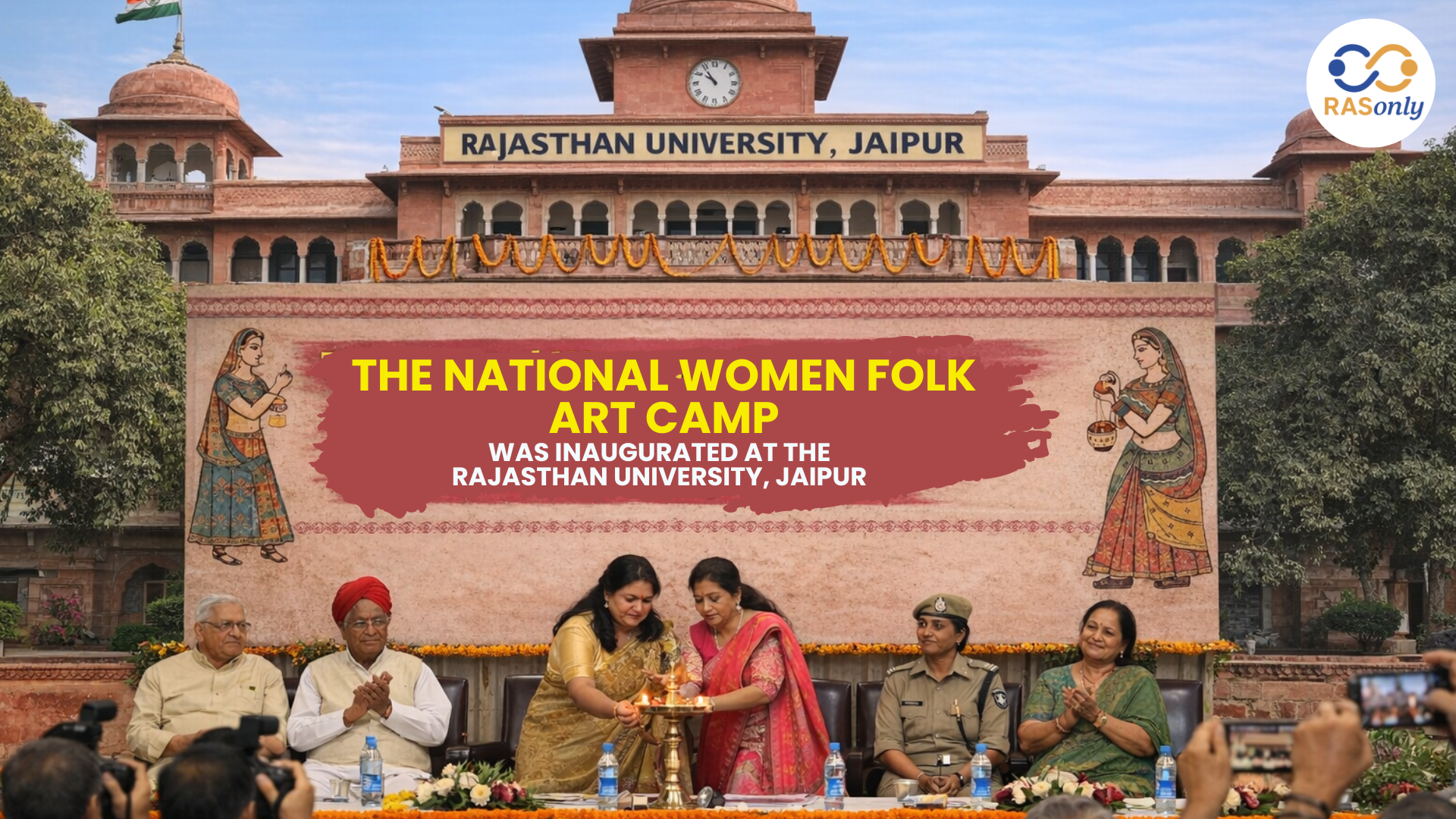
Rajasthan Governor Haribhau Bagde opened the National Women Folk Art Camp in the Rajasthan University campus, which was organised by the Department of Visual Arts. In the process, he was able to meet female artists who were not state residents. The Governor explained Indian handicrafts, the painting-related cottage industries, and household industries were purposely closed down by the British to ensure that people could rely on the economy and remain uprooted culturally. With reference to Mahatma Gandhi perspectives, he indicated that the people were being forced to be hungry by shutting down the domestic industries to corrode the culture at the starting point. He emphasized the role of hiding the Indian arts by the traditional artists and therefore, the National Women Folk Art Camp needs a great deal of support.
What the Governor Said on Colonial-Era Impact.
- The British shut down cottage and domestic industries that related to handicrafts and painting.
- According to the intention, the aim was to keep the country in a state of dependence and, therefore, constantly a slave.
- He connected this concept with the expressions of Mahatma Gandhi about closing domestic industries which made people hungry and tried to eliminate culture until the very first foundations.
- According to him, it was the traditional artists who made sure that arts in India continued to live amidst these demands.
Allusions to the Indian Artistic Heritage.
- He had explained that it was only after coming to India that the British realized that cloth was made out of cotton.
- He stated that the ship drawings can be found in Indian art as far back as the 7th century citing Ajanta-style paintings heritage.
- He claimed that Indian artworks employed colours which did not fade away with time.
- He further pointed out that Indian arts and craftsmanship were also used in many of the Western inventions despite their artistic knowledge and skills being stolen.
Significance of Folk Arts and the purpose of such Camps.
Objectives
- Traditional arts and crafts should be encouraged and promoted.
- Maintaining folk life and culture Supporting folk traditions related to local life and culture.
- Provide learning exposure to students by exposing them to artists and artworks.
Significance
- Folk arts and crafts are indications of the culture and daily life of certain locations.
- Rajasthan has traditionally been a great hub of arts.
- Through such camps the traditional arts are protected and at the same time the students are exposed to a modern artistic perspective.
Event Details
- Location: Rajasthan university campus, Jaipur.
- Organiser: Department of Visual Arts.
- Official opening of the national women folk art camp and folk art booths visit.
- Participation: 32 state women artists.
- The Governor visited stalls and tried to find out more about the folk arts of those artists who were the representatives of the states of Bihar, Odisha, and West Bengal.
Conclusion
The occasion emphasized the cultural importance of folk arts and how traditional communities of artists needed to be reinforced. When she opened the National Women Folk Art Camp and visited artists directly, the Governor emphasized the historical problem of the Indian handicrafts and artists that preserve traditions. Preservation of heritage and learning among students within a university setting are also connected with the camp.
MCQs (RAS Prelims Pattern)
Q1. What was the name of the institution/unit on which the Governor inaugurated the National Women Folk Art Camp?
(a) Department of Archaeology, Government of Rajasthan.
(b) Rajasthan University, Department of Visual Arts.
(c) Lalit Kala Akademi Jaipur Regional Centre.
(d) Rajasthan State Institute of Fine Arts.
Answer: (b)
The camp was inaugurated at the Rajasthan University campus by Governor Haribhau Bagde and was particularly brought about by the Department of Visual Arts at the university.
Q2. The number of women artists who attended the National Women Folk Art Camp as per the report is?
(a) 16
(b) 24
(c) 30
(d) 32
Answer: (d)
The report explicitly states that 32 women artists in various states attended the camp as was hosted at the Jaipur Rajasthan University campus.
Q3. The Governor argued, why did the British close down cottage and household industries that were related to handicraft in India?
(a) To maintain the country economically reliant and culturally disoriented to the extent that it was kept in slavery.
(b) To safeguard Indian arts by concentrating production under the state control.
(c) To only encourage agricultural labor as the primary source of livelihood.
(d) To move artisans to the modern factory jobs where people receive higher wages.
Answer: (a)
The Governor explained that the British shut these local industries in such a way that people would die of starvation and the culture would be taken down at its core leaving the nation in dependance and slavery.
राजस्थान विश्वविद्यालय, जयपुर में राष्ट्रीय महिला लोक कला शिविर का शुभारंभ
राजस्थान के राज्यपाल हरिभाऊ बागडे ने राजस्थान विश्वविद्यालय परिसर में राष्ट्रीय महिला लोक कला शिविर का शुभारंभ किया, जिसका आयोजन दृश्यकला विभाग द्वारा किया गया। इस दौरान उन्होंने विभिन्न राज्यों से आई महिला कलाकारों से संवाद किया। राज्यपाल ने बताया कि अंग्रेजों ने भारतीय हस्तकलाओं, चित्रकला से जुड़े कुटीर उद्योगों और घरेलू उद्योगों को जानबूझकर बंद किया ताकि लोग आर्थिक रूप से निर्भर रहें और सांस्कृतिक रूप से जड़ से कट जाएँ। महात्मा गांधी के विचारों का संदर्भ देते हुए उन्होंने कहा कि घरेलू उद्योगों को बंद कर लोगों को भूख की ओर धकेला गया, जिससे संस्कृति की नींव को कमजोर किया जा सके। उन्होंने जोर दिया कि पारंपरिक कलाकारों ने भारतीय कलाओं को जीवित रखा है, इसलिए ऐसे शिविरों को व्यापक समर्थन मिलना चाहिए।
औपनिवेशिक काल के प्रभाव पर राज्यपाल के कथन
- अंग्रेजों ने हस्तकला और चित्रकला से जुड़े कुटीर एवं घरेलू उद्योगों को बंद किया।
- उनके कथन के अनुसार उद्देश्य देश को निर्भर बनाकर “सदा गुलाम” बनाए रखना था।
- उन्होंने महात्मा गांधी के विचारों से जोड़ते हुए कहा कि घरेलू उद्योगों के बंद होने से लोग भूख की स्थिति में पहुँचे और संस्कृति को जड़ से कमजोर करने की कोशिश हुई।
- उन्होंने कहा कि पारंपरिक कलाकारों ने इन परिस्थितियों के बावजूद भारतीय कलाओं को जीवित बनाए रखा।
भारतीय कलात्मक विरासत के संदर्भ
- उन्होंने कहा कि अंग्रेजों को भारत आने के बाद ही पता चला कि कपास से कपड़ा बनता है।
- अजंता-शैली की चित्रकला विरासत का उल्लेख करते हुए उन्होंने कहा कि 7वीं शताब्दी में भी जहाजों के चित्र भारतीय कला में मिलते हैं।
- उन्होंने दावा किया कि भारतीय कलाकृतियों में ऐसे रंग प्रयुक्त होते थे जो समय के साथ फीके नहीं पड़ते थे।
- उन्होंने यह भी कहा कि भारतीय कला और कारीगरी से प्रेरणा लेकर पश्चिमी देशों ने अनेक आविष्कार किए, जबकि हमारी कलात्मक जानकारी और कौशल को लूटा भी गया।
लोक कलाओं का महत्व और ऐसे शिविरों का उद्देश्य
उद्देश्य
- पारंपरिक कला एवं शिल्प को प्रोत्साहन और बढ़ावा देना।
- स्थानीय जीवन और संस्कृति से जुड़ी लोक परंपराओं का संरक्षण और संवर्धन।
- विद्यार्थियों को कलाकारों और कलाकृतियों के प्रत्यक्ष संपर्क से सीखने का अवसर देना।
महत्व
- लोक कलाएँ और शिल्प किसी स्थान विशेष की संस्कृति और दैनिक जीवन को प्रतिबिंबित करते हैं।
- राजस्थान पारंपरिक रूप से कलाओं का एक प्रमुख केंद्र रहा है।
- ऐसे शिविरों के माध्यम से पारंपरिक कलाओं का संरक्षण होता है और विद्यार्थियों को आधुनिक कलादृष्टि से जोड़ने का अवसर मिलता है।
कार्यक्रम विवरण
- स्थान: राजस्थान विश्वविद्यालय परिसर, जयपुर।
- आयोजक: दृश्यकला विभाग।
- गतिविधि: राष्ट्रीय महिला लोक कला शिविर का औपचारिक उद्घाटन एवं लोक कला स्टॉल/स्टॉलों का अवलोकन।
- सहभागिता: विभिन्न राज्यों की 32 महिला कलाकार।
- राज्यपाल ने स्टॉलों का भ्रमण किया और बिहार, ओडिशा तथा पश्चिम बंगाल जैसे राज्यों से आई कलाकारों की लोक कलाओं के बारे में जानकारी ली।
निष्कर्ष
यह आयोजन लोक कलाओं के सांस्कृतिक महत्व और पारंपरिक कलाकार समुदायों को मजबूत करने की आवश्यकता को रेखांकित करता है। राष्ट्रीय महिला लोक कला शिविर का उद्घाटन कर तथा कलाकारों से सीधे संवाद करके राज्यपाल ने भारतीय हस्तकलाओं के ऐतिहासिक संघर्ष और परंपराओं को जीवित रखने वाले कलाकारों की भूमिका पर जोर दिया। यह शिविर विश्वविद्यालय परिसर में विरासत-संरक्षण और छात्र-शिक्षण को जोड़ता है।
बहुविकल्पीय प्रश्न (RAS प्रीलिम्स पैटर्न)
Q1. राज्यपाल ने राष्ट्रीय महिला लोक कला शिविर का शुभारंभ किस संस्था/इकाई के अंतर्गत आयोजित कार्यक्रम में किया?
(a) राजस्थान सरकार, पुरातत्व विभाग
(b) राजस्थान विश्वविद्यालय, दृश्यकला विभाग
(c) ललित कला अकादमी, जयपुर क्षेत्रीय केंद्र
(d) राजस्थान राज्य ललित कला संस्थान
उत्तर: (b)
यह शिविर राजस्थान विश्वविद्यालय परिसर में आयोजित हुआ और इसे विश्वविद्यालय के दृश्यकला विभाग द्वारा आयोजित किया गया था, जिसका शुभारंभ राज्यपाल हरिभाऊ बागडे ने किया।
Q2. रिपोर्ट के अनुसार राष्ट्रीय महिला लोक कला शिविर में कितनी महिला कलाकारों ने भाग लिया?
(a) 16
(b) 24
(c) 30
(d) 32
उत्तर: (d)
रिपोर्ट में स्पष्ट है कि देश के विभिन्न राज्यों से कुल 32 महिला कलाकारों ने इस शिविर में भाग लिया।
Q3. राज्यपाल के अनुसार अंग्रेजों ने भारत में हस्तकला से जुड़े कुटीर एवं घरेलू उद्योग क्यों बंद किए?
(a) देश को आर्थिक रूप से निर्भर और सांस्कृतिक रूप से जड़ से काटकर गुलामी में बनाए रखने हेतु
(b) राज्य नियंत्रण के तहत उत्पादन केंद्रित कर भारतीय कलाओं की रक्षा हेतु
(c) कृषि श्रम को ही आजीविका का मुख्य साधन बनाने हेतु
(d) कारीगरों को आधुनिक कारखानों में अधिक वेतन वाली नौकरियाँ देने हेतु
उत्तर: (a)
राज्यपाल के अनुसार अंग्रेजों ने इन घरेलू उद्योगों को इस उद्देश्य से बंद किया कि लोग भूख की ओर धकेले जाएँ, संस्कृति की नींव कमजोर हो और देश आर्थिक निर्भरता के कारण गुलामी में बना रहे।