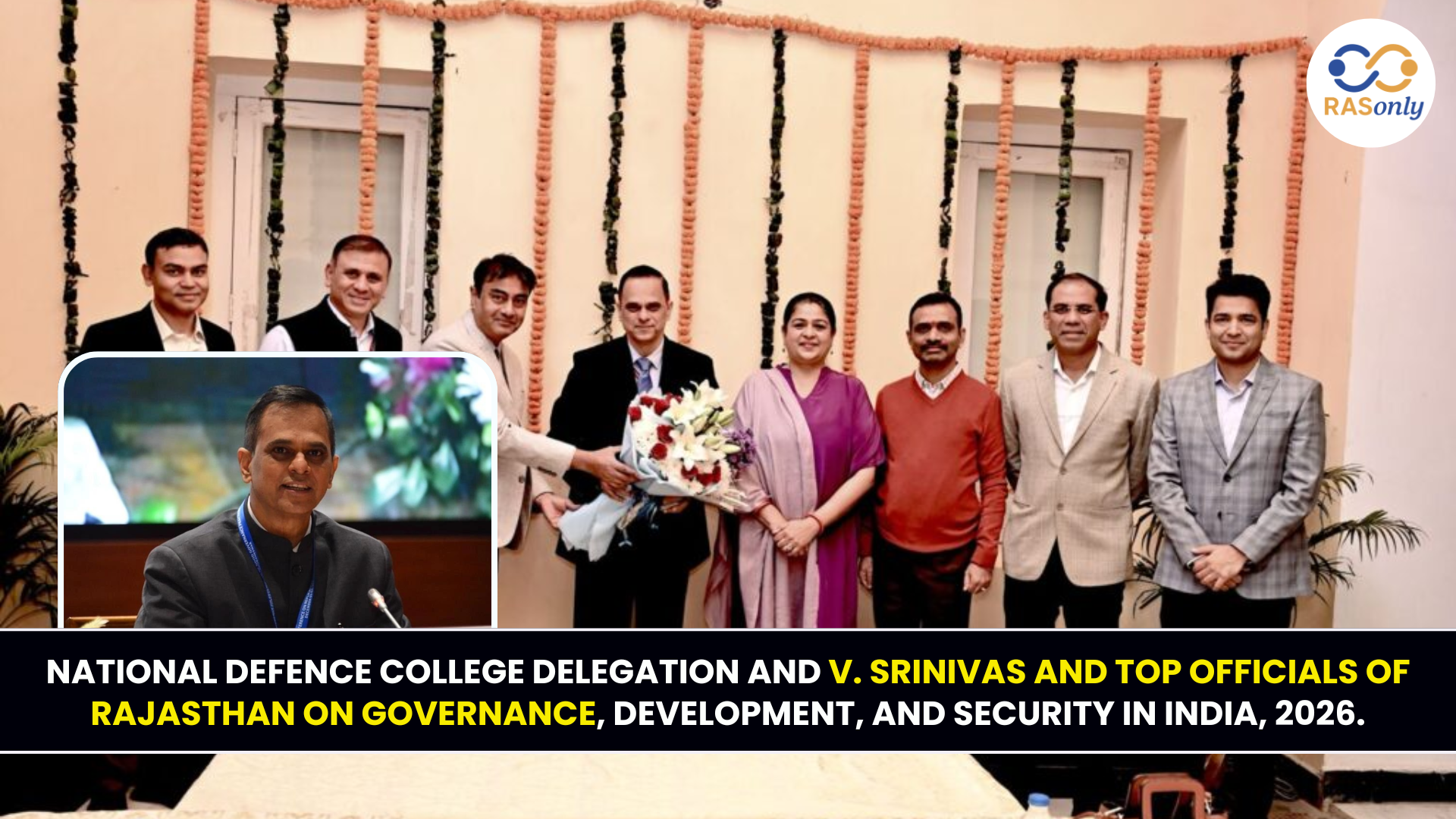
On 2 February during the Understanding India Study Tour, 2026, a National Defence College delegation met the Secretariat in Jaipur and had an introductory, interactive encounter with the V. Srinivas, Chief Secretary of Rajasthan and senior state officials. Delegates were senior officers of the Indian Army, Indian Air Force, Indian Navy, Indian Revenue Service as well as delegates of different countries. According to the Chief Secretary, the socio-economic path of the state is gradually shifting towards a developed future where inclusive development, empowered human resources and an innovation-led governance approach will create a turn around in the state of Rajasthan.
Some of the main points of the conversation are as follows.
- The Chief Secretary talked about the discussion as a good platform to present administration experience and development model of Rajasthan and the policy direction.
- They directed departments to maintain constant liaison and contacts with the delegation in the study tour.
A detailed briefing was done on:
- The socio-economic status and the administrative system of Rajasthan.
- Internal security arrangements.
- Significant sectoral schemes and programmes under implementation in the state.
Frequent briefs by Senior Officers in Sector wise.
- Industry and Investment: Shikhar Agrawal provided his contribution in terms of industrial development, policy of promotion of investment, industrial parks, promotion of exports and creation of employment.
- Skills and Employment: Sandeep Verma announced initiatives regarding skill training, job fair, apprenticeship, ITI consolidation and youth based initiatives.
- Higher and Technical Education: Kuldeep Ranka prioritized higher education, scholarships, education of girls, the development of infrastructure, and the work based on employment.
- Rural Development and Women Livelihoods The speaker, Shreya Guha addressed women empowerment and livelihood programmes, SHGs, and projects such as Lakhpati Didi, Solar Didi, Drone Didi, etc.
- Home and Internal Security: Bhaskar Atmaram Sawant was briefed on the issue of law and order, control of cybercrime, formation of task forces, CCTV surveillance, and introducing new legislation against crime.
- Energy and Renewables: Ajitabh Sharma gave the profile of the power sector of Rajasthan, renewable energy, solar and wind project, and developments under PM-KUSUM and PM-Surya Ghar.
- Health informatics Gayatri A. Rathore provided information about the health infrastructure, the Chief Minister Ayushman Arogya Yojana, medical education, medical and dental colleges, tertiary care, digital OPD management, and the care of the elderly.
- Mines, Minerals and Energy Security: T. Ravikant emphasised on mineral resources, mining auction, exploration of essential minerals and the contribution of Rajasthan in energy security.
- Women and Child Development: Bhawani Singh Detha presented on the topics of maternal and child health, nutrition, girl empowerment, women safety, skills, and social protection.
- Urban Development and Housing: AMRUT works, water supply, sewerage, revitalization of water sources, housing projects were discussed by Debashish Prusti.
- School Education: Krishna Kunal exchanged the state of the school education, infrastructure, PM-SHRI schools, smart classrooms and student welfare schemes.
- Planning and Digital Governance: Ravi Kumar Surpur showed the economic profile of Rajasthan and the long-term vision plan called Viksit Rajasthan @2047, which will involve e-governance reforms in the form of: the state data centre, RajNet, Jan Soochna Portal, e-Mitra, Rajasthan Sampark, and Abhay Command and Control Centre.
- Cooperation and Social Security: Andanandi emphasized on cooperative credit, interest subsidy, core banking, storage facilities, farmer welfare programmes, as well as exchange of information on social security programmes pensions, scholarships, coaching support and rehabilitation-related programmes of deprived sections.
Purposes and Importance.
Objectives
- establish a systematic communication between the state administration and the senior officers, both national/international.
- The trajectory of development of Present Rajasthan in the areas of economy, social sectors, and governance.
- Exchange operational strategies in internal security, computer crime, and technology-enabled services delivery.
Significance for RAS Exam
- Displays the fact that inter-institutional dialogues facilitate policy learning and the sharing of best practices.
- Connects inclusive development + human resource empowerment + innovation-based governance to long term visions such as Viksit Rajasthan@2047.
- Emphasizes the comprehensive character of governance: industry, skills, education, health, women empowerment, urban services, energy transition and security in a partnership.
Conclusion
The visit between the Understanding India Study Tour, 2026 and the Governance and Development priorities of Rajasthan presented the priorities of the Governance and development of the state before a high-level delegation of the National Defence college. The debates linked socio-economic growth and human resource development, women-headed livelihoods, digital governance, infrastructure and service provision and internal security. The areas of such engagements are useful in projecting the state-level administrative models, enhancing the effectiveness of coordination, and increasing policy views in the form of structured dialogue.
MCQs (English)
MCQ 1. What is the name of the state-level functionary that was the chair of the NDC delegation in the Jaipur meeting?
(a) Deputy Secretary of the Home Office.
(b) Principal Secretary, Medical and Health.
(c) Chief Secretary of Rajasthan.
(d) Secretary, School Education
Answer: (c)
Explanation : The Chief Secretary of Rajasthan chaired the meeting and introduced the delegation and instructed departments to maintain ongoing coordination and dialogue throughout the study tour.
MCQ 2. What was the precise theme that the Chief Secretary emphasized upon, when stating that Rajasthan was headed towards a developed future?
(a) Privatisation, disinvestment, and deregulation on a rapid basis.
(b) Inclusion development, empowered human resource and innovation-based governance.
(c) Defence production, border developments and sea power.
(d) Heritage branding and growth only through tourism.
Answer: (b)
Explanation: The Chief Secretary emphasised that the socio-economic path of Rajasthan is being undertaken by inclusive development, a robust human resource, and governance that is more innovation-based.
MCQ 3. During the briefing, what department undertook cybercrime control presentation, task force formation, CCTV surveillance and introduction of new criminal laws?
Municipality 3. Rural Development Department.
(b) Home Department
(c) Urban Development and Housing Department
(d) Mines and Petroleum Department.
Answer: (b)
Explanation: The Home Department briefing has focused on internal security and law and order issues such as cybercrime control, task forces, CCTV based surveillance, and enactment of new criminal laws.
वर्ष 2026 में शासन, विकास एवं सुरक्षा पर नेशनल डिफेन्स कॉलेज प्रतिनिधिमंडल और श्री वी. श्रीनिवास तथा राजस्थान के वरिष्ठ अधिकारियों के बीच संवाद
2 फरवरी को ‘अंडरस्टैंडिंग इंडिया स्टडी टूर, 2026’ के दौरान नेशनल डिफेन्स कॉलेज के प्रतिनिधिमंडल ने जयपुर स्थित सचिवालय में राजस्थान के मुख्य सचिव वी. श्रीनिवास तथा राज्य सरकार के वरिष्ठ अधिकारियों के साथ परिचयात्मक एवं संवादात्मक बैठक की। प्रतिनिधिमंडल में भारतीय थल सेना, भारतीय वायु सेना, भारतीय नौसेना, भारतीय राजस्व सेवा के वरिष्ठ अधिकारी तथा विभिन्न देशों के प्रतिनिधि शामिल थे। मुख्य सचिव के अनुसार राजस्थान की सामाजिक-आर्थिक यात्रा एक “विकसित भविष्य” की ओर निरंतर अग्रसर है, जिसमें समावेशी विकास, सशक्त मानव संसाधन और नवाचार आधारित शासन एक परिवर्तनकारी भूमिका निभाएंगे।
संवाद के मुख्य बिंदु
• मुख्य सचिव ने इस संवाद को राजस्थान के प्रशासनिक अनुभव, विकास मॉडल और नीतिगत दिशा को प्रस्तुत करने के लिए एक सशक्त मंच बताया।
• उन्होंने विभागों को निर्देश दिए कि अध्ययन भ्रमण के दौरान प्रतिनिधिमंडल के साथ निरंतर संपर्क, समन्वय और संवाद सुनिश्चित किया जाए।
• बैठक में विस्तृत जानकारी दी गई:
○ राजस्थान की सामाजिक-आर्थिक स्थिति और प्रशासनिक संरचना
○ आंतरिक सुरक्षा व्यवस्थाएँ
○ राज्य में संचालित प्रमुख क्षेत्रीय योजनाएँ और कार्यक्रम
वरिष्ठ अधिकारियों द्वारा क्षेत्रवार प्रस्तुतियाँ
• उद्योग और निवेश: शिखर अग्रवाल ने औद्योगिक विकास, निवेश प्रोत्साहन नीतियों, औद्योगिक पार्कों, निर्यात संवर्धन और रोजगार सृजन पर जानकारी दी।
• कौशल और रोजगार: संदीप वर्मा ने कौशल प्रशिक्षण, रोजगार मेलों, अप्रेंटिसशिप, औद्योगिक प्रशिक्षण संस्थान सुदृढ़ीकरण और युवाओं के लिए योजनाओं पर पहलें साझा कीं।
• उच्च और तकनीकी शिक्षा: कुलदीप रांका ने उच्च शिक्षा, छात्रवृत्तियाँ, बालिका शिक्षा, अधोसंरचना विकास और रोजगारोन्मुख प्रयासों को रेखांकित किया।
• ग्रामीण विकास और महिला आजीविका: श्रेया गुहा ने महिला सशक्तिकरण, आजीविका कार्यक्रम, स्वयं सहायता समूह तथा लखपति दीदी, सोलर दीदी, ड्रोन दीदी जैसी पहलों पर बात की।
• गृह और आंतरिक सुरक्षा: भास्कर आत्माराम सावंत ने कानून-व्यवस्था, साइबर अपराध नियंत्रण, टास्क फोर्स गठन, सीसीटीवी निगरानी और नए आपराधिक कानूनों के क्रियान्वयन की जानकारी दी।
• ऊर्जा और नवीकरणीय ऊर्जा: अजिताभ शर्मा ने विद्युत क्षेत्र का प्रोफाइल, नवीकरणीय ऊर्जा, सौर व पवन परियोजनाएँ तथा पीएम-कुसुम और पीएम-सूर्य घर योजनाओं की प्रगति साझा की।
• स्वास्थ्य: गायत्री ए. राठौड ने स्वास्थ्य अधोसंरचना, मुख्यमंत्री आयुष्मान आरोग्य योजना, चिकित्सा शिक्षा, मेडिकल-डेंटल कॉलेज, तृतीयक उपचार, डिजिटल ओपीडी प्रबंधन और वृद्धजन देखभाल पर जानकारी दी।
• खान, खनिज और ऊर्जा सुरक्षा: टी. रविकान्त ने खनिज संसाधन, खनन नीलामी, महत्वपूर्ण खनिजों की खोज और ऊर्जा सुरक्षा में राजस्थान की भूमिका पर जोर दिया।
• महिला एवं बाल विकास: भवानी सिंह देथा ने मातृ-शिशु स्वास्थ्य, पोषण, बालिका सशक्तिकरण, महिला सुरक्षा, कौशल और सामाजिक संरक्षण योजनाओं की जानकारी दी।
• नगरीय विकास और आवासन: डॉ. देबाशीष पृष्टी ने अमृत कार्य, जलापूर्ति, सीवरेज, जल स्रोत पुनर्जीवन और आवास परियोजनाओं पर चर्चा की।
• स्कूल शिक्षा: कृष्ण कुणाल ने स्कूल शिक्षा की स्थिति, आधारभूत ढांचा, पीएम-श्री विद्यालय, स्मार्ट कक्षा-कक्ष और विद्यार्थी कल्याण योजनाओं को साझा किया।
• आयोजना और डिजिटल गवर्नेंस: डॉ. रवि कुमार सुरपुर ने राजस्थान की आर्थिक प्रोफाइल और “विकसित राजस्थान@2047” दीर्घकालिक दृष्टि पर प्रस्तुति दी, जिसमें ई-गवर्नेंस सुधारों के रूप में राज्य डेटा सेंटर, राजनेट, जन सूचना पोर्टल, ई-मित्र, राजस्थान संपर्क और अभय कमांड एंड कंट्रोल सेंटर का उल्लेख किया गया।
• सहकारिता और सामाजिक सुरक्षा: आनंदी ने सहकारी ऋण, ब्याज अनुदान, कोर-बैंकिंग, भंडारण सुविधाएँ, किसान कल्याण कार्यक्रम तथा सामाजिक सुरक्षा योजनाएँ—पेंशन, छात्रवृत्ति, कोचिंग सहायता और वंचित वर्गों के पुनर्वास से जुड़े कार्यक्रमों—पर जानकारी दी।
उद्देश्य और महत्व
उद्देश्य
• राज्य प्रशासन और राष्ट्रीय/अंतरराष्ट्रीय वरिष्ठ अधिकारियों के बीच व्यवस्थित संवाद स्थापित करना।
• अर्थव्यवस्था, सामाजिक क्षेत्रों और शासन के संदर्भ में राजस्थान के विकास पथ को प्रस्तुत करना।
• आंतरिक सुरक्षा, साइबर अपराध और तकनीक आधारित सेवा-प्रदान में संचालनात्मक रणनीतियों का आदान-प्रदान करना।
आरएएस परीक्षा के लिए महत्व
• दिखाता है कि संस्थागत संवाद नीति सीखने और सर्वोत्तम प्रथाओं के आदान-प्रदान में कैसे सहायक होते हैं।
• समावेशी विकास, मानव संसाधन सशक्तिकरण और नवाचार आधारित शासन को “विकसित राजस्थान@2047” जैसी दीर्घकालिक दृष्टि से जोड़ता है।
• शासन की समग्रता को रेखांकित करता है, जहाँ उद्योग, कौशल, शिक्षा, स्वास्थ्य, महिला सशक्तिकरण, नगरीय सेवाएँ, ऊर्जा संक्रमण और सुरक्षा परस्पर सहयोग में काम करते हैं।
निष्कर्ष
‘अंडरस्टैंडिंग इंडिया स्टडी टूर, 2026’ के तहत नेशनल डिफेन्स कॉलेज के उच्चस्तरीय प्रतिनिधिमंडल के समक्ष राजस्थान की शासन एवं विकास प्राथमिकताओं को प्रस्तुत किया गया। संवाद में सामाजिक-आर्थिक वृद्धि को मानव संसाधन विकास, महिला-नेतृत्व वाली आजीविका, डिजिटल गवर्नेंस, अवसंरचना व सेवा-प्रदान तथा आंतरिक सुरक्षा के साथ जोड़कर रखा गया। ऐसे संवाद राज्य-स्तरीय प्रशासनिक मॉडल को प्रदर्शित करने, समन्वय की प्रभावशीलता बढ़ाने और संरचित चर्चा के माध्यम से नीति दृष्टिकोण को व्यापक बनाने में सहायक होते हैं।
बहुविकल्पीय प्रश्न (केवल हिंदी)
प्रश्न 1. जयपुर में आयोजित एनडीसी प्रतिनिधिमंडल की बैठक की अध्यक्षता किस राज्य-स्तरीय पदाधिकारी ने की?
(a) गृह विभाग के उप सचिव
(b) चिकित्सा एवं स्वास्थ्य के प्रमुख सचिव
(c) राजस्थान के मुख्य सचिव
(d) स्कूल शिक्षा सचिव
उत्तर: (c)
बैठक की अध्यक्षता राजस्थान के मुख्य सचिव ने की, जिन्होंने प्रतिनिधिमंडल का स्वागत किया और अध्ययन भ्रमण के दौरान विभागों को सतत समन्वय व संवाद सुनिश्चित करने के निर्देश दिए।
प्रश्न 2. मुख्य सचिव ने “विकसित भविष्य” की ओर बढ़ने के लिए किस मूल थीम पर जोर दिया?
(a) तेज निजीकरण, विनिवेश और विनियमन-शिथिलीकरण
(b) समावेशी विकास, सशक्त मानव संसाधन और नवाचार आधारित शासन
(c) रक्षा उत्पादन, सीमा अवसंरचना और समुद्री विस्तार
(d) केवल पर्यटन आधारित वृद्धि और विरासत ब्रांडिंग
उत्तर: (b)
मुख्य सचिव के अनुसार राजस्थान की सामाजिक-आर्थिक यात्रा समावेशी विकास, मानव संसाधन सशक्तिकरण और नवाचार आधारित शासन के माध्यम से विकसित भविष्य की ओर अग्रसर है।
प्रश्न 3. ब्रीफिंग में साइबर अपराध नियंत्रण, टास्क फोर्स गठन, सीसीटीवी निगरानी और नए आपराधिक कानूनों के क्रियान्वयन से संबंधित प्रस्तुति किस विभाग ने दी?
(a) ग्रामीण विकास विभाग
(b) गृह विभाग
(c) नगरीय विकास एवं आवासन विभाग
(d) खान एवं पेट्रोलियम विभाग
उत्तर: (b)
गृह विभाग की प्रस्तुति में आंतरिक सुरक्षा व कानून-व्यवस्था के विषय शामिल थे, जिनमें साइबर अपराध नियंत्रण, टास्क फोर्स गठन, सीसीटीवी निगरानी और नए आपराधिक कानूनों के क्रियान्वयन की जानकारी दी गई