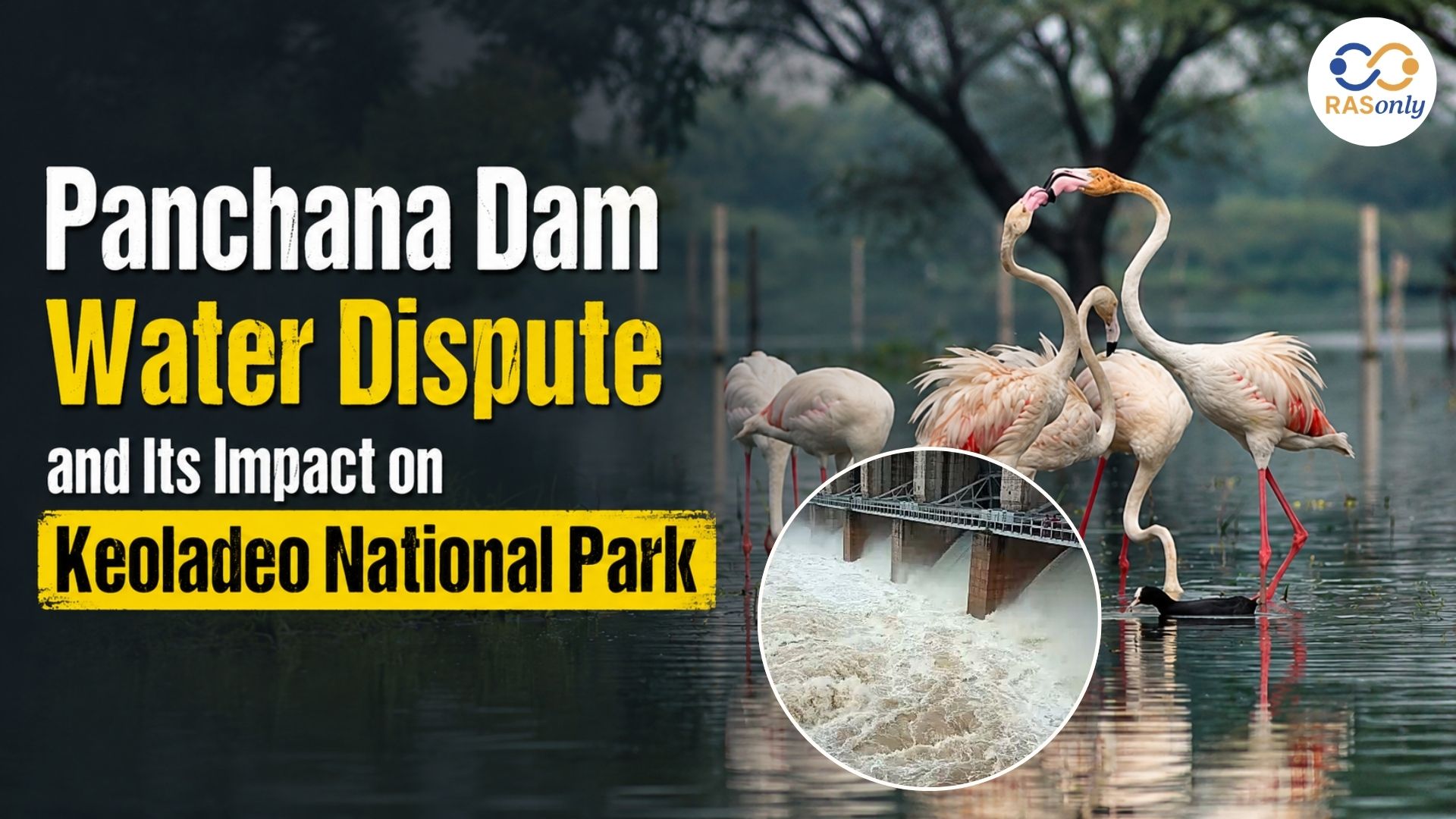
The Panchana Dam water dispute has become a cause of concern for the future of a UNESCO World Heritage Site and a Ramsar Wetland, Keoladeo National Park (Bharatpur). The Rajasthan High Court has asked for a clarification from the relevant authorities regarding the failure to release water from Panchana Dam into the Gambhir River, which is the main source of water for the park.
Background
The Keoladeo National Park relies on the water released from Panchana Dam through the Gambhir River to sustain its wetland ecosystem. However, the water distribution dispute between farmers in the command and catchment areas has disrupted the flow, raising concerns over the park's ecological sustainability.
Key Developments
Rajasthan High Court Intervention
- A Public Interest Litigation (PIL) has been filed in the Rajasthan High Court regarding the Panchana Dam water dispute.
- The Court has sought replies from the Secretary of the Water Resources Department, Karauli District Collector, Chief Engineer, and other concerned authorities.
- The Court has questioned why water from Panchana Dam is not being released into the Gambhir River.
Importance of Keoladeo National Park
- Keoladeo National Park covers nearly 29 sq. km. and is one of the world's most important wetland ecosystems.
- More than 375 bird species have been recorded in the park.
- Every winter, thousands of migratory birds arrive from Siberia, Central Asia, Europe, and different parts of India.
- The park is recognized as both a Ramsar Site and a UNESCO World Heritage Site.
Water Requirements and the Forest Department's Concerns
- Former Deputy Conservator of Forests (Wildlife)informed the Water Resources Department that approximately 550 MCFT of water is required annually for the park.
- In 2022, only 315.81 MCFT of water was supplied.
- The present DFO has again requested the release of adequate water for the park.
- Deputy Conservator of Forests (Wildlife) has written to the Divisional Commissioner highlighting the increasing problem of water scarcity.
The Effect of Diminished Water Flow
- Since the expansion of Panchana Dam in 2003, the flow of water through the Gambhir River to Ajan Dam has reduced significantly.
- Reduced water availability negatively affects:
- Breeding bird populations
- Arrival of migratory birds
- Tourism
- Overall wetland ecology
- June–July is the breeding season for local birds.
- October–November is the migration season for migratory birds.
- Insufficient water forces birds to relocate, affecting the park's international reputation and tourism.
Gambhir River and Ecological Concerns
- The Gambhir River was once one of the major rivers of eastern Rajasthan.
- It originates in Karauli and is the primary source of water for Keoladeo National Park.
- Over the years, large sections of the river have become silted and transformed into sandy stretches.
- According to the Gambhir River Water Conservation Committee, the construction of Panchana Dam disturbed the natural river flow.
- Around 288 km of the river and nearly 360 villages have been affected, reducing the natural water cycle supporting the park.
Present Water Dispute
- Farmers in the command area are demanding water release through irrigation canals.
- Farmers from 39 villages around the dam seek priority for agricultural water use.
- The conflict has continued for nearly 20 years.
- Environmental experts warn that failure to maintain the minimum environmental flow in the Gambhir River may severely affect the ecosystem of the Keoladeo wetland.
Why is this Issue Important?
Ecological Importance
- Conserves one of India's most important wetland ecosystems.
- Provides habitat for hundreds of resident and migratory bird species.
- Maintains ecological diversity and environmental balance.
Environmental Significance
- Maintains environmental flow (e-flow) in the Gambhir River.
- Conserves the Ramsar wetland ecosystem.
- Protects the UNESCO World Heritage Site from ecological degradation.
Economic Importance
- Promotes tourism in Bharatpur.
- Generates employment through eco-tourism.
- Supports the regional economy.
Challenges and Concerns
Water Allocation Conflict
- Long-standing dispute over water sharing between command area farmers and catchment area farmers.
Wetland Conservation
- Inadequate water supply threatens the wetland ecosystem and migratory bird habitat.
River Flow Management
- Maintaining a regular environmental flow in the Gambhir River continues to be a major challenge.
RAS Prelims Facts
|
|
|
|
|
|
|
|
|
|
|
|
|
|
|
|
|
|
|
|
|
Conclusion
The Panchana Dam water dispute has evolved into a significant environmental issue with serious ecological implications. Ensuring adequate water release is essential for conserving the Keoladeo National Park wetland ecosystem, protecting migratory bird habitats, maintaining its international conservation status, and supporting biodiversity, tourism, and the regional economy.
MCQs
Q1. Which river is the primary source of water for Keoladeo National Park?
A) Chambal River
B) Banas River
C) Gambhir River
D) Luni River
Answer: C) Gambhir River
Explanation:
The Gambhir River is the main source of water for Keoladeo National Park. Water released from Panchana Dam flows through the Gambhir River and sustains the park's wetland ecosystem, which is essential for resident and migratory bird species.
Q2. Panchana Dam, associated with the water supply to Keoladeo National Park, is located in which district of Rajasthan?
A) Bharatpur
B) Sawai Madhopur
C) Dholpur
D) Karauli
Answer: D) Karauli
Explanation:
Panchana Dam is located in Karauli district of Rajasthan. It is built on the Gambhir River and serves as the primary water source for Keoladeo National Park. The ongoing dispute over water release from the dam has raised concerns about the park's ecological health.
Q3. Keoladeo National Park is recognized under which of the following international conservation designations?
A) Biosphere Reserve and Tiger Reserve
B) UNESCO World Heritage Site and Ramsar Site
C) Global Geopark and Ramsar Site
D) UNESCO Biosphere Reserve and Elephant Reserve
Answer: B) UNESCO World Heritage Site and Ramsar Site
Explanation:
Keoladeo National Park is internationally recognized as both a UNESCO World Heritage Site and a Ramsar Site due to its outstanding wetland ecosystem and its importance as a habitat for more than 375 bird species, including thousands of migratory birds that visit during winter.
पांचना बांध जल विवाद और केवलादेव राष्ट्रीय उद्यान पर इसका प्रभाव
पांचना बांध जल विवाद अब यूनेस्को विश्व धरोहर स्थल (UNESCO World Heritage Site) और रामसर आर्द्रभूमि (Ramsar Wetland) केवलादेव राष्ट्रीय उद्यान (भरतपुर) के भविष्य के लिए चिंता का विषय बन गया है। राजस्थान उच्च न्यायालय ने संबंधित अधिकारियों से यह स्पष्ट करने को कहा है कि पांचना बांध से गंभीर नदी में पानी क्यों नहीं छोड़ा जा रहा है, जबकि यही नदी उद्यान के लिए जल का प्रमुख स्रोत है।
पृष्ठभूमि
केवलादेव राष्ट्रीय उद्यान अपनी आर्द्रभूमि पारिस्थितिकी तंत्र को बनाए रखने के लिए गंभीर नदी के माध्यम से पांचना बांध से छोड़े जाने वाले पानी पर निर्भर है। हालांकि, कमांड क्षेत्र और कैचमेंट क्षेत्र के किसानों के बीच जल वितरण विवाद के कारण पानी का प्रवाह बाधित हो गया है, जिससे उद्यान की पारिस्थितिकीय स्थिरता पर गंभीर चिंता उत्पन्न हो गई है।
प्रमुख घटनाक्रम
राजस्थान उच्च न्यायालय का हस्तक्षेप
- पांचना बांध जल विवाद को लेकर राजस्थान उच्च न्यायालय में जनहित याचिका (PIL) दायर की गई है।
- न्यायालय ने जल संसाधन विभाग के सचिव, करौली जिला कलेक्टर, मुख्य अभियंता तथा अन्य संबंधित अधिकारियों से जवाब मांगा है।
- न्यायालय ने पूछा है कि पांचना बांध से गंभीर नदी में पानी क्यों नहीं छोड़ा जा रहा है।
केवलादेव राष्ट्रीय उद्यान का महत्व
- केवलादेव राष्ट्रीय उद्यान लगभग 29 वर्ग किलोमीटर क्षेत्र में फैला हुआ है और विश्व के सबसे महत्वपूर्ण आर्द्रभूमि पारिस्थितिकी तंत्रों में से एक है।
- उद्यान में 375 से अधिक पक्षी प्रजातियाँ दर्ज की गई हैं।
- प्रत्येक वर्ष सर्दियों के मौसम में साइबेरिया, मध्य एशिया, यूरोप तथा भारत के विभिन्न भागों से हजारों प्रवासी पक्षी यहां आते हैं।
- इस उद्यान को रामसर स्थल (Ramsar Site) तथा यूनेस्को विश्व धरोहर स्थल (UNESCO World Heritage Site) दोनों का दर्जा प्राप्त है।
जल आवश्यकता और वन विभाग की चिंताएँ
- पूर्व उप वन संरक्षक (वन्यजीव) ने जल संसाधन विभाग को बताया था कि उद्यान के लिए प्रतिवर्ष लगभग 550 एमसीएफटी (MCFT) पानी की आवश्यकता होती है।
- वर्ष 2022 में उद्यान को केवल 315.81 एमसीएफटी (MCFT) पानी उपलब्ध कराया गया।
- वर्तमान डीएफओ (DFO) ने भी उद्यान के लिए पर्याप्त पानी छोड़े जाने का पुनः अनुरोध किया है।
- उप वन संरक्षक (वन्यजीव) ने बढ़ती जल कमी की समस्या को लेकर संभागीय आयुक्त को पत्र लिखा है।
जल प्रवाह में कमी का प्रभाव
- वर्ष 2003 में पांचना बांध के विस्तार के बाद गंभीर नदी के माध्यम से अजान बांध तक पानी का प्रवाह काफी कम हो गया।
- पानी की कमी का नकारात्मक प्रभाव निम्न पर पड़ता है:
- स्थानीय पक्षियों के प्रजनन पर
- प्रवासी पक्षियों के आगमन पर
- पर्यटन पर
- संपूर्ण आर्द्रभूमि पारिस्थितिकी तंत्र पर
- जून–जुलाई स्थानीय पक्षियों का प्रजनन काल होता है।
- अक्टूबर–नवंबर प्रवासी पक्षियों के आगमन का मौसम होता है।
- पर्याप्त पानी न मिलने पर पक्षियों को अन्य स्थानों पर जाना पड़ता है, जिससे उद्यान की अंतरराष्ट्रीय पहचान और पर्यटन प्रभावित होता है।
गंभीर नदी और पारिस्थितिकीय चिंताएँ
- गंभीर नदी कभी पूर्वी राजस्थान की प्रमुख नदियों में से एक थी।
- इसका उद्गम करौली से होता है और यह केवलादेव राष्ट्रीय उद्यान के लिए जल का मुख्य स्रोत है।
- वर्षों के दौरान नदी के बड़े हिस्सों में गाद भर गई है और कई स्थानों पर यह रेतीले क्षेत्र में बदल गई है।
- गंभीर नदी जल संरक्षण समिति के अनुसार, पांचना बांध के निर्माण के बाद नदी का प्राकृतिक जल प्रवाह प्रभावित हो गया।
- लगभग 288 किलोमीटर नदी क्षेत्र तथा लगभग 360 गांव प्रभावित हुए हैं, जिससे उद्यान के प्राकृतिक जल चक्र पर प्रतिकूल प्रभाव पड़ा है।
वर्तमान जल विवाद
- कमांड क्षेत्र के किसान सिंचाई नहरों के माध्यम से पानी छोड़े जाने की मांग कर रहे हैं।
- बांध के आसपास के 39 गांवों के किसान अपनी कृषि गतिविधियों के लिए प्राथमिकता के आधार पर पानी की मांग कर रहे हैं।
- यह विवाद लगभग 20 वर्षों से जारी है।
- पर्यावरण विशेषज्ञों का कहना है कि यदि गंभीर नदी में न्यूनतम पर्यावरणीय प्रवाह (Environmental Flow) बनाए नहीं रखा गया, तो केवलादेव आर्द्रभूमि के पारिस्थितिकी तंत्र पर गंभीर प्रभाव पड़ सकता है।
यह मुद्दा क्यों महत्वपूर्ण है?
पारिस्थितिकीय महत्व
- भारत के सबसे महत्वपूर्ण आर्द्रभूमि पारिस्थितिकी तंत्रों में से एक का संरक्षण करता है।
- सैकड़ों स्थानीय एवं प्रवासी पक्षियों को प्राकृतिक आवास प्रदान करता है।
- पारिस्थितिकीय विविधता एवं पर्यावरणीय संतुलन बनाए रखने में सहायता करता है।
पर्यावरणीय महत्व
- गंभीर नदी में पर्यावरणीय प्रवाह (ई-फ्लो) बनाए रखता है।
- रामसर आर्द्रभूमि पारिस्थितिकी तंत्र का संरक्षण करता है।
- यूनेस्को विश्व धरोहर स्थल को पारिस्थितिकीय क्षति से बचाने में मदद करता है।
आर्थिक महत्व
- भरतपुर में पर्यटन को बढ़ावा देता है।
- इको-टूरिज्म के माध्यम से रोजगार के अवसर उत्पन्न करता है।
- क्षेत्रीय आर्थिक विकास में योगदान देता है।
चुनौतियाँ और चिंताएँ
जल आवंटन विवाद
- कमांड क्षेत्र एवं कैचमेंट क्षेत्र के किसानों के बीच जल बंटवारे का लंबे समय से चला आ रहा विवाद।
आर्द्रभूमि संरक्षण
- अपर्याप्त जल आपूर्ति से आर्द्रभूमि पारिस्थितिकी तंत्र तथा प्रवासी पक्षियों के आवास को खतरा है।
नदी प्रवाह प्रबंधन
- गंभीर नदी में नियमित पर्यावरणीय प्रवाह बनाए रखना अभी भी एक बड़ी चुनौती है।
प्रारंभिक परीक्षा (Prelims) तथ्य
|
|
|
|
|
|
|
|
|
|
|
|
|
|
|
|
|
|
|
|
|
निष्कर्ष
पांचना बांध जल विवाद अब एक महत्वपूर्ण पर्यावरणीय मुद्दा बन चुका है, जिसके गंभीर पारिस्थितिकीय प्रभाव सामने आ रहे हैं। केवलादेव राष्ट्रीय उद्यान की आर्द्रभूमि पारिस्थितिकी तंत्र के संरक्षण, प्रवासी पक्षियों के आवास की सुरक्षा, इसके अंतरराष्ट्रीय संरक्षण दर्जे को बनाए रखने तथा क्षेत्र में जैव विविधता, पर्यटन और आर्थिक विकास को सुनिश्चित करने के लिए पर्याप्त जल उपलब्ध कराना अत्यंत आवश्यक है।
बहुविकल्पीय प्रश्न (MCQs)
प्रश्न 1. केवलादेव राष्ट्रीय उद्यान के लिए जल का प्रमुख स्रोत कौन-सी नदी है?
A) चंबल नदी
B) बनास नदी
C) गंभीर नदी
D) लूणी नदी
उत्तर: C) गंभीर नदी
व्याख्या:
गंभीर नदी केवलादेव राष्ट्रीय उद्यान के लिए जल का प्रमुख स्रोत है। पांचना बांध से छोड़ा गया पानी गंभीर नदी के माध्यम से उद्यान तक पहुंचता है और इसकी आर्द्रभूमि पारिस्थितिकी तंत्र को बनाए रखता है, जो स्थानीय एवं प्रवासी पक्षियों के लिए अत्यंत आवश्यक है।
प्रश्न 2. केवलादेव राष्ट्रीय उद्यान को जल आपूर्ति से संबंधित पांचना बांध राजस्थान के किस जिले में स्थित है?
A) भरतपुर
B) सवाई माधोपुर
C) धौलपुर
D) करौली
उत्तर: D) करौली
व्याख्या:
पांचना बांध राजस्थान के करौली जिले में स्थित है। यह गंभीर नदी पर निर्मित है और केवलादेव राष्ट्रीय उद्यान के लिए जल का प्रमुख स्रोत है। बांध से पानी छोड़े जाने को लेकर चल रहे विवाद ने उद्यान के पारिस्थितिकीय स्वास्थ्य को लेकर चिंताएं बढ़ा दी हैं।
प्रश्न 3. केवलादेव राष्ट्रीय उद्यान को निम्नलिखित में से किस अंतरराष्ट्रीय संरक्षण मान्यता के अंतर्गत मान्यता प्राप्त है?
A) बायोस्फीयर रिजर्व एवं टाइगर रिजर्व
B) यूनेस्को विश्व धरोहर स्थल एवं रामसर स्थल
C) ग्लोबल जियोपार्क एवं रामसर स्थल
D) यूनेस्को बायोस्फीयर रिजर्व एवं हाथी रिजर्व
उत्तर: B) यूनेस्को विश्व धरोहर स्थल एवं रामसर स्थल
व्याख्या:
केवलादेव राष्ट्रीय उद्यान को इसकी उत्कृष्ट आर्द्रभूमि पारिस्थितिकी तंत्र तथा 375 से अधिक पक्षी प्रजातियों, जिनमें सर्दियों के दौरान आने वाले हजारों प्रवासी पक्षी भी शामिल हैं, के महत्वपूर्ण आवास के रूप में यूनेस्को विश्व धरोहर स्थल (UNESCO World Heritage Site) तथा रामसर स्थल (Ramsar Site) दोनों का दर्जा प्राप्त है।
