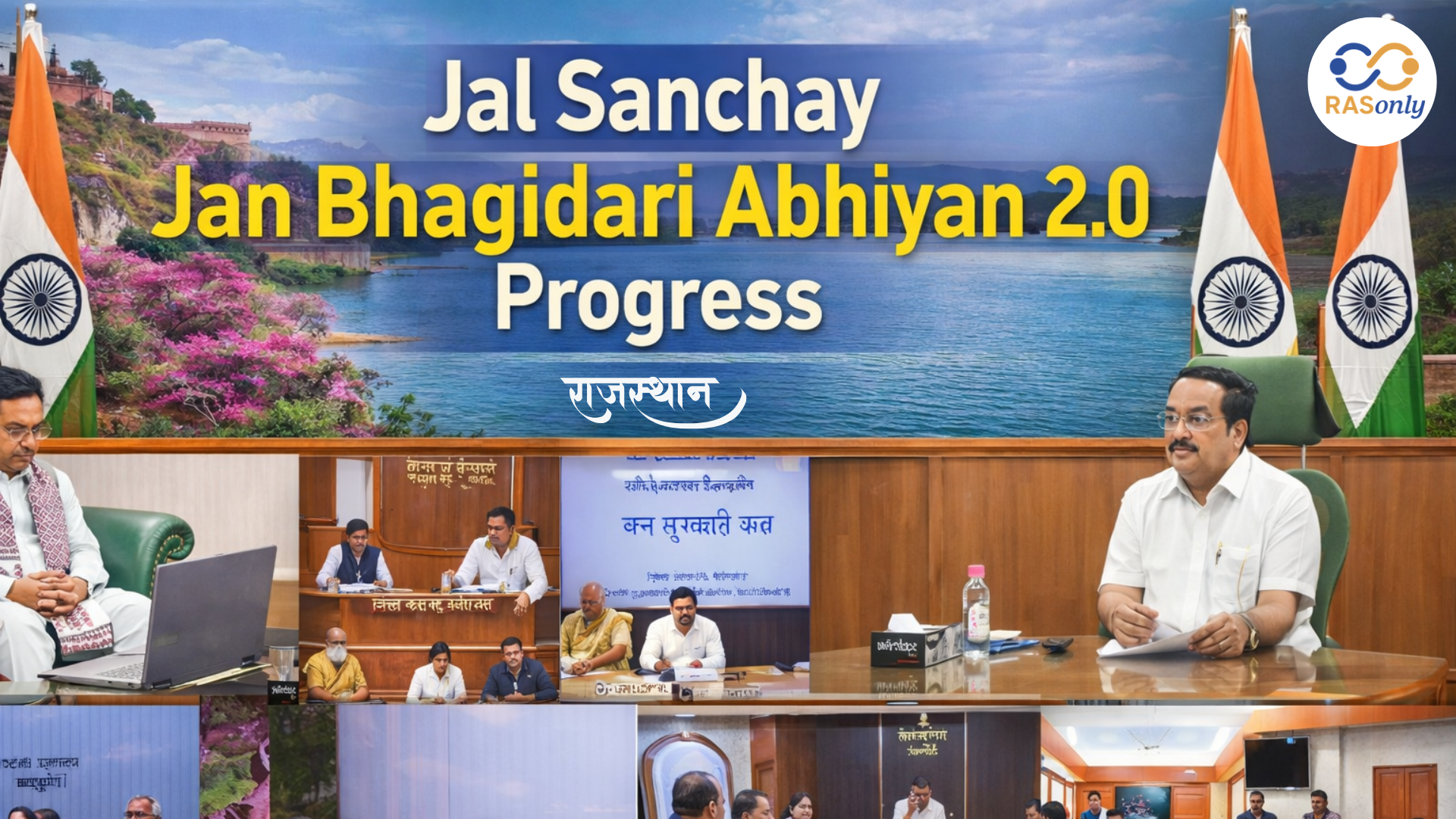
The other group Jal Sanchay Jan Bhagidari Abhiyan 2.0 became active in Rajasthan following a review progress meeting on 24 February. The state was requested to provide an adequate rainwater recharge capacity, and the state Minister of Union Jal Shakti C.R. Patil, in his virtual meeting mentioned in New Delhi, urged all the districts and urban local bodies to prioritize the treatment of water conservation as an important issue that all of them should be keen to participate in. He admired the water programmes of the Chief Minister Bhajanlal Sharma and singled out the community based river conservation in Dungarpur to positively reflect on. The Chief Minister was present virtually at Kishangarh airport and ordered an accelerated construction and repair of rainwater harvesting structures whose construction was to achieve targets within timelines.
Key Features
- Directions to achieve sufficient recharge capacity under Jal Sanchay Jan Bhagidari Abhiyan 2.0.
- Request to the district administrations and urban local bodies to make a priority in water saving works and enhance the aspects of public participation.
- The community-based river water conservation by Dungarpur is an initiative that should be recognized as an example.
- Push to accelerate construction and repair of rain water harvesting structures in districts.
- Examination of key water projects, such as the Ramjal Setu Link Project, which is said to be significant to Rajasthan.
- Revise that the DPR of the Yamuna water agreement to supply Yamuna water to the region of the Shekhawati is at its final stage.
Objectives and Benefits
Objectives
- Construct and enhance rainwater harvesting and recharge systems to collect all the available rain.
- Transform Jal Sanchay Jan Bhagidari Abhiyan 2.0 into the sustained action of community in relation to ULBs, PRIs, civil society, and citizens.
- Promote improvements in districts by meeting targets at the accelerated implementation and monitoring.
Benefits
- Support Improvement and restoration of ground water level and traditional water sources on a state level.
- Scale local models, like the use of participation-based conservation by Dungarpur, should be replicated.
- Strengthen results using competitive performance: Rajasthan got third place in Phase 1.0 of which the Union government known and rewarded Barmer and Bhilwara.
The timeline and the implementation will take place during the period of the 1996-2009 years.
- Phase-2 is called Vande Ganga Jal Sanrakshan Jan Abhiyan and is planned between 25 May (Ganga Dussehra) and 5 June (World Environment Day).
- Progress was offered by District Collectors of 2.0 Jal Sanchay Jan Bhagidari Abhiyan of both Dungarpur and Bhilwara.
- Some of the key officials who were interlinked in the review were the Chief Secretary V. Srinivas, ACS Water Resources Abhay Kumar, ACS (CMO) Akhil Arora, and the Additional Secretary and Mission Director (National Water Mission) Archana Verma and the district and municipal leadership through video conferencing.
Conclusion
Jal Sanchay Jan Bhagidari Abhiyan 2.0 review establishes a transparent administrative course in Rajasthan: the focus on water conservation, the development of recharge capacity, and the acceleration of rainwater harvesting activities with the involvement of people are the preferences. The state is making water security a goal-focused and governance-oriented mission with related projects, such as Ramjal Setu, and a planned Phase-2 of the Vande Ganga campaign between 25 May and 5 June.
MCQs (RAS Prelims Pattern)
Q1. Union Jal Shakti Minister C.R. Patil chaired the progress review meeting of Jal Sanchay Jan Bhagidari Abhiyan 2.0 and is based in:
a) Jaipur
b) New Delhi
c) Jodhpur
d) Udaipur
Answer: b
Explanation : This review was done in the form of a virtual session and the Union Jal Shakti Minister spoke on the same session in New Delhi. It centred on recharging capacity and the need to focus more water conservation by districts and urban local governments through citizen involvement.
Q2. With regard to Vande Ganga Jal Sanrakshan Jan Abhiyan (Phase-2), the following statements can be made:
1. It will start on 25 May which is known as Ganga Dussehra.
2. It shall run up until 5 June, which is the world environment day.
Which of the above-presented statements is/are correct?
a) 1 only
b) 2 only
c) Both 1 and 2
d) Neither 1 nor 2
Answer: c
Explanation : The second step will be scheduled between 25 May (Ganga Dussehra) and 5 June (World Environment Day). The schedule is meant to maintain the interest of the populace and discernible activity on conservation and water hoarding throughout the campaign period.
Q3. Where do you think the performance and recognition of Phase 1.0 of the campaign in Rajasthan would best fit?
a) First came Rajasthan; Dungarpur and Kota received.
b) Rajasthan came second, Jaipur and Udaipur were given.
c) and third; Rajasthan was recognised and awarded; Barmer and Bhilwara.
d) Rajasthan was fourth, Ajmer and Bharatpur were recognised and rewarded.
Answer: c
Explanation: Rajasthan won Phase 1.0 at third place, and Barmer, Bhilwara were noted to have performed impressive. The Union government appreciated and awarded their work which is an indication of witnessed results within the framework of the campaign.
जल संचय जन भागीदारी अभियान 2.0 की प्रगति समीक्षा; वर्षा जल संचयन को गति; वंदे गंगा चरण-2 का कार्यक्रम
24 फरवरी को जल संचय जन भागीदारी अभियान 2.0 की प्रगति को लेकर एक समीक्षा बैठक आयोजित हुई, जिसके बाद राजस्थान में अभियान को नई सक्रियता मिली। केन्द्रीय जलशक्ति मंत्री श्री सी. आर. पाटिल ने नई दिल्ली से वर्चुअल बैठक को संबोधित करते हुए निर्देश दिए कि अभियान के अंतर्गत वर्षा जल की पर्याप्त रिचार्ज क्षमता सुनिश्चित की जाए। उन्होंने सभी जिलों और शहरी स्थानीय निकायों से अपील की कि जल संरक्षण को प्राथमिकता दें और जन भागीदारी को मजबूत करें। मंत्री ने मुख्यमंत्री श्री भजनलाल शर्मा के नेतृत्व में राज्य में जल संरक्षण के प्रयासों की सराहना की तथा डूंगरपुर में जन सहभागिता के माध्यम से नदी जल संरक्षण को अनुकरणीय मॉडल बताया। मुख्यमंत्री श्री शर्मा किशनगढ़ एयरपोर्ट से वर्चुअली जुड़े और वर्षा जल संचयन संरचनाओं के निर्माण व मरम्मत को तेज करने तथा समयबद्ध लक्ष्यों की प्राप्ति के निर्देश दिए।
प्रमुख विशेषताएँ
- जल संचय जन भागीदारी अभियान 2.0 के अंतर्गत पर्याप्त रिचार्ज क्षमता सुनिश्चित करने के निर्देश।
- जिला प्रशासन और शहरी स्थानीय निकायों से जल बचत कार्यों को प्राथमिकता देने तथा जन भागीदारी बढ़ाने का आह्वान।
- डूंगरपुर में जन सहभागिता आधारित नदी जल संरक्षण को अनुकरणीय उदाहरण के रूप में रेखांकित किया गया।
- जिलों में वर्षा जल संचयन संरचनाओं के निर्माण और मरम्मत कार्यों में तेजी लाने पर जोर।
- रामजल सेतु लिंक परियोजना को राजस्थान के लिए महत्वपूर्ण परियोजना के रूप में संदर्भित किया गया।
- यमुना जल समझौते की डीपीआर के माध्यम से शेखावाटी क्षेत्र में यमुना जल लाने का कार्य अंतिम चरण में होने की जानकारी दी गई।
उद्देश्य एवं लाभ
उद्देश्य
- उपलब्ध वर्षा जल को सहेजने हेतु वर्षा जल संचयन एवं रिचार्ज प्रणालियों का निर्माण और सुदृढ़ीकरण।
- शहरी निकाय, पंचायती राज संस्थाएँ, सिविल सोसायटी और नागरिकों की भागीदारी से अभियान को सतत सामुदायिक कार्रवाई में बदलना।
- तेज क्रियान्वयन और निगरानी के माध्यम से समयबद्ध लक्ष्य प्राप्ति सुनिश्चित करना।
लाभ
- राज्य स्तर पर भूजल स्तर सुधार तथा पारंपरिक जल स्रोतों के पुनर्जीवन को समर्थन।
- डूंगरपुर जैसे सहभागिता-आधारित स्थानीय मॉडलों का विस्तार और अन्य क्षेत्रों में अनुकरण।
- उपलब्धियों को सुदृढ़ करना: अभियान के प्रथम चरण (1.0) में राजस्थान को तृतीय स्थान मिला तथा बाड़मेर और भीलवाड़ा को केंद्र सरकार ने सराहा और पुरस्कृत किया।
समय-सीमा एवं कार्यान्वयन
- वंदे गंगा जल संरक्षण जन अभियान (चरण-2) का आयोजन 25 मई (गंगा दशहरा) से 5 जून (विश्व पर्यावरण दिवस) तक प्रस्तावित है।
- डूंगरपुर और भीलवाड़ा के जिला कलेक्टर्स ने अभियान 2.0 के अंतर्गत प्रगति कार्यों पर प्रस्तुतीकरण दिया।
- बैठक में मुख्य सचिव श्री वी. श्रीनिवास, अतिरिक्त मुख्य सचिव (जल संसाधन) श्री अभय कुमार, अतिरिक्त मुख्य सचिव (मुख्यमंत्री कार्यालय) श्री अखिल अरोरा, तथा नेशनल वाटर मिशन की अतिरिक्त सचिव एवं मिशन डायरेक्टर श्रीमती अर्चना वर्मा सहित जिला एवं नगर निकाय नेतृत्व वीडियो कॉन्फ्रेंसिंग के माध्यम से जुड़े।
निष्कर्ष
जल संचय जन भागीदारी अभियान 2.0 की समीक्षा ने राजस्थान के लिए स्पष्ट प्रशासनिक दिशा तय की—जल संरक्षण को प्राथमिकता, रिचार्ज क्षमता का विस्तार और वर्षा जल संचयन कार्यों में तेजी, वह भी व्यापक जन भागीदारी के साथ। रामजल सेतु जैसी परियोजनाओं और 25 मई से 5 जून तक प्रस्तावित वंदे गंगा अभियान के दूसरे चरण के साथ राज्य जल सुरक्षा को परिणाम-आधारित और शासन-केन्द्रित मिशन के रूप में आगे बढ़ा रहा है।
बहुविकल्पीय प्रश्न (आरएएस प्रारंभिक परीक्षा पैटर्न)
प्रश्न 1. जल संचय जन भागीदारी अभियान 2.0 की प्रगति समीक्षा बैठक को केन्द्रीय जलशक्ति मंत्री श्री सी. आर. पाटिल ने कहाँ से संबोधित किया?
a) जयपुर
b) नई दिल्ली
c) जोधपुर
d) उदयपुर
उत्तर: b
व्याख्या: यह समीक्षा बैठक वर्चुअल माध्यम से आयोजित हुई और केन्द्रीय जलशक्ति मंत्री ने इसे नई दिल्ली से संबोधित किया। बैठक का मुख्य फोकस रिचार्ज क्षमता बढ़ाने तथा जिलों और शहरी निकायों के माध्यम से जल संरक्षण को प्राथमिकता देने पर था।
प्रश्न 2. वंदे गंगा जल संरक्षण जन अभियान (चरण-2) के संबंध में निम्न कथनों पर विचार कीजिए:
- यह 25 मई को, जिसे गंगा दशहरा के रूप में मनाया जाता है, प्रारंभ होगा।
- यह 5 जून, विश्व पर्यावरण दिवस तक संचालित होगा।
उपरोक्त में से कौन-सा/से कथन सही है/हैं?
a) केवल 1
b) केवल 2
c) 1 और 2 दोनों
d) न तो 1 न ही 2
उत्तर: c
व्याख्या: चरण-2 का आयोजन 25 मई (गंगा दशहरा) से 5 जून (विश्व पर्यावरण दिवस) तक प्रस्तावित है। इस अवधि का उद्देश्य जल संरक्षण और जल संचयन से जुड़े जन-आधारित कार्यों को संगठित रूप से आगे बढ़ाना है।
प्रश्न 3. अभियान के प्रथम चरण (1.0) में राजस्थान की उपलब्धि और मान्यता के संबंध में सही विकल्प चुनिए:
a) राजस्थान प्रथम रहा; डूंगरपुर और कोटा को पुरस्कृत किया गया
b) राजस्थान द्वितीय रहा; जयपुर और उदयपुर को पुरस्कृत किया गया
c) राजस्थान तृतीय रहा; बाड़मेर और भीलवाड़ा को सराहा और पुरस्कृत किया गया
d) राजस्थान चतुर्थ रहा; अजमेर और भरतपुर को सराहा और पुरस्कृत किया गया
उत्तर: c
व्याख्या: अभियान के चरण 1.0 में राजस्थान को तृतीय स्थान प्राप्त हुआ। बाड़मेर और भीलवाड़ा ने उत्कृष्ट प्रदर्शन किया, जिसके लिए केंद्र सरकार ने उनके कार्यों की सराहना की और उन्हें पुरस्कृत भी किया