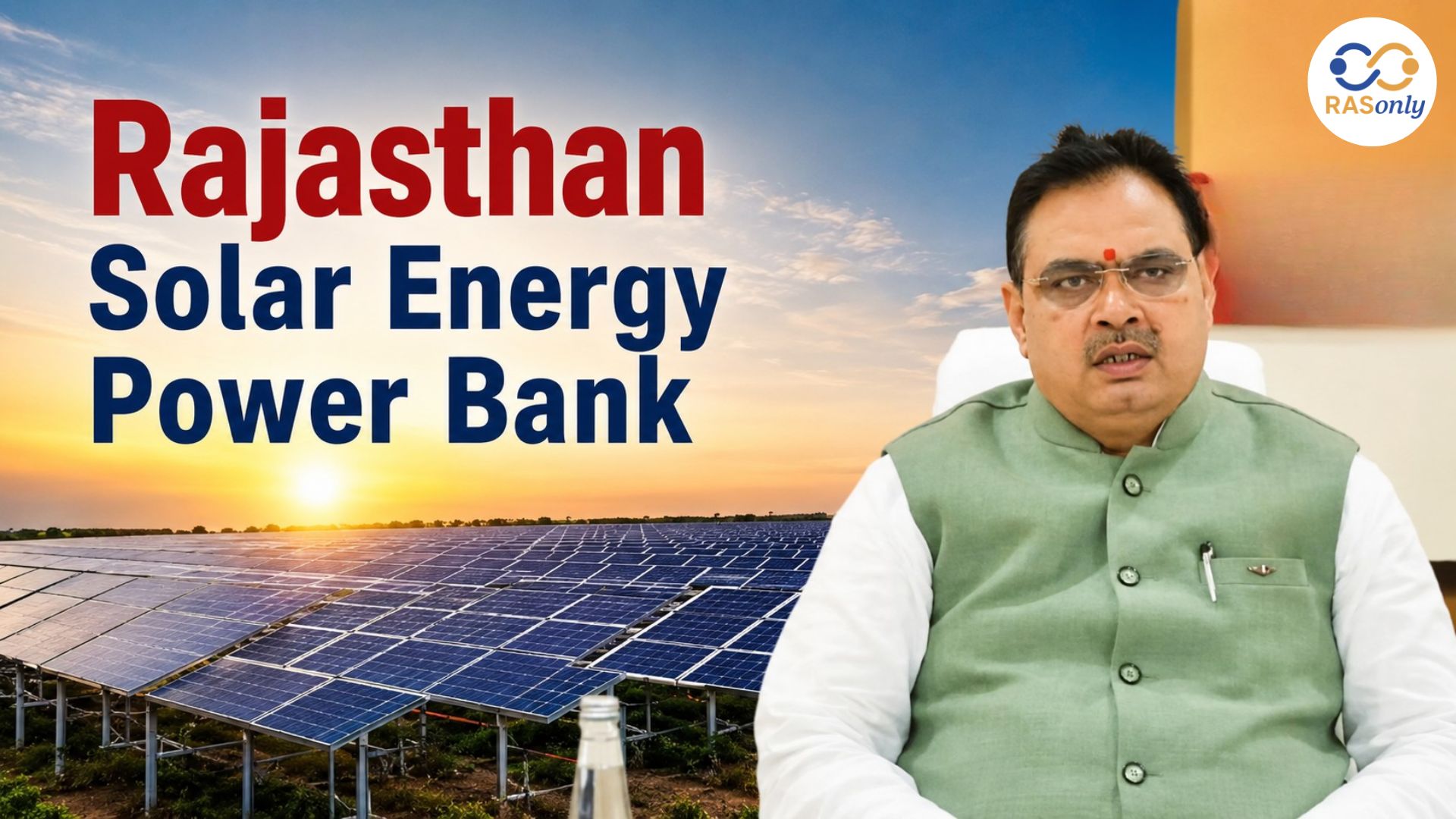
Rajasthan is fast becoming the most prominent state in India in terms of solar power generation as well as Battery Energy Storage Systems (BESS). The Rajasthan Rajya Vidyut Utpadan Nigam Limited (RVUNL) is targeting to build 1,000 MW of battery energy storage system by September 2026, while the Rajasthan state government has fixed a target for 6,000 MW battery storage capacity by 2027.
Background
The vast desert land with ample sunlight all year round makes Rajasthan the largest producer of solar energy in India. Solar power generation is considerable during the day hours in the west of Rajasthan. But, during some hours, the amount of electricity demand is relatively low, thus a large amount of renewable energy is not used.
To address this, the state is implementing Battery Energy Storage Systems (BESS), which can store excess energy generated in the day and use it during evening and night peak demand periods. This will ensure uninterrupted supply of power, ensuring grid stability and reducing coal based thermal power plant dependence.
Rajasthan is also at the forefront of providing round the clock supply of renewable energy with the first battery storage projects being planned in Bikaner, followed by Jaisalmer and Jodhpur.
Battery Energy Storage System (BESS) – What is it?
Battery Energy Storage System (BESS) is a technology for storing surplus electricity produced from renewable energy sources like solar and wind power in a large battery system.
This stored electricity can be fed into the grid when there is a higher demand for electricity or when renewables are not available. BESS is used to help stabilize the grid, to improve energy efficiency, and to decrease the need for traditional thermal power plants.
Rajasthan's Battery Energy Storage Plan
By September 2026, aim to have 1000 MW of BES deployed.
- By 2027: Target to develop 6,000 MW of battery storage capacity.
- There are about 3,000 MW of Renewable Energy projects installed in Western Rajasthan.
- Rajasthan has one of the highest number of sunny days in the country (325 days annually) and is among the most ideal states for producing solar energy.
How the Battery Storage System Will Work
Any unused excess solar electricity in the day will be stored in battery systems.
- Energy stored will be fed into the grid during peak hours in the evening and at night.
- It will keep the electricity available throughout the night even after dark.
- The system will help to compensate the imbalance of renewable energy generation.
- By doing so, it will enhance the overall reliability of the electricity network in Rajasthan.
Advantages of Battery Energy Storage System (BESS)
1. Round-the-Clock Green Power
When the sun comes out, the solar power generated can be stored in the battery system and used at day's end to ensure a continuous stream of renewable energy.
2. Improved Grid Stability
During periods of peak demand, the energy from the stored electricity can be tapped, providing a more stable and reliable power grid.
3. Lower Reliance on Coal
Preserving the storage of these batteries will lead to the decrease in the requirement of thermal power plants based on coal, thus reducing carbon emissions.
4. Better Utilization of Renewable Energy
Increasing the use of surplus solar energy means it will not be lost, but can be stored and used effectively when needed.
5. Reduced Power Cuts
Peak demand periods will reduce the chances of load shedding and power shortages due to stored electricity.
Home-Level Power Banks
Rooftop solar projects on homes are also increasingly being coupled with lithium-based batteries apart from their use for large-scale battery storage projects.
These batteries are used to store energy generated during the day, and to supply energy when the power is out or at night. These items can now run on stored solar power, including large capacity air conditioners and some household appliances.
Significance for Rajasthan
- Adds to the state of Rajasthan's position as India's renewable energy hub.
- Supports the development of clean and sustainable energy.
- Improves energy security by providing a secure supply.
- Supports continuous production in industry with a stable power supply.
- Promotes investment in Renewable Energy and Battery Development.
- Supporting India's transition towards clean energy and climate commitments.
Environmental Significance
- Increases renewable energy use.
- Reduces greenhouse gas emission.
- Reduces reliance on fossil fuels.
- Supports sustainable energy management.
- Supports long-term climate & environmental objectives.
Conclusion
The emergence of Battery Energy Storage Systems (BESS) will help maximise the use of excess solar energy, supply reliable 24×7 electricity, improve grid stability, decrease reliance on Coal Based Power Generation and speed transition to Clean Energy, while paving the path for Rajasthan to become the country's "Solar Energy Power Bank." Rajasthan has the potential to become a benchmark state for sustainable and future energy infrastructure with its ambitious targets set for storage and an ample supply of solar energy.
MCQs
Q1. With reference to Rajasthan’s Battery Energy Storage System (BESS) targets, consider the following statements:
- Rajasthan Rajya Vidyut Utpadan Nigam Limited (RVUNL) aims to deploy 1,000 MW of battery energy storage by September 2026.
- The Rajasthan state government has set an ambitious target to reach 6,000 MW of total battery storage capacity by 2027.
Which of the statements given above is/are correct?
A. 1 only
B. 2 only
C. Both 1 and 2
D. Neither 1 nor 2
Answer: C. Both 1 and 2
Explanation:
Both statements perfectly match the state's current blueprint. Rajasthan is aggressively scaling up its infrastructure to handle its massive renewable output. Statement 1 is correct as RVUNL is specifically targeting the 1,000 MW milestone by September 2026. Statement 2 is also correct because the broader state policy has fixed a target of 6,000 MW capacity by the year 2027 to anchor its position as India's solar power bank.
Q2. Why is Western Rajasthan prioritizing the implementation of Battery Energy Storage Systems (BESS) despite already being India's top solar producer?
A. Solar generation in Western Rajasthan is highly inefficient during peak daylight hours.
B. Peak electricity generation occurs during the day when local demand is relatively low, leading to unutilized surplus green energy.
C. The region lacks access to the conventional national grid entirely.
D. BESS is required to convert solar energy into wind energy during the night.
Answer: B. Peak electricity generation occurs during the day when local demand is relatively low, leading to unutilized surplus green energy.
Explanation:
This captures the core problem of renewable energy integration known as intermittency and supply-demand mismatch. While Western Rajasthan enjoys massive solar generation during bright daylight hours, the power demand during those specific hours is often low. Without storage, this excess clean energy goes to waste. BESS solves this by storing daytime surplus and discharging it during high-demand evening and night hours, stabilizing the grid and reducing the need to fire up coal-based plants.
Q3. Consider the following statements regarding the advantages and applications of BESS mentioned in the text:
- At the domestic level, lithium-based batteries can be coupled with rooftop solar to power high-capacity appliances like air conditioners during power cuts or at night.
- The deployment of large-scale BESS is expected to increase the grid's reliance on traditional coal-based thermal power plants during peak hours.
Which of the statements given above is/are correct?
A. 1 only
B. 2 only
C. Both 1 and 2
D. Neither 1 nor 2
Answer: A. 1 only
Explanation:
- Statement 1 is correct: The "Home-Level Power Banks" using lithium-based batteries paired with rooftop solar can now effectively run heavy household loads, including large-capacity air conditioners.
- Statement 2 is incorrect: BESS actually decreases the reliance on coal-based thermal plants. By releasing stored green energy during evening peak hours, utilities do not need to ramp up polluting coal plants to meet the sudden surge in demand.
राजस्थान सौर ऊर्जा का पावर बैंक: बीईएसएस (बैटरी ऊर्जा भंडारण प्रणाली) और 6000 मेगावाट बैटरी भंडारण क्षमता का लक्ष्य
राजस्थान सौर ऊर्जा उत्पादन के साथ-साथ बैटरी ऊर्जा भंडारण प्रणाली (BESS) के मामले में भारत का सबसे प्रमुख राज्य बनता जा रहा है। राजस्थान राज्य विद्युत उत्पादन निगम लिमिटेड (RVUNL) सितंबर 2026 तक 1,000 मेगावाट (MW) की बैटरी ऊर्जा भंडारण प्रणाली बनाने का लक्ष्य लेकर चल रहा है, जबकि राजस्थान राज्य सरकार ने 2027 तक 6,000 मेगावाट बैटरी भंडारण क्षमता का लक्ष्य तय किया है।
पृष्ठभूमि
साल भर प्रचुर मात्रा में धूप के साथ विशाल मरुस्थलीय भूमि राजस्थान को भारत में सौर ऊर्जा का सबसे बड़ा उत्पादक बनाती है। पश्चिमी राजस्थान में दिन के समय सौर ऊर्जा का उत्पादन काफी अधिक होता है। लेकिन, कुछ घंटों के दौरान, बिजली की मांग अपेक्षाकृत कम होती है, जिससे बड़ी मात्रा में नवीकरणीय (रिन्यूएबल) ऊर्जा का उपयोग नहीं हो पाता है।
इस समस्या के समाधान के लिए, राज्य बैटरी ऊर्जा भंडारण प्रणाली (BESS) को लागू कर रहा है, जो दिन में उत्पन्न होने वाली अतिरिक्त ऊर्जा को संग्रहीत (store) कर सकती है और शाम तथा रात के समय मांग के चरम (peak) घंटों के दौरान इसका उपयोग कर सकती है। यह बिजली की निर्बाध आपूर्ति सुनिश्चित करेगा, जिससे ग्रिड स्थिरता सुनिश्चित होगी और कोयला आधारित थर्मल पावर प्लांटों पर निर्भरता कम होगी।
बीकानेर में नियोजित पहली बैटरी भंडारण परियोजनाओं के साथ राजस्थान चौबीसों घंटे नवीकरणीय ऊर्जा की आपूर्ति करने में भी सबसे आगे है, इसके बाद जैसलमेर और जोधपुर का नंबर आता है।
बैटरी ऊर्जा भंडारण प्रणाली (BESS) - यह क्या है?
बैटरी ऊर्जा भंडारण प्रणाली (BESS) सौर और पवन ऊर्जा जैसे नवीकरणीय ऊर्जा स्रोतों से उत्पादित अतिरिक्त बिजली को एक बड़ी बैटरी प्रणाली में संग्रहीत करने की एक तकनीक है।
इस संग्रहीत बिजली को ग्रिड में तब भेजा जा सकता है जब बिजली की मांग अधिक हो या जब नवीकरणीय ऊर्जा स्रोत उपलब्ध न हों। BESS का उपयोग ग्रिड को स्थिर करने, ऊर्जा दक्षता में सुधार करने और पारंपरिक थर्मल पावर प्लांटों की आवश्यकता को कम करने में मदद के लिए किया जाता है।
राजस्थान की बैटरी ऊर्जा भंडारण योजना
- सितंबर 2026 तक: 1,000 मेगावाट क्षमता के BESS को तैनात करने का लक्ष्य।
- 2027 तक: 6,000 मेगावाट की बैटरी भंडारण क्षमता विकसित करने का लक्ष्य।
- पश्चिमी राजस्थान में लगभग 3,000 मेगावाट की नवीकरणीय ऊर्जा परियोजनाएं स्थापित हैं।
- राजस्थान में देश में सबसे अधिक धूप वाले दिन (सालाना 325 दिन) होते हैं और यह सौर ऊर्जा उत्पादन के लिए सबसे आदर्श राज्यों में से एक है।
बैटरी भंडारण प्रणाली कैसे काम करेगी
- दिन में उपयोग न होने वाली अतिरिक्त सौर बिजली को बैटरी प्रणालियों में संग्रहीत किया जाएगा।
- संग्रहीत ऊर्जा को शाम और रात के समय मांग के चरम घंटों (peak hours) के दौरान ग्रिड में भेजा जाएगा।
- यह अंधेरा होने के बाद भी पूरी रात बिजली की उपलब्धता बनाए रखेगा।
- यह प्रणाली नवीकरणीय ऊर्जा उत्पादन के असंतुलन की भरपाई करने में मदद करेगी।
- ऐसा करने से, यह राजस्थान में बिजली नेटवर्क की समग्र विश्वसनीयता को बढ़ाएगा।
बैटरी ऊर्जा भंडारण प्रणाली (BESS) के लाभ
- चौबीसों घंटे हरित ऊर्जा (Green Power): जब सूरज निकलता है, तो उत्पन्न सौर ऊर्जा को बैटरी प्रणाली में संग्रहीत किया जा सकता है और नवीकरणीय ऊर्जा का निरंतर प्रवाह सुनिश्चित करने के लिए दिन के अंत में इसका उपयोग किया जा सकता है।
- ग्रिड स्थिरता में सुधार: अत्यधिक मांग की अवधि के दौरान, संग्रहीत बिजली से ऊर्जा प्राप्त की जा सकती है, जिससे अधिक स्थिर और विश्वसनीय बिजली ग्रिड मिलता है।
- कोयले पर कम निर्भरता: इन बैटरियों के भंडारण को बनाए रखने से कोयले पर आधारित थर्मल पावर प्लांटों की आवश्यकता में कमी आएगी, जिससे कार्बन उत्सर्जन कम होगा।
- नवीकरणीय ऊर्जा का बेहतर उपयोग: अतिरिक्त सौर ऊर्जा के उपयोग को बढ़ाने का मतलब है कि यह व्यर्थ नहीं जाएगी, बल्कि आवश्यकता पड़ने पर इसे संग्रहीत कर प्रभावी ढंग से उपयोग किया जा सकता है।
- बिजली कटौती में कमी: मांग के चरम घंटों में संग्रहीत बिजली के कारण लोड शेडिंग (बिजली कटौती) और बिजली की कमी की संभावना कम हो जाएगी।
घरेलू स्तर के पावर बैंक
बड़े पैमाने पर बैटरी भंडारण परियोजनाओं के अलावा, घरों में रूफटॉप (छत पर) सौर परियोजनाओं को भी तेजी से लिथियम-आधारित बैटरियों के साथ जोड़ा जा रहा है।
इन बैटरियों का उपयोग दिन के दौरान उत्पन्न ऊर्जा को संग्रहीत करने और बिजली कटने पर या रात में ऊर्जा की आपूर्ति करने के लिए किया जाता है। ये उपकरण अब संग्रहीत सौर ऊर्जा पर चल सकते हैं, जिनमें बड़ी क्षमता वाले एयर कंडीशनर और कुछ घरेलू उपकरण शामिल हैं।
राजस्थान के लिए महत्व
- भारत के नवीकरणीय ऊर्जा केंद्र के रूप में राजस्थान की स्थिति को और मजबूत करता है।
- स्वच्छ और सतत (सस्टेनेबल) ऊर्जा के विकास का समर्थन करता है।
- सुरक्षित आपूर्ति प्रदान करके ऊर्जा सुरक्षा में सुधार करता है।
- एक स्थिर बिजली आपूर्ति के साथ उद्योगों में निरंतर उत्पादन का समर्थन करता है।
- नवीकरणीय ऊर्जा और बैटरी विकास में निवेश को बढ़ावा देता है।
- स्वच्छ ऊर्जा और जलवायु प्रतिबद्धताओं की दिशा में भारत के संक्रमण (transition) का समर्थन करता है।
पर्यावरणीय महत्व
- नवीकरणीय ऊर्जा के उपयोग को बढ़ाता है।
- ग्रीनहाउस गैस उत्सर्जन को कम करता है।
- जीवाश्म ईंधन (fossil fuels) पर निर्भरता कम करता है।
- सतत ऊर्जा प्रबंधन का समर्थन करता है।
- दीर्घकालिक जलवायु और पर्यावरणीय उद्देश्यों का समर्थन करता है।
निष्कर्ष
बैटरी ऊर्जा भंडारण प्रणालियों (BESS) के आने से अतिरिक्त सौर ऊर्जा के उपयोग को अधिकतम करने, चौबीसों घंटे विश्वसनीय बिजली की आपूर्ति करने, ग्रिड स्थिरता में सुधार करने, कोयला आधारित बिजली उत्पादन पर निर्भरता कम करने और स्वच्छ ऊर्जा की ओर बढ़ने की गति को तेज करने में मदद मिलेगी। साथ ही, यह राजस्थान के लिए देश का "सौर ऊर्जा पावर बैंक" बनने का मार्ग प्रशस्त करेगा। भंडारण के लिए निर्धारित अपने महत्वाकांक्षी लक्ष्यों और सौर ऊर्जा की प्रचुर आपूर्ति के साथ, राजस्थान में टिकाऊ और भविष्य के ऊर्जा बुनियादी ढांचे के लिए एक बेंचमार्क (मानक) राज्य बनने की क्षमता है।
बहुविकल्पीय प्रश्न (MCQs)
प्रश्न 1. राजस्थान के बैटरी ऊर्जा भंडारण प्रणाली (BESS) लक्ष्यों के संदर्भ में, निम्नलिखित कथनों पर विचार कीजिए:
- राजस्थान राज्य विद्युत उत्पादन निगम लिमिटेड (RVUNL) का लक्ष्य सितंबर 2026 तक 1,000 मेगावाट बैटरी ऊर्जा भंडारण तैनात करना है।
- राजस्थान राज्य सरकार ने 2027 तक कुल 6,000 मेगावाट बैटरी भंडारण क्षमता तक पहुंचने का महत्वाकांक्षी लक्ष्य रखा है।
ऊपर दिए गए कथनों में से कौन सा/से सही है/हैं?
A. केवल 1
B. केवल 2
C. 1 और 2 दोनों
D. न तो 1 और न ही 2
उत्तर: C. 1 और 2 दोनों
व्याख्या:
दोनों कथन पूरी तरह से राज्य के वर्तमान खाके (blueprint) से मेल खाते हैं। राजस्थान अपने बड़े पैमाने पर नवीकरणीय उत्पादन को संभालने के लिए अपने बुनियादी ढांचे को तेजी से बढ़ा रहा है। कथन 1 सही है क्योंकि RVUNL विशेष रूप से सितंबर 2026 तक 1,000 मेगावाट के मील के पत्थर को छूने का लक्ष्य बना रहा है। कथन 2 भी सही है क्योंकि व्यापक राज्य नीति ने भारत के सौर ऊर्जा बैंक के रूप में अपनी स्थिति को मजबूत करने के लिए वर्ष 2027 तक 6,000 मेगावाट क्षमता का लक्ष्य निर्धारित किया है।
प्रश्न 2. पश्चिमी राजस्थान पहले से ही भारत का शीर्ष सौर उत्पादक होने के बावजूद बैटरी ऊर्जा भंडारण प्रणालियों (BESS) के कार्यान्वयन को प्राथमिकता क्यों दे रहा है?
A. पश्चिमी राजस्थान में अत्यधिक धूप वाले घंटों के दौरान सौर उत्पादन बेहद अक्षम (inefficient) होता है।
B. बिजली का अधिकतम उत्पादन दिन के दौरान होता है जब स्थानीय मांग अपेक्षाकृत कम होती है, जिससे अप्रयुक्त अतिरिक्त हरित ऊर्जा बच जाती है।
C. इस क्षेत्र की पारंपरिक राष्ट्रीय ग्रिड तक पूरी तरह से पहुंच नहीं है।
D. रात के दौरान सौर ऊर्जा को पवन ऊर्जा में बदलने के लिए BESS की आवश्यकता होती है।
उत्तर: B. बिजली का अधिकतम उत्पादन दिन के दौरान होता है जब स्थानीय मांग अपेक्षाकृत कम होती है, जिससे अप्रयुक्त अतिरिक्त हरित ऊर्जा बच जाती है।
व्याख्या:
यह नवीकरणीय ऊर्जा एकीकरण की मुख्य समस्या को दर्शाता है जिसे अनिरंतरता (intermittency) और आपूर्ति-मांग बेमेल (supply-demand mismatch) के रूप में जाना जाता है। हालांकि पश्चिमी राजस्थान में दिन के उजाले के दौरान बड़े पैमाने पर सौर उत्पादन होता है, लेकिन उन विशिष्ट घंटों के दौरान बिजली की मांग अक्सर कम होती है। भंडारण के बिना, यह अतिरिक्त स्वच्छ ऊर्जा व्यर्थ चली जाती है। BESS दिन के समय की अतिरिक्त ऊर्जा को संग्रहीत करके और शाम तथा रात के उच्च-मांग वाले घंटों के दौरान इसे डिस्चार्ज करके इस समस्या को हल करता है, जिससे ग्रिड स्थिर होता है और कोयला आधारित संयंत्रों को चलाने की आवश्यकता कम हो जाती है।
प्रश्न 3. पाठ में उल्लिखित BESS के लाभों और अनुप्रयोगों के संबंध में निम्नलिखित कथनों पर विचार कीजिए:
- घरेलू स्तर पर, लिथियम-आधारित बैटरियों को रूफटॉप सौर के साथ जोड़ा जा सकता है ताकि बिजली कटौती के दौरान या रात में एयर कंडीशनर जैसे उच्च क्षमता वाले उपकरणों को चलाया जा सके।
- बड़े पैमाने पर BESS की तैनाती से व्यस्त घंटों (peak hours) के दौरान पारंपरिक कोयला आधारित थर्मल पावर प्लांटों पर ग्रिड की निर्भरता बढ़ने की उम्मीद है।
ऊपर दिए गए कथनों में से कौन सा/से सही है/हैं?
A. केवल 1
B. केवल 2
C. 1 और 2 दोनों
D. न तो 1 और न ही 2
उत्तर: A. केवल 1
व्याख्या:
कथन 1 सही है: रूफटॉप सौर के साथ जोड़ी गई लिथियम-आधारित बैटरियों का उपयोग करने वाले "घरेलू स्तर के पावर बैंक" अब बड़ी क्षमता वाले एयर कंडीशनर सहित भारी घरेलू लोड को प्रभावी ढंग से चला सकते हैं।
कथन 2 गलत है: BESS वास्तव में कोयला-आधारित थर्मल प्लांटों पर निर्भरता को कम करता है। शाम के व्यस्त घंटों के दौरान संग्रहीत हरित ऊर्जा को जारी करके, बिजली कंपनियों को मांग में अचानक आई तेजी को पूरा करने के लिए प्रदूषण फैलाने वाले कोयला संयंत्रों को चालू करने की आवश्यकता नहीं पड़ती है
