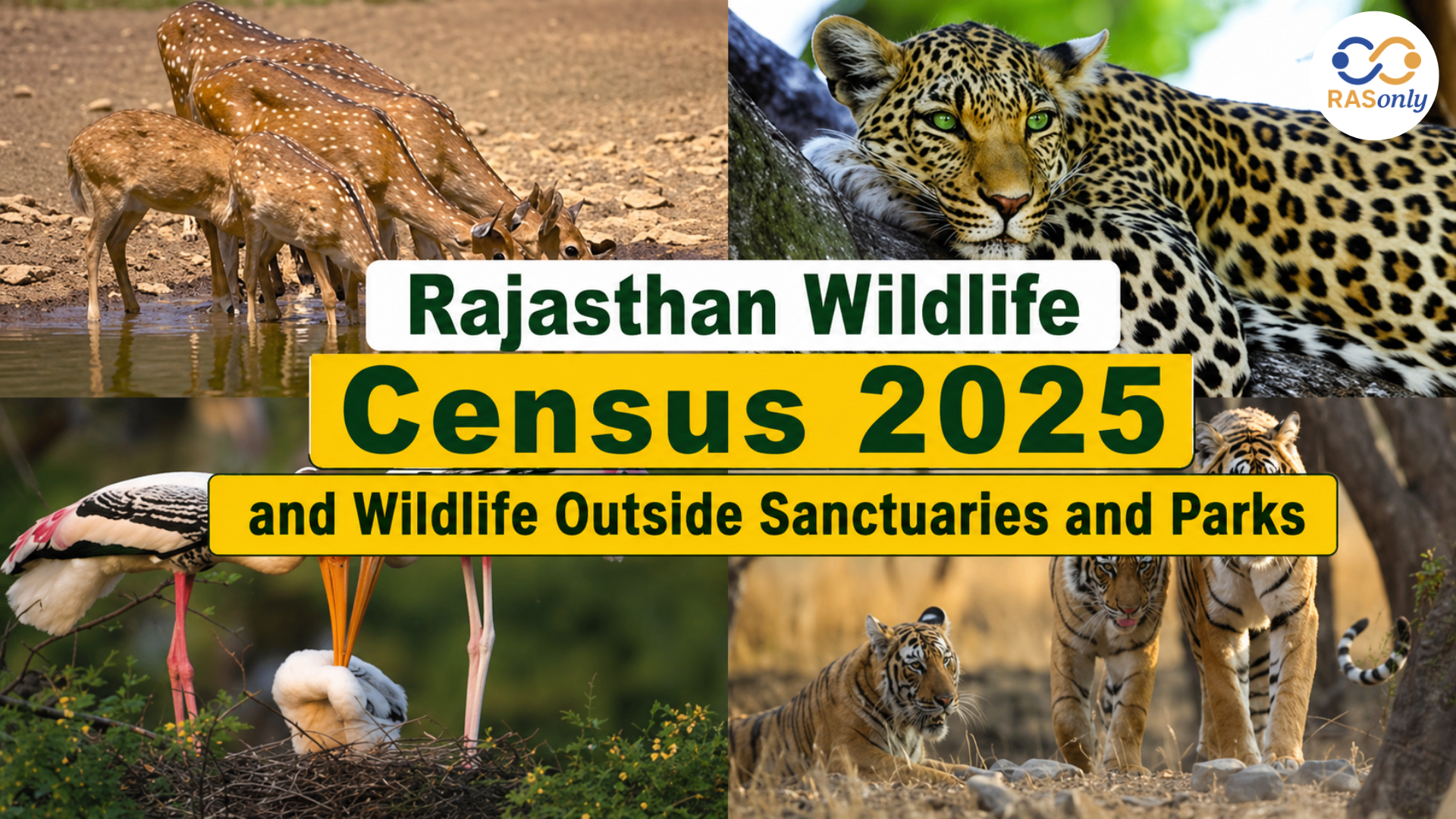
The Wildlife Census 2025 conducted in Rajasthan reveals a significance trend in the state's forest and wildlife conservation. On Buddha Purnima at 5 PM, the Forest Department is counting wildlife using the waterhole method, which counts wildlife around water sources. Data from 2014 to 2025 shows that Rajasthan’s estimated wildlife population increased from 21,759 in 2014 to 2,71,813 in 2025. Most importantly, wildlife outside protected areas is considerably greater than inside sanctuaries and parks. In 2025, 58,885 animals were found in sanctuaries and parks whereas 2,12,928 animals were counted outside sanctuaries and parks.
Wildlife Census 2025 Key Points
- Rajasthan recorded a total wildlife count of 2,71,813 in 2025.
- 58,885 animals were found inside sanctuaries and parks.
- 2,12,928 animals were found outside the sanctuaries and parks.
- The number of animals outside protected areas is more han three times that of sanctuaries and parks.
- Buddha Purnima brings the waterhole method of census.
- Ranthambore, Sariska and Mukundra Hills Tiger Reserves are not part of this data set as the method of counting is different.
Wildlife Growth from 2014 to 2025
In Rajasthan, the number of wildlife has grown significantly over the past 11 years. In 2014, the estimated count was 21,759, which increased to 2,71,813 in 2025. This indicates a significant increase in wildlife count in the state.
|
|
|
|
|
|
|
|
|
|
|
|
|
|
|
|
|
|
|
|
|
|
|
|
|
|
|
|
|
|
|
|
|
|
|
|
|
|
|
|
Major Wildlife Found Outside Protected Areas
There were many wildlife species that were present in greater numbers outside sanctuaries and parks. This suggests that the wildlife conservation in Rajasthan cannot be confined to protected areas.
|
|
|
|
|
|
|
|
|
|
|
|
|
|
|
Why the Data Is Important
Conservation Beyond Protected Areas
- Rajasthan's wildlife is largely found outside protected areas based on the data.
- This increases the need to engage the community in village-based conservation and conservation outside sanctuaries.
- Movement of wildlife outside protected areas also means improved waterhole, pasture and forest management.
Value of the Waterhole Method
- The waterhole method will count wildlife around water bodies.
- In arid Rajasthan the animals generally visit water points at least once a day.
- It can be used to count wildlife on Buddha Purnima.
Data collection and census enhancement
Previous wildlife census was sparse. Between 2001 and 2004, just the name of animals and small figures were entered. Until 2013, full data for the whole state was also not available. From 2014 onwards, the total numbers were recorded. Therefore, the data since 2014 is more reliable for wildlife trends in Rajasthan.
Conclusion
Rajasthan's 2025 Wildlife Census shows a significant ecological shift: wildlife outside of sanctuaries and parks is much greater than within sanctuaries. The increase from 21,759 in 2014 to 2,71,813 in 2025 reflects a sharp rise in recorded wildlife numbers. To protect Rajasthan's wildlife, we must conserve forests outside sanctuaries, manage the water sources and engage the public.
MCQs
MCQ 1: What was the Rajasthan's wildlife count in 2025?
A. 58,885
B. 2,12,928
C. 2,71,813
D. 21,759
Answer: C
Explanation : In 2025, Rajasthan had a total wildlife count of 2,71,813. Of this, 58,885 animals were found in sanctuaries and parks and 2,12,928 animals were found in non-protected areas.
MCQ 2: Which technique is used by the Forest Department for wildlife census in Rajasthan on Buddha Purnima?
A. Camera trap method
B. Waterhole method
C. Satellite mapping method
D. Drone survey method
Answer: B
Explanation : The wildlife census in Rajasthan is done by waterhole method. This involves counting wildlife by keeping watch over water holes as during a period of drought, wildlife approach water holes within 24 hours.
MCQ 3: Why aren't Ranthambore, Sariska and Mukundra Hills Tiger Reserves included in the above wildlife census?
A. They do not have wildlife populations
B. They have a different counting method
C. They are outside Rajasthan
D. They were closed during the census
Answer: B
Explanation: Ranthambore, Sariska and Mukundra Hills Tiger Reserves were excluded from the data provided above because their counting methodology was different. So, their data were not merged with this tiger census data.
राजस्थान वन्यजीव गणना 2025 और अभयारण्यों व उद्यानों के बाहर वन्यजीव
राजस्थान में की गई वन्यजीव गणना 2025 राज्य के वन और वन्यजीव संरक्षण से जुड़ी एक महत्वपूर्ण प्रवृत्ति को दर्शाती है। वन विभाग बुद्ध पूर्णिमा के अवसर पर शाम 5 बजे से जलस्रोत पद्धति के माध्यम से वन्यजीवों की गणना करता है। इस पद्धति में जलस्रोतों के आसपास आने वाले वन्यजीवों की गिनती की जाती है। 2014 से 2025 तक के आंकड़ों के अनुसार राजस्थान में अनुमानित वन्यजीव संख्या 2014 में 21,759 से बढ़कर 2025 में 2,71,813 हो गई। सबसे महत्वपूर्ण बात यह है कि अभयारण्यों और उद्यानों के बाहर वन्यजीवों की संख्या इनके भीतर दर्ज संख्या से काफी अधिक है। 2025 में 58,885 वन्यजीव अभयारण्यों और उद्यानों में पाए गए, जबकि 2,12,928 वन्यजीव इनके बाहर दर्ज किए गए।
वन्यजीव गणना 2025 के प्रमुख बिंदु
• राजस्थान में 2025 में कुल 2,71,813 वन्यजीव दर्ज किए गए।
• 58,885 वन्यजीव अभयारण्यों और उद्यानों के अंदर पाए गए।
• 2,12,928 वन्यजीव अभयारण्यों और उद्यानों के बाहर पाए गए।
• संरक्षित क्षेत्रों के बाहर वन्यजीवों की संख्या अभयारण्यों और उद्यानों के अंदर दर्ज संख्या से तीन गुना से अधिक है।
• बुद्ध पूर्णिमा पर वन्यजीव गणना के लिए जलस्रोत पद्धति अपनाई जाती है।
• रणथंभौर, सरिस्का और मुकुंदरा हिल्स बाघ अभयारण्यों को इस आंकड़े में शामिल नहीं किया गया है, क्योंकि वहां गणना की पद्धति अलग है।
2014 से 2025 तक वन्यजीवों की वृद्धि
राजस्थान में पिछले 11 वर्षों में वन्यजीवों की संख्या में महत्वपूर्ण वृद्धि हुई है। 2014 में अनुमानित संख्या 21,759 थी, जो 2025 में बढ़कर 2,71,813 हो गई। यह राज्य में वन्यजीवों की दर्ज संख्या में उल्लेखनीय वृद्धि को दर्शाता है।
|
|
|
|
|
|
|
|
|
|
|
|
|
|
|
|
|
|
|
|
|
|
|
|
|
|
|
|
|
|
|
|
|
|
|
|
|
|
|
|
संरक्षित क्षेत्रों के बाहर पाए गए प्रमुख वन्यजीव
कई वन्यजीव प्रजातियां अभयारण्यों और उद्यानों के बाहर अधिक संख्या में दर्ज की गईं। यह संकेत देता है कि राजस्थान में वन्यजीव संरक्षण को केवल संरक्षित क्षेत्रों तक सीमित नहीं रखा जा सकता।
|
|
|
|
|
|
|
|
|
|
|
|
|
|
|
आंकड़ों का महत्व
संरक्षित क्षेत्रों के बाहर संरक्षण
• आंकड़ों के अनुसार राजस्थान के वन्यजीवों का बड़ा हिस्सा संरक्षित क्षेत्रों के बाहर पाया जाता है।
• इससे ग्राम आधारित संरक्षण और अभयारण्यों के बाहर संरक्षण में समुदाय की भागीदारी की आवश्यकता बढ़ जाती है।
• संरक्षित क्षेत्रों के बाहर वन्यजीवों की आवाजाही बेहतर जलस्रोत, चरागाह और वन प्रबंधन की आवश्यकता को भी दर्शाती है।
जलस्रोत पद्धति का महत्व
• जलस्रोत पद्धति में जल निकायों के आसपास आने वाले वन्यजीवों की गणना की जाती है।
• शुष्क राजस्थान में पशु सामान्यतः दिन में कम से कम एक बार जलस्रोतों पर आते हैं।
• इस कारण बुद्ध पूर्णिमा के अवसर पर वन्यजीव गणना के लिए यह पद्धति उपयोगी मानी जाती है।
आंकड़ा संग्रह और गणना में सुधार
पहले वन्यजीव गणना के आंकड़े सीमित थे। 2001 से 2004 के बीच केवल पशुओं के नाम और सीमित संख्याएं दर्ज की जाती थीं। 2013 तक पूरे राज्य का पूर्ण आंकड़ा भी उपलब्ध नहीं था। 2014 के बाद कुल संख्याएं व्यवस्थित रूप से दर्ज की जाने लगीं। इसलिए 2014 के बाद का आंकड़ा राजस्थान में वन्यजीव प्रवृत्तियों को समझने के लिए अधिक उपयोगी है।
निष्कर्ष
राजस्थान की वन्यजीव गणना 2025 एक महत्वपूर्ण पारिस्थितिक बदलाव को दर्शाती है। अभयारण्यों और उद्यानों के बाहर वन्यजीवों की संख्या इनके भीतर दर्ज संख्या से काफी अधिक है। 2014 में 21,759 से बढ़कर 2025 में 2,71,813 तक पहुंची संख्या वन्यजीवों की दर्ज संख्या में तेज वृद्धि को दिखाती है। राजस्थान के वन्यजीवों की रक्षा के लिए अभयारण्यों के बाहर वनों का संरक्षण, जलस्रोतों का बेहतर प्रबंधन और जनभागीदारी आवश्यक है।
बहुविकल्पीय प्रश्न
प्रश्न 1 : 2025 में राजस्थान में कुल कितने वन्यजीव दर्ज किए गए?
A. 58,885
B. 2,12,928
C. 2,71,813
D. 21,759
उत्तर: C
व्याख्या: 2025 में राजस्थान में कुल 2,71,813 वन्यजीव दर्ज किए गए। इनमें से 58,885 वन्यजीव अभयारण्यों और उद्यानों के अंदर पाए गए, जबकि 2,12,928 वन्यजीव संरक्षित क्षेत्रों के बाहर दर्ज किए गए।
प्रश्न 2 : बुद्ध पूर्णिमा पर राजस्थान में वन विभाग वन्यजीव गणना के लिए कौनसी पद्धति अपनाता है?
A. कैमरा जाल पद्धति
B. जलस्रोत पद्धति
C. उपग्रह मानचित्रण पद्धति
D. ड्रोन सर्वेक्षण पद्धति
उत्तर: B
व्याख्या: राजस्थान में वन्यजीव गणना जलस्रोत पद्धति से की जाती है। इसमें जलस्रोतों के आसपास निगरानी रखकर वन्यजीवों की गिनती की जाती है, क्योंकि शुष्क परिस्थितियों में वन्यजीव सामान्यतः 24 घंटे की अवधि में जलस्रोतों पर पानी पीने आते हैं।
प्रश्न 3 : रणथंभौर, सरिस्का और मुकुंदरा हिल्स बाघ अभयारण्यों को दिए गए वन्यजीव गणना आंकड़ों में क्यों शामिल नहीं किया गया?
A. वहां वन्यजीव नहीं हैं
B. वहां गणना की पद्धति अलग है
C. वे राजस्थान के बाहर हैं
D. गणना के समय वे बंद थे
उत्तर: B
व्याख्या: रणथंभौर, सरिस्का और मुकुंदरा हिल्स बाघ अभयारण्यों को दिए गए आंकड़ों में शामिल नहीं किया गया, क्योंकि वहां वन्यजीव गणना की पद्धति अलग है। इसलिए उनके आंकड़ों को इस वन्यजीव गणना के आंकड़ों में नहीं मिलाया गया |