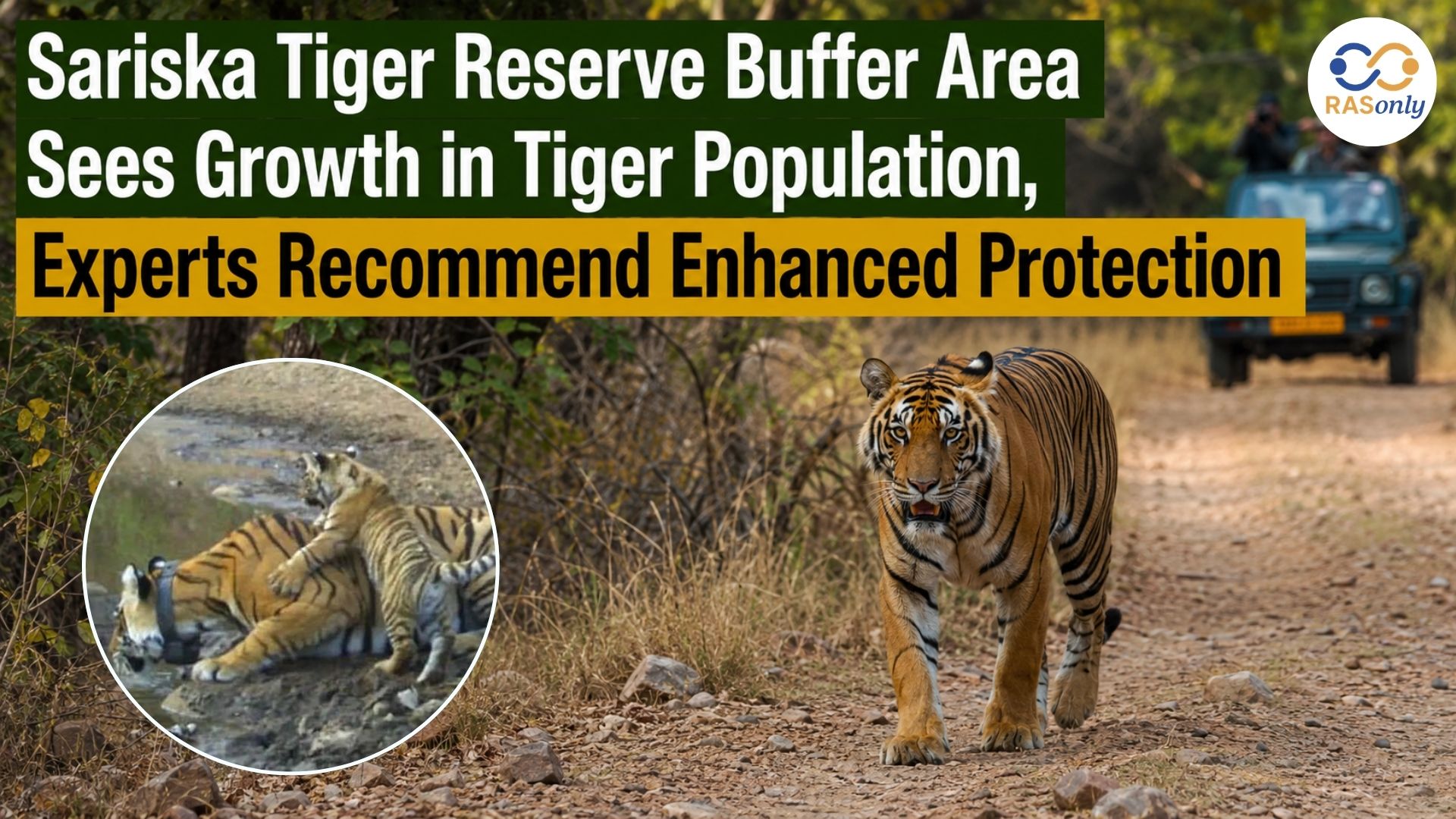
There is a tremendous increase in the number of tigers in the buffer zone of Sariska Tiger Reserve, Alwar, Rajasthan. The tiger population in the buffer area has increased to 11 in the last two years and the region's significance as a tiger habitat has increased. The administration should now consider upgrading parts of the buffer zone to a Core Area and improving the monitoring to ensure long-term conservation, said the wildlife experts.
Tiger Population in Sariska Buffer Zone Reaches 11
The buffer region of Sariska includes important wildlife habitats such as:
- Bala Quila
- Andheri
- Kishankund
Several tigers, including:
- ST-2302 and its 2 cubs
- ST-18
- ST-19
- ST-31
Much more tiger movement and breeding activity has been observed in these areas. The number of cubs has been steadily increasing as per experts, showing that the tiger population is healthy and growing.
Dense Forest Cover Supporting Tiger Population Growth in Sariska
The high density of forest cover and habitat conditions in the buffer area are responsible for the rise of the tiger population, according to the wildlife experts. Tigers have been repeatedly seen hunting near the main roads at Bala Quila, indicating their territorial presence.
Conservationists say that the forest is becoming more suitable for tiger habitat and their movement, and Sariska is extending in this area into the core area of the tiger.
Core Area Too Small, Expansion Through Buffer Zone Recommended
Tigers need more protection as the number of tigers is increasing, say experts.
Key Recommendations
- Inclusion of parts of the buffer zone into the Core Area.
- Improved wildlife monitoring and surveillance.
- Tight control of human activities.
- Livestock movement within forest areas.
- Improved habitat protection and conservation planning.
The former Sariska Field Director R.S. Shekhawat highlighted that before 1950, the forest area in the buffer was degraded, thus decreasing the opportunity for the tigers to breed. Thanks to forest regeneration and an improved ecological environment, however, tigers are now spreading their presence in the region again.
History of Sariska Tiger Reserve
The Sariska Tiger Reserve has a long and varied history.
1955: Wildlife Sanctuary Status
In 1955, the Sariska became a Wildlife Sanctuary.
1978: Tiger Reserve Declaration
Sariska became a Tiger Reserve in 1978 under the direction of the Government of India in its Project Tiger.
The reserve continues to be one of the most important tiger conservation areas in India, and is an important site for the conservation of wildlife in Rajasthan.
Rising Tiger Numbers Creating Territorial Pressure
The increase in the number of tigers is a good conservation result, but experts caution that there may not be enough forest space to support populations in the future.
Challenges
- Young cubs will grow up to be territorial adults.
- Competition for territory might rise.
- There may be increased potential for human-wildlife conflict.
- The base and habitat resources of prey species might be under increased pressure.
The Sariska administration had already made proposals for expansion, but this is subject to approval from higher authorities.
Impact of Human Activities and Wildlife Management
The effects of human activities on other wildlife species.
Leopard Population
Today, Sariska has a healthy population of leopards as well as tigers. Suitable habitat has played a role in the sustained growth of wildlife populations by species.
Experts warn, however, that if the number of protected areas are not increased, tigers and other wildlife may be limited in their habitat in the future.
Importance of Habitat Expansion in Sariska Tiger Reserve
Conservationists feel that an increase in the size of the Sariska protected area and improved habitat management will be critical to:
- Sustainable tiger conservation.
- Minimisation of land disputes.
- Protection of biodiversity.
- Long-term ecological balance.
- Better wildlife movement facilities.
Conclusion
The success of conservation efforts and habitat recovery in Sariska's buffer area is reflected in the increase in the number of tigers to 11 in the area. The population growth does however, indicate a need for better protection and monitoring, and there is a potential for extending the core conservation area. To maintain ecological balance in Sariska Tiger Reserve and promote the survival of tigers in the long run, it is important that proper buffer regions are upgraded to core areas.
Q1. Recently, the tiger population in the buffer area of Sariska Tiger Reserve has increased to:
A) 7
B) 9
C) 11
D) 13
Answer: C) 11
Explanation: Over the last two years, the tiger population in the buffer area of Sariska Tiger Reserve has increased to 11, making the region an important habitat for tigers.
Q2. Which of the following is NOT included among the important wildlife habitats in the buffer area of Sariska Tiger Reserve?
A) Bala Quila
B) Andheri
C) Kishankund
D) Ranthambore
Answer: D) Ranthambore
Explanation: Bala Quila, Andheri, and Kishankund are important wildlife habitats within the Sariska buffer area, whereas Ranthambore is a separate Tiger Reserve.
Q3. Consider the following statements regarding Sariska Tiger Reserve:
- Sariska was granted the status of a Wildlife Sanctuary in 1955.
- Sariska was declared a Tiger Reserve under Project Tiger in 1978.
- Experts have recommended including parts of the buffer area into the Core Area due to the increasing tiger population.
Which of the statements given above are correct?
A) 1 and 2 only
B) 2 and 3 only
C) 1 and 3 only
D) 1, 2 and 3
Answer: D) 1, 2 and 3
Explanation: Sariska was declared a Wildlife Sanctuary in 1955 and a Tiger Reserve under Project Tiger in 1978. Due to the growing tiger population, experts have also recommended upgrading parts of the buffer area into the Core Area.
सरिस्का टाइगर रिजर्व के बफर क्षेत्र में बाघों की संख्या बढ़ी, विशेषज्ञों ने बेहतर संरक्षण की सिफारिश की
राजस्थान के अलवर स्थित सरिस्का टाइगर रिजर्व के बफर क्षेत्र में बाघों की संख्या में उल्लेखनीय वृद्धि दर्ज की गई है। पिछले दो वर्षों में बफर क्षेत्र में बाघों की संख्या बढ़कर 11 हो गई है, जिससे यह क्षेत्र बाघों के लिए एक महत्वपूर्ण आवास के रूप में उभरकर सामने आया है। वन्यजीव विशेषज्ञों का मानना है कि दीर्घकालिक संरक्षण सुनिश्चित करने के लिए प्रशासन को अब बफर क्षेत्र के कुछ हिस्सों को कोर एरिया में शामिल करने तथा निगरानी व्यवस्था को और मजबूत करने पर विचार करना चाहिए।
सरिस्का बफर क्षेत्र में बाघों की संख्या 11 पहुंची
सरिस्का के बफर क्षेत्र में कई महत्वपूर्ण वन्यजीव आवास शामिल हैं, जैसे:
- बाला किला (Bala Quila)
- अंधेरी (Andheri)
- किशनकुंड (Kishankund)
इन क्षेत्रों में कई बाघों की उपस्थिति दर्ज की गई है, जिनमें शामिल हैं:
- ST-2302 और उसके 2 शावक
- ST-18
- ST-19
- ST-31
विशेषज्ञों के अनुसार इन क्षेत्रों में बाघों की गतिविधियों और प्रजनन में उल्लेखनीय वृद्धि देखी गई है। शावकों की संख्या में लगातार वृद्धि यह संकेत देती है कि यहां की बाघ आबादी स्वस्थ और विकसित हो रही है।
घना वन क्षेत्र बाघों की संख्या बढ़ाने में सहायक
वन्यजीव विशेषज्ञों के अनुसार बफर क्षेत्र में घने वन आवरण और अनुकूल आवासीय परिस्थितियों के कारण बाघों की संख्या में वृद्धि हुई है। बाला किला क्षेत्र की मुख्य सड़कों के आसपास कई बार बाघों को शिकार करते हुए देखा गया है, जो उनके मजबूत क्षेत्रीय अस्तित्व को दर्शाता है।
संरक्षणवादियों का कहना है कि यह वन क्षेत्र बाघों के आवास और उनके आवागमन के लिए अधिक उपयुक्त होता जा रहा है तथा सरिस्का का प्रभाव क्षेत्र धीरे-धीरे इस दिशा में विस्तारित हो रहा है।
कोर एरिया छोटा, बफर क्षेत्र के विस्तार की आवश्यकता
विशेषज्ञों का मानना है कि बढ़ती बाघ संख्या को देखते हुए उन्हें अधिक सुरक्षित और विस्तृत आवास की आवश्यकता है।
प्रमुख सिफारिशें
- बफर क्षेत्र के कुछ हिस्सों को कोर एरिया में शामिल किया जाए।
- वन्यजीव निगरानी और सर्विलांस को मजबूत किया जाए।
- मानव गतिविधियों पर सख्त नियंत्रण रखा जाए।
- वन क्षेत्रों में पशुओं की आवाजाही को नियंत्रित किया जाए।
- आवास संरक्षण और दीर्घकालिक संरक्षण योजना को मजबूत किया जाए।
सरिस्का के पूर्व फील्ड डायरेक्टर आर. एस. शेखावत ने बताया कि वर्ष 1950 से पहले बफर क्षेत्र का वन काफी हद तक क्षतिग्रस्त था, जिससे बाघों के प्रजनन की संभावनाएं कम हो गई थीं। हालांकि वन पुनर्जनन और बेहतर पारिस्थितिक परिस्थितियों के कारण अब बाघों की उपस्थिति फिर से इस क्षेत्र में बढ़ रही है।
सरिस्का टाइगर रिजर्व का इतिहास
सरिस्का टाइगर रिजर्व का इतिहास काफी समृद्ध और महत्वपूर्ण रहा है।
1955: वन्यजीव अभयारण्य का दर्जा
वर्ष 1955 में सरिस्का को वन्यजीव अभयारण्य (Wildlife Sanctuary) घोषित किया गया।
1978: टाइगर रिजर्व की घोषणा
वर्ष 1978 में भारत सरकार के प्रोजेक्ट टाइगर के अंतर्गत सरिस्का को टाइगर रिजर्व घोषित किया गया।
आज भी यह भारत के महत्वपूर्ण बाघ संरक्षण क्षेत्रों में से एक है और राजस्थान में वन्यजीव संरक्षण का प्रमुख केंद्र माना जाता है।
बढ़ती बाघ संख्या से क्षेत्रीय दबाव की आशंका
बाघों की संख्या में वृद्धि संरक्षण की दृष्टि से एक सकारात्मक उपलब्धि है, लेकिन विशेषज्ञों का मानना है कि भविष्य में उपलब्ध वन क्षेत्र सभी बाघों के लिए पर्याप्त नहीं रह सकता।
चुनौतियां
- वर्तमान शावक बड़े होकर अपने-अपने क्षेत्र स्थापित करेंगे।
- क्षेत्रीय प्रतिस्पर्धा बढ़ सकती है।
- मानव-वन्यजीव संघर्ष की संभावना बढ़ सकती है।
- शिकार प्रजातियों और आवासीय संसाधनों पर दबाव बढ़ सकता है।
सरिस्का प्रशासन द्वारा पहले भी क्षेत्र विस्तार के प्रस्ताव भेजे जा चुके हैं, लेकिन उन्हें उच्च अधिकारियों की मंजूरी मिलना अभी शेष है।
मानव गतिविधियों और वन्यजीव प्रबंधन का प्रभाव
मानव गतिविधियों का प्रभाव केवल बाघों पर ही नहीं बल्कि अन्य वन्यजीवों पर भी पड़ता है।
तेंदुआ आबादी
सरकार में वर्तमान समय में बाघों के साथ-साथ तेंदुओं की भी अच्छी संख्या मौजूद है। अनुकूल आवासीय परिस्थितियों के कारण विभिन्न वन्यजीव प्रजातियों की संख्या लगातार बढ़ रही है।
हालांकि विशेषज्ञों का कहना है कि यदि संरक्षित क्षेत्रों का विस्तार नहीं किया गया, तो भविष्य में बाघों और अन्य वन्यजीवों के लिए पर्याप्त आवास उपलब्ध कराना चुनौतीपूर्ण हो सकता है।
सरिस्का टाइगर रिजर्व में आवास विस्तार का महत्व
संरक्षण विशेषज्ञों का मानना है कि सरिस्का के संरक्षित क्षेत्र का विस्तार और बेहतर आवास प्रबंधन निम्नलिखित उद्देश्यों के लिए आवश्यक है:
- बाघों का सतत संरक्षण
- क्षेत्रीय संघर्षों में कमी
- जैव विविधता का संरक्षण
- दीर्घकालिक पारिस्थितिक संतुलन
- वन्यजीवों के बेहतर आवागमन की सुविधा
निष्कर्ष
सरिस्का के बफर क्षेत्र में बाघों की संख्या बढ़कर 11 होना संरक्षण प्रयासों और आवास पुनर्स्थापन की सफलता को दर्शाता है। हालांकि बढ़ती बाघ आबादी के साथ बेहतर सुरक्षा, निगरानी और कोर संरक्षण क्षेत्र के विस्तार की आवश्यकता भी सामने आई है। सरिस्का टाइगर रिजर्व में पारिस्थितिक संतुलन बनाए रखने और बाघों के दीर्घकालिक अस्तित्व को सुनिश्चित करने के लिए उपयुक्त बफर क्षेत्रों को कोर एरिया में शामिल करना महत्वपूर्ण होगा।
Q1. हाल ही में सरिस्का टाइगर रिजर्व के बफर क्षेत्र में बाघों की संख्या बढ़कर कितनी हो गई है?
A) 7
B) 9
C) 11
D) 13
उत्तर: C) 11
व्याख्या: पिछले दो वर्षों में सरिस्का टाइगर रिजर्व के बफर क्षेत्र में बाघों की संख्या बढ़कर 11 हो गई है, जिससे यह क्षेत्र बाघों के लिए एक महत्वपूर्ण आवास बन गया है।
Q2. निम्नलिखित में से कौन-सा सरिस्का टाइगर रिजर्व के बफर क्षेत्र के महत्वपूर्ण वन्यजीव आवासों में शामिल नहीं है?
A) बाला किला
B) अंधेरी
C) किशनकुंड
D) रणथंभौर
उत्तर: D) रणथंभौर
व्याख्या: बाला किला, अंधेरी और किशनकुंड सरिस्का के बफर क्षेत्र के महत्वपूर्ण वन्यजीव आवास हैं, जबकि रणथंभौर एक अलग टाइगर रिजर्व है।
Q3. सरिस्का टाइगर रिजर्व के संबंध में निम्नलिखित कथनों पर विचार कीजिए:
- सरिस्का को वर्ष 1955 में वन्यजीव अभयारण्य का दर्जा दिया गया था।
- सरिस्का को वर्ष 1978 में प्रोजेक्ट टाइगर के अंतर्गत टाइगर रिजर्व घोषित किया गया था।
- बाघों की बढ़ती संख्या के कारण विशेषज्ञों ने बफर क्षेत्र के कुछ हिस्सों को कोर एरिया में शामिल करने की सिफारिश की है।
उपरोक्त में से कौन-से कथन सही हैं?
A) केवल 1 और 2
B) केवल 2 और 3
C) केवल 1 और 3
D) 1, 2 और 3
उत्तर: D) 1, 2 और 3
व्याख्या: सरिस्का को वर्ष 1955 में वन्यजीव अभयारण्य तथा वर्ष 1978 में प्रोजेक्ट टाइगर के अंतर्गत टाइगर रिजर्व घोषित किया गया था। बाघों की बढ़ती संख्या को देखते हुए विशेषज्ञों ने बफर क्षेत्र के कुछ हिस्सों को कोर एरिया में शामिल करने की सिफारिश भी की है।
