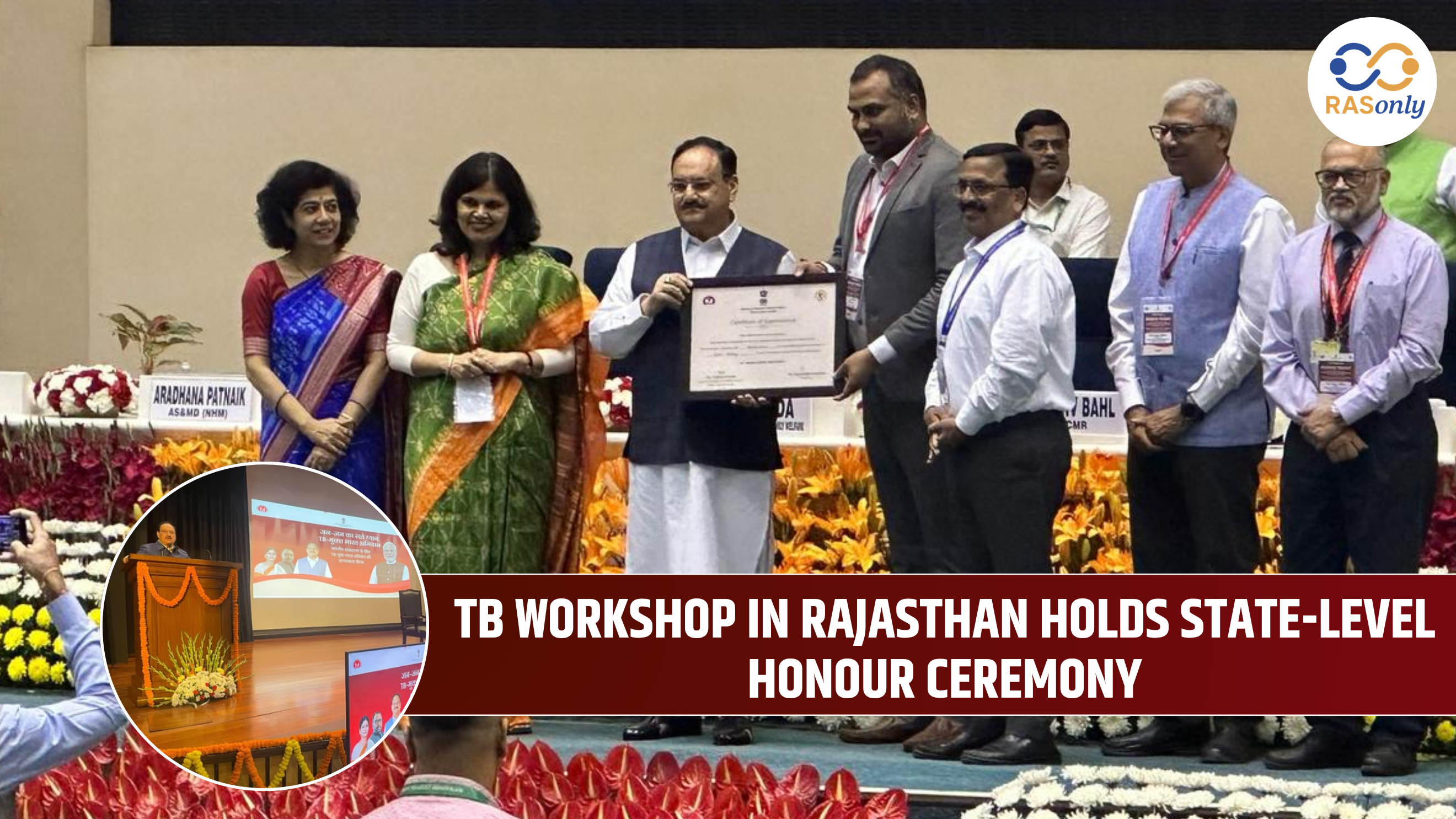
Rajasthan held an honour ceremony at the state level under the TB-Free India Campaign and a Pediatric TB Stakeholder Workshop in Jaipur on 27 March. The programme made an aim to enhance the initiatives on tuberculosis elimination in the state by implementing coordination, community involvement, and combining pediatric TB treatment with services of child health. The event recognised officers, personnel, districts and development partners who had attained a great performance in the field of TB control. The workshop also discussed achievements with the National Tuberculosis Elimination Programme and how the implementation could be improved at the grassroots level and thus the development is very relevant in the RAS examination point of view.
Key Highlights
- TB-Free India Campaign state level honour ceremony and Pediatric TB Stakeholder Workshop was held in Jaipur.
- Awards were given to the officials and personnel who were undertaking significant work in the TB elimination.
- The programme emphasized on multi-sectoral coordination and community involvement in TB elimination.
- Special focus was made on the combination of pediatric TB and child health programmes.
- Excellent districts, STC, STDC, and development partners were also awarded.
- The advancements of the National Tuberculosis Elimination Programme, TB-Free Gram Panchayat Campaign, and the condition of TB-AI solutions in the state were presented.
- Integration of TB and child health programmes at the district level was discussed based on experience sharing and group work.
Successful treatment of learned disorders of the brain does not occur without multisectoral coordination.
- The chief guest who was a Director of Public Health Dr. Ravi Prakash Sharma highlighted that TB elimination needs to be coordinated heavily in multi-sectoral coordination. He made it clear that the participation of all stakeholders in ensuring the intended outcome of a TB-free India is active.
- This measure is significant owing to the fact that health departments are not the only paramount agencies of tuberculosis control but the other arm involves raising awareness, early diagnosis, institutional reaction, and social involvement.
Significance of Community Participation
The event emphasized the importance of community involvement as a way of enhancing the TB-Free India Campaign. The main guest requested a wider awareness by involving the people in activities to create awareness. He also emphasized on the importance of increasing field work in order to facilitate better diagnosis and treatment services to vulnerable populations. This community-based practice is particularly important to governance of public health and the local government.
Pediatric TB Child Health Integration.
- Pediatric TB was also one of the key themes of the workshop.
- The programme was aimed at making pediatric TB more integrated with child health programmes. Specialists were speaking about various targets connected with TB in children, technical recommendations, and the system of collaboration based on RBSK.
- This is significant in that, tight collaboration between TB control systems and child health services is needed to identify and treat TB in children at an early stage.
Specific Screening in the High-Risk localities.
- The other issue that was addressed during the programme was the necessity to enhance TB screening and treatment services in the identified high-risk villages using Ayushman Arogya Camps.
- This is an indication of a focused public health approach whereby the high-risk areas are of priority in the intervention.
- This can be used to enhance the detection of cases and decrease the burden of the disease in regions where special medical outreach is required.
Programme progress
The progress of National Tuberculosis Elimination Programme, TB-Free Gram Panchayat Campaign and the current state of TB-AI solutions in Rajasthan were presented in detail during the programme. The importance of these presentations lies in the fact that they demonstrate the way state is integrating traditional public health tactics with local governance and technological based solutions.
Administrative Advice and District Survey.
- State TB Officer Dr. Purushottam Soni reviewed the performance of every district and provided stipulated guidelines that would ensure the completion of the successful implementation of the programme on the TB-Free India Campaign -100 Day.
- The directions were also given by State Nodal Officer of the TB-Free Gram panchayat campaign, Dr. S.N. Dholpuria on the need to increase the number of TB-free panchayats and meet the targeted numbers.
- These reviews suggest that monitoring, accountability, and administrative direction are of importance in public health campaigns.
Numerous talented individuals
The workshop also involved high-level discussions, experiences, and team work with an orientation of enhancing integration of TB and child health programmes on the district level. The importance of these collaborative exercises is that it enables the officials and the field workers to gain knowledge through the successes of practices and gain realizations on how they can apply this in real life situations that may be facing them in the implementation.
Important to RAS Preparation
- This trend is significant to RAS as it encompasses the administration of health of the population, eradication of diseases, localized governance, child health, utilization of technology in health care provision, and coordination at multiple levels.
- Some of the questions that can be posed include the National Tuberculosis Elimination Programme, pediatric TB, TB-Free Gram Panchayat Campaign, public health outreach in high-risk villages, role of awareness and administrative review in control of the disease.
Conclusion
The honour ceremony state level, and the workshop on pediatric TB indicate how seriously Rajasthan takes the TB-Free India Campaign. On a single platform, the programme united recognition, review, planning and technical discussion. Its emphasis on integration of child health, awareness and targeted screening demonstrates that elimination of TB needs effective administration as well as active involvement of communities.
MCQs
1. What was the prime objective of the state level workshop arranged in Jaipur as part of TB-Free India Campaign?
A. Only to introduce a new vaccination programme.
B. To assess TB elimination activities and enhance pediatric TB.
C. To write about water-borne diseases in rural population.
D. To distribute school based nutritional supplements.
Answer: B. To assess the TB elimination progress and enhance TB integration among pediatrics.
Explanation : The Workshop held at Jaipur as part of TB-free India Campaign was aimed at the review of the TB elimination achievement and at the enhancement of the pediatric TB inclusion into the child health programme. It further featured the stakeholder conversations, technical advice, and coordination on the district level to enhance the implementation of the public health.
2. What was the particular programme that was being shown at the event?
A. National Health Mission
B. Universal Immunisation Programme.
C. National Tuberculosis Elimination Programme.
D. Pulse Polio Programme
Explanation : The progress of the National Tuberculosis Elimination Programme was presented in detail during the programme. In addition to this, the TB-Free Gram Panchayat Campaign and the status of TB-AI solutions in Rajasthan was also presented, which presented a general overview of the work on tuberculosis control.
3. It was specifically suggested that screening and treatment services in the high-risk villages should be reinforced with TB screening.
A. Mobile school health vans
B. Ayushman Arogya Camps
C. Digital grievance portals
D. Nutrition rehabilitation centres.
Answer : B. Ayushman Arogya Camps.
Explanation : The reason for this is that the chief guest emphasized the necessity to increase TB screening and treatment services in identified high-risk villages using Ayushman Arogya Camps. This is a commendation of an interventionist style of public health whereby vulnerable communities receive special consideration in terms of early diagnosis, awareness and early treatment.
राजस्थान में टीबी कार्यशाला के अंतर्गत राज्य स्तरीय सम्मान समारोह आयोजित
टीबी-मुक्त भारत अभियान के अंतर्गत राजस्थान ने 27 मार्च को जयपुर में राज्य स्तरीय सम्मान समारोह तथा बाल क्षय रोग हितधारक कार्यशाला का आयोजन किया। इस कार्यक्रम का उद्देश्य राज्य में क्षय रोग उन्मूलन के प्रयासों को अधिक सशक्त बनाना था। इसके लिए समन्वय, सामुदायिक भागीदारी तथा बाल क्षय रोग सेवाओं को बाल स्वास्थ्य कार्यक्रमों के साथ जोड़ने पर विशेष बल दिया गया। कार्यक्रम में क्षय रोग नियंत्रण के क्षेत्र में उत्कृष्ट कार्य करने वाले अधिकारियों, कार्मिकों, जिलों और विकास भागीदारों को सम्मानित किया गया। कार्यशाला में राष्ट्रीय क्षय उन्मूलन कार्यक्रम की प्रगति की समीक्षा की गई और जमीनी स्तर पर क्रियान्वयन को बेहतर बनाने के उपायों पर चर्चा हुई। इस कारण यह विषय आरएएस परीक्षा की दृष्टि से भी अत्यंत महत्वपूर्ण है।
प्रमुख बिंदु
- टीबी-मुक्त भारत अभियान के अंतर्गत जयपुर में राज्य स्तरीय सम्मान समारोह तथा बाल क्षय रोग हितधारक कार्यशाला आयोजित की गई।
- क्षय रोग उन्मूलन के क्षेत्र में उल्लेखनीय कार्य करने वाले अधिकारियों और कार्मिकों को सम्मानित किया गया।
- कार्यक्रम में क्षय रोग उन्मूलन के लिए बहु-क्षेत्रीय समन्वय और सामुदायिक भागीदारी पर विशेष बल दिया गया।
- बाल क्षय रोग को बाल स्वास्थ्य कार्यक्रमों के साथ प्रभावी रूप से जोड़ने पर विशेष ध्यान दिया गया।
- उत्कृष्ट प्रदर्शन करने वाले जिलों, एसटीसी, एसटीडीसी तथा विकास भागीदारों को सम्मानित किया गया।
- राष्ट्रीय क्षय उन्मूलन कार्यक्रम, टीबी-मुक्त ग्राम पंचायत अभियान तथा राज्य में टीबी-कृत्रिम बुद्धिमत्ता समाधान की स्थिति पर प्रस्तुतियाँ दी गईं।
- जिला स्तर पर क्षय रोग और बाल स्वास्थ्य कार्यक्रमों के बेहतर एकीकरण पर अनुभव साझा सत्र और समूह कार्य आयोजित किए गए।
बहु-क्षेत्रीय समन्वय पर विशेष ध्यान
- कार्यक्रम के मुख्य अतिथि जन स्वास्थ्य निदेशक डॉ. रवि प्रकाश शर्मा ने कहा कि क्षय रोग उन्मूलन के लिए बहु-क्षेत्रीय समन्वय अत्यंत आवश्यक है।
- उन्होंने इस बात पर जोर दिया कि टीबी-मुक्त भारत के लक्ष्य को प्राप्त करने के लिए सभी हितधारकों की सक्रिय भागीदारी अनिवार्य है।
- यह दृष्टिकोण महत्वपूर्ण है क्योंकि क्षय रोग नियंत्रण केवल स्वास्थ्य विभाग का दायित्व नहीं है, बल्कि इसमें जागरूकता, शीघ्र पहचान, संस्थागत प्रतिक्रिया और सामाजिक सहयोग भी समान रूप से आवश्यक हैं।
सामुदायिक भागीदारी का महत्व
- कार्यक्रम में यह स्पष्ट किया गया कि टीबी-मुक्त भारत अभियान को प्रभावी बनाने में सामुदायिक भागीदारी की बड़ी भूमिका है।
- मुख्य अतिथि ने जनभागीदारी आधारित गतिविधियों के माध्यम से व्यापक जागरूकता फैलाने का आह्वान किया। उन्होंने जमीनी स्तर पर कार्य को और मजबूत करने तथा संवेदनशील वर्गों तक जांच और उपचार सेवाओं की पहुँच बढ़ाने की आवश्यकता पर भी बल दिया।
- यह समुदाय-केंद्रित दृष्टिकोण लोक स्वास्थ्य प्रशासन और स्थानीय शासन दोनों के लिए अत्यंत महत्वपूर्ण है।
बाल क्षय रोग और बाल स्वास्थ्य का एकीकरण
- कार्यशाला का एक प्रमुख विषय बाल क्षय रोग था। कार्यक्रम का उद्देश्य बाल क्षय रोग सेवाओं को बाल स्वास्थ्य कार्यक्रमों के साथ अधिक प्रभावी ढंग से जोड़ना था।
- विशेषज्ञों ने बाल क्षय रोग से संबंधित लक्ष्यों, तकनीकी दिशानिर्देशों तथा आरबीएसके के अंतर्गत सहयोगात्मक ढांचे पर विस्तार से चर्चा की।
- यह महत्वपूर्ण है क्योंकि बच्चों में क्षय रोग की शीघ्र पहचान और समय पर उपचार के लिए क्षय रोग नियंत्रण तंत्र तथा बाल स्वास्थ्य सेवाओं के बीच घनिष्ठ समन्वय आवश्यक होता है।
उच्च जोखिम वाले क्षेत्रों में लक्षित जांच
- कार्यक्रम के दौरान यह भी रेखांकित किया गया कि चिन्हित उच्च जोखिम वाले गांवों में आयुष्मान आरोग्य शिविरों के माध्यम से क्षय रोग जांच और उपचार सेवाओं को अधिक सशक्त किया जाए।
- यह एक लक्षित लोक स्वास्थ्य रणनीति को दर्शाता है, जिसमें उन क्षेत्रों को प्राथमिकता दी जाती है जहाँ रोग का जोखिम अधिक है।
- इस प्रकार की रणनीति से रोगियों की पहचान में सुधार हो सकता है और विशेष चिकित्सा पहुँच की आवश्यकता वाले क्षेत्रों में रोग का बोझ कम किया जा सकता है।
कार्यक्रम की प्रगति की समीक्षा
- कार्यक्रम के दौरान राष्ट्रीय क्षय उन्मूलन कार्यक्रम, टीबी-मुक्त ग्राम पंचायत अभियान और राजस्थान में टीबी-कृत्रिम बुद्धिमत्ता समाधान की वर्तमान स्थिति पर विस्तृत प्रस्तुतियाँ दी गईं।
- ये प्रस्तुतियाँ इसलिए महत्वपूर्ण हैं क्योंकि वे दर्शाती हैं कि राज्य पारंपरिक लोक स्वास्थ्य उपायों को स्थानीय शासन और तकनीकी समाधान के साथ जोड़कर कार्य कर रहा है।
प्रशासनिक मार्गदर्शन और जिला समीक्षा
- राज्य क्षय रोग अधिकारी डॉ. पुरुषोत्तम सोनी ने सभी जिलों की प्रगति की समीक्षा की और “टीबी-मुक्त भारत अभियान – 100 दिवसीय” के सफल क्रियान्वयन के लिए आवश्यक दिशा-निर्देश दिए।
- टीबी-मुक्त ग्राम पंचायत अभियान के राज्य नोडल अधिकारी डॉ. एस.एन. धौलपुरिया ने भी टीबी-मुक्त पंचायतों की संख्या बढ़ाने और निर्धारित लक्ष्यों को प्राप्त करने हेतु आवश्यक निर्देश दिए।
- यह समीक्षा दर्शाती है कि लोक स्वास्थ्य अभियानों में निगरानी, जवाबदेही और प्रशासनिक दिशा अत्यंत महत्वपूर्ण होती है।
कार्यशाला में सहयोगात्मक सीख
- कार्यशाला में विशेषज्ञ चर्चा, अनुभव साझा सत्र तथा समूह कार्य भी आयोजित किए गए, जिनका उद्देश्य जिला स्तर पर क्षय रोग और बाल स्वास्थ्य कार्यक्रमों के एकीकरण को बेहतर बनाना था।
- इस प्रकार की सहयोगात्मक गतिविधियाँ महत्वपूर्ण हैं क्योंकि इनके माध्यम से अधिकारी और क्षेत्रीय कर्मी सफल अनुभवों से सीखते हैं और कार्यान्वयन संबंधी चुनौतियों के व्यावहारिक समाधान तलाशते हैं।
आरएएस तैयारी की दृष्टि से महत्व
यह समाचार आरएएस परीक्षा के लिए इसलिए महत्वपूर्ण है क्योंकि इसमें लोक स्वास्थ्य प्रशासन, रोग उन्मूलन, स्थानीय शासन, बाल स्वास्थ्य, स्वास्थ्य सेवाओं में प्रौद्योगिकी का उपयोग तथा बहु-स्तरीय समन्वय जैसे कई महत्वपूर्ण पहलू शामिल हैं। इस विषय से राष्ट्रीय क्षय उन्मूलन कार्यक्रम, बाल क्षय रोग, टीबी-मुक्त ग्राम पंचायत अभियान, उच्च जोखिम वाले गांवों में लोक स्वास्थ्य पहुँच और रोग नियंत्रण में जागरूकता तथा प्रशासनिक समीक्षा की भूमिका पर प्रश्न पूछे जा सकते हैं।
निष्कर्ष
राज्य स्तरीय सम्मान समारोह और बाल क्षय रोग कार्यशाला यह दर्शाते हैं कि राजस्थान टीबी-मुक्त भारत अभियान को लेकर गंभीर है। इस कार्यक्रम ने एक ही मंच पर सम्मान, समीक्षा, योजना और तकनीकी चर्चा को जोड़ा। बाल स्वास्थ्य एकीकरण, जागरूकता और लक्षित जांच पर इसका बल यह दिखाता है कि क्षय रोग उन्मूलन के लिए प्रभावी प्रशासन के साथ सक्रिय सामुदायिक सहभागिता भी आवश्यक है।
वस्तुनिष्ठ प्रश्न
1. टीबी-मुक्त भारत अभियान के अंतर्गत जयपुर में आयोजित राज्य स्तरीय कार्यशाला का मुख्य उद्देश्य क्या था?
A. केवल एक नए टीकाकरण कार्यक्रम की शुरुआत करना
B. क्षय रोग उन्मूलन की प्रगति की समीक्षा करना और बाल क्षय रोग के एकीकरण को सुदृढ़ करना
C. ग्रामीण क्षेत्रों में जलजनित रोगों पर चर्चा करना
D. विद्यालयों में पोषण पूरक वितरित करना
उत्तर: B. क्षय रोग उन्मूलन की प्रगति की समीक्षा करना और बाल क्षय रोग के एकीकरण को सुदृढ़ करना
व्याख्या: जयपुर में आयोजित यह कार्यशाला क्षय रोग उन्मूलन की प्रगति की समीक्षा करने और बाल क्षय रोग को बाल स्वास्थ्य कार्यक्रमों के साथ अधिक प्रभावी रूप से जोड़ने पर केंद्रित थी। इसमें हितधारकों की चर्चा, तकनीकी मार्गदर्शन और जिला स्तर के समन्वय को भी महत्व दिया गया।
2. कार्यक्रम के दौरान किस योजना या कार्यक्रम की प्रगति पर विशेष प्रस्तुति दी गई?
A. राष्ट्रीय स्वास्थ्य मिशन
B. सार्वभौमिक टीकाकरण कार्यक्रम
C. राष्ट्रीय क्षय उन्मूलन कार्यक्रम
D. पल्स पोलियो कार्यक्रम
उत्तर: C. राष्ट्रीय क्षय उन्मूलन कार्यक्रम
व्याख्या: कार्यक्रम के दौरान राष्ट्रीय क्षय उन्मूलन कार्यक्रम की प्रगति पर विस्तृत प्रस्तुति दी गई। इसके साथ ही टीबी-मुक्त ग्राम पंचायत अभियान और राजस्थान में टीबी-कृत्रिम बुद्धिमत्ता समाधान की स्थिति पर भी चर्चा हुई, जिससे राज्य में क्षय रोग नियंत्रण की व्यापक समीक्षा सामने आई।
3. उच्च जोखिम वाले गांवों में क्षय रोग जांच और उपचार सेवाओं को मजबूत करने के लिए किस माध्यम पर विशेष बल दिया गया?
A. मोबाइल विद्यालय स्वास्थ्य वाहन
B. आयुष्मान आरोग्य शिविर
C. डिजिटल शिकायत पोर्टल
D. पोषण पुनर्वास केंद्र
उत्तर: B. आयुष्मान आरोग्य शिविर
व्याख्या: कार्यक्रम में इस बात पर विशेष जोर दिया गया कि चिन्हित उच्च जोखिम वाले गांवों में आयुष्मान आरोग्य शिविरों के माध्यम से क्षय रोग जांच और उपचार सेवाओं को अधिक सशक्त बनाया जाए। यह एक लक्षित लोक स्वास्थ्य दृष्टिकोण है, जिसके माध्यम से संवेदनशील क्षेत्रों में शीघ्र पहचान और समय पर उपचार सुनिश्चित किया जा सकता है