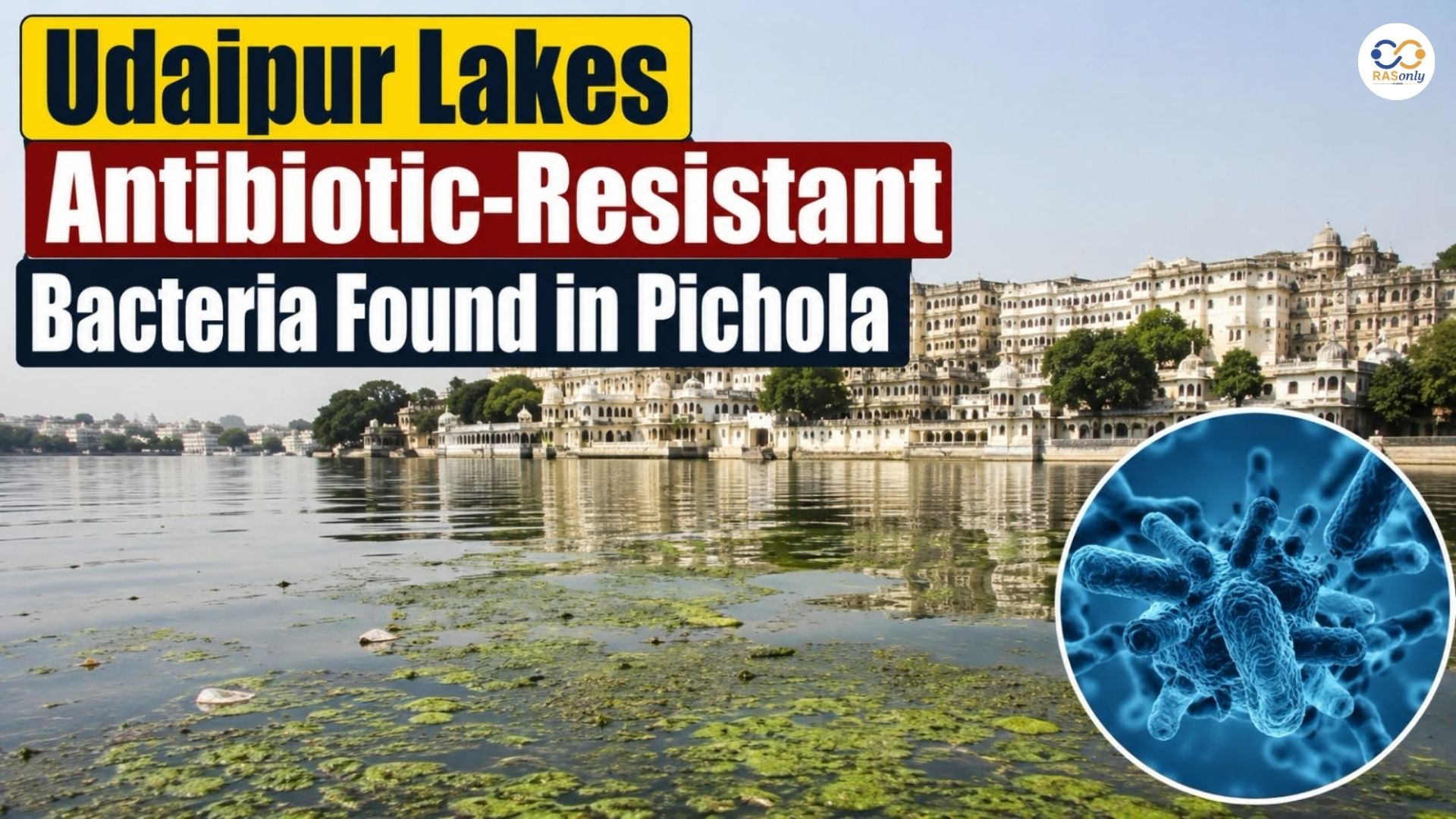
A new study on the quality of major lakes in Udaipur has raised concerns about both water quality and public health. The study, connected with the Biotechnology and Microbiology departments of Sukhadia University, has discovered the presence of antibiotic-resistant (AMR) bacteria in water samples taken from major lakes of Pichola, Fateh Sagar, Badi and Rang Sagar.
These findings are important because the lakes are directly associated with the water supply system of the city. Infections may be hard to treat if commonly used antibiotics are not effective against antibiotic-resistant bacteria.
Key Highlights
|
|
|
|
|
|
|
|
|
|
|
|
|
|
|
|
|
|
|
|
|
|
|
|
Antibiotic-Resistant Bacteria in Udaipur Lakes
The water of the biggest lakes of Udaipur city was found clean in the routine examination, according to the investigation. Detailed microbiological analysis, however, found to contain antibiotic resistant bacteria.
In Pichola Lake, the MEC-A-associated finding was reported in 34% of the samples and the MRSA-associated finding was reported in 27% of the samples from Fateh Sagar Lake. These bacteria are a cause for concern because antimicrobial resistance can mean that medicines used to treat bacterial infections are not as effective.
Another important aspect of the investigation was the issue of the stability of resistant bacteria in the water following treatment with conventional water treatment and disinfection. Proper monitoring, advanced water treatment and regular microbiological testing is especially critical.
Why is Antimicrobial Resistance a Concern?
Antimicrobial resistance (AMR) is the resistance of microorganisms to antimicrobials that were once effective against them. Resistant bacteria that get into the human body can cause infections that are more difficult to treat and can lead to serious health problems.
The results thus highlight the importance of more robust water quality monitoring and treatment strategies for water sources associated with urban communities.
Conclusion
It is significant that antibiotic-resistant bacteria are reportedly found in the lakes of Udaipur, as this poses a serious challenge to the environment and public health. Routine monitoring, pollution control and good water treatment are crucial to minimize potential risks to the city's population.
MCQs
1. Which city is associated with the reported AMR bacteria findings?
A. Jaipur
B. Udaipur
C. Kota
D. Jodhpur
Answer: B. Udaipur
2. Which lake reportedly had AMR-related findings in 34% of samples?
A. Badi
B. Rang Sagar
C. Pichola
D. Fateh Sagar
Answer: C. Pichola
3. What does AMR stand for?
A. Antimicrobial Resistance
B. Advanced Medical Research
C. Antibacterial Microbe Reaction
D. Applied Microbial Regulation
Answer: A. Antimicrobial Resistance
4. Which institution's departments were associated with the detailed study?
A. Rajasthan University
B. Sukhadia University
C. Mohanlal Sukhadia University
D. IIT Jodhpur
Answer: B. Sukhadia University
उदयपुर की झीलें: पिछोला, फतहसागर और बड़ी झील में एंटीबायोटिक-प्रतिरोधी बैक्टीरिया पाए गए
उदयपुर की प्रमुख झीलों की जल गुणवत्ता पर एक नए अध्ययन ने जल गुणवत्ता और सार्वजनिक स्वास्थ्य दोनों को लेकर चिंता बढ़ा दी है। सुखाड़िया विश्वविद्यालय के जैव प्रौद्योगिकी और माइक्रोबायोलॉजी विभागों से जुड़े अध्ययन में पिछोला, फतहसागर, बड़ी और रंगसागर जैसी प्रमुख झीलों से लिए गए पानी के नमूनों में एंटीबायोटिक-प्रतिरोधी (AMR) बैक्टीरिया की मौजूदगी का पता चला है।
ये निष्कर्ष महत्वपूर्ण हैं क्योंकि ये झीलें शहर की जल आपूर्ति प्रणाली से सीधे जुड़ी हुई हैं। यदि सामान्य रूप से इस्तेमाल होने वाली एंटीबायोटिक्स एंटीबायोटिक-प्रतिरोधी बैक्टीरिया के खिलाफ प्रभावी नहीं होती हैं, तो संक्रमण का इलाज करना मुश्किल हो सकता है।
मुख्य बिंदु
|
|
|
|
|
|
|
|
|
|
|
|
|
|
|
|
|
|
|
|
|
|
|
|
उदयपुर की झीलों में एंटीबायोटिक-प्रतिरोधी बैक्टीरिया
जांच के अनुसार, उदयपुर शहर की प्रमुख झीलों का पानी नियमित जांच में साफ पाया गया। हालांकि, विस्तृत माइक्रोबायोलॉजिकल विश्लेषण में एंटीबायोटिक-प्रतिरोधी बैक्टीरिया की मौजूदगी पाई गई।
पिछोला झील में 34% नमूनों में MEC-A से संबंधित निष्कर्ष और फतहसागर झील के 27% नमूनों में MRSA से संबंधित निष्कर्ष की रिपोर्ट की गई। ये बैक्टीरिया चिंता का कारण हैं क्योंकि एंटीमाइक्रोबियल प्रतिरोध का मतलब यह हो सकता है कि बैक्टीरियल संक्रमण के इलाज के लिए इस्तेमाल की जाने वाली दवाएं उतनी प्रभावी नहीं हैं।
जांच का एक अन्य महत्वपूर्ण पहलू पारंपरिक जल उपचार और कीटाणुशोधन के बाद पानी में प्रतिरोधी बैक्टीरिया के बने रहने का मुद्दा था। उचित निगरानी, उन्नत जल उपचार और नियमित माइक्रोबायोलॉजिकल जांच विशेष रूप से महत्वपूर्ण है।
एंटीमाइक्रोबियल प्रतिरोध चिंता का विषय क्यों है?
एंटीमाइक्रोबियल प्रतिरोध (AMR) सूक्ष्मजीवों की उन एंटीमाइक्रोबियल दवाओं के प्रति प्रतिरोधक क्षमता है, जो पहले उनके खिलाफ प्रभावी थीं। मानव शरीर में प्रवेश करने वाले प्रतिरोधी बैक्टीरिया ऐसे संक्रमण पैदा कर सकते हैं जिनका इलाज करना अधिक कठिन होता है और जो गंभीर स्वास्थ्य समस्याओं का कारण बन सकते हैं।
इसलिए, परिणाम शहरी समुदायों से जुड़े जल स्रोतों के लिए अधिक मजबूत जल गुणवत्ता निगरानी और उपचार रणनीतियों के महत्व को उजागर करते हैं।
निष्कर्ष
यह महत्वपूर्ण है कि उदयपुर की झीलों में एंटीबायोटिक-प्रतिरोधी बैक्टीरिया पाए जाने की रिपोर्ट सामने आई है, क्योंकि यह पर्यावरण और सार्वजनिक स्वास्थ्य के लिए गंभीर चुनौती पैदा करता है। शहर की आबादी के संभावित जोखिमों को कम करने के लिए नियमित निगरानी, प्रदूषण नियंत्रण और बेहतर जल उपचार महत्वपूर्ण हैं।
MCQs
1. रिपोर्ट किए गए AMR बैक्टीरिया के निष्कर्ष किस शहर से संबंधित हैं?
A. जयपुर
B. उदयपुर
C. कोटा
D. जोधपुर
उत्तर: B. उदयपुर
2. किस झील के 34% नमूनों में AMR-संबंधित निष्कर्ष पाया गया?
A. बड़ी
B. रंगसागर
C. पिछोला
D. फतहसागर
उत्तर: C. पिछोला
3. AMR का पूर्ण रूप क्या है?
A. Antimicrobial Resistance
B. Advanced Medical Research
C. Antibacterial Microbe Reaction
D. Applied Microbial Regulation
उत्तर: A. Antimicrobial Resistance
4. विस्तृत अध्ययन किन संस्थान के विभागों से संबंधित था?
A. राजस्थान विश्वविद्यालय
B. सुखाड़िया विश्वविद्यालय
C. मोहनलाल सुखाड़िया विश्वविद्यालय
D. IIT जोधपुर
उत्तर: B. सुखाड़िया विश्वविद्यालय