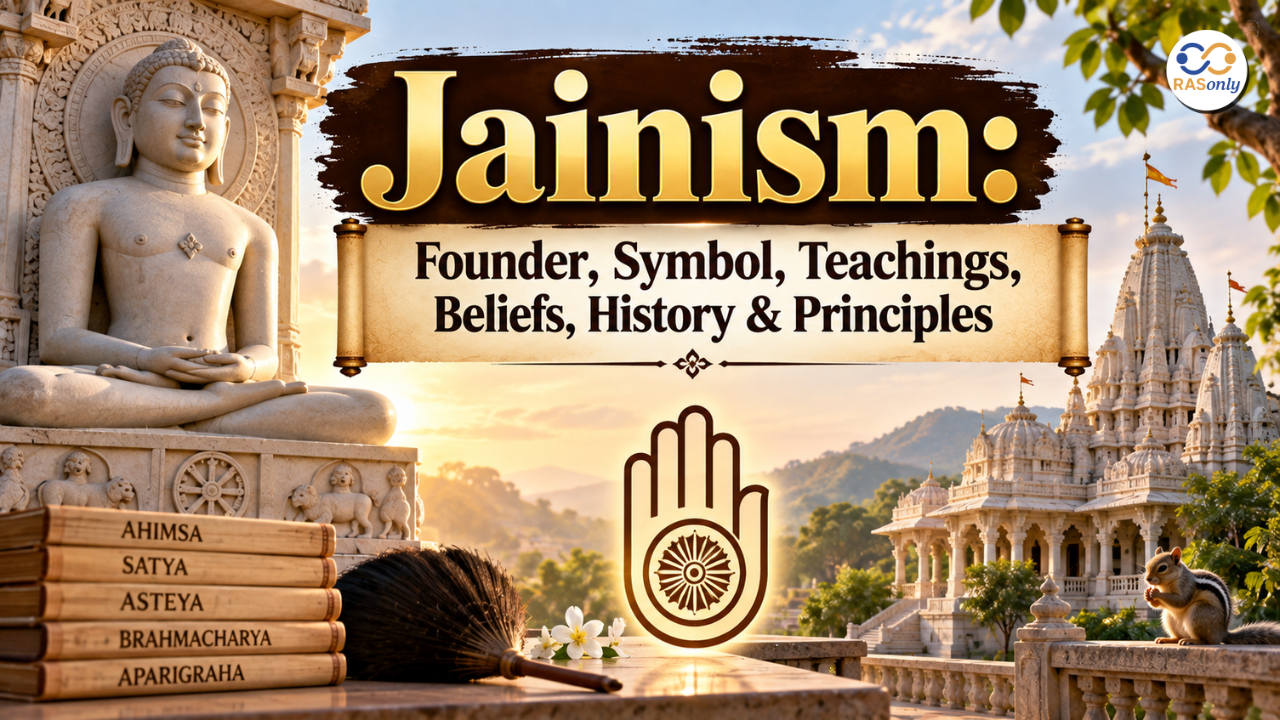
Jainism: Founder, Symbol, Teachings, Beliefs, History & Principles
Role of Gram Sabha in Rajasthan 2026: Structure, Powers, Functions, Governance & Importance (RAS)

Get in Touch with RASonly!

The Gram Sabha in Rajasthan is the foundation of grassroots democracy, ensuring direct participation of citizens in governance and decision-making. It plays a key role in GPDP approval, social audit, and rural development, making governance transparent and accountable. For RAS 2026, it is a crucial topic linking Panchayati Raj, decentralization, and good governance.

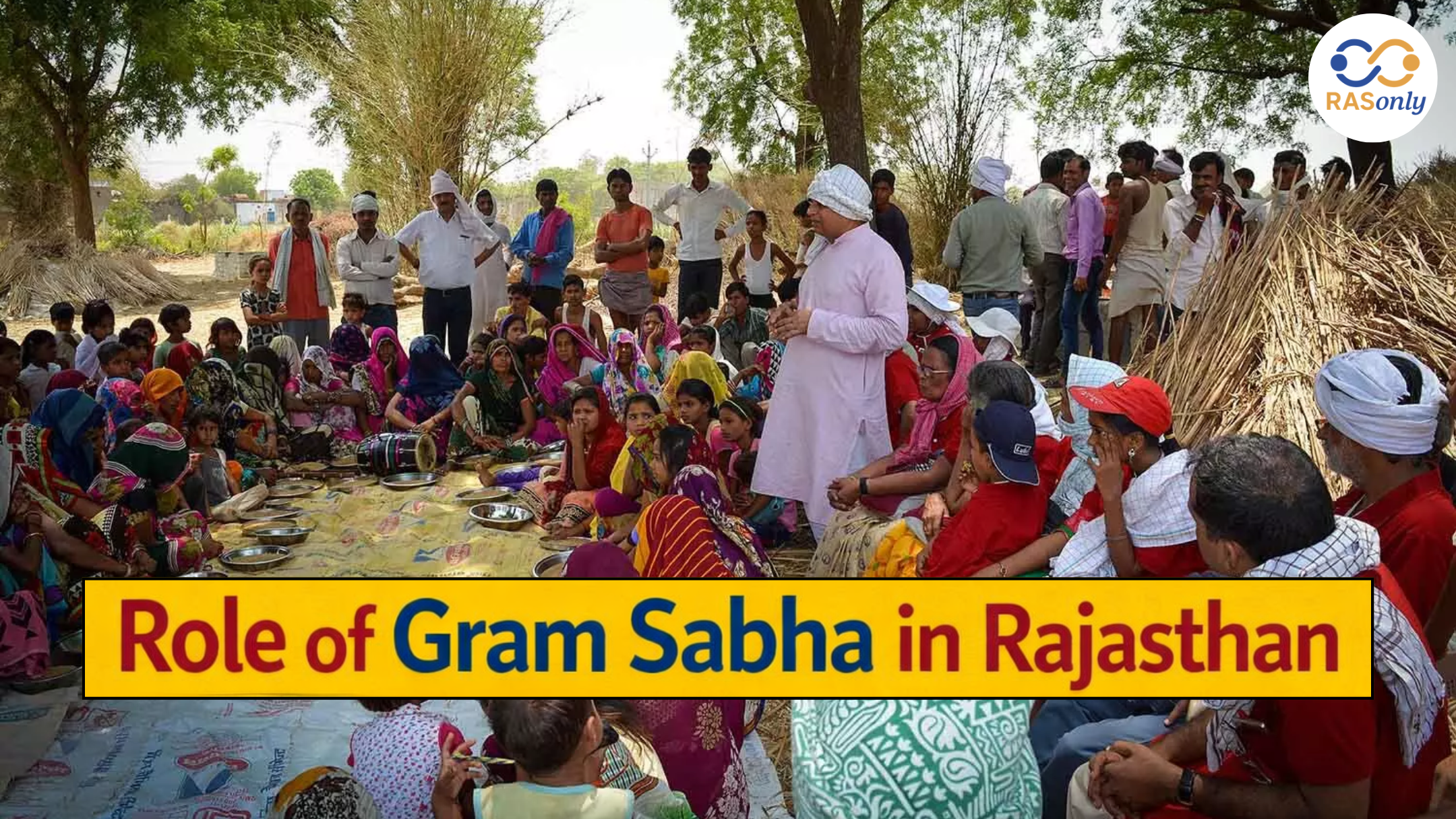
The Gram Sabha in Rajasthan is the foundation of grassroots democracy, participatory governance, decentralized administration, and rural self-governance. It consists of all registered voters of a village and acts as a village-level decision-making body under the Panchayati Raj system. The Gram Sabha plays a crucial role in ensuring direct democracy, transparency, accountability, and inclusive governance, making it a key institution for strengthening local administration and empowering rural citizens.
Gram Sabha has great significance in the context of RPSC RAS 2026, Rajasthan GK, Panchayati Raj System, Governance, and Rural Development, which guarantees participation of the citizens, social audit, selection of beneficiaries, approval of Gram Panchayat Development Plan (GPDP), and monitoring of government schemes. It not only encourages good governance, but also limits corruption, improves service delivery, and makes development need-oriented and people-oriented, which is a primary subject of Prelims and Mains study.
Gram Sabha Overview
Gram Sabha in Rajasthan forms the basis of grassroots democracy, participatory government, and decentralized government through the Panchayati Raj system. It is a combination of all the registered voters of a village and serves as a decision-making body at the village level, so that governance remains in the hands of the people. It is the ultimate form of pure democracy in rural India, where people are directly involved in decision-making processes without an intermediary.
The Gram Sabha is very important in terms of transparency, accountability, social audit, and inclusive rural governance. It oversees the operations of the Gram Panchayat, grants development plans such as the Gram Panchayat Development Plan (GPDP), and makes sure that the government schemes are put into proper functioning. This renders it of great importance to RPSC RAS 2026, Rajasthan GK, Governance, and Rural development.
Constitutional and Legal Provisions of Gram Sabha
The Gram Sabha is backed by strong constitutional provisions and legal frameworks, which ensure its authority and legitimacy in the governance system. It was institutionalized through the 73rd Constitutional Amendment Act, 1992, which established Panchayati Raj institutions as the third tier of government.
In Rajasthan, its structure and powers are defined by the Rajasthan Panchayati Raj Act, 1994, and Rules, 1996, while additional powers in tribal areas are granted under the PESA Act, 1996. These provisions ensure democratic decentralization, local self-governance, and citizen empowerment.
Key Provisions Table
| Provision | Details |
|---|---|
| Article 243A | Empowers Gram Sabha at village level |
| 73rd Amendment (1992) | Constitutional status to Panchayati Raj |
| Rajasthan Panchayati Raj Act, 1994 | Defines powers and functions |
| Rules, 1996 | Operational framework |
| PESA Act, 1996 | Special powers in tribal areas |
Composition of Gram Sabha
The Gram Sabha is an inclusive and universal institution, and it represents all classes of people in the rural society and guarantees equal participation in governance. It further consists of all adult inhabitants (18+) of the Panchayat area and is a really democratic institution.
This is because this inclusive composition guarantees the representation of women, SC, ST, OBC, and the marginalized groups, which enhances social justice, equality, and participatory governance. It enhances democracy at the grassroots because each citizen has a say in the decision-making process.
Composition Details
-
All registered voters (18+ years)
-
Residents of Gram Panchayat area
-
Includes women, SC, ST, OBC, marginalized groups
Organisation of Gram Sabha
The Gram Sabha is organised to facilitate systematic operations, administrative coordination, and good participation in the running of the governance. It must have elected representatives, and the administration must be assisted by administrative staff to ensure that the documentation and implementation are correct.
The Sarpanch presides over meetings, while the Gram Sevak/Secretary maintains records, ensuring transparency and accountability. This structure enables the smooth functioning of meetings, planning, and implementation of development activities.
Structure
- Sarpanch → Presides over meetings
- Up-Sarpanch → Acts in absence
- Gram Sevak/Secretary → Maintains records
- Citizens → Participate and vote
Gram Sabha Meetings
Regular Gram Sabha meetings are essential for ensuring democratic participation, decision-making, and monitoring of development activities. These meetings provide a platform for citizens to express concerns, approve plans, and evaluate governance performance.
The meetings are held in accordance with the legal requirement and have adequate quorum, agenda, transparency, accountability, and participation of the populace in the rural governance.
Key Features Table
| Feature | Details |
|---|---|
| Minimum Meetings | At least 2 per year |
| Quorum | 1/10th (10%) members |
| Special Meetings | Can be called when required |
| Presiding Officer | Sarpanch / Up-Sarpanch |
Agenda of Gram Sabha Meetings
The Gram Sabha meetings have an organized agenda in order to be well governed, transparent, and well planned. These agendas also assist in performance assessment and future growth affairs.
The agenda typically includes financial review, development planning, budget approval, and social audit, making it highly relevant for RAS Prelims and Mains.
Meeting Agenda
First Meeting (Beginning of Financial Year)
- Annual accounts
- Administrative report
- GPDP approval
- Audit report
Second Meeting (End of Financial Year)
- Budget approval
- Work progress review
- Expenditure analysis
- Future planning
Functions of Gram Sabha
Gram Sabha has various roles in terms of planning, governance, monitoring, and development at the village level. It has consistency in decision-making, and the decisions made are based on the needs of the community.
It plays a key role in the approval of development plans, beneficiary selection, social audit, and monitoring of government schemes, ensuring transparency and efficiency.
Key Functions Table
| Function | Description |
|---|---|
| Development Planning | Approves GPDP |
| Budget Approval | Approves Panchayat budget |
| Beneficiary Selection | Selects scheme beneficiaries |
| Social Audit | Reviews implementation |
| Monitoring | Supervises Panchayat |
| Resource Management | Manages local resources |
Additional Functions
- Promote education, health, and sanitation
- Ensure proper use of funds
- Monitor schemes like MGNREGA, PMAY
- Encourage community participation
Special Powers under the PESA Act (1996)
In Scheduled (tribal) areas of Rajasthan, the Gram Sabha has additional powers under the PESA Act, 1996, which ensures tribal self-governance and protection of traditional rights.
These powers give control over natural resources, land use, and cultural practices, making governance more localized and community-driven.
Key Powers
- Approval for land acquisition
- Control over minor forest produce
- Prevention of land alienation
- Regulation of local resources
Important for: Tribal Governance + RAS Exams
Role in Rural Development and Governance
Gram Sabha is a very important institution in terms of rural development, planning, and governance, whereby development activities are based on need and are inclusive. It allows citizens to be directly involved in the process of determining local priorities.
It strengthens participatory planning, sustainable development, and effective implementation of schemes, ensuring better outcomes in rural areas.
Key Roles
- Identifies local needs
- Approves development plans (GPDP)
- Monitors projects
- Promotes inclusive growth
Importance of Gram Sabha in Rajasthan
The Gram Sabha is essential for strengthening democracy, transparency, and accountability at the grassroots level. It acts as a bridge between citizens and administration, ensuring that governance is people-centric.
It reduces corruption, improves service delivery, and enhances public participation, making it a core institution of good governance.
Key Importance
- Strengthens democracy
- Ensures transparency
- Reduces corruption
- Enhances participation
- Improves service delivery
Challenges of Gram Sabha
Despite its importance, the Gram Sabha faces several challenges that limit its effectiveness in practice. These include low participation, lack of awareness, and administrative issues.
Addressing these challenges requires awareness programs, digital governance, and stronger monitoring systems to improve effectiveness.
Challenges Table
| Issue | Explanation |
|---|---|
| Low Participation | Lack of awareness |
| Social Inequality | Elite dominance |
| Weak Implementation | Poor monitoring |
| Political Interference | Bias |
| Digital Divide | Limited access |
Difference Between Gram Sabha and Gram Panchayat
The Gram Sabha and Gram Panchayat are two distinct institutions in rural governance, with different roles and responsibilities.
Understanding this difference is important for conceptual clarity in RAS Prelims and Mains.
| Feature | Gram Sabha | Gram Panchayat |
|---|---|---|
| Nature | General body | Executive body |
| Members | All voters | Elected members |
| Role | Decision-making | Implementation |
| Power | Approval | Administration |
Gram Sabha and Good Governance
Gram Sabha is an important instrument in the state of Rajasthan in facilitating good governance, transparency, and accountability at the grassroots level. It allows direct involvement of citizens in decision-making and allows governance to be more inclusive and people-oriented.
Key Role in Governance:
- Ensures transparency in decision-making
- Promotes accountability of Gram Panchayat
- Encourages direct citizen participation
- Supports a decentralized governance system
Governance Impact:
- Reduces corruption through social audit
- Improves public service delivery
- Strengthens democratic values in rural areas
Digital Governance & Gram Sabha (New Trend)
As digital governance is becoming effective in Rajasthan, the functioning of the Gram Sabha is getting efficient, transparent, and accessible. Technology is assisting in enhancing the planning, monitoring, and implementation of rural development programs.
Key Digital Initiatives:
- e-Mitra - Service delivery platform
- e-Panchayat - Digital governance system
- Online grievance portals - Complaint tracking
- Digital service tracking systems - Transparency
Impact:
- Faster and more efficient service delivery
- Better monitoring and transparency
- Increased citizen accessibility
Importance for RPSC RAS 2026
The subject Gram Sabha in Rajasthan is very critical in RPSC RAS 2026 since it relates to the concepts of governance, rural development, and Panchayati Raj. It is often posed both objectively and analytically.
Prelims Focus:
- Article 243A
- Quorum (1/10th members)
- Meeting structure
Mains Focus:
- Role in good governance
- Importance of social audit
- Decentralization and rural development
Rajasthan GK:
- Panchayati Raj system
- Village-level governance
- Administrative structure
Conclusion
The Gram Sabha in Rajasthan is the source of grassroots democracy and decentralization rule in the state, where the citizens take an active interest in decision-making, planning, and monitoring of rural development. It enhances social audit, accountability, and transparency, and renders the governance more social and inclusive.
With legal backing under the 73rd Constitutional Amendment, Rajasthan Panchayati Raj Act, and PESA Act, the Gram Sabha plays a vital role in improving service delivery, reducing corruption, and promoting sustainable rural development. For RPSC RAS 2026, it remains a high-weightage topic connecting governance, administration, and rural development concepts.
FAQ
Gram Sabha is a village-level body consisting of all registered voters that participates directly in governance and decision-making.
It approves GPDP, selects beneficiaries, conducts social audit, and monitors implementation of government schemes.
The quorum is 1/10th (10%) of total members, which is important for exam purposes.
The 73rd Constitutional Amendment (1992) and Rajasthan Panchayati Raj Act, 1994 provide legal authority.
It includes control over resources, approval of land acquisition, and protection of tribal rights in scheduled areas.

BEST SELLER
🏆 PRELIMS
RAS Pass
Prelims focused Hindi & English
₹399
✓
Prelims Topic-Wise Tests
✓
Subject-Wise Tests
✓
Full-Length Prelims Tests
✓
Daily Current Affairs Tests
✓
Prelims PYQs Tests
✓
Detailed Solutions & Analysis
✓
All Rajasthan Ranking
✓
Unlimited Reattempts
✓
Mains Tests
✓
Hindi & English Tests
✓
All Rajasthan Ranking
Trusted by 5,000+ Students

Post Category
- RAS Salary
- Result
- RAS Admit Card
- RAS Job
- RAS Cutoff
- Preparation Tips
- RAS Answer Key
- RAS Exam Analysis
- RAS Syllabus
- RAS Previous Year Papers
- RPSC RAS Exam Pattern
- RAS Interview
- RAS Exam Date
- RAS Vacancy
- RAS Test Series
- RAS Best Books
- RAS Preparation Resources
- RAS Coaching Centre
- History
- Polity
- Geography
- Economics
- Science
- Art and Culture
- RPSC RAS Application Form
- RPSC RAS Notification
- RAS Eligibility Criteria
- UPSC Exam
- RPSC RAS Mains
Visit Our RASonly Offline Center
Our Expert Faculty

Bhunesh Sir
Current Affairs · 13+ Yrs

Aamir Khan Sir
RAS-2017 · IIM Ahm.

Akash Sir
Polity · 8+ Yrs
Free Resources
Official Mobile App

RASOnly App
by OTSAdda · Free
Full Video Lectures
Mock Tests & PYQs
Daily Current Affairs
AI Mock Interview
Free Download · No subscription needed to install
RAS 2024 Toppers — RASonly
Rank 2
Virendra Charan
Rank 9
Bhoopinder Singh
Rank 26
Aanchal Nagpal
Rank 33
Lokendra Singh
Rank 45
Amar Rathore
Rank 46
Manasvini Verma

Join RASonly WhatsApp Community
Get daily current affairs, exam alerts, free study material and tips from expert faculty — right on WhatsApp.
Join for Free →RASonly Interview Guidance Program

Mr. Ashok Jain
Ex-Chief Secretary Govt of Rajasthan
- IAS officer of the 1981 batch, Rajasthan cadre.
- Passionate about mentoring the next generation of RAS officers with real-world insights.
- Got retired in Dec 2017 from the post of Chief Secretary of the state of Rajasthan.

Mr. Guru Charan Rai
Ex-ASP / SP in Jaisalmer
- Guru Charan Rai, IPS (Retd), retired as Inspector General of Police (Security), Rajasthan, Jaipur in 2017.
- Served as ASP and SP in Jaisalmer, Nagaur, Sri Ganganagar, Sawai Madhopur, Dausa, Sikar, and Karauli.
- He also held key positions as DIGP and IGP in the Law and Order division.

Mr. Rakesh Verma
Ex-IAS Officer, B.Tech, MBA, and M.A. (Economics)
- IAS officer of the 1981 batch and retired in Chief Secretary Rank.
- Civil servant of high repute and vast experience.
- Has been teaching UPSC CSE subjects for the last six years.


Daily Current Affairs for RAS Exam Preparation 2026

25th SCO Foreign Trade Ministers' Meeting
September 19, 2026
India’s flag bearer at the opening ceremony of the...
September 19, 2026
PM-YASASVI Scheme Update 2026
September 18, 2026