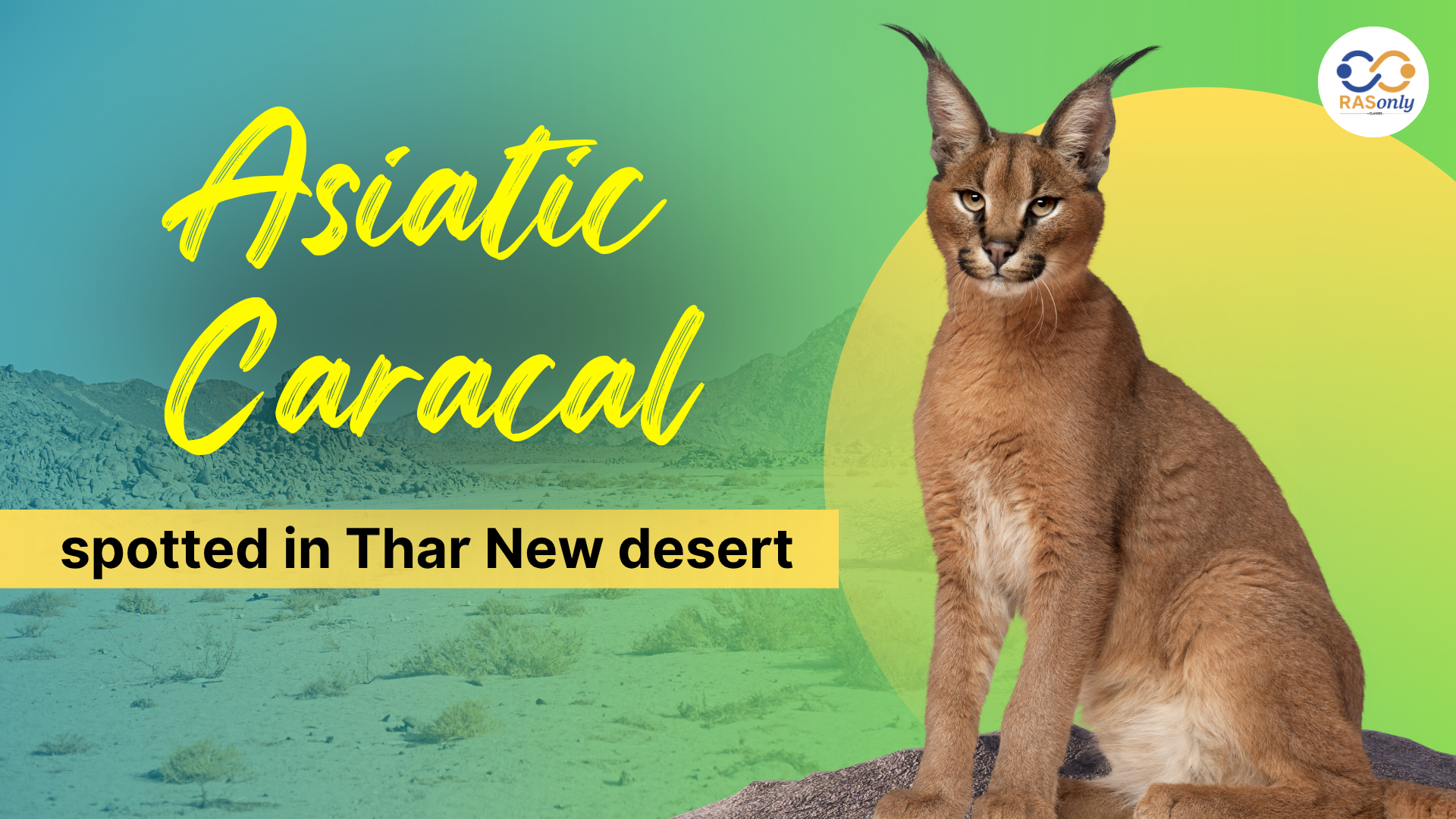
One of the endangered species of wild cat found in India, known as Asiatic Caracal has been spotted in Ramgarh, in Jaisalmer in the border of India and Pakistan. The local wildlife observers photographed the caracal thus confirming its existence in the Thar Desert. This is a significant conservation discovery considering that there are less than 10 people believed to be alive in Rajasthan. The species is at risk of several things such as loss of habitat, lack of food and human interference. Those in charge believe that as long as its natural habitat is better safeguarded, its prey species restored, and its population constantly watched over by scientists, the population can gradually be restored. The wildlife department is also having a close evaluation of the movement patterns and threats that may be posed to this elusive desert species.
Major Asiatic Caracal Characteristics
Physical Characteristics
- Long blacktipped ear tufts
- Slender, agile, muscular body
- Short reddishbrown coat ideal in camouflage in the desert.
Behaviour & Habitat
- Lives in Scrublands, scrub ravines and desert ecosystems.
- is able to jump 3 meters in order to attack birds in the air.
- Preys upon the rodents, birds, hares and small mammals.
- very evasive, and not easily photographed.
Conservation Concerns
- very low population at Rajasthan.
- Big threats include habitat fragmentation and loss of prey.
- Desert ecology needs protection to survive.
Conclusion
The Asiatic Caracal is a rare species spotted in Jaisalmer which features the ecological richness of Thar Desert and outlines the necessity of conservation efforts. Its extremely low population requires the protection of the habitat, the restoration of its prey and scientific control. This is a rare piece of photographic evidence that gives new hope to conservationists trying to save the wildlife that is endangered in Rajasthan.
MCQs (English Only)
Q1. Where in Rajasthan had the rare Asiatic Caracal just been seen?
(a) Barmer Plateau
(b) Ramgarh area of Jaisalmer
(c) Sambhar Wetlands
(d) Kumbhalgarh Wild life Sanctuary.
Answer: (b)
Explanation:
The photograph was taken in the Ramgarh region of the Jaisalmer at the border between India and Pakistan. This area provides scrubland and desert plants, which are adapted to the endangered species. The sighting is noteworthy since caracals are very very rare in Rajasthan, and there is hardly an estimation of the number surviving with less than ten accomplished sighting creating a critical conservation plan.
Q2. What is the most common physical characteristic of the Asiatic Caracal?
(a) White mane and long tail
(b) Spotted coat like a leopard
(c) Long blacktipped ear tufts
(d) Striped body pattern
Answer: (c)
Explanation :
The lengthiest and most peculiar part of the Asiatic Caracal is the lengthy black tipped ear tufts. These ear tufts are useful in its reception of slight sounds in desert grasslands and a major identifying feature. The trait also helps in camouflaging and communicating, whereby the caracal is easily spotted among the small wild cats species.
Q3. What do you consider to be one of the key reasons as to why Asiatic Caracal are on the verge of disappearance in Rajasthan?
(a) Increase in water bodies
(b) Heavy snowfall
(c) Destruction of habitat and loss of prey.
(d) Excessive tourism
Answer: (c)
Explanation :
The caracals are dependent on the dry scrublands and desert ecosystems which are being shrinking as a result of human activities like landuse change and livestock pressure. Their prey species such as birds and hares are also on the decline, leaving them less likely to survive. The main threats are habitat loss and prey depletion because the habitat fragmentation limits their movement and breeding.
Q4. What are the heights at which a caracal is said to jump in order to seize the birds?
(a) 1 meter
(b) 2 meters
(c) 3 meters
(d) 5 meters
Answer: (c)
Explanation :
The Asiatic Caracal is reputed to be extremely agile and a hunter. It is able to jump almost 3 meters in the air and grab the birds on the move, a strategy essential in surviving open desert environments. This skill makes the species distinguishable among other small cats and makes it noticeable in terms of adaptation to tough and scarce habitats.
Q5. What action towards conservation of the Asiatic Caracal is immediately recommended?
(a) Opening the habitat to tourism.
(b) Capturing them for zoos
(c) Safeguarding natural habitat and preying.
(d) Enhancing night safari tours.
Answer: (c)
Explanation :
The critical thing that needs to be done in order to preserve Asiatic Caracal is to preserve its habitat, and make sure that it has natural prey. Some of the important steps include restoring scrublands, preventing land fragmentation, reducing human disturbance, and reviving prey species. Unless these ecological needs are taken care of, the already limited population of caracals may only go down further.
थार के नए रेगिस्तानी क्षेत्र में एशियाटिक कैराकल का देखा जाना
भारत में पाई जाने वाली संकटग्रस्त जंगली बिल्ली की प्रजाति—एशियाटिक कैराकल—का जैसलमेर जिले के रामगढ़ क्षेत्र (भारतपाक सीमा के निकट) में दुर्लभ अवलोकन किया गया है। स्थानीय वन्यजीव प्रेमियों द्वारा खींची गई तस्वीरों ने थार रेगिस्तान में इसकी उपस्थिति की पुष्टि की है। राजस्थान में इसकी संख्या 10 से भी कम मानी जाती है, इसलिए यह sighting संरक्षण की दृष्टि से अत्यंत महत्वपूर्ण है। प्रजाति को आवास क्षरण, भोजन की कमी और मानवीय हस्तक्षेप जैसी चुनौतियों का सामना करना पड़ रहा है। विशेषज्ञों का मानना है कि यदि इसके प्राकृतिक आवास की बेहतर सुरक्षा, शिकार प्रजातियों की बहाली और वैज्ञानिक निगरानी सुनिश्चित की जाए, तो इसकी आबादी धीरेधीरे बढ़ सकती है। वन विभाग भी इसके मूवमेंट और संभावित खतरों का नज़दीकी अध्ययन कर रहा है।
एशियाटिक कैराकल की मुख्य विशेषताएँ
शारीरिक विशेषताएँ
- लंबे काले तुओं वाले कान (ब्लैकटिप्ड ईयर टफ्ट्स)
- पतला, फुर्तीला और मांसल शरीर
- लालिमा लिए भूरे रंग का कोट, जो रेगिस्तान में उत्कृष्ट कैमोफ्लाज प्रदान करता है
व्यवहार एवं आवास
- झाड़ीदार क्षेत्रों, नालों और मरुस्थलीय पारिस्थितिक तंत्र में निवास
- लगभग 3 मीटर ऊँची छलांग लगाकर हवा में उड़ते पक्षियों को पकड़ने की क्षमता
- प्रमुख शिकार: कृंतक, पक्षी, खरगोश और छोटे स्तनधारी
- अत्यंत शर्मीला एवं दुर्लभ रूप से कैमरे में कैद होने वाला जीव
संरक्षण संबंधी चिंताएँ
- राजस्थान में आबादी अत्यंत कम
- आवास का विखंडन और शिकार प्रजातियों की कमी बड़े खतरे
- मरुस्थलीय पारिस्थितिकी तंत्र की सुरक्षा आवश्यक
निष्कर्ष
जैसलमेर में एशियाटिक कैराकल का दिखना थार रेगिस्तान की पारिस्थितिक महत्ता को रेखांकित करता है और संरक्षण प्रयासों की तात्कालिक आवश्यकता दर्शाता है। अत्यंत कम संख्या को देखते हुए प्राकृतिक आवास की रक्षा, prey species की बहाली और वैज्ञानिक निगरानी अत्यावश्यक है। यह दुर्लभ फोटोग्राफिक साक्ष्य राजस्थान में संकटग्रस्त वन्यजीव संरक्षण के लिए नई आशा प्रदान करता है।
MCQs (हिंदी)
प्रश्न 1. राजस्थान में एशियाटिक कैराकल हाल ही में कहाँ देखा गया?
(अ) बाड़मेर पठार
(ब) जैसलमेर का रामगढ़ क्षेत्र
(स) सांभर झील
(द) कुम्भलगढ़ वन्यजीव अभयारण्य
उत्तर: (ब)
व्याख्या :
कैराकल को जैसलमेर के रामगढ़ क्षेत्र में कैमरे में कैद किया गया, जो भारतपाक सीमा के समीप है। यह क्षेत्र झाड़ियों एवं मरुस्थलीय वनस्पति वाला है जो कैराकल के लिए उपयुक्त आवास प्रदान करता है। चूँकि राजस्थान में इनकी संख्या 10 से भी कम मानी जाती है, इसलिए यह sighting संरक्षण योजनाओं के लिए अत्यंत महत्वपूर्ण है।
प्रश्न 2. एशियाटिक कैराकल की सबसे प्रमुख शारीरिक विशेषता कौनसी है?
(अ) सफेद अयाल और लंबी पूँछ
(ब) तेंदुए जैसी चित्तीदार खाल
(स) लंबे काले तुओं वाले कान
(द) शरीर पर धारियाँ
उत्तर: (स)
व्याख्या :
एशियाटिक कैराकल की पहचान इसके लंबे काले तुओं वाले कानों से होती है। ये कान रेगिस्तानी झाड़ियों में हल्कीसी आवाज़ पकड़ने और संचार में मदद करते हैं। यह विशेषता इसे अन्य छोटी बिल्ली प्रजातियों से अलग बनाती है और कैराकल की पहचान का प्रमुख आधार है।
प्रश्न 3. राजस्थान में एशियाटिक कैराकल की संख्या घटने का प्रमुख कारण क्या है?
(अ) पानी के स्रोतों का बढ़ना
(ब) भारी हिमपात
(स) आवास का नष्ट होना और शिकार की कमी
(द) अत्यधिक पर्यटन
उत्तर: (स)
व्याख्या:
कैराकल सूखे झाड़ीदार एवं मरुस्थलीय आवासों पर निर्भर करता है, जहाँ मानवीय गतिविधियों से भूमिउपयोग में तेजी से परिवर्तन हो रहा है। शिकार प्रजातियों—जैसे पक्षी और खरगोश—की संख्या भी कम हो रही है, जिससे इसका भोजन आधार घटा है। आवास विखंडन से इनके मूवमेंट और प्रजनन पर भी असर पड़ता है।
प्रश्न 4. पक्षियों को पकड़ने के लिए कैराकल कितनी ऊँचाई तक छलांग लगा सकता है?
(अ) 1 मीटर
(ब) 2 मीटर
(स) 3 मीटर
(द) 5 मीटर
उत्तर: (स)
व्याख्या :
एशियाटिक कैराकल अपनी असाधारण फुर्ती और उछाल क्षमता के लिए प्रसिद्ध है। यह लगभग 3 मीटर तक हवा में छलांग लगाकर उड़ते हुए पक्षियों को पकड़ सकता है। यह विशेष कौशल इसे मरुस्थलीय पारिस्थितिकी तंत्र में जीवित रहने में अत्यंत सहायक बनाता है, जहाँ शिकार कम और तेज होता है।
प्रश्न 5. एशियाटिक कैराकल के संरक्षण के लिए सबसे महत्वपूर्ण कदम कौनसा है?
(अ) पर्यटन को बढ़ावा देना
(ब) इन्हें चिड़ियाघरों में रखना
(स) प्राकृतिक आवास एवं शिकार प्रजातियों की सुरक्षा
(द) नाइट सफारी बढ़ाना
उत्तर: (स)
व्याख्या :
कैराकल संरक्षण के लिए सबसे ज़रूरी है इसके प्राकृतिक आवास की रक्षा करना और शिकार प्रजातियों को पुनर्स्थापित करना। झाड़ीदार क्षेत्रों को संरक्षित करना, भूमि विखंडन रोकना, मानवीय हस्तक्षेप कम करना और prey species की बहाली अत्यंत आवश्यक है। इन आवश्यकताओं की अनदेखी इसकी घटती संख्या को और संकट में डाल सकती है।