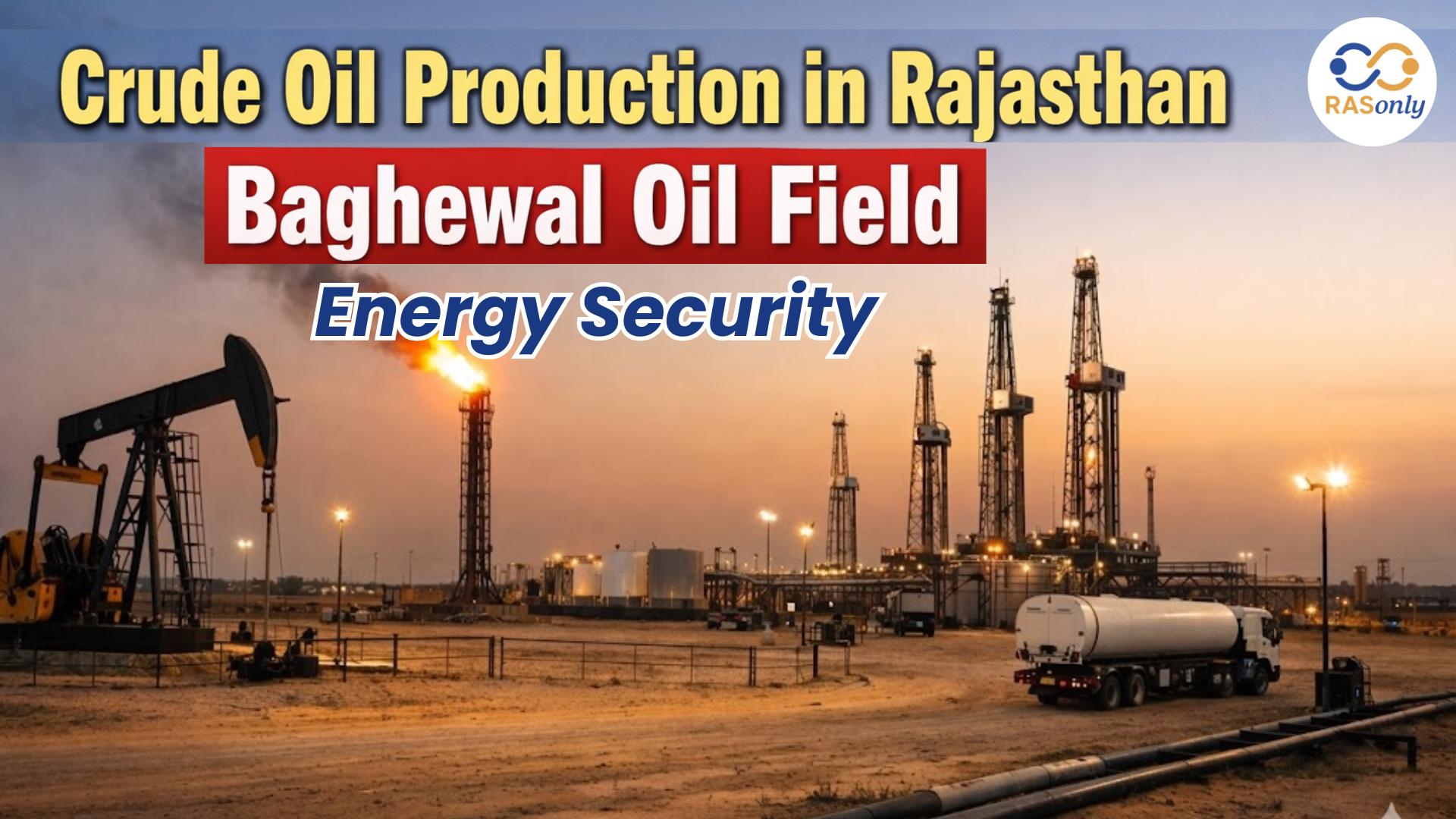
Rajasthan has also registered a significant growth in crude oil production at the Baghewala Oil Field in Jaisalmer where the production has increased by approximately 70 percent. This is happening when the world oil industry is under pressure because of the conflict in West Asia. The success has enhanced the energy security of India and the contribution of Rajasthan in the hydrocarbon industry. This has been termed by the oil India Limited as a significant milestone in production in the Thar Desert region. This increase has been occasioned by better operations and the application of the CSMS technology where 13 new wells were sunk this year and 19 wells were finished.
The main Highlights of the Production Increase.
- The production of crude oil at the Baghewala Oil Field has grown by approximately 70 percent.
- Daily production has increased by 705 barrels per day to 1,202 barrels per day.
- Annual production in 2025–26 reached 43,773 metric tonnes.
- Last year, the production was at 32,787 metric tonnes.
- Oil India has finished the work of the CSMS in 19 wells, which is approximately 72 percent more than the last year.
- Since 2017, the company has been continuously producing crude oil at the Baghewala field.
The Baghewala Oil Field is strategically important
One of the few heavy oil fields in India is the Baghewala Oil Field in the Bikaner Nagaur sub-basin. Its enhanced production is not only significant to the economy of Rajasthan but also to the pressure on imported crude oil. The report observes that the increase in production has also brought into focus the role of the contribution of the state of Jaisalmer and Rajasthan towards national energy security.
Field Profile and Infrastructure.
Important Features
- The Baghewala field was discovered in 1991.
- It covers an area of 200.26 square kilometres.
- There are a total of 52 wells in the field.
- Of these, there are 33 active wells.
The transportation and refining process is carried out in two stages:
Transportation and Refining
- The Baghewala field is used to produce crude oil, which is transported by tankers to the ONGC plant at Mehsana in Gujarat. It is then transported via a pipeline to the Koyali Refinery, which is run by Indian Oil Corporation Limited.
Conclusion
The sudden increase in crude oil production in the Baghewala Oil Field of Rajasthan is a big step towards the state and the country. As the daily and annual production increased, the well operations improved, and the field has been producing since 2017, it has become a significant source of energy security in India and the domestic oil production capacity.
MCQs
1. Which district of Rajasthan is the Baghewala Oil Field, which has been in the news recently due to the increased production of crude oil?
a) Barmer
b) Jaisalmer
c) Bikaner
d) Jodhpur
Answer: b) Jaisalmer
2. The report indicates that the daily production of crude oil at the Baghewala Oil Field rose to:
a) 705 barrels per day.
b) 943 barrels per day.
c) 1,202 barrels per day
d) 1,500 barrels per day
Answer: c) 1,202 barrels per day
3. Which refinery does the crude oil of the Baghewala field finally go to after it has been received at the ONGC plant at Mehsana?
a) Mathura Refinery
b) Panipat Refinery
c) Paradip Refinery
d) Koyali Refinery
Explanation : d) Koyali Refinery.
राजस्थान में कच्चे तेल का उत्पादन, बागेवाला तेल क्षेत्र, ऊर्जा सुरक्षा
राजस्थान ने जैसलमेर स्थित बागेवाला तेल क्षेत्र में कच्चे तेल के उत्पादन में उल्लेखनीय वृद्धि दर्ज की है, जहाँ उत्पादन में लगभग 70 प्रतिशत की बढ़ोतरी हुई है। यह वृद्धि ऐसे समय में हुई है, जब पश्चिम एशिया के संघर्ष के कारण वैश्विक तेल उद्योग दबाव में है। इस उपलब्धि ने भारत की ऊर्जा सुरक्षा को मजबूत किया है और हाइड्रोकार्बन क्षेत्र में राजस्थान के योगदान को और अधिक महत्त्वपूर्ण बनाया है। ऑयल इंडिया लिमिटेड ने इसे थार मरुस्थल क्षेत्र में उत्पादन का एक बड़ा मील का पत्थर बताया है। यह वृद्धि बेहतर परिचालन और सीएसएमएस तकनीक के उपयोग से संभव हुई, जिसके अंतर्गत इस वर्ष 13 नए कुएँ खोदे गए और 19 कुओं में कार्य पूरा किया गया।
उत्पादन वृद्धि की मुख्य विशेषताएँ
- बागेवाला तेल क्षेत्र में कच्चे तेल के उत्पादन में लगभग 70 प्रतिशत की वृद्धि हुई है।
- दैनिक उत्पादन 705 बैरल प्रतिदिन से बढ़कर 1,202 बैरल प्रतिदिन हो गया है।
- 2025–26 में वार्षिक उत्पादन 43,773 मीट्रिक टन तक पहुँच गया।
- पिछले वर्ष उत्पादन 32,787 मीट्रिक टन था।
- ऑयल इंडिया ने 19 कुओं में सीएसएमएस कार्य पूरा किया, जो पिछले वर्ष की तुलना में लगभग 72 प्रतिशत अधिक है।
- कंपनी 2017 से बागेवाला क्षेत्र में लगातार कच्चे तेल का उत्पादन कर रही है।
बागेवाला तेल क्षेत्र का सामरिक महत्व
बीकानेर–नागौर उप-बेसिन में स्थित बागेवाला तेल क्षेत्र भारत के कुछ गिने-चुने भारी तेल क्षेत्रों में से एक है। इसका बढ़ा हुआ उत्पादन केवल राजस्थान की अर्थव्यवस्था के लिए ही महत्त्वपूर्ण नहीं है, बल्कि आयातित कच्चे तेल पर निर्भरता का दबाव कम करने में भी सहायक है। इस वृद्धि ने जैसलमेर और राजस्थान की राष्ट्रीय ऊर्जा सुरक्षा में भूमिका को और अधिक स्पष्ट किया है।
क्षेत्रीय स्वरूप और आधारभूत संरचना
महत्त्वपूर्ण विशेषताएँ
- बागेवाला क्षेत्र की खोज 1991 में हुई थी।
- यह क्षेत्र 200.26 वर्ग किलोमीटर में फैला हुआ है।
- इस क्षेत्र में कुल 52 कुएँ हैं।
- इनमें से 33 कुएँ सक्रिय हैं।
परिवहन और परिशोधन प्रक्रिया
बागेवाला क्षेत्र से निकाले गए कच्चे तेल को टैंकरों के माध्यम से गुजरात के मेहसाणा स्थित ओएनजीसी संयंत्र तक पहुँचाया जाता है। इसके बाद इसे पाइपलाइन द्वारा इंडियन ऑयल कॉरपोरेशन लिमिटेड की कोयली तेल परिशोधनशाला तक भेजा जाता है।
निष्कर्ष
राजस्थान के बागेवाला तेल क्षेत्र में कच्चे तेल के उत्पादन में हुई तीव्र वृद्धि राज्य और देश दोनों के लिए एक महत्त्वपूर्ण उपलब्धि है। दैनिक और वार्षिक उत्पादन में बढ़ोतरी, कुओं के बेहतर संचालन और 2017 से निरंतर उत्पादन के कारण यह क्षेत्र भारत की ऊर्जा सुरक्षा और घरेलू तेल उत्पादन क्षमता का एक महत्त्वपूर्ण आधार बनकर उभरा है।
बहुविकल्पीय प्रश्न
1. हाल ही में कच्चे तेल के उत्पादन में वृद्धि के कारण चर्चा में रहा बागेवाला तेल क्षेत्र राजस्थान के किस जिले में स्थित है?
a) बाड़मेर
b) जैसलमेर
c) बीकानेर
d) जोधपुर
उत्तर: b) जैसलमेर
2. रिपोर्ट के अनुसार बागेवाला तेल क्षेत्र में कच्चे तेल का दैनिक उत्पादन बढ़कर कितना हो गया है?
a) 705 बैरल प्रतिदिन
b) 943 बैरल प्रतिदिन
c) 1,202 बैरल प्रतिदिन
d) 1,500 बैरल प्रतिदिन
उत्तर: c) 1,202 बैरल प्रतिदिन
3. मेहसाणा स्थित ओएनजीसी संयंत्र तक पहुँचने के बाद बागेवाला क्षेत्र का कच्चा तेल अंततः किस परिशोधनशाला में भेजा जाता है?
a) मथुरा परिशोधनशाला
b) पानीपत परिशोधनशाला
c) पारादीप परिशोधनशाला
d) कोयली तेल परिशोधनशाला
उत्तर: d) कोयली तेल परिशोधनशाला