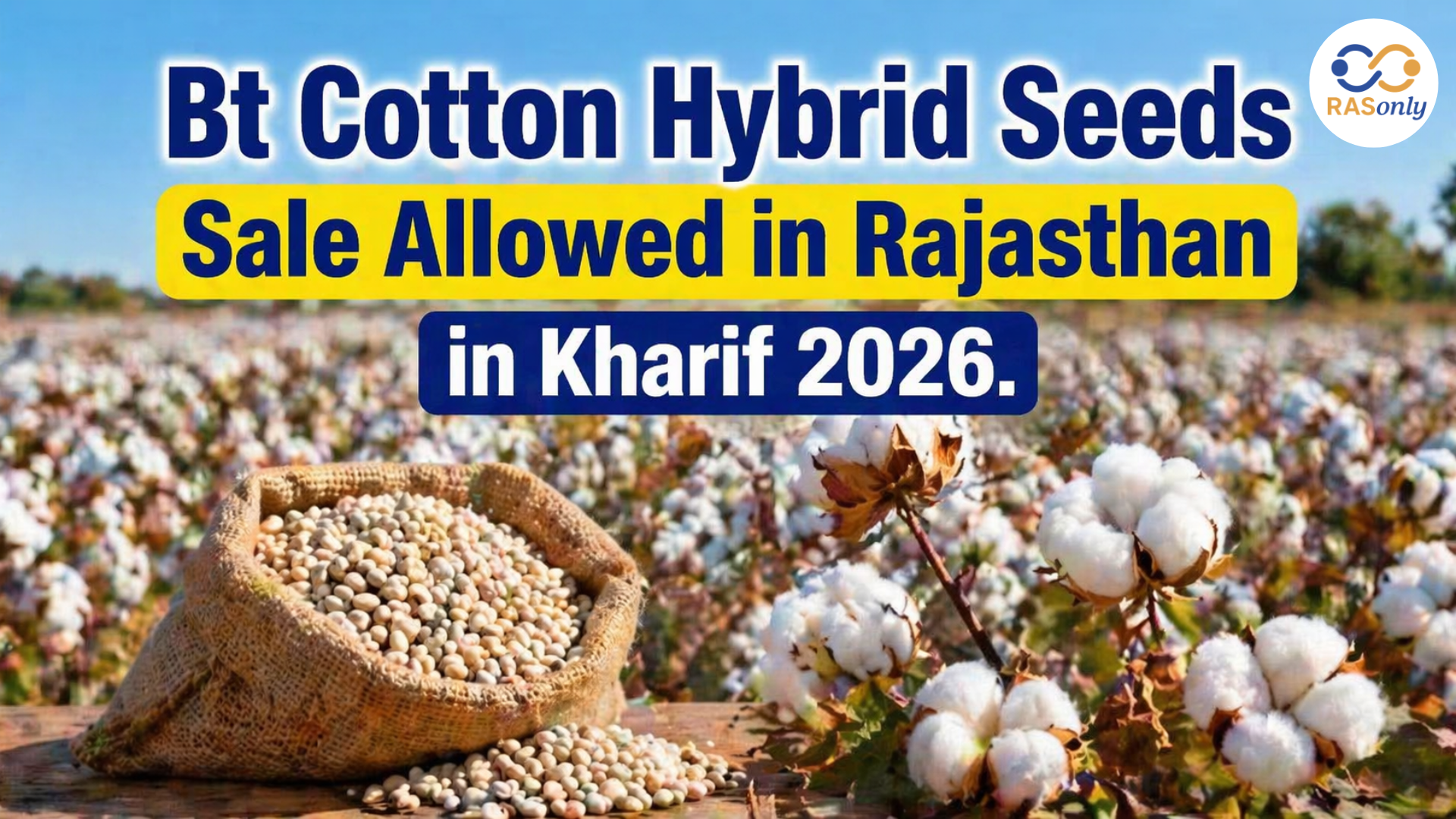
The Rajasthan government has officially authorized the sale of Bt cotton hybrid seeds of Kharif 2026 to commercially grow non-modified (BG-II, GFM) Bt cotton hybrids. It has been decided as per the suggestions of the recommendation of the Genetic Engineering Appraisal Committee (GEAC) under the Union Ministry of Environment, Forest and Climate Change and the Standing Committee on Bt Cotton. Under this scheme, the supply of Bt cotton hybrid seeds to various agro-climatic areas of the state will be permitted to 34 approved seed companies under prescribed conditions. The significance of the move is that it incorporates the agricultural productivity, regulation of biotechnology, quality control of seed, training and control of farmers and regional diseases.
Significant Characteristics of the Permission
- Kharif 2026: Rajasthan has given a formal permission of selling Bt cotton hybrid seeds.
- The authorization is on non-modified (BG-II, GFM) Bt cotton hybrids.
- The permission is granted according to the proposals of the GEAC and Standing Committee on Bt Cotton.
- There will be 34 approved seed companies who will supply seeds in various agro-climatic areas in the state.
- Supply will be permitted on condition of specified regulatory conditions.
The Performance Testing and Regional Permission
According to the Agriculture Commissioner, Naresh Kumar Goyal, the success of every hybrid of Bt cotton will be tested by compulsory testing on ATC, ARS and KVK farms based on agro-climatic regions. Seed companies are allowed to sell the seeds to the Joint Director Agriculture (ATC), Agriculture Commissionerate until the date of 30 April 2026 and the department would receive testing charges according to the prescribed norms. Once one of the hybrids has already been subjected to a performance test running continuously during a span of two years, then it will not be necessary to conduct additional testing. This is a provision to ensure that scientific assessment is upheld but repetition is not done unnecessarily in the approval process.
Western Districts Disease-Based Restriction
There is a clear ban on the sale of Bt cotton hybrids prone to whitefly and Cotton Leaf Curl Virus (CLCuD) in the west of Sri Ganganagar, Hanumangarh and Bikaner. This is to avoid an outbreak of pest and disease issues in susceptible cotton-producing areas. The ruling is a reminder of a regional regulatory solution to seed distribution and emphasizes the significance of seed suitability and agro-climatic and plant health considerations.
Farmer Training and Cultivation Guidelines
With the help of the Agriculture Department in their sales regions, all seed companies will be required to offer farmers three-stage training. The steps involved in this training will be the phases of pre-sowing, crop growth and harvesting. It will entail adherence to the recommended percentage of Bt structure of refusal seed- 20% of area or five rows of the border with fertilizer and manure management and narrow biological control methods. There should also be a Hindi package of agricultural practices that should be provided with each seed packet to every buyer. This will be to encourage knowledge-based agriculture and enhance adherence to suggested practices of cultivation.
Price Control, QR Code Check and Tracking
Every company has been advised to make sure that the sale price of Bt cotton hybrid seeds of Kharif 2026 does not surpass the minimum-maximum rates announced by the Central Government under the Essential Commodities Act of 1955 as well as the Seeds Control Order of 1983. Every seed packet should have a unique QR code in it to be checked and a valid contact number. The companies will be also required to submit periodically the district-wise sales plans, dealer lists and monthly reports of actual sales to the Joint Director Agriculture (Extension), Zila Parishad, as well as, Agriculture Commissionerate, Jaipur. The department will constantly check the composition of seed quantity and quality of refuge seed.
Preference to the Cooperative Sector and Post- release Oversight
The state government has instructed that the priority in the allocation of 15-20 percent in the supply of Bt cotton hybrid seeds in the districts should be provided to the cooperative sector which includes KVSS, GSS and FPOs. This is to make seeds accessible to the small and marginal farmers easily. To this end, it will organize joint meetings between the district administration and Agriculture Department and other Bt cotton companies. Bt cotton will be monitored by committees of the respective regional and departmental, ATCs after release and reports will be analysed at the state level to make policy decisions on the future.
This is an important development that should be discussed
The decision is significant in terms of examination since it unites the problems of agricultural biotechnology, regulatory approval, seed pricing, plant protection, farmer awareness, and cooperative distribution systems. It also demonstrates how the agricultural administration at the state level relies on testing, region specific restriction, training requirements and monitoring provisions to guarantee not only productivity, but also safety of commercial seed use.
Conclusion
This is an important administrative move towards regulated agricultural biotechnology as Bt cotton hybrid seed sale in Rajasthan Kharif 2026 is given the go-ahead. Through integration of scientific testing, disease restrictions, farmer training, price control, cooperative access and post-release monitoring, the state has developed a well designed system of seed distribution and cotton cultivation management.
MCQs
1. What is the name of the body on the basis of which the Rajasthan government has authorized the sale of Bt cotton hybrid seeds on Kharif 2026?
A. NITI Aayog and ICAR.
B. GEAC and Standing Committee on Bt Cotton.
C. NABARD and FCI
D. CACP and Agricultural Costs Commission.
Answer: B
Explanation: Bt cotton hybrid seeds Kharif 2026 have been approved to be sold under the recommendations of the Genetic Engineering Appraisal Committee (GEAC) under the Union Ministry of Environment, Forest and Climate Change, and the Standing Committee on Bt Cotton. This renders option B right. The other institutions mentioned are not approving bodies as they are in this case.
2. Which district(s) has banned the sale of Bt cotton hybrids prone to whitefly and Cotton Leaf Curl Virus (CLCuD) in Rajasthan?
A. Udaipur, Chittorgarh and Rajsamand
B. Kota, Bundi and Baran
C. Sri Ganganagar, Hanumangarh and Bikaner.
D. Jaipur, Alwar and Sikar
Answer: C
Explanation : Bt cotton hybrids prone to whitefly and Cotton Leaf Curl Virus have been specially banned in the western regions of Sri Ganganagar, Hanumangarh and Bikaner by Rajasthan. This limitation is supposed to curb outbreak of diseases in susceptible cotton growing regions. As such, option C is right, and the other district groups are not subjected to this restriction.
3. Which among the following is true in terms of training and distribution of Bt cotton hybrid seeds in Rajasthan in Kharif 2026?
A. Farmers will be trained just at the harvesting level.
B. Seed packets do not have to be authenticated.
C. Cooperative institutions priority has been assigned 15-20% allocation in the supply of districts.
D. Refuge seed use has been completely removed from the cultivation protocol.
Answer: C
Explanation: The state government has given a priority to allocate 15-20% of the total amount of supply to the cooperative sector, such as KVSS, GSS and FPOs, at the district level to ensure that small and marginal farmers have easier access to seeds. The training will be provided in three phases, the seed packets will have a QR code, and compliance with refuge seed will also be required. Hence, option C is the correct statement.
राजस्थान में खरीफ 2026 हेतु बीटी कपास हाइब्रिड बीजों की बिक्री को अनुमति
राजस्थान सरकार ने खरीफ 2026 के लिए गैर-संशोधित (बीजी-II, जीएफएम) बीटी कपास हाइब्रिड की व्यवसायिक खेती हेतु बीटी कपास हाइब्रिड बीजों की बिक्री को औपचारिक स्वीकृति प्रदान की है। यह निर्णय भारत सरकार के पर्यावरण, वन एवं जलवायु परिवर्तन मंत्रालय के अंतर्गत जेनेटिक इंजीनियरिंग मूल्यांकन समिति तथा बीटी कपास पर स्थायी समिति की सिफारिशों के आधार पर लिया गया है। इस व्यवस्था के अंतर्गत राज्य के विभिन्न कृषि-जलवायु क्षेत्रों में निर्धारित शर्तों के अनुसार 34 अनुमोदित बीज कंपनियों को बीटी कपास हाइब्रिड बीजों की आपूर्ति की अनुमति दी गई है। यह निर्णय कृषि उत्पादकता, जैव-प्रौद्योगिकी विनियमन, बीज गुणवत्ता नियंत्रण, किसान प्रशिक्षण तथा क्षेत्रीय रोग प्रबंधन को एक साथ जोड़ता है।
अनुमति की प्रमुख विशेषताएँ
- राजस्थान ने खरीफ 2026 के लिए बीटी कपास हाइब्रिड बीजों की बिक्री की औपचारिक अनुमति जारी की है।
- यह अनुमति गैर-संशोधित (बीजी-II, जीएफएम) बीटी कपास हाइब्रिड पर लागू है।
- स्वीकृति जेनेटिक इंजीनियरिंग मूल्यांकन समिति तथा बीटी कपास पर स्थायी समिति की सिफारिशों के अनुसार प्रदान की गई है।
- 34 अनुमोदित बीज कंपनियाँ राज्य के विभिन्न कृषि-जलवायु क्षेत्रों में बीजों की आपूर्ति कर सकेंगी।
- आपूर्ति केवल निर्धारित विनियामक शर्तों के अंतर्गत ही की जाएगी।
प्रदर्शन परीक्षण और क्षेत्रीय अनुमति
कृषि आयुक्त श्री नरेश कुमार गोयल के अनुसार प्रत्येक बीटी कपास हाइब्रिड के प्रदर्शन का मूल्यांकन कृषि-जलवायु क्षेत्रवार एटीसी, एआरएस और केवीके फार्मों पर अनिवार्य परीक्षण के माध्यम से किया जाएगा। बीज कंपनियाँ 30 अप्रैल 2026 तक संयुक्त निदेशक कृषि (एटीसी), कृषि आयुक्तालय को बीज उपलब्ध करा सकती हैं और विभाग निर्धारित मानकों के अनुसार परीक्षण शुल्क प्राप्त करेगा। यदि किसी हाइब्रिड पर लगातार दो वर्षों तक प्रदर्शन परीक्षण हो चुका है, तो अतिरिक्त परीक्षण की आवश्यकता नहीं होगी। यह प्रावधान वैज्ञानिक मूल्यांकन को बनाए रखते हुए अनावश्यक पुनरावृत्ति को रोकने के लिए किया गया है।
पश्चिमी जिलों में रोग-आधारित प्रतिबंध
राजस्थान ने श्रीगंगानगर, हनुमानगढ़ और बीकानेर जैसे पश्चिमी जिलों में सफेद मक्खी तथा कॉटन लीफ कर्ल वायरस के प्रति संवेदनशील बीटी कपास हाइब्रिड की बिक्री पर स्पष्ट प्रतिबंध लगाया है। इसका उद्देश्य संवेदनशील कपास उत्पादक क्षेत्रों में कीट और रोग प्रकोप को रोकना है। यह निर्णय दर्शाता है कि बीज वितरण में क्षेत्र-विशिष्ट विनियमन अपनाया जा रहा है और बीज उपयुक्तता को कृषि-जलवायु तथा पादप स्वास्थ्य स्थितियों के अनुरूप महत्व दिया जा रहा है।
किसान प्रशिक्षण और कृषि पद्धति दिशा-निर्देश
सभी बीज कंपनियों को कृषि विभाग के सहयोग से अपने बिक्री क्षेत्रों में किसानों को त्रि-स्तरीय प्रशिक्षण देना होगा। यह प्रशिक्षण बुवाई-पूर्व, फसल-वृद्धि और कटाई के चरणों को शामिल करेगा। इसमें बीटी संरचना वाले रिफ्यूज बीज के निर्धारित अनुपात का पालन, अर्थात 20% क्षेत्र या पाँच सीमावर्ती कतारें, उर्वरक एवं खाद प्रबंधन तथा संकीर्ण जैव-नियंत्रण तकनीकों का समावेश होगा। इसके अतिरिक्त, प्रत्येक ग्राहक को प्रत्येक बीज पैकेट के साथ हिंदी में तैयार कृषि पद्धतियों का पैकेज उपलब्ध कराना अनिवार्य होगा। इसका उद्देश्य ज्ञान-आधारित खेती को बढ़ावा देना और अनुशंसित कृषि पद्धतियों के पालन को सुदृढ़ करना है।
मूल्य नियंत्रण, क्यूआर कोड सत्यापन और निगरानी
सभी कंपनियों को निर्देश दिया गया है कि खरीफ 2026 के लिए बीटी कपास हाइब्रिड बीजों की बिक्री कीमत केंद्र सरकार द्वारा आवश्यक वस्तु अधिनियम, 1955 तथा बीज नियंत्रण आदेश, 1983 के अंतर्गत अधिसूचित न्यूनतम-अधिकतम दरों से अधिक नहीं होनी चाहिए। प्रत्येक बीज पैकेट पर सत्यापन हेतु एक अद्वितीय क्यूआर कोड तथा एक वैध संपर्क संख्या अंकित होना अनिवार्य है। कंपनियों को जिला-वार बिक्री योजना, विक्रेता-सूची तथा वास्तविक बिक्री की पखवाड़े-आधारित रिपोर्ट नियमित रूप से संयुक्त निदेशक कृषि (विस्तार), जिला परिषद तथा कृषि आयुक्तालय, जयपुर को उपलब्ध करानी होगी। विभाग बीज की मात्रा संरचना तथा रिफ्यूज बीज की गुणवत्ता की निरंतर निगरानी करेगा।
सहकारी क्षेत्र को प्राथमिकता और जारीकरण के बाद निगरानी
राज्य सरकार ने निर्देश दिए हैं कि बीटी कपास हाइब्रिड बीजों की जिला-स्तरीय आपूर्ति में 15-20% आवंटन प्राथमिकता सहकारी क्षेत्र को दी जाए, जिसमें केवीएसएस, जीएसएस और किसान उत्पादक संगठन शामिल हैं। इसका उद्देश्य छोटे और सीमांत किसानों को बीजों की सरल उपलब्धता सुनिश्चित करना है। इसके लिए जिला प्रशासन, कृषि विभाग और संबंधित बीटी कपास कंपनियों के बीच संयुक्त बैठकें आयोजित की जाएंगी। बीज जारी होने के बाद संबंधित क्षेत्रीय तथा विभागीय एटीसी की समितियाँ बीटी कपास की निगरानी करेंगी और उनकी रिपोर्टों का राज्य स्तर पर विश्लेषण भविष्य के नीतिगत निर्णयों के लिए किया जाएगा।
यह विकास क्यों महत्वपूर्ण है
परीक्षा की दृष्टि से यह निर्णय महत्वपूर्ण है क्योंकि यह कृषि जैव-प्रौद्योगिकी, विनियामक स्वीकृति, बीज मूल्य निर्धारण, पादप संरक्षण, किसान जागरूकता तथा सहकारी वितरण प्रणाली जैसे विषयों को एक साथ जोड़ता है। यह भी स्पष्ट करता है कि राज्य स्तरीय कृषि प्रशासन व्यावसायिक बीज उपयोग में उत्पादकता और सुरक्षा दोनों सुनिश्चित करने के लिए परीक्षण, क्षेत्र-विशिष्ट प्रतिबंध, प्रशिक्षण आवश्यकताओं और निगरानी व्यवस्थाओं का उपयोग करता है।
निष्कर्ष
राजस्थान में खरीफ 2026 के लिए बीटी कपास हाइब्रिड बीजों की बिक्री की अनुमति विनियमित कृषि जैव-प्रौद्योगिकी की दिशा में एक महत्वपूर्ण प्रशासनिक कदम है। वैज्ञानिक परीक्षण, रोग-आधारित प्रतिबंध, किसान प्रशिक्षण, मूल्य नियंत्रण, सहकारी पहुँच और जारीकरण के बाद निगरानी को एकीकृत करके राज्य ने बीज वितरण और कपास खेती प्रबंधन की एक सुव्यवस्थित रूपरेखा विकसित की है।
बहुविकल्पीय प्रश्न
1. राजस्थान सरकार ने खरीफ 2026 के लिए बीटी कपास हाइब्रिड बीजों की बिक्री की अनुमति किन निकायों की सिफारिशों के आधार पर दी है?
A. नीति आयोग और भारतीय कृषि अनुसंधान परिषद
B. जेनेटिक इंजीनियरिंग मूल्यांकन समिति और बीटी कपास पर स्थायी समिति
C. नाबार्ड और भारतीय खाद्य निगम
D. कृषि लागत एवं मूल्य आयोग और कृषि लागत आयोग
उत्तर: B
व्याख्या: खरीफ 2026 के लिए बीटी कपास हाइब्रिड बीजों की बिक्री की अनुमति भारत सरकार के पर्यावरण, वन एवं जलवायु परिवर्तन मंत्रालय के अंतर्गत जेनेटिक इंजियरिंग मूल्यांकन समिति तथा बीटी कपास पर स्थायी समिति की सिफारिशों के आधार पर दी गई है। इसलिए विकल्प B सही है। अन्य संस्थाएँ इस प्रकरण में स्वीकृति प्रदान करने वाली संस्थाएँ नहीं हैं।
2. राजस्थान में सफेद मक्खी और कॉटन लीफ कर्ल वायरस के प्रति संवेदनशील बीटी कपास हाइब्रिड की बिक्री किन जिलों में प्रतिबंधित की गई है?
A. उदयपुर, चित्तौड़गढ़ और राजसमंद
B. कोटा, बूंदी और बारां
C. श्रीगंगानगर, हनुमानगढ़ और बीकानेर
D. जयपुर, अलवर और सीकर
उत्तर: C
व्याख्या: राजस्थान ने विशेष रूप से श्रीगंगानगर, हनुमानगढ़ और बीकानेर जैसे पश्चिमी जिलों में सफेद मक्खी तथा कॉटन लीफ कर्ल वायरस के प्रति संवेदनशील बीटी कपास हाइब्रिड की बिक्री पर प्रतिबंध लगाया है। यह प्रतिबंध रोग प्रकोप को रोकने के लिए लगाया गया है। इसलिए विकल्प C सही है, जबकि अन्य जिलों का इस प्रतिबंध से संबंध नहीं है।
3. खरीफ 2026 में राजस्थान में बीटी कपास हाइब्रिड बीजों के प्रशिक्षण और वितरण ढाँचे के संबंध में निम्नलिखित में से कौन-सा कथन सही है?
A. किसानों को केवल कटाई के चरण पर प्रशिक्षण दिया जाएगा।
B. बीज पैकेट पर सत्यापन की कोई आवश्यकता नहीं होगी।
C. सहकारी संस्थाओं को जिला-स्तरीय आपूर्ति में 15-20% आवंटन प्राथमिकता दी गई है।
D. रिफ्यूज बीज के उपयोग को पूरी तरह समाप्त कर दिया गया है।
उत्तर: C
व्याख्या: राज्य सरकार ने निर्देश दिया है कि जिला-स्तरीय आपूर्ति में 15-20% आवंटन प्राथमिकता सहकारी क्षेत्र, जैसे केवीएसएस, जीएसएस और किसान उत्पादक संगठनों को दी जाए, ताकि छोटे और सीमांत किसानों को बीज आसानी से उपलब्ध हो सकें। प्रशिक्षण तीन चरणों में दिया जाएगा, बीज पैकेट पर क्यूआर कोड अनिवार्य होगा, और रिफ्यूज बीज का पालन भी आवश्यक रहेगा। इसलिए विकल्प C सही है ।