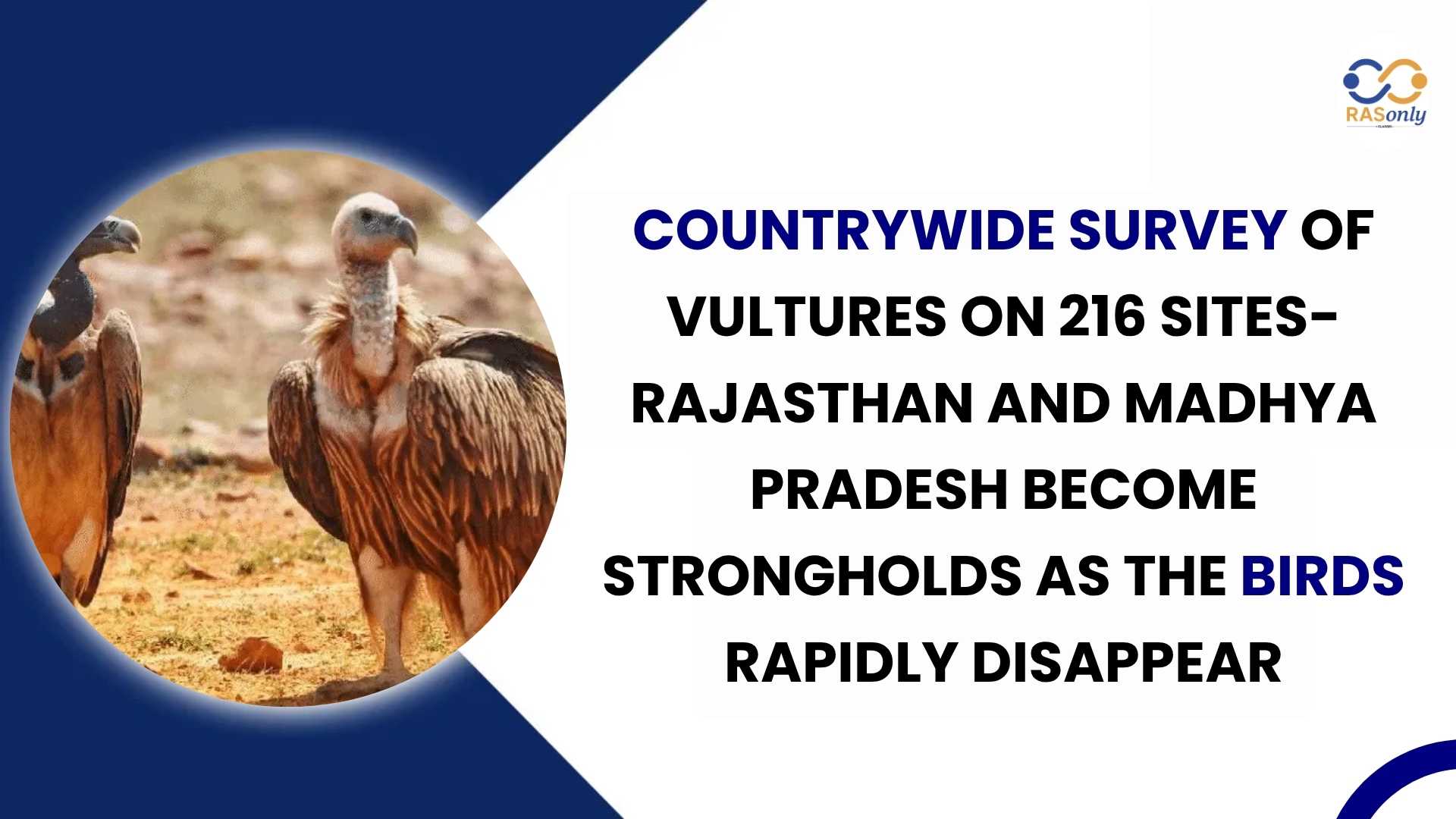
A nationwide survey (mentioning 216 sites, according to the news clipping) points to the fact that since the 1990s, the population of vultures in India has been dropping at a very rapid pace, and the states of Rajasthan and Madhya Pradesh can be mentioned as those places, where, due to the targeted conservation, the numbers can be stabilized. The report has blamed the losses mainly to v veterinary NSAIDs (especially diclofenac) in the cattle carcasses as well as habitat degradation and unsafe carcass dumps. Conversely, the Rajasthan and MP have scaled- vulture-safe zones, carcass management, rescue/breeding support and field monitoring, which combined are reducing the declines. The point is simple: banning of NSAIDs, safe alternatives (e.g., meloxicam/tolfenamic acid) and protection of major colonies and food sources are significant factors that will help to achieve a long-term recovery.
The Survey had the following significant implications.
- Coverage: Evaluation of two hundred and sixteen sites reveals that there is still national-scale pressure on the populations of the vultures.
- Bright spots: In Rajasthan and Madhya Pradesh, the colonies and active protection remain relatively strong.
- Primary threat: Veterinary diclofenac and other un-safer NSAIDs in livestock carcass.
- Conservation priority: Vulture-safe areas, drug scanning, clean carrion, rescue/breeding assistance and strict monitoring.
The reasons that led vultures to refuse (conceptual)?
- Toxic NSAIDs in corpses: Diclofenac induces visceral gout and kidney failure in vultures.
- Loss of habitat and unsafe dumping: Intruded nesting cliffs/trees and contaminated carcass sites.
- Slow life-history: Slow breeding rate decreases the rate of recovery following shock.
Rajasthan & MP—What’s working
- Vulture-safe landscapes: Proactive regulation of the harmful NSAIDs; uptake of the beneficial NSAID; meloxicam/tolfenamic acid.
- Managed carcass points: Accidental poisoning is minimized by safer sources of food.
- Rescue/breeding & monitoring: Collaboration with forest, veterinary and community organizations; periodic counts of roosts and nests and sensitization.
Way Forward
Strict drug enforcement (zero diclofenac leakages), veter training and chemist surveillance.
Safety of food networks Scale safe-food networks and preserve nesting/roosting areas.
Community stewardship: Villages and carcass handlers should be motivated to use vulture-safe practices.
Conclusion
The poll highlights a national vulture crisis but also demonstrates that targeted state action is effective. Through imposing safety on drugs, protecting habitats and offering clean food sources, Rajasthan and MP are showcasing a promising way out. Nationally implementing these measures supported with the continuous surveillance and local engagement of the population can transform a shaky status into a universal recovery
RAS-Style MCQs (English)
Q1. According to the news survey, what was the number of sites sampled to determine the status of the vultures?
A. 116
B. 216
C. 316
D. 416
Answer: 2
Q2. What is the most regularly associated factor with the crash of the vultures in India since the 90s?
A. Electrocution
B. Wind turbine collisions
C. In cattle carcasses Veterinary diclofenac containing cattle carcasses.
D. Plastic ingestion
Answer: 3
Q3. The clipping singles out two Indian states as being comparative citadens of the vultures. Which are they?
A. Gujarat and Maharashtra
B. Madhya Pradesh and Rajasthan.
C. Karnataka and Tamil Nadu
D. Assam and West Bengal
Answer: 2
216 स्थलों के देशव्यापी सर्वे में गिद्धों की तेज गिरावट—बचाव में राजस्थान और मध्यप्रदेश आगे
समाचार क्लिपिंग के अनुसार 216 स्थलों पर हुए देशव्यापी सर्वे में गिद्धों की आबादी में तेज़ गिरावट दर्ज हुई है, जबकि राजस्थान और मध्यप्रदेश में संरक्षण प्रयास अपेक्षाकृत सफल रहे हैं। मुख्य कारण पशु-चिकित्सा NSAIDs (विशेषकर डाइक्लोफेनाक) से युक्त कार्कस माने गए हैं; साथ ही आवास ह्रास और असुरक्षित डंपिंग स्थल भी समस्या हैं। इसके विपरीत, राजस्थान-एमपी में वल्चर-सेफ ज़ोन, सुरक्षित कार्कस प्रबंधन, रेस्क्यू/ब्रीडिंग सहयोग और मैदानी मॉनिटरिंग जैसी पहलें गिरावट को थामने में मदद कर रही हैं। संदेश स्पष्ट है—हानिकारक NSAIDs पर सख़्त नियंत्रण, सुरक्षित विकल्प (मेलॉक्सिकैम/टोल्फेनामिक एसिड) और आवास-खाद्य सुरक्षा ही दीर्घकालीन पुनरुत्थान की कुंजी हैं।
प्रमुख निष्कर्ष
- कवरेज: 216 स्थलों में आकलन—राष्ट्रीय स्तर पर दबाव बना हुआ है।
- उम्मीद की किरण: राजस्थान व मध्यप्रदेश में अपेक्षाकृत बेहतर स्थिति, सक्रिय संरक्षण।
- मुख्य खतरा: पशु-चिकित्सा डाइक्लोफेनाक व अन्य असुरक्षित NSAIDs।
- संरक्षण फोकस: वल्चर-सेफ ज़ोन, दवा-निगरानी, स्वच्छ कार्कस प्वाइंट, रेस्क्यू/ब्रीडिंग और सख़्त मॉनिटरिंग।
गिरावट के कारण (संकल्पनात्मक)
- कार्कस में विषैली दवाएँ: डाइक्लोफेनाक से किडनी फेल/विसरल गाउट।
- असुरक्षित डंपिंग व आवास हानि: दूषित कार्कस साइटें, घोंसले/रूस्त स्थल बाधित।
- धीमी प्रजनन दर: झटका लगने पर आबादी वापसी धीमी।
राजस्थान-एमपी: क्या कारगर रहा
वल्चर-सेफ लैंडस्केप: हानिकारक NSAIDs पर नियंत्रण; मेलॉक्सिकैम/टोल्फेनामिक को बढ़ावा।
सुरक्षित कार्कस प्रबंधन: स्वच्छ/सुरक्षित खाद्य स्रोत से विषाक्त जोखिम घटा।
रेस्क्यू/ब्रीडिंग व मॉनिटरिंग: वानिकी-पशु चिकित्सा-समुदाय साझेदारी; नियमित गणना और जागरूकता।
आगे की राह
दवा-नियमन (डाइक्लोफेनाक का शून्य रिसाव), वेट ट्रेनिंग व केमिस्ट निगरानी।
सुरक्षित खाद्य नेटवर्क का विस्तार, घोंसले/रूस्त स्थलों की रक्षा।
समुदाय भागीदारी: गिद्ध-सुरक्षित प्रोटोकॉल अपनाने हेतु प्रोत्साहन।
निष्कर्ष
सर्वे बताता है कि राष्ट्रीय गिद्ध संकट अभी बना हुआ है, पर राजस्थान-एमपी की लक्षित रणनीतियाँ कारगर हैं। दवा-सुरक्षा, आवास संरक्षण और स्वच्छ खाद्य स्रोत—इनकी सख़्त अमलदारी से गिरावट को रोका जा सकता है। राज्यों-समुदायों की साझेदारी और निरंतर मॉनिटरिंग से नाज़ुक स्थिरता को टिकाऊ पुनरुत्थान में बदला जा सकता है।
RAS MCQs (हिन्दी)
प्र.1. समाचार क्लिपिंग के अनुसार गिद्धों के आकलन के लिए सर्वे का कवरेज लगभग कितने स्थलों पर बताया गया है?
A. 116
B. 216
C. 316
D. 416
उत्तर: 2
प्र.2. भारत में 1990 के दशक से गिद्धों में आई तेज़ गिरावट का प्रमुख कारण कौन-सा माना जाता है?
A. प्लास्टिक का सेवन
B. पशु-चिकित्सा डाइक्लोफेनाक
C. पवनचक्कियों से टकराव
D. बिजली के तारों से करंट
उत्तर: 2
प्र.3. क्लिपिंग में किन दो राज्यों को गिद्ध संरक्षण के मजबूत केन्द्र के रूप में रेखांकित किया गया है?
A. गुजरात और महाराष्ट्र
B. राजस्थान और मध्यप्रदेश
C. कर्नाटक और तमिलनाडु
D. असम और पश्चिम बंगाल
उत्तर: 2