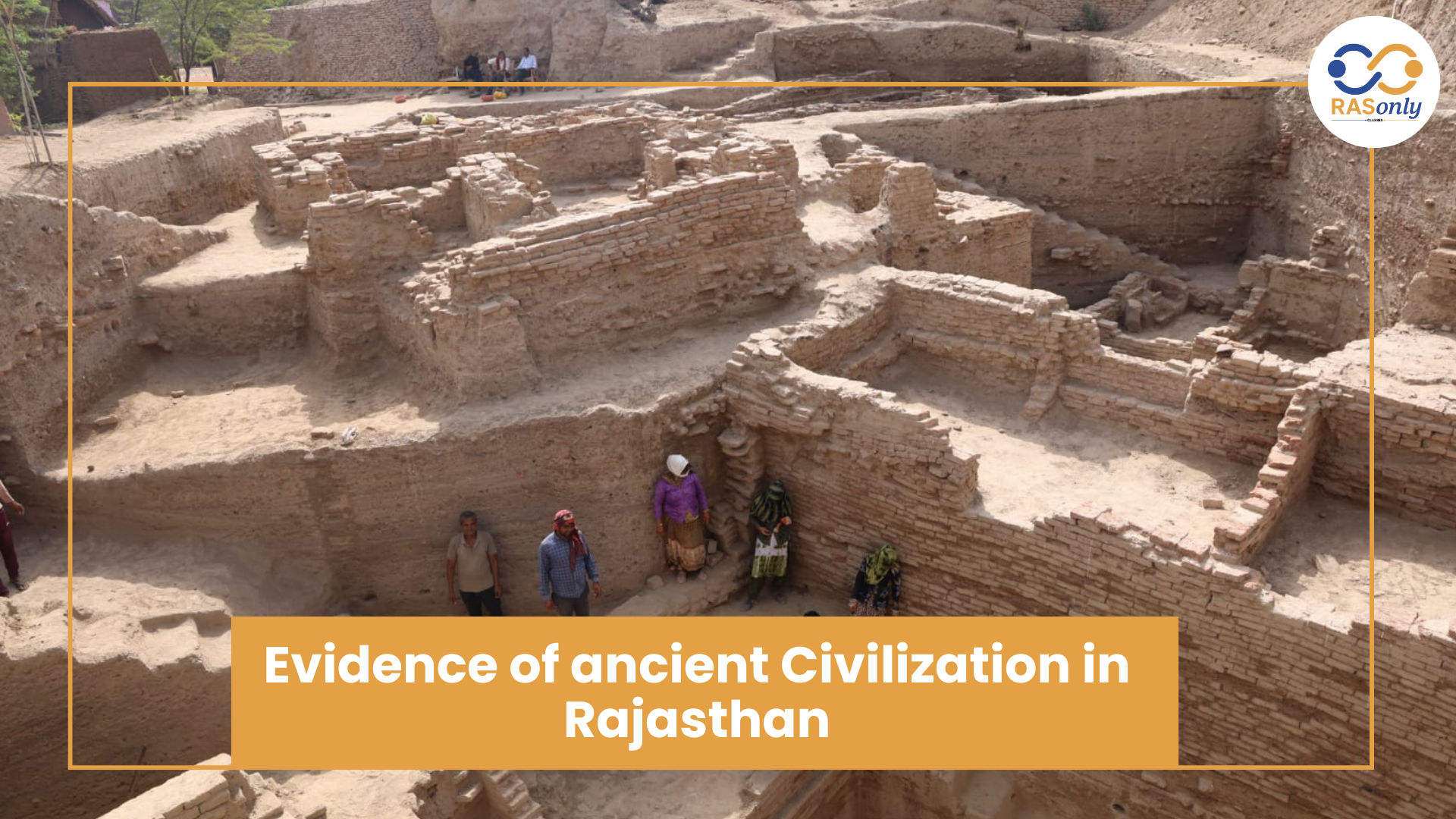
The relics of the civilization that was almost 4,000 years old have been found by the archaeologists at Basiyaal village, which is about 65 km away form the headquarters of Jhunjhunu district. The four years of archeological survey ended with actual excavations beginning in October which uncovered domestic buildings, mud-plaster walls, and terracotta beads, copper objects, rings, stone tools, and pieces of pottery. House architecture was first discovered in evidence in the first place, which is an essential advancement. Dr. Esha Prasad and Dr. Shweta Sinha Deshpande found that the artefacts demonstrate an occupation associated with the early Ganeshwar-Jodhpura cultural complex which was one of the earliest proto-historic cultures in the region. These discoveries reinforce the historical chronology of Rajasthan and can be used to comprehend the early human settlement trends.
Major Archaeological Findings of Basiyaal (Jhunjhunu).
- Indications of proto-historic civilization of about 4,000 years ago.
- Domestic structures inside the settlement discovered (first time at site)
- Terracotta objects: beads, bangles, figurines.
- Copper artefacts: rings, wires, little tools.
- Fragments of pottery, red-slipped, microliths.
- Household utility items, grinding stones, and stone tools.
- Ganeshwar-Jodhpura cultural complex excavation.
- Excavation allowed on long term basis by Archaeological Department.
Objectives and Significance.
Goals of the Excavation.
- Record early patterns of settlement in Shekhawati region.
- Bear cultural continuity to Ganeshwar-Jodhpura civilization.
- Determine proto-historic domestic architecture and craft.
- Rebuild the initial social, economic, and technological life.
Significance
- House structures are first time evidence and make the site historically significant.
- Enhances the status of North Rajasthan in the early metal-age societies.
- Offers information on the early-metallurgy and terracotta-art.
- Improves the knowledge regarding pre-Harappan/ post-Harappan cultural connections of Rajasthan.
Conclusion
The Basiyaal excavation of Jhunjhunu has yielded important evidence of a 4,000-year-old settlement of the Ganeshwar-Jodhpura cultural horizon. House structures, terracotta objects, copper artefacts are all good milestones in the archaeological studies of Rajasthan. These results enrich the knowledge of proto-historic life, technology and patterns of settlement in the area.
MCQs
MCQ 1
What was the cultural complex of Bansiyaal excavation in Jhunjhunu?
A. Sothi–Siswal
B. Ganeshwar–Jodhpura
C. Ahar–Banas
D. Kayatha
Answer: B
Explanation :
The archaeologists said that the artefacts, especially copper objects, microliths and the terracotta features correspond with Ganeshwar-Jodhpura cultural complex. This is the culture that is associated with early copper metallurgy and proto-historic settlements along the JhunjhunuSikar belt in Rajasthan.
MCQ 2
What had been first found at the Bansiyaal site?
A. Copper smelting furnaces
B. Complete burial sites
C. Domestic structural remains housings.
D. Script tablets
Answer: C
Explanation :
Archeologists have found clear remains of the ancient houses structure at Basiyaal, the first time. This is a significant progress since the previous discoveries were primarily on artefacts. The buildings of houses can give more information about the settlement planning, everyday life, and socio-cultural activity.
MCQ 3
What kind of materials were discovered in the excavation of recent Bansiyal(Jhunjhunu)site that would point towards the use of metal in the early days?
A. Iron swords
B. Copper rings and tools, wires.
C. Bronze shields
D. Gold ornaments
Answer: B
Explanation :
The use of copper rings, wires and small blades and tools depicts the early technology of copper-age. This upholds the already known fact that Ganeshwar-Jodhpura culture was instrumental in the early metallurgy of copper in Rajasthan.
झुंझुनू (बंसियाल उत्खनन) में प्रारंभिक बसावट संरचनाएँ मिलीं: 4,000 वर्ष पुरानी सांस्कृतिक अवशेषों का नया अनावरण
Summary
झुंझुनू जिला मुख्यालय से लगभग 65 किमी दूर स्थित बंसियाल गाँव में लगभग 4,000 वर्ष पुरानी सभ्यता के अवशेष पुरातत्वविदों द्वारा खोजे गए हैं। चार वर्षों तक चले पुरातात्विक सर्वेक्षण के बाद अक्टूबर में उत्खनन आरंभ हुआ, जिसमें घरेलू भवन, मिट्टी-लेपित दीवारें, मृदभांड (टेराकोटा) मोती, ताम्र-निर्मित वस्तुएँ, अंगूठियाँ, पत्थर के औज़ार और मिट्टी के पात्रों के टुकड़े मिले। पहली बार घरों की संरचना का स्पष्ट प्रमाण मिला, जो एक महत्वपूर्ण प्रगति है। डॉ. ईशा प्रसाद और डॉ. श्वेता सिन्हा देशपांडे ने बताया कि मिले हुए कलाकृतियाँ गणेश्वर–जोधपुरा सांस्कृतिक परिसर से संबंधित हैं, जो प्रदेश की प्रारंभिक प्रोटो-ऐतिहासिक संस्कृतियों में से एक थी। ये खोजें राजस्थान के ऐतिहासिक क्रम को मजबूत करती हैं और क्षेत्र की प्रारंभिक मानव बस्ती के स्वरूप को समझने में मदद करती हैं।
Major Archaeological Findings of Basiyaal (Jhunjhunu)
• लगभग 4,000 वर्ष पुरानी प्रोटो-ऐतिहासिक संस्कृति के संकेत।
• पहली बार बस्ती के भीतर घरेलू संरचनाओं का पता चला।
• मृदभांड वस्तुएँ: मोती, चूड़ियाँ, प्रतिमाएँ।
• ताम्र वस्तुएँ: अंगूठियाँ, तार, छोटे औज़ार।
• मिट्टी के बर्तन, रेड-स्लिप्ड वेयर, माइक्रोलिथ।
• घरेलू उपयोगी उपकरण, पीसने वाले पत्थर और पत्थर के औज़ार।
• गणेश्वर–जोधपुरा सांस्कृतिक परिसर का उत्खनन।
• पुरातत्व विभाग द्वारा दीर्घकालिक उत्खनन की अनुमति।
Objectives and Significance
Goals of the Excavation
• शेखावाटी क्षेत्र में प्रारंभिक बसावट के स्वरूप का रिकॉर्ड तैयार करना।
• गणेश्वर–जोधपुरा संस्कृति की सांस्कृतिक निरंतरता स्थापित करना।
• प्रोटो-ऐतिहासिक घरेलू वास्तुकला और शिल्प का निर्धारण।
• प्रारंभिक सामाजिक, आर्थिक और तकनीकी जीवन का पुनर्निर्माण।
Significance
• घर की संरचनाएँ पहली बार मिलने से यह स्थल अत्यंत ऐतिहासिक महत्व का हुआ।
• उत्तर राजस्थान की स्थिति को प्रारंभिक धातु युग समाजों में मजबूती मिलती है।
• प्रारंभिक धातुकर्म और टेराकोटा कला का महत्वपूर्ण साक्ष्य उपलब्ध।
• राजस्थान की प्री-हरप्पा/पोस्ट-हरप्पा सांस्कृतिक कड़ियों को समझने में सहायता।
Conclusion
झुंझुनू के बंसियाल उत्खनन ने गणेश्वर–जोधपुरा सांस्कृतिक क्षेत्र की लगभग 4,000 वर्ष पुरानी बसावट के महत्त्वपूर्ण प्रमाण उजागर किए हैं। घरों की संरचनाएँ, टेराकोटा वस्तुएँ और ताम्र उपकरण राजस्थान के पुरातात्विक अध्ययनों में महत्वपूर्ण उपलब्धियाँ हैं। ये निष्कर्ष क्षेत्र के प्रोटो-ऐतिहासिक जीवन, तकनीकी विकास और बसावट के स्वरूप की हमारी समझ को और समृद्ध करते हैं।
MCQs
MCQ 1
What was the cultural complex of Bansiyaal excavation in Jhunjhunu?
A. Sothi–Siswal
B. Ganeshwar–Jodhpura
C. Ahar–Banas
D. Kayatha
Answer: B
Explanation:
पुरातत्वविदों के अनुसार बंसियाल स्थल पर मिले ताम्र औज़ार, माइक्रोलिथ तथा टेराकोटा अवशेष गणेश्वर–जोधपुरा सांस्कृतिक परिसर से मेल खाते हैं। यह संस्कृति झुंझुनू–सीकर क्षेत्र में प्रारंभिक ताम्र धातुकर्म तथा प्रोटो-ऐतिहासिक बसावटों से जुड़ी हुई है।
MCQ 2
What had been first found at the Bansiyaal site?
A. Copper smelting furnaces
B. Complete burial sites
C. Domestic structural remains housings
D. Script tablets
Answer: C
Explanation:
बंसियाल में पहली बार प्राचीन आवासीय संरचनाओं के स्पष्ट अवशेष मिले हैं। इससे पहले मुख्यतः कलाकृतियाँ ही प्राप्त होती थीं। घरों की इन संरचनाओं से पुरातत्वविदों को बसावट नियोजन, दैनिक जीवन और सामाजिक-सांस्कृतिक गतिविधियों की अधिक सटीक जानकारी मिल सकेगी।
MCQ 3
What kind of materials were discovered in the excavation of recent Bansiyal (Jhunjhunu) site that would point towards the use of metal in the early days?
A. Iron swords
B. Copper rings and tools, wires
C. Bronze shields
D. Gold ornaments
Answer: B
Explanation:
बंसियाल स्थल पर ताम्र निर्मित अंगूठियाँ, तार, छोटे उपकरण और औज़ार मिले, जो प्रारंभिक ताम्र-युग तकनीक के प्रमाण हैं। इससे यह तथ्य पुष्ट होता है कि गणेश्वर–जोधपुरा संस्कृति राजस्थान में प्रारंभिक ताम्र धातुकर्म की प्रमुख जननी रही है।