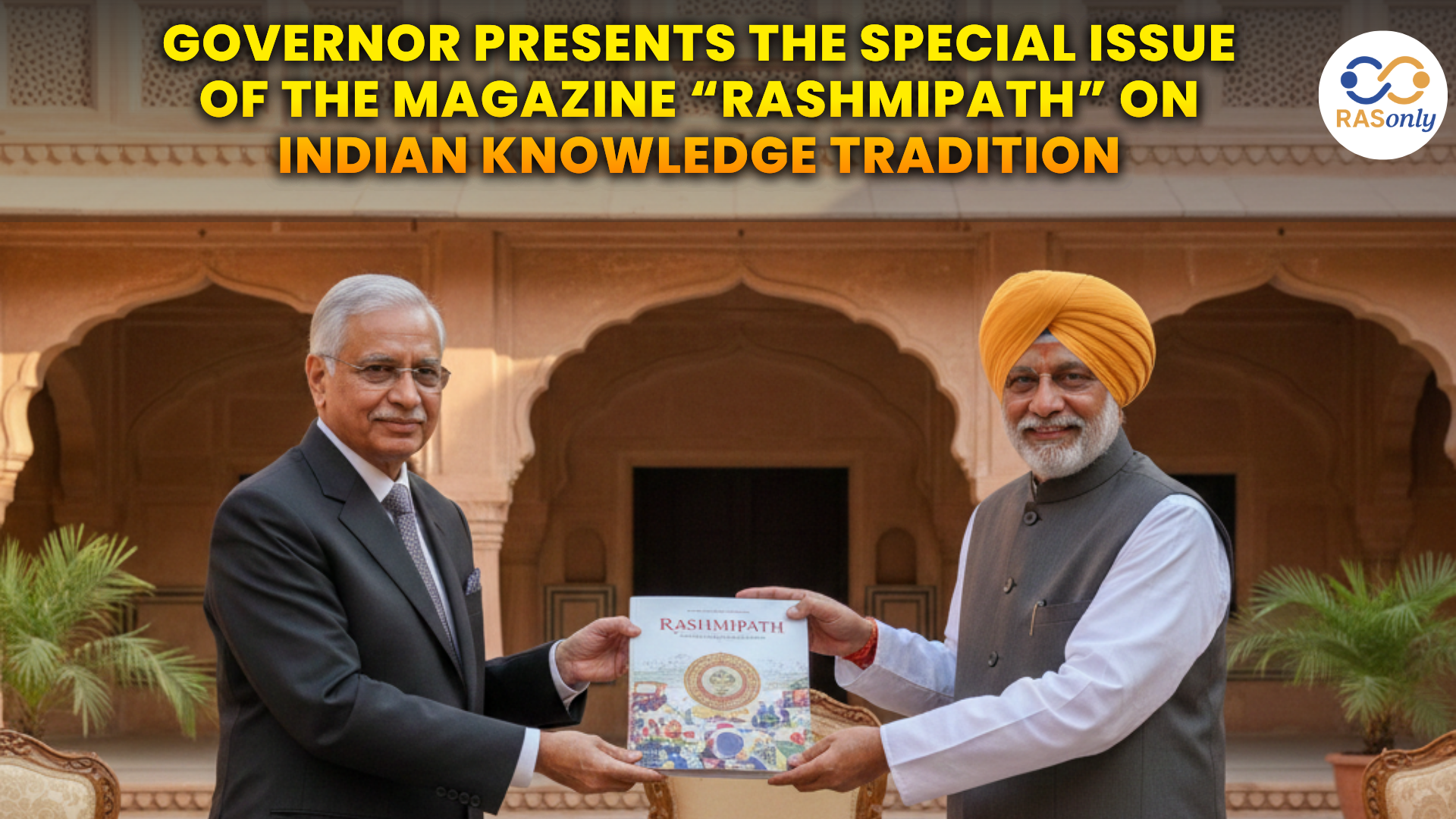
On 20 December in Jaipur, Rajasthan Governor Haribhau Bagade released the Indian Knowledge Tradition (Bharatiya Gyan Parampara) special issue of “Rashmipath,” the annual magazine of Bharatiya Shikshan Mandal. During the release, the Governor described the Indian knowledge tradition as a unique synthesis of knowledge and science, worldly and spiritual dimensions, action and duty, and enjoyment and renunciation. He linked the Indian knowledge tradition to education and stated that the ancient Indian education system emphasised the idea of “Manur Bhav” (first become a human being), meaning that one should live not only for oneself but also for others.
Major Highlights of the Governor’s Address
- The Indian knowledge tradition is a harmonious blend of:
- Knowledge and science
- Worldly and other-worldly (spiritual) dimensions
- Action (karma) and duty (dharma)
- Enjoyment (bhog) and renunciation (tyag)
- In the context of education, the Governor emphasised “Manur Bhav” in the ancient Indian education system:
- “First become a human being.”
- Being human means living not only for one’s own interests but also for others.
- He stated that the seeds of the Indian knowledge tradition are present in Pandit Deendayal Upadhyaya’s concept of Integral Humanism (Ekatma Manavवाद).
- He stressed that India will remain united only if there is commitment to Indian culture.
- He added that if India gains global recognition, its foundation will be Indian values and culture.
- While releasing the magazine, he said the articles published in the issue are readable and relevant for all sections of society.
MCQs (English)
MCQ 1
Who released the Indian Knowledge Tradition special issue of “Rashmipath” in Jaipur on 20 December?
a) Chief Minister Bhajanlal Sharma
b) Governor Haribhau Bagade
c) Water Resources Minister Suresh Singh Rawat
d) Pandit Deendayal Upadhyaya
Answer: b
On 20 December, Rajasthan Governor Haribhau Bagade released the Indian Knowledge Tradition special issue of “Rashmipath,” the annual magazine of Bharatiya Shikshan Mandal, in Jaipur.
MCQ 2
According to the Governor, the ancient Indian education system emphasised “Manur Bhav,” which primarily means:
a) Receiving scientific education only
b) Making material progress the highest value
c) First becoming a human being and living for others as well
d) Rejecting worldly life entirely
Answer: c
The Governor explained that “Manur Bhav” means “first become a human being,” and becoming human implies living not only for oneself but also for others.
MCQ 3
Which concept did the Governor mention as containing the seeds of the Indian knowledge tradition?
a) Liberal Humanism
b) Scientific Socialism
c) Integral Humanism (Ekatma Manavवाद) of Pandit Deendayal Upadhyaya
d) Western Enlightenment philosophy
Answer: c
He stated that the seeds of Indian knowledge tradition are present in Pandit Deendayal Upadhyaya’s concept of Integral Humanism (Ekatma Manavवाद).
“रश्मिपथ” पत्रिका के भारतीय ज्ञान परंपरा विशेषांक का विमोचन; भारतीय शिक्षा, मूल्य और सांस्कृतिक आधार पर केंद्रित मुख्य विचार।
20 दिसंबर को जयपुर में राजस्थान के राज्यपाल श्री हरिभाऊ बागडे ने भारतीय शिक्षण मंडल की वार्षिक पत्रिका “रश्मिपथ” के भारतीय ज्ञान परंपरा विशेषांक का विमोचन किया। विमोचन के दौरान राज्यपाल ने भारतीय ज्ञान परंपरा को ज्ञान एवं विज्ञान, लौकिक एवं आध्यात्मिक आयाम, कर्म एवं धर्म, तथा भोग एवं त्याग के अद्भुत समन्वय के रूप में वर्णित किया। उन्होंने भारतीय ज्ञान परंपरा को शिक्षा से जोड़ते हुए कहा कि प्राचीन भारतीय शिक्षा प्रणाली में “मनुभव” (पहले मनुष्य बनें) पर जोर दिया गया है, जिसका अर्थ है कि मनुष्य को केवल अपने लिए नहीं, बल्कि दूसरों के लिए भी जीवन जीना चाहिए।
राज्यपाल के संबोधन की प्रमुख बातें
- भारतीय ज्ञान परंपरा निम्न का समन्वित और संतुलित स्वरूप है:
- ज्ञान एवं विज्ञान
- लौकिक एवं पर-लौकिक (आध्यात्मिक) आयाम
- कर्म (कार्य) एवं धर्म (कर्तव्य)
- भोग एवं त्याग
- शिक्षा के संदर्भ में राज्यपाल ने प्राचीन शिक्षा प्रणाली में “मनुभव” पर जोर बताया:
- “पहले मनुष्य बनें।”
- मनुष्य बनने का अर्थ है कि जीवन केवल अपने हित के लिए नहीं, बल्कि दूसरों के लिए भी जिया जाए।
- उन्होंने कहा कि पंडित दीनदयाल उपाध्याय के एकात्म मानववाद (Integral Humanism / एकात्म मानववाद) में भारतीय ज्ञान परंपरा के बीज निहित हैं।
- उन्होंने जोर देकर कहा कि भारतीय संस्कृति के प्रति निष्ठा रहेगी, तभी भारत एकात्म (एकजुट) रहेगा।
- उन्होंने कहा कि यदि भारत को विश्व में पहचान मिलेगी, तो उसके मूल में भारतीय संस्कार और संस्कृति ही होंगे।
- पत्रिका विमोचन के दौरान उन्होंने कहा कि विशेषांक में प्रकाशित लेख समाज के सभी वर्गों के लिए पठनीय और उपयोगी हैं।
MCQs (हिन्दी)
MCQ 1
20 दिसंबर को जयपुर में “रश्मिपथ” के भारतीय ज्ञान परंपरा विशेषांक का विमोचन किसने किया?
a) मुख्यमंत्री श्री भजनलाल शर्मा
b) राज्यपाल श्री हरिभाऊ बागडे
c) जल संसाधन मंत्री श्री सुरेश सिंह रावत
d) पंडित दीनदयाल उपाध्याय
उत्तर: b
20 दिसंबर को जयपुर में राजस्थान के राज्यपाल श्री हरिभाऊ बागडे ने भारतीय शिक्षण मंडल की वार्षिक पत्रिका “रश्मिपथ” के भारतीय ज्ञान परंपरा विशेषांक का विमोचन किया।
MCQ 2
राज्यपाल के अनुसार, प्राचीन भारतीय शिक्षा प्रणाली में “मनुभव” का मुख्य अर्थ क्या है?
a) केवल वैज्ञानिक शिक्षा प्राप्त करना
b) भौतिक प्रगति को सर्वोच्च मूल्य बनाना
c) पहले मनुष्य बनना और दूसरों के लिए भी जीवन जीना
d) लौकिक जीवन का पूर्ण त्याग करना
उत्तर: c
राज्यपाल ने स्पष्ट किया कि “मनुभव” का अर्थ है “पहले मनुष्य बनें,” और मनुष्य बनने का तात्पर्य यह है कि जीवन केवल अपने लिए नहीं, बल्कि दूसरों के लिए भी जिया जाए।
MCQ 3
राज्यपाल ने भारतीय ज्ञान परंपरा के बीज किस विचार में निहित बताए?
a) उदार मानववाद (Liberal Humanism)
b) वैज्ञानिक समाजवाद (Scientific Socialism)
c) पंडित दीनदयाल उपाध्याय का एकात्म मानववाद (Integral Humanism / एकात्म मानववाद)
d) पश्चिमी प्रबोधन दर्शन (Western Enlightenment philosophy)
उत्तर: c
राज्यपाल के अनुसार, पंडित दीनदयाल उपाध्याय के एकात्म मानववाद में भारतीय ज्ञान परंपरा के बीज निहित हैं |