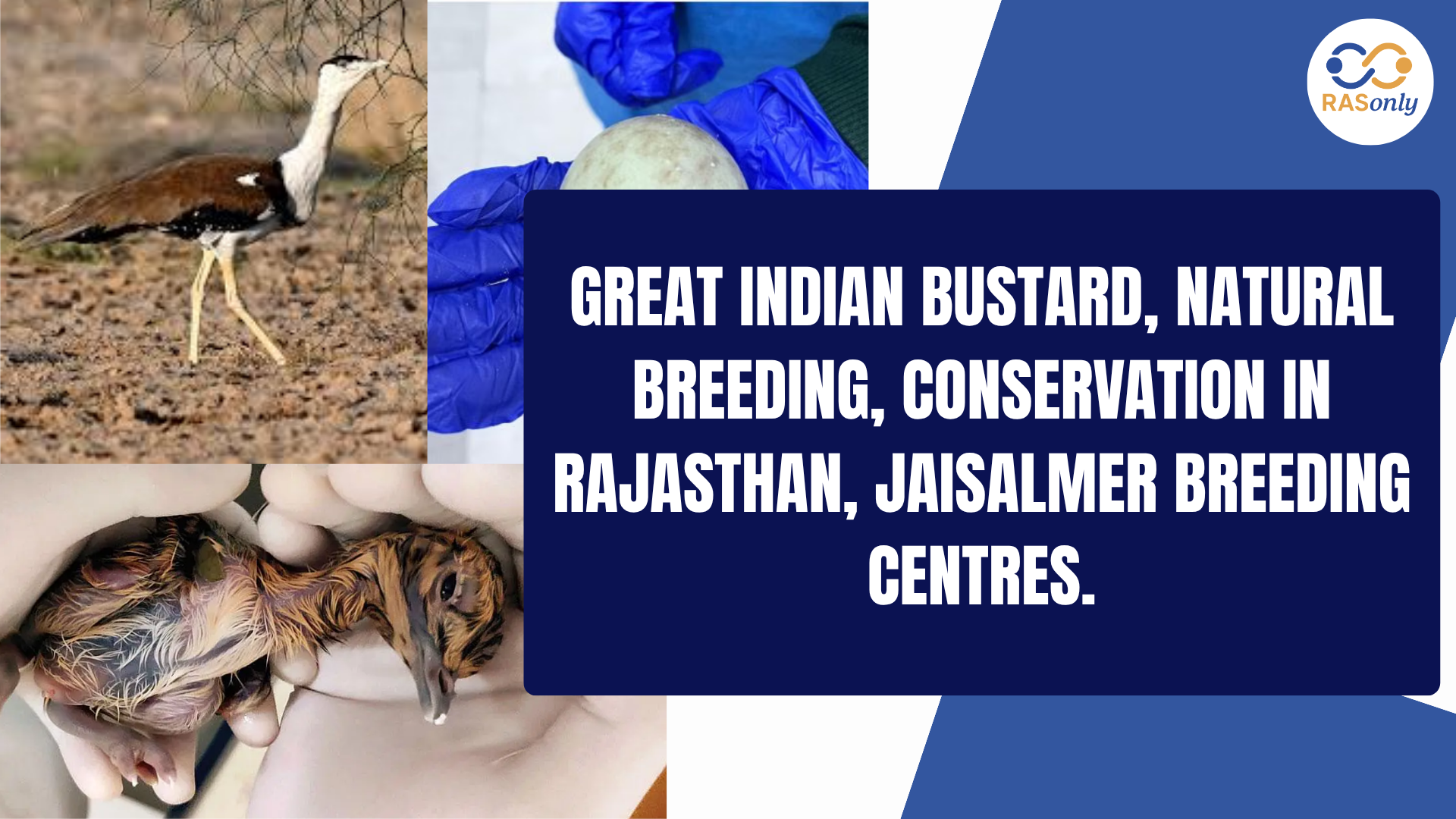
In Rajasthan, a significant conservation success has been achieved with the natural breed of the Great Indian Bustard increasing new expectations of the restoration of one of the most endangered birds in India. Natural breeding has resulted in three chicks being born at the breeding centres in Sam and Ramdevra in the Jaisalmer district, increasing the total number under the conservation to 79. This is significant since the previous conservation attempts devolved much on harvesting eggs in the wild and applying artificial methods. The latest development indicates that the Great Indian Bustard is capable of reproduction in a natural environment provided that it is given the right environment, free of stress. The examination perspective of this news is that it is significant when it comes to biodiversity conservation, protection of endangered species and current affairs regarding the environment of Rajasthan.
Reasons why this development is important.
- Three of the chicks were naturally bred at the conservation centres in Jaisalmer.
- This is being regarded as a significant encouraging indication of the recovery of the Great Indian Bustard.
- The overall figure approximated under the current conservation effort has currently hit 79.
- The success indicates that the bird will be able to multiply naturally provided that appropriate habitat and protection are available.
- It is a transition to less reliance on artificial support to more sustainable conservation model.
Conservation in Rajasthan.
Phased Breeding Centres
- To conserve the Great Indian Bustard, the initial breeding centre was established in 2019 in Sam and the second one in 2022 at Ramdevra. These centres have taken the centre stage in the recovery of the species in Rajasthan.
Change of Artificial to Natural Reproduction.
So far, the primary conservation technique was gathering eggs in wild and then assisting the reproduction by artificial means. In October 2024, a chick was born in the Sam centre by artificial insemination. Nonetheless, the most recent success is more critical as birds at the centres would pair, lay eggs, and give birth to healthy chicks on their own.
Signs of Population Trend and Recovery.
The report points to the fact that the number of the Great Indian Bustard has drastically decreased with time:
1961: 1,200
1978: 745
2001: 600
2008: 300
2013: 125
This protracted fall had brought the bird near extinction. It is on this backdrop that the current recovery initiative is very important. In the first month of the breeding season in 2026, 11 new chicks were born alone. Currently it has 33 adult birds and 46 chicks that have been raised in the centres bringing the total to 79.
Principal Causes of Fall.
The report finds the following to have been the major causes of the decline of the Great Indian Bustard:
- Contact with power lines.
- Illegal hunting
- Erosion of habitat, particularly grasslands.
The stated reasons are significant in the examination perspective since they indicate that the conservation of the species is not solely up to breeding success, but also up to habitat safeguard and control over human interference.
More Positive Sign Beyond Rajasthan.
The conservation initiative has also borne good fruits beyond Rajasthan. On 28 March, a healthy chick was born after an egg was sent by Jaisalmer to Kutch in Gujarat. This has been termed as a historic success as it shows how the species have reappeared in Gujarat after a period of approximately ten years.
Future Conservation Plan
According to the forest officials, natural breeding is an indication that the birds are at ease in the current environment. Bustards reared in the centres will be released into the open environment in the next three to four months once they have been well prepared. It is intended to guide them towards a more natural lifestyle into the wild. Scientists think that in five years the population of bustards would be at a safer level in case the current trend is maintained.
Conclusion
In Jaisalmer, the birth of three Great Indian Bustard chicks naturally is a significant step on the way to conservation of wildlife in Rajasthan. It demonstrates that an extreme decline in population can be reversed by means of long-term protection, regulated breeding centres, and appropriate habitat conditions. In case of competitive examination, this is significant as it links the conservation of endangered species, the state bird of Rajasthan, the management of its habitat, and the protection of wildlife scientifically in a single news item.
MCQs
1. Why has the recent hatching of three Great Indian Bustard in Jaisalmer been viewed as a big conservation achievement?
a) It was also the first record of the species in Rajasthan.
b) It turned out that the bird is now sustainable to hunt.
c) It displayed effective natural breeding in conservation centres.
d) It was the move of all birds to Gujarat.
Answer: c
Explanation : The birth of three chicks is important since they were born as a result of natural breeding in conservation centres at Sam and Ramdevra. Previous initiatives relied on the use of artificial means and collection of eggs. Natural breeding indicates that the birds are getting accustomed to a safe environment and they can be able to restore their population in a more sustainable manner.
2. What was cited as one of the factors that contributed significantly to the decline of the population of the Great Indian Bustard?
a) Marine pollution
b) Crash into power lines.
c) Volcanic activity
d) Glacier melting
Answer: b
Explanation: One of the significant causes of decline that have been specifically stated in the report is collision with power lines. It also lists illegal hunting and destruction of grassland habitat. This renders the issue significant to the conservation of wildlife as well as infrastructure planning, management of habitats, and ecological governance.
3. What is the correct conservation status statement as reported?
a)The number conserved in all has been 79, of all ages, and centre-raised chicks.
b) The overall population has already since reached 1,200 in 2026.
c) All centres are only using artificial breeding.
d) There is no breeding centre that was established after 2019.
Answer: a
Explanation: The report mentions that the amount of total under the current conservation effort has increased to 79 with 33 adult birds and 46 chicks that are raised in the centres. This indicates quantifiable success in the recovery programme and indicates the escalating breeding and protection success in Rajasthan.
गोडावण, प्राकृतिक प्रजनन, राजस्थान में संरक्षण, जैसलमेर प्रजनन केन्द्र
राजस्थान में गोडावण संरक्षण के क्षेत्र में एक महत्त्वपूर्ण सफलता मिली है। जैसलमेर जिले के सम और रामदेवरा स्थित प्रजनन केन्द्रों में प्राकृतिक प्रजनन से तीन चूजों का जन्म हुआ है, जिससे संरक्षण के दायरे में कुल संख्या बढ़कर 79 हो गई है। यह उपलब्धि इसलिए विशेष महत्त्व रखती है क्योंकि पहले संरक्षण प्रयास मुख्यतः वन क्षेत्र से अंडे एकत्र करने और कृत्रिम विधियों पर निर्भर थे। नई सफलता से स्पष्ट हुआ है कि यदि गोडावण को अनुकूल, सुरक्षित और तनावमुक्त वातावरण मिले, तो वह स्वाभाविक रूप से प्रजनन कर सकता है। प्रतियोगी परीक्षाओं की दृष्टि से यह समाचार जैव विविधता संरक्षण, संकटग्रस्त प्रजातियों की सुरक्षा और राजस्थान के पर्यावरणीय समसामयिक प्रसंगों के लिए अत्यंत महत्त्वपूर्ण है।
यह उपलब्धि क्यों महत्त्वपूर्ण है
- जैसलमेर के संरक्षण केन्द्रों में तीन चूजों का जन्म प्राकृतिक प्रजनन से हुआ।
- इसे गोडावण की वापसी का एक अत्यंत सकारात्मक संकेत माना जा रहा है।
- वर्तमान संरक्षण प्रयास के अंतर्गत कुल संख्या अब 79 तक पहुँच गई है।
- यह सफलता दर्शाती है कि उपयुक्त आवास और सुरक्षा मिलने पर यह पक्षी स्वाभाविक रूप से अपनी संख्या बढ़ा सकता है।
- इससे संरक्षण का मॉडल कृत्रिम सहायता पर पूर्ण निर्भरता से आगे बढ़कर अधिक टिकाऊ दिशा में जाता दिखाई देता है।
राजस्थान में संरक्षण प्रयास
चरणबद्ध रूप से स्थापित प्रजनन केन्द्र
गोडावण संरक्षण के लिए पहला प्रजनन केन्द्र वर्ष 2019 में सम में स्थापित किया गया था, जबकि दूसरा केन्द्र वर्ष 2022 में रामदेवरा में स्थापित किया गया। ये दोनों केन्द्र राजस्थान में इस प्रजाति के पुनरुद्धार के प्रमुख आधार बन चुके हैं।
कृत्रिम विधि से प्राकृतिक प्रजनन की ओर परिवर्तन
अब तक संरक्षण की मुख्य पद्धति वन क्षेत्र से अंडों को एकत्र कर कृत्रिम माध्यमों से प्रजनन को सहारा देने की रही थी। अक्तूबर 2024 में सम केन्द्र में कृत्रिम गर्भाधान के माध्यम से एक चूजे का जन्म हुआ था। किंतु नवीन सफलता अधिक महत्त्वपूर्ण है, क्योंकि केन्द्रों में रह रहे पक्षियों ने स्वाभाविक रूप से जोड़े बनाए, अंडे दिए और स्वस्थ चूजों को जन्म दिया।
जनसंख्या प्रवृत्ति और पुनरुत्थान के संकेत
गोडावण की संख्या समय के साथ तीव्र रूप से घटी है:
- 1961: 1,200
- 1978: 745
- 2001: 600
- 2008: 300
- 2013: 125
यह दीर्घकालिक गिरावट इस पक्षी को विलुप्ति के कगार तक ले गई थी। इसी पृष्ठभूमि में वर्तमान संरक्षण प्रयास अत्यंत महत्त्वपूर्ण हो जाता है। वर्ष 2026 के प्रजनन सत्र के पहले ही महीने में 11 नए चूजों का जन्म हुआ। वर्तमान में संरक्षण केन्द्रों में 33 वयस्क पक्षी और 46 चूजे हैं, जिससे कुल संख्या 79 हो गई है।
गिरावट के प्रमुख कारण
गोडावण की संख्या में कमी के मुख्य कारण निम्नलिखित रहे हैं:
- विद्युत तारों से टकराव
- अवैध शिकार
- आवास का विनाश, विशेषकर घास के मैदानों का नष्ट होना
ये कारण इस बात को रेखांकित करते हैं कि किसी प्रजाति का संरक्षण केवल प्रजनन सफलता पर निर्भर नहीं करता, बल्कि उसके लिए आवास सुरक्षा और मानवीय हस्तक्षेप पर नियंत्रण भी उतना ही आवश्यक है।
राजस्थान से बाहर भी सकारात्मक संकेत
यह संरक्षण प्रयास राजस्थान के बाहर भी सकारात्मक परिणाम दे रहा है। जैसलमेर से कच्छ, गुजरात भेजे गए एक अंडे से 28 मार्च को एक स्वस्थ चूजे का जन्म हुआ। इसे ऐतिहासिक सफलता माना गया है, क्योंकि इससे लगभग दस वर्ष के अंतराल के बाद गुजरात में इस प्रजाति की वापसी का संकेत मिला है।
भावी संरक्षण योजना
वन अधिकारियों के अनुसार प्राकृतिक प्रजनन इस बात का संकेत है कि वर्तमान वातावरण में पक्षी सहज और तनावमुक्त हैं। आगामी तीन से चार महीनों में केन्द्रों में पाले जा रहे गोडावणों को आवश्यक तैयारी के बाद खुले वातावरण में छोड़ा जाएगा। इसका उद्देश्य उन्हें प्राकृतिक जीवन की ओर अग्रसर करना है। विशेषज्ञों का मानना है कि यदि वर्तमान गति बनी रही, तो अगले पाँच वर्षों में गोडावण की संख्या अपेक्षाकृत सुरक्षित स्तर तक पहुँच सकती है।
निष्कर्ष
जैसलमेर में गोडावण के तीन चूजों का प्राकृतिक जन्म राजस्थान में वन्यजीव संरक्षण की दिशा में एक महत्त्वपूर्ण मील का पत्थर है। यह स्पष्ट करता है कि दीर्घकालिक संरक्षण, नियंत्रित प्रजनन केन्द्र और अनुकूल आवासीय परिस्थितियाँ अत्यंत गंभीर जनसंख्या गिरावट को भी पलट सकती हैं। प्रतियोगी परीक्षाओं की दृष्टि से यह समाचार विशेष महत्त्व रखता है, क्योंकि इसमें संकटग्रस्त प्रजाति संरक्षण, राजस्थान के राज्य पक्षी, आवास प्रबंधन और वैज्ञानिक वन्यजीव सुरक्षा जैसे अनेक आयाम एक साथ जुड़े हुए हैं।
बहुविकल्पीय प्रश्न
1. जैसलमेर में गोडावण के तीन चूजों के जन्म को एक बड़ी संरक्षण उपलब्धि क्यों माना गया है?
a) क्योंकि यह राजस्थान में इस प्रजाति का पहला अभिलेख था
b) क्योंकि इससे इस पक्षी के शिकार को टिकाऊ रूप से संभव माना गया
c) क्योंकि इससे संरक्षण केन्द्रों में सफल प्राकृतिक प्रजनन सिद्ध हुआ
d) क्योंकि सभी पक्षियों को गुजरात स्थानांतरित कर दिया गया
उत्तर: c
व्याख्या: तीन चूजों का जन्म इसलिए महत्त्वपूर्ण है क्योंकि यह सम और रामदेवरा के संरक्षण केन्द्रों में प्राकृतिक प्रजनन से हुआ। पहले संरक्षण प्रयास मुख्यतः कृत्रिम विधियों और अंडों के संग्रह पर आधारित थे। प्राकृतिक प्रजनन यह दर्शाता है कि सुरक्षित और अनुकूल वातावरण में गोडावण स्वाभाविक रूप से अपनी जनसंख्या बढ़ाने की क्षमता रखता है।
2. गोडावण की जनसंख्या में गिरावट का एक प्रमुख कारण क्या बताया गया है?
a) समुद्री प्रदूषण
b) विद्युत तारों से टकराव
c) ज्वालामुखीय गतिविधि
d) हिमनदों का पिघलना
उत्तर: b
व्याख्या: गोडावण की संख्या में गिरावट के प्रमुख कारणों में विद्युत तारों से टकराव विशेष रूप से महत्त्वपूर्ण है। इसके साथ अवैध शिकार और घासभूमि आवास का विनाश भी गंभीर कारण रहे हैं। इससे यह स्पष्ट होता है कि वन्यजीव संरक्षण का प्रश्न केवल जैविक नहीं, बल्कि आधारभूत संरचना नियोजन, आवास प्रबंधन और पारिस्थितिक प्रशासन से भी जुड़ा हुआ है।
3. वर्तमान संरक्षण स्थिति के संबंध में कौन-सा कथन सही है?
a) संरक्षण के दायरे में कुल संख्या 79 है, जिसमें वयस्क पक्षी और केन्द्रों में पाले गए चूजे शामिल हैं
b) वर्ष 2026 में कुल संख्या फिर से 1,200 से अधिक हो गई है
c) सभी केन्द्रों में केवल कृत्रिम प्रजनन ही किया जा रहा है
d) वर्ष 2019 के बाद कोई नया प्रजनन केन्द्र स्थापित नहीं हुआ
उत्तर: a
व्याख्या: वर्तमान संरक्षण प्रयास के अंतर्गत कुल संख्या 79 तक पहुँच चुकी है, जिसमें 33 वयस्क पक्षी और 46 चूजे शामिल हैं। यह आँकड़ा संरक्षण कार्यक्रम की ठोस प्रगति को दर्शाता है और बताता है कि राजस्थान में प्रजनन, संरक्षण और प्रबंधन प्रयास क्रमशः परिणाम देने लगे हैं