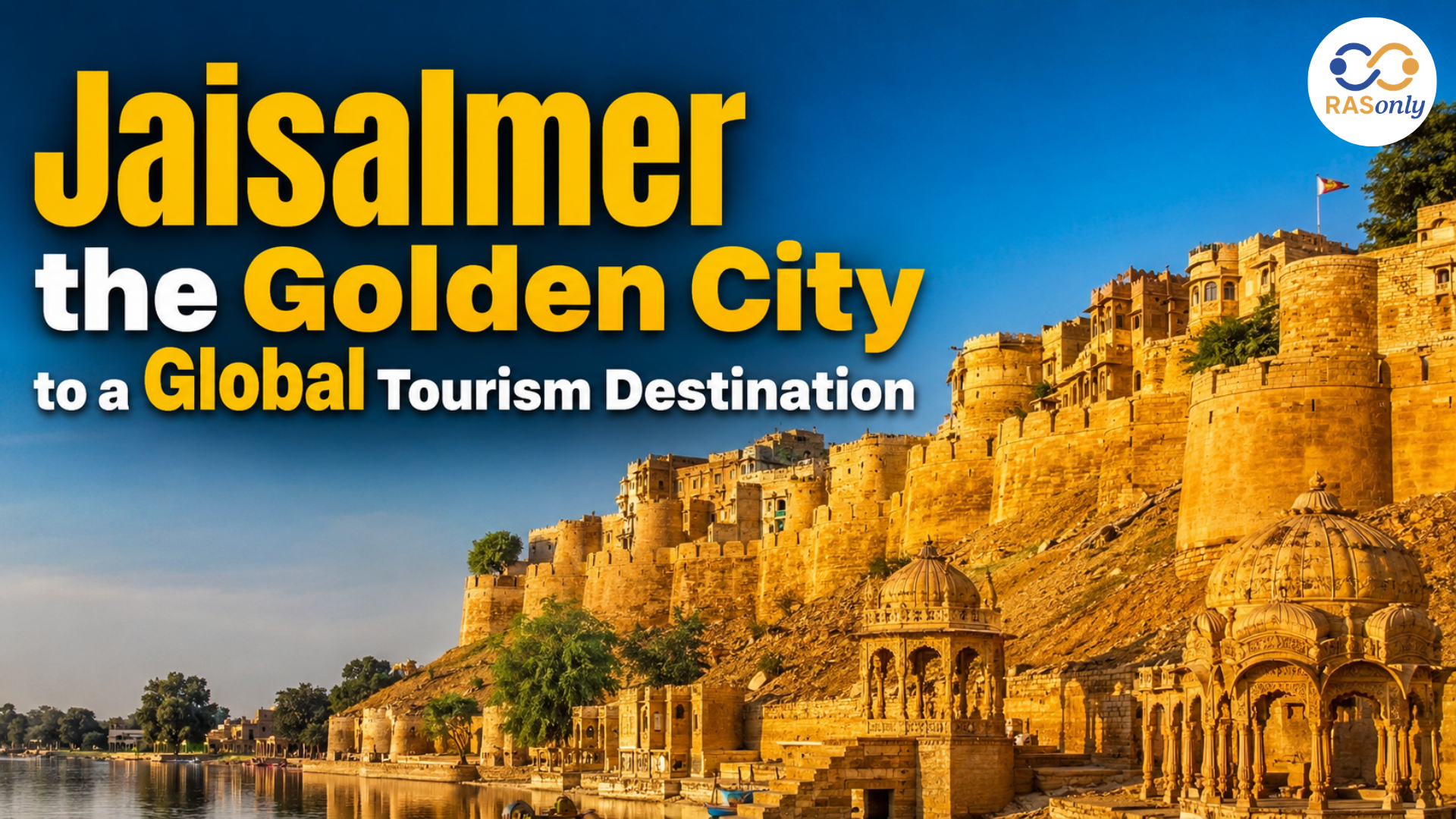
Jaisalmer, popularly known as the “Golden City of Rajasthan,” has undergone a remarkable transformation over the past four decades. The city is located in the middle of the Thar Desert, which used to be a place with weak infrastructure and basic facilities. Today, it is one of the most significant tourist attractions in Rajasthan, which is visited by both Indians and foreigners.
Key Highlights
|
|
|
|
|
|
|
|
|
|
|
|
|
|
|
|
|
|
|
|
|
|
|
|
|
|
|
|
|
|
|
|
|
|
|
|
|
|
|
|
|
|
Tourism Transformed Jaisalmer
The development of tourism in Jaisalmer started getting momentum from the eighties onwards. The local Tourist Bungalow, which was established by the Rajasthan Tourism Development Corporation (RTDC) and is now known as Moomal Hotel, became an important milestone in the city's tourism journey.
One area of special importance has been the development of the hotel sector. Jaisalmer had only 10 hotels in 1982, which increased to 29 in 1986, 35 in 1989, 68 in 1993, 83 in 1995, 94 in 1999 and 121 in 2001. There are now more than 400 hotels.
Growth of Desert Tourism
The expansion of tourism has also encouraged the growth of restaurants, travel agencies, handicraft shops and other tourism-related businesses. Today the Sam Sand Dunes are a big tourist draw and there are approximately 200 resorts in the region. Camel safaris are also an integral part of the Jaisalmer tour package.
The city receives approximately 15 lakh tourists every year. This has helped to create direct jobs with 50,000 people involved in handicraft and traditional goods shops, which has helped the local economy.
Better Connectivity and Infrastructure
Jaisalmer has witnessed major improvements in roads, railways, transportation and air connectivity. It is now directly linked by rail to some important cities like Jaipur, Delhi, Mumbai and Kathgodam. The construction of a civil airport, which cost approximately ₹100 crore, has made it easier to connect with the place and regular air connectivity is available for a major part of the tourism season.
Conclusion
Jaisalmer's transformation from a city struggling with basic facilities into a modern tourism hub highlights the important role of tourism, infrastructure and connectivity in regional development. Golden sandstone buildings, deserts, Sam Sand Dunes, camel safaris, handicrafts and heritage sites have made Jaisalmer a famous tourist hotspot in Rajasthan and India.
MCQs
1. When did tourism development in Jaisalmer begin gaining significant momentum?
A. 1960s
B. 1970s
C. 1980s
D. 2000s
Answer: C. 1980s
2. How many hotels were there in Jaisalmer in 1982?
A. 10
B. 29
C. 35
D. 68
Answer: A. 10
3. Approximately how many tourists visit Jaisalmer every year?
A. 5 lakh
B. 10 lakh
C. 15 lakh
D. 20 lakh
Answer: C. 15 lakh
जैसलमेर: स्वर्ण नगरी से वैश्विक पर्यटन गंतव्य तक
जैसलमेर, जिसे लोकप्रिय रूप से “राजस्थान की स्वर्ण नगरी” कहा जाता है, ने पिछले चार दशकों में उल्लेखनीय परिवर्तन देखा है। यह शहर थार मरुस्थल के मध्य स्थित है, जो कभी कमजोर बुनियादी ढाँचे और सीमित सुविधाओं वाला क्षेत्र था। आज यह राजस्थान के सबसे महत्वपूर्ण पर्यटन स्थलों में से एक है, जहाँ देश-विदेश से पर्यटक आते हैं।
प्रमुख विशेषताएँ
|
|
|
|
|
|
|
|
|
|
|
|
|
|
|
|
|
|
|
|
|
|
|
|
|
|
|
|
|
|
|
|
|
|
|
|
|
|
|
|
|
|
पर्यटन ने बदली जैसलमेर की तस्वीर
जैसलमेर में पर्यटन का विकास अस्सी के दशक से गति पकड़ने लगा। राजस्थान पर्यटन विकास निगम (RTDC) द्वारा स्थापित स्थानीय टूरिस्ट बंगला, जिसे अब मूमल होटल के नाम से जाना जाता है, शहर की पर्यटन यात्रा में एक महत्वपूर्ण मील का पत्थर बना।
विशेष महत्व का एक क्षेत्र होटल क्षेत्र का विकास रहा है। जैसलमेर में 1982 में केवल 10 होटल थे, जो 1986 में बढ़कर 29, 1989 में 35, 1993 में 68, 1995 में 83, 1999 में 94 और 2001 में 121 हो गए। वर्तमान में यह संख्या 400 से अधिक हो चुकी है।
रेगिस्तानी पर्यटन का विकास
पर्यटन के विस्तार ने रेस्टोरेंट, ट्रैवल एजेंसियों, हस्तशिल्प की दुकानों और अन्य पर्यटन संबंधी व्यवसायों के विकास को भी बढ़ावा दिया है। आज सम सैंड ड्यून्स एक प्रमुख पर्यटन आकर्षण हैं और इस क्षेत्र में लगभग 200 रिसॉर्ट संचालित हो रहे हैं। ऊंट सफारी भी जैसलमेर के पर्यटन पैकेज का एक अभिन्न हिस्सा है।
शहर में हर वर्ष लगभग 15 लाख पर्यटक आते हैं। इससे प्रत्यक्ष रोजगार के अवसर भी पैदा हुए हैं और लगभग 50,000 लोग हस्तशिल्प तथा पारंपरिक वस्तुओं की दुकानों से जुड़े हुए हैं, जिससे स्थानीय अर्थव्यवस्था को मजबूती मिली है।
बेहतर कनेक्टिविटी और बुनियादी ढाँचा
जैसलमेर में सड़क, रेलवे, परिवहन और हवाई कनेक्टिविटी में बड़े सुधार हुए हैं। यह अब जयपुर, दिल्ली, मुंबई और काठगोदाम जैसे महत्वपूर्ण शहरों से रेल द्वारा सीधे जुड़ा हुआ है। लगभग ₹100 करोड़ की लागत से बने सिविल एयरपोर्ट ने यहाँ कनेक्टिविटी को आसान बनाया है और पर्यटन सीजन के एक बड़े हिस्से में नियमित हवाई सेवा उपलब्ध रहती है।
निष्कर्ष
जैसलमेर का बुनियादी सुविधाओं के लिए संघर्ष करने वाले शहर से एक आधुनिक पर्यटन केंद्र में परिवर्तन क्षेत्रीय विकास में पर्यटन, बुनियादी ढाँचे और कनेक्टिविटी की महत्वपूर्ण भूमिका को दर्शाता है। सुनहरी बलुआ पत्थर की इमारतों, रेगिस्तान, सम सैंड ड्यून्स, ऊंट सफारी, हस्तशिल्प और विरासत स्थलों ने जैसलमेर को राजस्थान और भारत का एक प्रसिद्ध पर्यटन स्थल बना दिया है।
MCQs
1. जैसलमेर में पर्यटन विकास ने कब महत्वपूर्ण गति पकड़नी शुरू की?
A. 1960 का दशक
B. 1970 का दशक
C. 1980 का दशक
D. 2000 का दशक
उत्तर: C. 1980 का दशक
2. 1982 में जैसलमेर में कितने होटल थे?
A. 10
B. 29
C. 35
D. 68
उत्तर: A. 10
3. हर वर्ष लगभग कितने पर्यटक जैसलमेर आते हैं?
A. 5 लाख
B. 10 लाख
C. 15 लाख
D. 20 लाख
उत्तर: C. 15 लाख