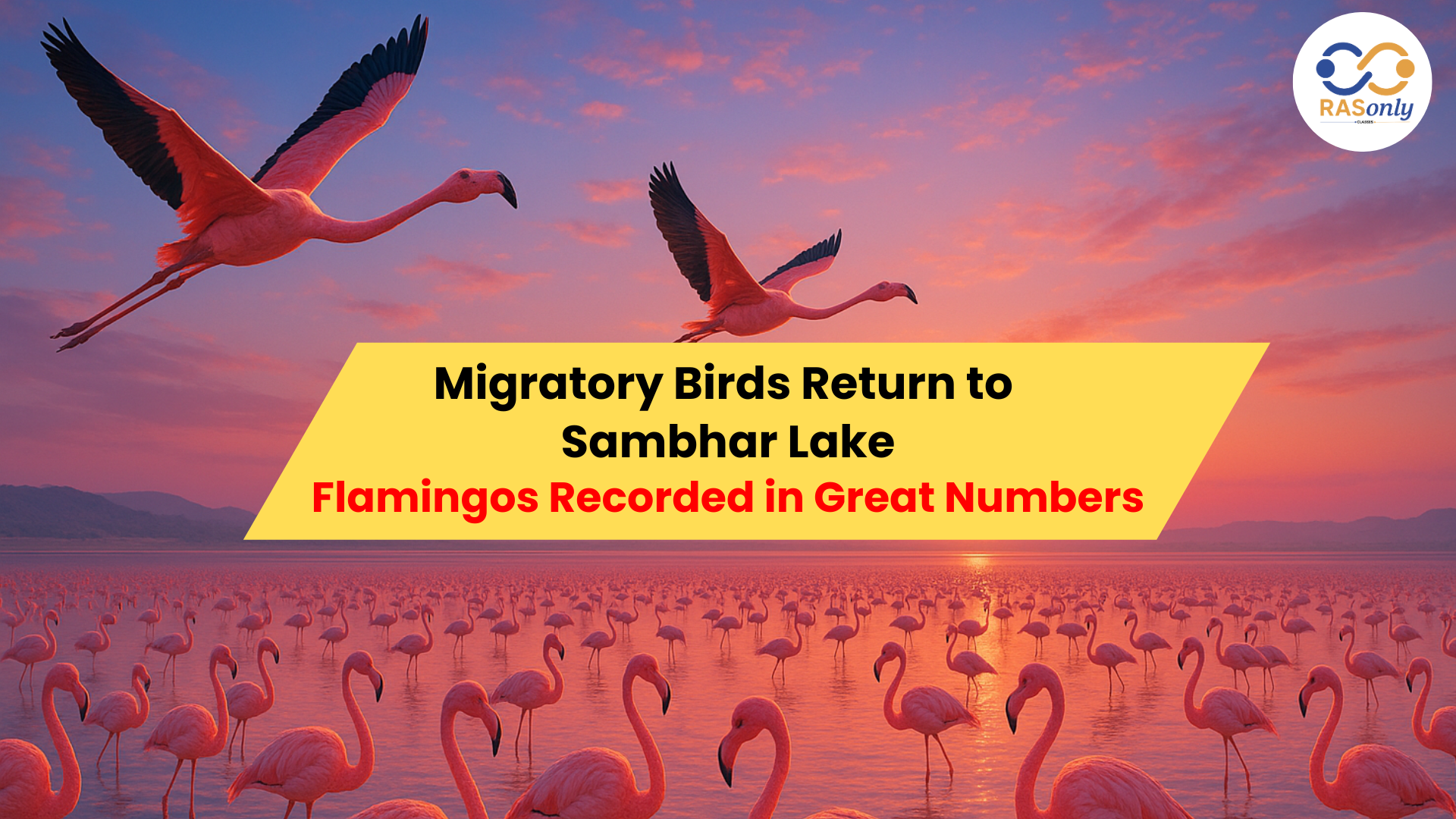
Sambhar Lake near Jaipur is once again witnessing a large influx of migratory birds, particularly flamingos, after several years of decline caused by avian botulism. During the severe outbreak in late 2019, thousands of birds died, raising major ecological concerns. This year, however, improved water availability and healthier habitat conditions have helped restore the lake’s ecological balance. Wildlife photographers have reported lakhs of migratory birds arriving again, including flamingos that travel thousands of kilometres across multiple countries. According to officials from the Animal Husbandry Department, the threat of the disease has now reduced significantly. Recent rainfall has increased the water level, making Sambhar Lake a favourable winter habitat for migratory species.
Key Environmental Observations
Revival After Botulism Outbreak
• The 2019 bird mortality event caused by avian botulism had severely affected Sambhar Lake.
• Officials confirm that the disease threat has now reduced.
High Flamingo Population
• This year, flamingos are being observed in the highest numbers.
• Lakhs of native and foreign migratory birds have arrived at the lake.
Improved Water Levels
• Heavy rainfall this year has raised water levels, creating favourable winter migration conditions.
• Thousands of birds are arriving after long migratory journeys from various countries.
Wildlife and Expert Inputs
Photographers’ Reports
• Wildlife photographer Gaurav Dakshin reported that Sambhar Lake is showing peak flamingo presence.
• Large flocks are feeding in shallow, low-salinity areas.
Government Confirmation
• IDO Vivek Singh of the Animal Husbandry Department stated that bird arrivals have increased due to better water availability.
• In late 2019, around 153 birds were found dead due to botulism, but the situation is now stable.
Conclusion
The revival of Sambhar Lake as a major wintering habitat for migratory birds marks a significant environmental improvement for Rajasthan. Higher water levels, a decline in disease risks, and restored habitat conditions have encouraged flamingos and other species to return in large numbers. This resurgence strengthens biodiversity and reinforces the ecological importance of Sambhar Lake as a global migratory bird destination.
MCQs (English )
MCQ 1
What significant change has recently been observed in Sambhar Lake?
A. Decline in water levels
B. Return of flamingos in greatest abundance
C. Drought affecting bird population
D. Closure of the lake for tourism
Answer: B
Explanation:
The article reports that flamingos have been sighted in their highest numbers this year at Sambhar Lake. Their return marks an ecological recovery after years of concern caused by avian botulism. Improved water levels and favourable habitat conditions have allowed large numbers of native and migratory birds to revisit the lake, strengthening its biodiversity and environmental stability.
MCQ 2
Which disease caused mass bird deaths at Sambhar Lake in 2019?
A. Avian flu
B. Avian botulism
C. Newcastle disease
D. West Nile fever
Answer: B
Explanation:
In late 2019, Sambhar Lake suffered a severe outbreak of avian botulism, leading to the deaths of thousands of birds, including migratory species. This incident drastically reduced bird arrivals in the following years. Authorities now confirm that the disease threat has diminished, as evidenced by the large numbers of birds returning this season, indicating ecological restoration.
MCQ 3
What factor has most contributed to the increased arrival of migratory birds this year?
A. New tourism policies
B. Higher pollution levels
C. Enhanced rainfall and water availability
D. Ban on fishing in the lake
Answer: C
Explanation:
Higher rainfall this year has significantly improved the water levels in Sambhar Lake, creating favourable wetland conditions that attract migratory birds. Wetland ecosystems are highly dependent on water availability, and the deeper, expanded water spread has encouraged flamingos and other species to return in large numbers. Experts and officials confirm this as the primary reason for increased bird arrivals.
साम्भर झील में प्रवासी पक्षी लौटे; फ्लेमिंगो सबसे अधिक संख्या में दर्ज
जयपुर के निकट स्थित साम्भर झील एक बार फिर बड़ी संख्या में प्रवासी पक्षियों, विशेषकर फ्लेमिंगो, का स्वागत कर रही है। वर्ष 2019 के अंत में एवियन बोटुलिज़्म के प्रकोप के कारण हजारों पक्षियों की मौत हुई थी, जिससे झील की पारिस्थितिक स्थिति गंभीर रूप से प्रभावित हुई थी। लेकिन इस वर्ष जल उपलब्धता में सुधार और बेहतर आवास परिस्थितियों ने झील की पारिस्थितिक संतुलन को पुनः स्थापित किया है। वाइल्डलाइफ़ फ़ोटोग्राफ़रों ने लाखों प्रवासी पक्षियों के लौटने की पुष्टि की है, जिनमें वे फ्लेमिंगो भी शामिल हैं जो हजारों किलोमीटर की यात्रा कर कई देशों से यहाँ पहुँचते हैं। पशुपालन विभाग के अधिकारियों के अनुसार अब बीमारी का खतरा काफी कम हो गया है। हाल की बारिश ने जल स्तर में वृद्धि की है, जिससे साम्भर झील फिर से शीतकालीन प्रवास के लिए उपयुक्त स्थल बन गई है।
पर्यावरण से जुड़े प्रमुख अवलोकन
बोटुलिज़्म प्रकोप के बाद पुनरुद्धार
• 2019 के पक्षी मृत्यु कांड ने साम्भर झील की पारिस्थितिकी को गंभीर रूप से प्रभावित किया था।
• अधिकारियों ने पुष्टि की है कि अब बीमारी का खतरा कम हो गया है।
फ्लेमिंगो की अधिकतम संख्या
• इस वर्ष फ्लेमिंगो सबसे अधिक संख्या में देखे जा रहे हैं।
• झील में देशी और विदेशी लाखों प्रवासी पक्षी पहुँच चुके हैं।
बढ़ा हुआ जल स्तर
• इस साल हुई भारी बारिश से झील में जल स्तर बढ़ा है, जिससे सर्दियों के लिए उत्कृष्ट प्रवास परिस्थितियाँ बनी हैं।
• विभिन्न देशों से लंबी दूरी तय कर हजारों पक्षी झील तक पहुँच रहे हैं।
वन्यजीव एवं विशेषज्ञों की जानकारी
फ़ोटोग्राफ़रों की रिपोर्ट
• वाइल्डलाइफ़ फ़ोटोग्राफ़र गौरव दक्षिण ने बताया कि साम्भर झील में फ्लेमिंगो की उपस्थिति इस वर्ष सबसे अधिक है।
• बड़ी संख्या में पक्षी उथले, कम-लवणीय जल क्षेत्रों में भोजन कर रहे हैं।
सरकारी पुष्टि
• पशुपालन विभाग के आईडीओ विवेक सिंह के अनुसार बेहतर जल उपलब्धता के कारण इस वर्ष अधिक संख्या में पक्षी लौटे हैं।
• 2019 के अंत में लगभग 153 पक्षी बोटुलिज़्म से मृत पाए गए थे, लेकिन अब स्थिति स्थिर है।
निष्कर्ष
साम्भर झील का एक प्रमुख शीतकालीन प्रवासी पक्षी-विहार स्थल के रूप में पुनर्जीवन राजस्थान के पर्यावरण के लिए एक सकारात्मक संकेत है। बढ़े हुए जल स्तर, रोग-जोखिम में कमी और बेहतर आवास परिस्थितियों ने फ्लेमिंगो सहित अनेक प्रवासी प्रजातियों की वापसी को प्रोत्साहित किया है। यह पुनरुत्थान झील की जैव-विविधता को सुदृढ़ करता है और वैश्विक प्रवासी पक्षियों के लिए इसके महत्व को पुनः स्थापित करता है।
MCQ 1
सांभर झील में हाल ही में कौन-सा महत्वपूर्ण परिवर्तन देखा गया है?
A. जल स्तर में कमी
B. फ्लेमिंगो की अत्यधिक संख्या में वापसी
C. सूखे से प्रभावित पक्षी जनसंख्या
D. पर्यटकों के लिए झील का बंद होना
उत्तर: B
व्याख्या:
इस वर्ष सांभर झील में फ्लेमिंगो की संख्या कई वर्षों के बाद सबसे अधिक दर्ज की गई है। एवियन बोटुलिज़्म के कारण वर्षों तक पारिस्थितिक हानि होती रही, लेकिन इस बार पक्षियों की वापसी पर्यावरणीय सुधार का संकेत है। हालिया वर्षा के कारण जल स्तर बढ़ा, जिससे स्थानीय और प्रवासी दोनों प्रकार के पक्षियों को वापस आने के लिए अनुकूल वातावरण मिला और जैव-विविधता मजबूत हुई।
MCQ 2
2019 में सांभर झील में भारी पक्षी मृत्यु का कारण कौन-सी बीमारी थी?
A. एवियन फ्लू
B. एवियन बोटुलिज़्म
C. न्यूकैसल रोग
D. वेस्ट नाइल फीवर
उत्तर: B
व्याख्या:
2019 के अंत में सांभर झील में एवियन बोटुलिज़्म का गंभीर प्रकोप हुआ था, जिसके कारण हजारों स्थानीय और प्रवासी पक्षियों की मृत्यु हुई। इस घटना से आने वाले वर्षों में झील में पक्षियों का आगमन बहुत कम हो गया था। इस वर्ष पक्षियों की संख्या में वृद्धि यह दर्शाती है कि बीमारी का खतरा अब कम हो गया है और झील की पारिस्थितिक स्थिति में सुधार हो रहा है।
MCQ 3
इस वर्ष प्रवासी पक्षियों की बढ़ी हुई संख्या का सबसे बड़ा कारण क्या है?
A. नई पर्यटन नीतियाँ
B. बढ़ता प्रदूषण स्तर
C. अधिक वर्षा और बेहतर जल उपलब्धता
D. झील में मछली पकड़ने पर प्रतिबंध
उत्तर: C
व्याख्या:
सांभर झील जैसे आर्द्र-भूमि पारिस्थितिकी तंत्र पूरी तरह जल उपलब्धता पर निर्भर करते हैं। इस वर्ष हुई अधिक वर्षा से झील में जल स्तर बढ़ा और आवास क्षेत्र का विस्तार हुआ, जिससे प्रवासी पक्षियों के लिए अनुकूल परिस्थितियाँ बनीं। विशेषज्ञों की पुष्टि के अनुसार बेहतर जल-संतुलन ही इस वर्ष पक्षियों की अधिक संख्या का मुख्य कारण है