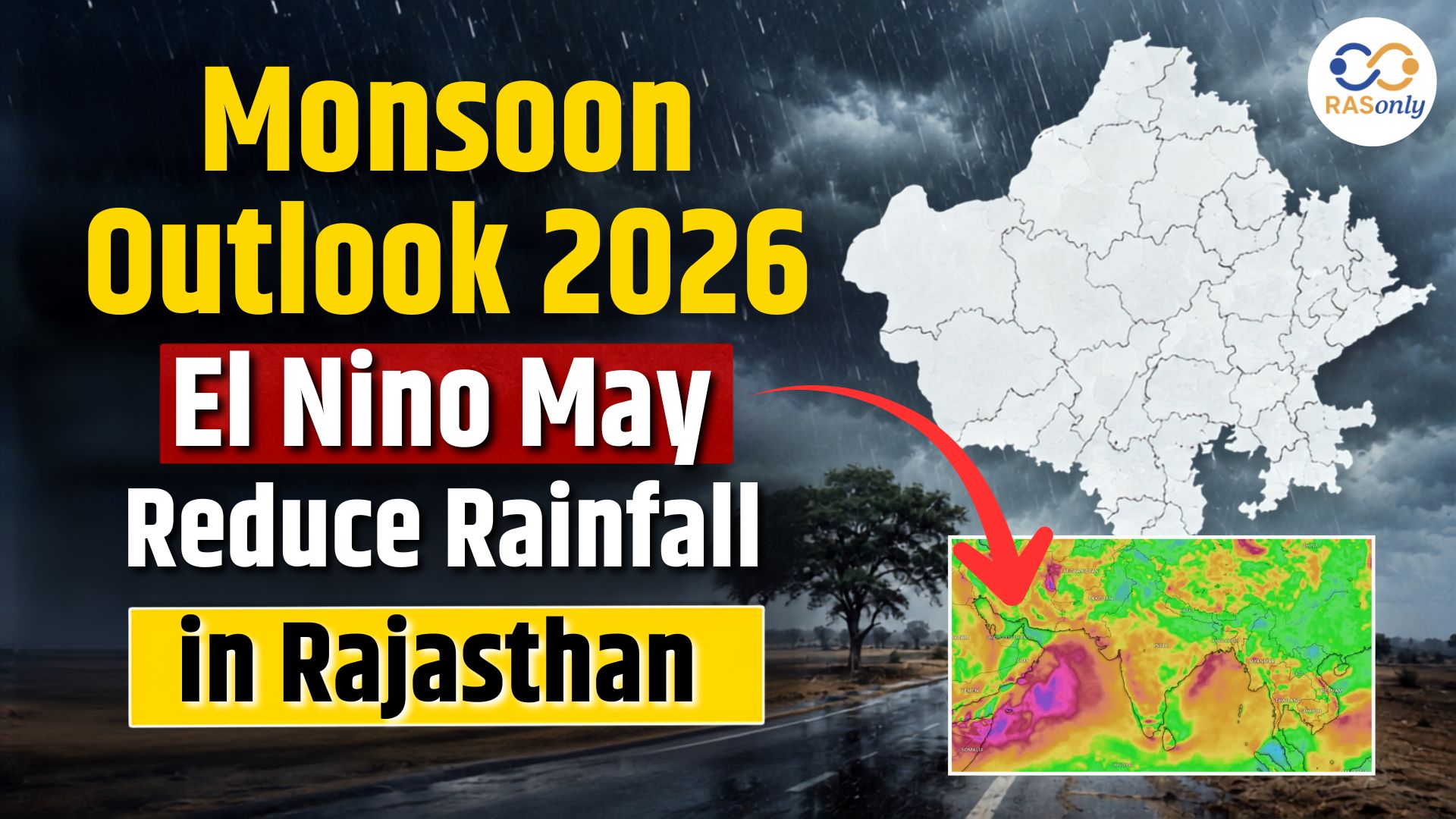
The India Meteorological Department (IMD) has indicated that Rajasthan may receive below-normal rainfall during the 2026 Southwest Monsoon season, mainly due to the expected strengthening of El Niño conditions. While the monsoon remains active across several parts of India, rainfall activity over Rajasthan is expected to weaken during parts of July and August, with the possibility of increased rainfall before the withdrawal of the monsoon in September.
Key Highlights
- Rajasthan witnessed the arrival of the Southwest Monsoon on 2 July 2026, around a week later than its normal onset.
- Good rainfall was recorded in parts of northeastern Rajasthan after the monsoon arrived, but rainfall activity has gradually slowed.
- According to the India Meteorological Department (IMD), the strengthening of El Niño during the monsoon season could reduce rainfall over several regions, including Rajasthan.
- IMD has projected that India's cumulative monsoon rainfall during June–September 2026 may be around 92% of the Long Period Average (LPA), which falls under the below-normal rainfall category.
- Meteorologists expect July and August to remain comparatively weaker in terms of rainfall over Rajasthan, while September may witness a revival of monsoon activity, including the possibility of heavy rainfall in some areas before the season ends.
What is El Niño?
El Niño is a climate phenomenon characterized by the unusual warming of sea surface temperatures in the central and eastern equatorial Pacific Ocean. This warming has impacts on global atmospheric circulation and can sometimes influence weather patterns on different continents.
For India, El Niño is generally associated with:
- Weakening of the Southwest Monsoon.
- Below normal precipitation in many areas.
- Higher temperatures and longer dry spells.
- Increased risk of drought-like conditions in vulnerable areas.
However, the impact of El Niño is not identical every year, as other climate factors such as the Indian Ocean Dipole (IOD) and regional weather systems also influence monsoon performance.
Monsoon in Rajasthan
Rajasthan is the largest state in India for area, with large portions of it being arid and semi-arid and agriculture being very sensitive to monsoon rainfall.
The state's Long Period Average (LPA) for monsoon rainfall is generally considered to be around 435.6 mm to 500 mm (based on the 1971–2020 climatological period). During the last few years, Rajasthan experienced relatively good monsoon seasons with above-average rainfall in several districts. The 2026 outlook, on the other hand, indicates that the risk of rainfall falling below the seasonal average could increase as El Niño conditions continue to get stronger.
Rajasthan Monsoon Rainfall (Year-wise)
The Rajasthan Monsoon Rainfall year-wise data highlights rainfall trends across the state. Comparing annual rainfall with the Long Period Average (LPA) helps understand monsoon performance, water availability, and the impact of El Niño on the Rajasthan Monsoon 2026.
|
|
|
|
|
|
|
|
|
|
|
|
|
|
|
|
|
|
|
|
|
|
|
|
|
|
|
|
|
|
|
|
|
|
|
|
Why is this Important?
Below-normal rainfall may affect:
- Agricultural productivity, especially for rain-fed crops.
- Reservoir and groundwater recharge.
- Drinking water availability in drought-prone districts.
- Livestock and rural livelihoods.
- Planning for irrigation and water conservation.
Meanwhile, the meteorologists have also pointed out that there might be chances of localized heavy rainfall, especially in September, so there is a need for disaster preparedness as well as water management.
MCQs
Q1. The primary climatic phenomenon linked with the possibility of below-normal rainfall in Rajasthan during the 2026 monsoon season is:
A. La Niña
B. Western Disturbance
C. El Niño
D. Madden-Julian Oscillation
Answer: C. El Niño
Q2. According to IMD, rainfall between 90% and 95% of the Long Period Average (LPA) is classified as:
A. Above Normal
B. Excess Rainfall
C. Normal Rainfall
D. Below Normal Rainfall
Answer: D. Below Normal Rainfall
Q3. The Southwest Monsoon entered Rajasthan in 2026 on:
A. 18 June
B. 25 June
C. 30 June
D. 2 July
Answer: D. 2 July
Q4. El Niño is primarily associated with:
A. Cooling of the Arabian Sea only
B. Warming of the central and eastern equatorial Pacific Ocean
C. Increased snowfall over the Himalayas
D. Formation of tropical cyclones in the Bay of Bengal
Answer: B. Warming of the central and eastern equatorial Pacific Ocean
2026 मानसून पूर्वानुमान: एल नीनो के कारण राजस्थान में सामान्य से कम वर्षा की संभावना
भारत मौसम विज्ञान विभाग (IMD) के अनुसार, 2026 के दक्षिण-पश्चिम मानसून के दौरान राजस्थान में सामान्य से कम (Below Normal) वर्षा होने की संभावना है। इसका प्रमुख कारण एल नीनो (El Niño) की स्थिति का मजबूत होना माना जा रहा है। यद्यपि देश के कई हिस्सों में मानसून सक्रिय है, लेकिन राजस्थान में जुलाई और अगस्त के दौरान वर्षा गतिविधियों के कमजोर रहने की संभावना है। वहीं, सितंबर में मानसून की पुनः सक्रियता तथा कुछ क्षेत्रों में भारी वर्षा होने की संभावना व्यक्त की गई है।
प्रमुख बिंदु (Key Highlights)
- वर्ष 2026 में दक्षिण-पश्चिम मानसून 2 जुलाई को राजस्थान पहुँचा, जो सामान्य आगमन तिथि से लगभग एक सप्ताह देर से था।
- मानसून के आगमन के बाद पूर्वोत्तर राजस्थान के कई क्षेत्रों में अच्छी वर्षा दर्ज की गई, लेकिन बाद में वर्षा गतिविधियाँ धीमी पड़ गईं।
- भारत मौसम विज्ञान विभाग (IMD) के अनुसार, मानसून के दौरान एल नीनो के प्रभाव के कारण राजस्थान सहित कई क्षेत्रों में वर्षा कम हो सकती है।
- IMD के अनुसार, जून से सितंबर 2026 के बीच पूरे भारत में मानसूनी वर्षा दीर्घकालिक औसत (Long Period Average - LPA) का लगभग 92% रहने का अनुमान है, जिसे सामान्य से कम (Below Normal Rainfall) श्रेणी में रखा जाता है।
- मौसम वैज्ञानिकों का अनुमान है कि जुलाई और अगस्त में राजस्थान में वर्षा अपेक्षाकृत कम रहेगी, जबकि सितंबर में मानसून दोबारा सक्रिय होकर कुछ क्षेत्रों में भारी वर्षा ला सकता है।
एल नीनो (El Niño) क्या है?
एल नीनो एक जलवायु घटना (Climate Phenomenon) है, जिसमें प्रशांत महासागर (Pacific Ocean) के मध्य एवं पूर्वी विषुवतीय भाग के समुद्री सतह के तापमान में असामान्य वृद्धि हो जाती है। इसका प्रभाव वैश्विक वायुमंडलीय परिसंचरण (Atmospheric Circulation) पर पड़ता है, जिससे दुनिया के विभिन्न क्षेत्रों के मौसम में बदलाव देखने को मिलता है।
भारत में एल नीनो के प्रमुख प्रभाव
- दक्षिण-पश्चिम मानसून कमजोर पड़ सकता है।
- कई क्षेत्रों में सामान्य से कम वर्षा होती है।
- तापमान में वृद्धि होती है।
- लंबे शुष्क (Dry Spell) दौर देखने को मिल सकते हैं।
- सूखा जैसी परिस्थितियों का खतरा बढ़ जाता है।
हालाँकि, प्रत्येक वर्ष एल नीनो का प्रभाव समान नहीं होता। भारतीय महासागर द्विध्रुव (Indian Ocean Dipole - IOD) तथा अन्य क्षेत्रीय मौसम प्रणालियाँ भी मानसून को प्रभावित करती हैं।
राजस्थान में मानसून
राजस्थान भारत का क्षेत्रफल की दृष्टि से सबसे बड़ा राज्य है। राज्य का अधिकांश भाग शुष्क (Arid) एवं अर्ध-शुष्क (Semi-Arid) क्षेत्र में आता है, इसलिए यहाँ की कृषि मानसूनी वर्षा पर अत्यधिक निर्भर करती है।
राजस्थान में मानसूनी वर्षा का दीर्घकालिक औसत (LPA) लगभग 435.6 मिमी माना जाता है (1971–2020 के जलवायु औसत के आधार पर)।
पिछले कुछ वर्षों में राजस्थान के अधिकांश जिलों में औसत से अधिक वर्षा दर्ज की गई थी, लेकिन 2026 के पूर्वानुमान के अनुसार एल नीनो के कारण इस वर्ष सामान्य से कम वर्षा होने की संभावना बढ़ गई है।
राजस्थान में वर्षवार मानसूनी वर्षा
राजस्थान में वर्षवार मानसूनी वर्षा के आँकड़े राज्य में वर्षा की प्रवृत्तियों (Rainfall Trends) को दर्शाते हैं। वार्षिक वर्षा की तुलना दीर्घकालिक औसत वर्षा (Long Period Average - LPA) से करने पर मानसून के प्रदर्शन, जल उपलब्धता तथा 2026 के राजस्थान मानसून पर एल नीनो के प्रभाव को बेहतर ढंग से समझा जा सकता है।
|
|
|
|
|
|
|
|
|
|
|
|
|
|
|
|
|
|
|
|
|
|
|
|
|
|
|
|
|
|
|
|
|
|
|
|
यह क्यों महत्वपूर्ण है?
यदि वर्षा सामान्य से कम रहती है, तो इसका प्रभाव निम्न क्षेत्रों पर पड़ सकता है—
- वर्षा आधारित कृषि (Rain-fed Agriculture) पर प्रतिकूल प्रभाव।
- जलाशयों एवं भूजल (Groundwater) का कम पुनर्भरण।
- सूखा प्रभावित जिलों में पेयजल संकट।
- पशुपालन एवं ग्रामीण आजीविका पर प्रभाव।
- सिंचाई एवं जल संरक्षण योजनाओं की आवश्यकता बढ़ेगी।
साथ ही, मौसम वैज्ञानिकों ने यह भी संकेत दिया है कि सितंबर में कुछ क्षेत्रों में स्थानीय स्तर पर भारी वर्षा हो सकती है। इसलिए जल प्रबंधन और आपदा तैयारी (Disaster Preparedness) दोनों आवश्यक होंगे।
MCQs
प्रश्न 1. 2026 में राजस्थान में सामान्य से कम वर्षा की संभावना मुख्यतः किस जलवायु घटना से जुड़ी है?
A. ला नीना (La Niña)
B. पश्चिमी विक्षोभ (Western Disturbance)
C. एल नीनो (El Niño)
D. मैडेन-जूलियन ऑसिलेशन (MJO)
उत्तर: C. एल नीनो
प्रश्न 2. IMD के अनुसार, यदि मानसूनी वर्षा दीर्घकालिक औसत (LPA) के 90% से 95% के बीच रहती है, तो उसे किस श्रेणी में रखा जाता है?
A. सामान्य से अधिक (Above Normal)
B. अधिक वर्षा (Excess)
C. सामान्य वर्षा (Normal)
D. सामान्य से कम वर्षा (Below Normal)
उत्तर: D. सामान्य से कम वर्षा
प्रश्न 3. वर्ष 2026 में दक्षिण-पश्चिम मानसून राजस्थान में कब पहुँचा?
A. 18 जून
B. 25 जून
C. 30 जून
D. 2 जुलाई
उत्तर: D. 2 जुलाई
प्रश्न 4. एल नीनो मुख्य रूप से किससे संबंधित है?
A. केवल अरब सागर के ठंडे होने से
B. मध्य एवं पूर्वी विषुवतीय प्रशांत महासागर के गर्म होने से
C. हिमालय में अधिक हिमपात से
D. बंगाल की खाड़ी में उष्णकटिबंधीय चक्रवातों के बनने से
उत्तर: B. मध्य एवं पूर्वी विषुवतीय प्रशांत महासागर के समुद्री सतह तापमान में असामान्य वृद्धि।