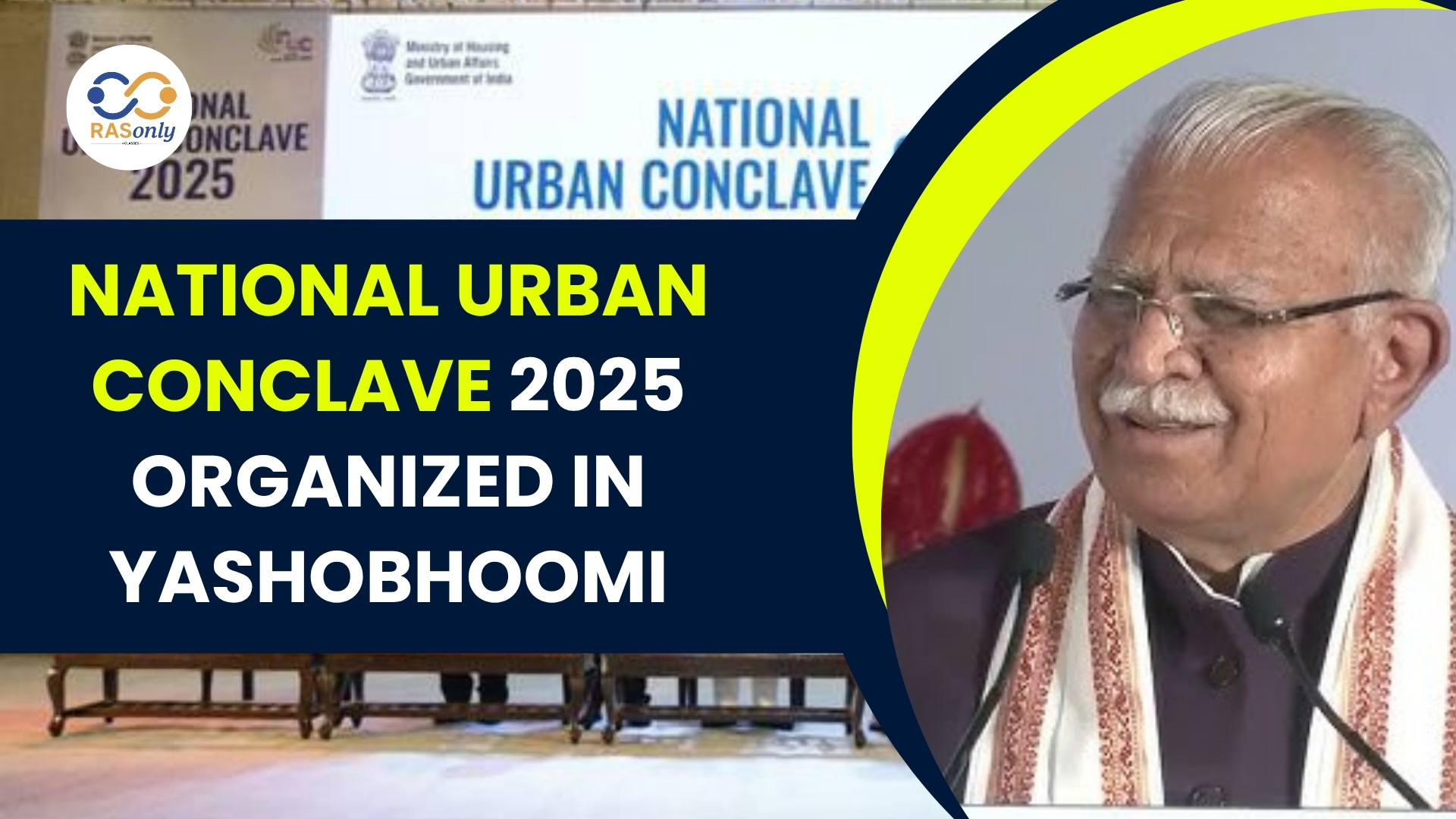
It was held in the Yashobhoomi Convention Centre, New Delhi with Union Housing and Urban Affairs Minister Manohar Lal Khattar as Chief Guest. The conclave examined an all inclusive and sustainable urban development roadmap. As a representative of Rajasthan, Minister of State (Independent Charge) in Urban Development, Housing and LSG, Jhabar Singh Kharra outlined the urban strategy of the state and highlighted the principles of collaborative policy-making, innovativeness and citizen-based delivery. In line with the Viksit Bharat 2047 vision, debates surrounding environmentally conscious, technological and people oriented urban systems were discussed to improve the quality of life. The conclave also opened and visited the Viksit Bharat City Exhibition, that displayed innovations of sustainability, safety in technology and finding a way to include design in a modern humane and progressive urban India.
Key Highlights
- Venue & leadership: Yashobhoomi Convention Centre, New Delhi; Chief Guest Manohar Lal Khattar
- Rajasthan involvement: Jhabar Singh Kharra Jhabar Singh Kharra, part of the city vision & future strategy of Rajasthan.
- Mainstream agenda: Sustainable, inclusive, tech-enabled and future-ready urban systems.
- National alignment: Roadmap associated with Viksit Bharat 2047 objectives.
- Exhibition: “ Viksit Bharat City Exhibition” opened; prioritise sustainability, technologically enabled safety, inclusivity.
The governance of the hospitality industry is guided by policies that establish the fundamental principles of effective hotel management. Hospitality industry policies set the rule of governance of the sector and these principles are the guiding principles of proper hotel management.
- Joint policy-making: Ministries, policy-makers and innovators jointly making urban roadmaps.
- People-first approach: Citizen first design, service provision, and quantifiable quality-of-life results.
- Tech integration: Digital platforms, data-based planning and resilient infrastructure.
Objectives and Benefits
Objectives
- Develop sustainable, sustainable, and inclusive cities.
- Nominal technology of planning, services and safety.
- Support states have scalable models and a model best practice.
Benefits
- Improved urban living and the quality of services.
- Effective administration through information and platforms.
- Duplicable models of Indian states and ULBs.
Conclusion
India is moving to sustainable, tech-enabled, citizen-first cities as National Urban Conclave 2025 indicates Viksit Bharat 2047. The active presence of Rajasthan put the conclave in the context of obvious priorities of resilience, inclusiveness, and quantifiable livability, and Viksit Bharat City Exhibition presented scaled solutions. The product: a common action-oriented urban roadmap among states and ULBs.
RAS-Style MCQs (English)
Q1. In what place was the National Urban Conclave 2025?
A. Bharat Mandapam, New Delhi
B. Yashobhoomi Convention Centre.
C. Pragati Maidan, New Delhi
D. Vigyan Bhawan, New Delhi
Answer: B
Q2. Who was the Rajasthan representative at the conclave?
A. Bhajanlal Sharma
B. Jhabar Singh Kharra
C. Rajyavardhan Rathore
D. Ashok Gehlot
Answer: 2
Q3. What national milestone does the urban vision of the conclave have the closest connection with?
A. Digital India 2020
B. AMRUT 2.0 only
C. Viksit Bharat 2047
D. India75 (Azadi Ka Amrit Mahotsav).
Answer: 3
नई दिल्ली में “नेशनल अर्बन कॉन्क्लेव 2025”—भविष्य के लिए तैयार शहरों का रोडमैप; राजस्थान की सहभागिता
नई दिल्ली, यशोभूमि कन्वेंशन सेंटर में केंद्रीय आवासन एवं शहरी कार्य मंत्री मनोहर लाल खट्टर की मुख्य आतिथ्य में “नेशनल अर्बन कॉन्क्लेव 2025” आयोजित हुआ। इसमें सतत, समावेशी और भविष्य-उन्मुख शहरी विकास के रोडमैप पर विस्तृत चर्चा हुई। राजस्थान की ओर से नगरीय विकास, आवासन एवं स्वायत्त शासन राज्य मंत्री (स्वतंत्र प्रभार) श्री झाबर सिंह खर्रा ने भाग लेकर राज्य की रणनीति प्रस्तुत की और नीति-निर्माताओं व नवाचारकों के साथ मिलकर नागरिक-केंद्रित, प्रौद्योगिकी-संचालित मॉडल पर जोर दिया। विकसित भारत 2047 के लक्ष्य के अनुरूप, इको-फ्रेंडली, टेक-सक्षम और जन-प्रथम शहरी तंत्र से जीवन-गुणवत्ता सुधार पर फोकस रहा। इस दौरान “विकसित भारत सिटी प्रदर्शनी” का उद्घाटन व अवलोकन भी किया गया, जिसमें सस्टेनेबिलिटी, टेक-समर्थ सुरक्षा और समावेशिता पर आधारित नवाचार प्रदर्शित हुए।
प्रमुख बिंदु
- स्थल व नेतृत्व: यशोभूमि कन्वेंशन सेंटर, नई दिल्ली; मुख्य अतिथि मनोहर लाल खट्टर
- राजस्थान की सहभागिता: झाबर सिंह खर्रा ने राज्य की शहरी रणनीति प्रस्तुत की
- मुख्य एजेंडा: सततता, समावेशिता, टेक-सक्षम और फ्यूचर-रेडी शहरी तंत्र
- राष्ट्रीय संरेखण: विकसित भारत 2047 के लक्ष्य से तालमेल
- प्रदर्शनी: “विकसित भारत सिटी प्रदर्शनी”—सस्टेनेबिलिटी, टेक-आधारित सुरक्षा व समावेशी डिज़ाइन
सुशासन व नीति-दिशा
- सहयोगी नीति-निर्माण: मंत्रालयों, नीति-निर्माताओं व नवाचारकों का संयुक्त रोडमैप
- जन-प्रथम अप्रोच: सेवा-प्रदान व डिज़ाइन में नागरिक-केंद्रिता व मापा-जाने योग्य परिणाम
- टेक एकीकरण: डिजिटल प्लेटफॉर्म, डाटा-आधारित योजना व सक्षम, लचीला अवसंरचना
उद्देश्य व लाभ
उद्देश्य
- पर्यावरण-अनुकूल, लचीले व समावेशी शहरों का निर्माण
- योजना, सेवाएँ व सुरक्षा में प्रौद्योगिकी का मुख्यधारा-करण
- राज्यों/यूएलबी के लिए स्केलेबल मॉडल व श्रेष्ठ उदाहरण
लाभ
- जीवन-गुणवत्ता में सुधार और बेहतर शहरी सेवाएँ
- डाटा-संचालित सुशासन व कुशल क्रियान्वयन
- दोहराने योग्य खाके जिनसे राज्य व यूएलबी लाभान्वित हों
निष्कर्ष
नेशनल अर्बन कॉन्क्लेव 2025 ने विकसित भारत 2047 के अनुरूप सतत, टेक-सक्षम, नागरिक-प्रथम शहरों की रूपरेखा को ठोस दिशा दी। राजस्थान की सक्रिय भागीदारी के साथ, लचीलापन, समावेशिता व मापनीय जीवन-गुणवत्ता को प्राथमिकता मिली। “विकसित भारत सिटी प्रदर्शनी” ने स्केलेबल समाधान दिखाए—परिणामस्वरूप राज्यों व यूएलबी के लिए साझा, क्रियान्वयन-योग्य शहरी रोडमैप सामने आया।
RAS MCQs (हिन्दी)
प्र.1. “नेशनल अर्बन कॉन्क्लेव 2025” का आयोजन कहाँ हुआ?
A. विज्ञान भवन, नई दिल्ली
B. प्रगति मैदान, नई दिल्ली
C. यशोभूमि कन्वेंशन सेंटर, नई दिल्ली
D. भारत मंडपम, नई दिल्ली
उत्तर: 3
प्र.2. राजस्थान की ओर से कॉन्क्लेव में किसने भाग लिया?
A. भजनलाल शर्मा
B. झाबर सिंह खर्रा
C. राजेन्द्र राठौड़
D. अशोक गहलोत
उत्तर: 2
प्र.3. कॉन्क्लेव की दिशा किस राष्ट्रीय लक्ष्य के अनुरूप बताई गई?
A. डिजिटल इंडिया 2020
B. अमृत महोत्सव (India@75)
C. विकसित भारत 2047
D. स्वच्छ भारत मिशन
उत्तर: 3