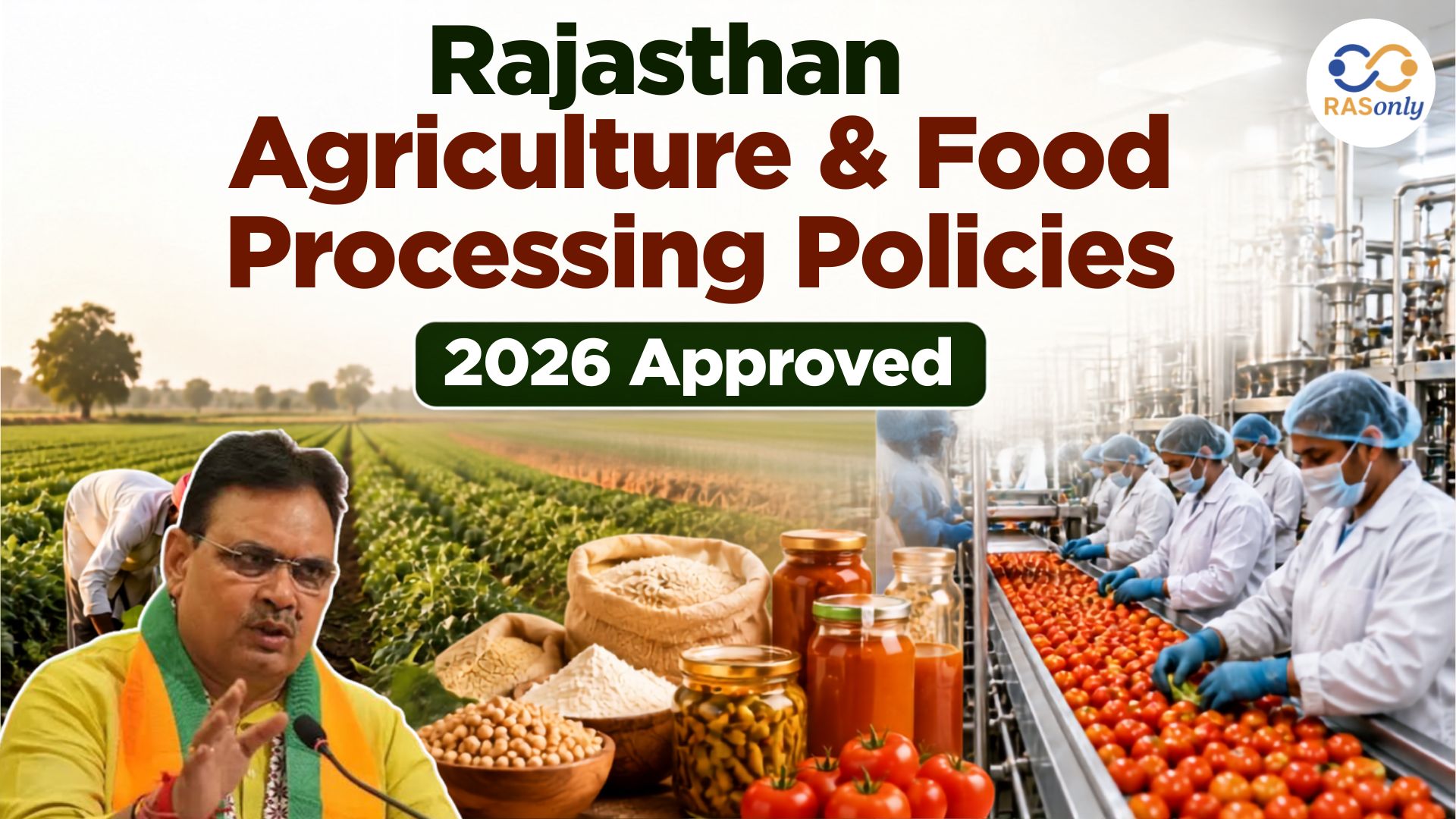
The Rajasthan Government under Bhajan Lal Sharma has passed two significant policies to boost the income of farmers as well as the promotion of agro-based industries in the state: Rajasthan Agriculture and Food Processing Policy-2026 and Rajasthan Food Park Development Policy-2026.
The decision was taken in a Cabinet and Council of Ministers meeting chaired by Chief Minister Bhajan Lal Sharma. The policies aim to create a robust farm-to-market value chain, promote food-processing industries in the rural regions and enhance market opportunities for agricultural commodities.
Key Highlights
|
|
|
|
|
|
|
|
|
|
|
|
|
|
|
|
|
|
|
|
|
|
|
|
|
|
|
Rajasthan Agriculture and Food Processing Policy-2026
The current policy is more about value addition and enhancement of agricultural produce through processing. The farmers and businessmen will be motivated to set up their processing units near the place of production rather than selling the agricultural produce as a raw material.
This can be helpful in minimizing post-harvest losses, increasing job opportunities and opening up farmers to greater markets.
Rajasthan Food Park Development Policy-2026
The Food Park Development Policy-2026 is an initiative to encourage development of food-processing parks and food infrastructure in Rajasthan.
Food parks can facilitate the convergence of food processing facilities, storage, packaging, logistics and other supporting facilities. The integrated approach can improve the agricultural supply chain and stimulate private investment.
Major Benefits
The policies will be expected to:
- Increase farmers’ income through value addition.
- Promote agricultural processing by rural people.
- Generate employment opportunities.
- Reduce post-harvest losses.
- Promote investment in food-processing industries.
- Develop infrastructure for the agricultural supply chains.
- Provide better market opportunities for farmers.
- Enable entrepreneurs to create agro-based businesses.
‘Apni Upaj–Apna Udyog’ Campaign
The policy approval has been termed a big development after the ‘Apni Upaj–Apna Udyog’ campaign. The campaign emphasized the importance of linkage between production and processing/industry to ensure that farmers reap value-added benefits other than the farm gate value.
The government's policies now create an institutional structure to bolster this farm-to-market model.
Significance for Rajasthan
Rajasthan is a major agricultural state where diverse variety of crops and agricultural products are grown. Establishing food-processing infrastructure can be a key factor in reshaping the agricultural economy of the state by linking farmers, processors, entrepreneurs and markets.
The initiative can also be part of the rural industrialisation and employment creation.
Conclusion
The Rajasthan Agriculture and Food Processing Policy-2026 and Rajasthan Food Park Development Policy-2026 are significant initiatives in developing the agricultural value chain. The Rajasthan Government is targeting to transform from selling agricultural produce to adding value to it through the processing industry and rural industries by promoting them through food parks. The policies can therefore serve as a significant contribution towards enhancing farmers' incomes and boosting the food-processing industry in Rajasthan.
MCQs
1. Which two policies were approved by the Rajasthan Cabinet?
A. Agriculture Export Policy and Dairy Policy
B. Agriculture and Food Processing Policy and Food Park Development Policy
C. Farm Mechanisation Policy and Irrigation Policy
D. Rural Employment Policy and MSME Policy
Answer: B
2. Who chaired the Cabinet meeting?
A. Vasundhara Raje
B. Ashok Gehlot
C. Bhajan Lal Sharma
D. Diya Kumari
Answer: C
3. What is a major objective of the new policies?
A. Reduce agricultural production
B. Increase farmers’ income
C. Promote urban migration
D. Reduce food processing
Answer: B
4. The policies mainly focus on strengthening which value chain?
A. Factory-to-export
B. Farm-to-market
C. Port-to-market
D. Market-to-farm
Answer: B
राजस्थान कृषि एवं खाद्य प्रसंस्करण नीतियां 2026 मंजूर: किसानों और खाद्य उद्योग को बढ़ावा
राजस्थान सरकार ने मुख्यमंत्री भजन लाल शर्मा के नेतृत्व में किसानों की आय बढ़ाने और राज्य में कृषि आधारित उद्योगों को बढ़ावा देने के लिए दो महत्वपूर्ण नीतियों को मंजूरी दी है: राजस्थान कृषि एवं खाद्य प्रसंस्करण नीति-2026 और राजस्थान फूड पार्क विकास नीति-2026।
यह निर्णय मुख्यमंत्री भजन लाल शर्मा की अध्यक्षता में आयोजित कैबिनेट और मंत्रिपरिषद की बैठक में लिया गया। इन नीतियों का उद्देश्य एक मजबूत खेत से बाजार तक वैल्यू चेन तैयार करना, ग्रामीण क्षेत्रों में खाद्य प्रसंस्करण उद्योगों को बढ़ावा देना और कृषि उत्पादों के लिए बाजार के अवसरों को बढ़ाना है।
प्रमुख बिंदु
|
|
|
|
|
|
|
|
|
|
|
|
|
|
|
|
|
|
|
|
|
|
|
|
|
|
|
राजस्थान कृषि एवं खाद्य प्रसंस्करण नीति-2026
यह नीति मुख्य रूप से प्रसंस्करण के माध्यम से कृषि उत्पादों में मूल्य संवर्धन और उनकी गुणवत्ता में वृद्धि पर केंद्रित है। किसानों और व्यवसायियों को कृषि उत्पादों को कच्चे माल के रूप में बेचने के बजाय उत्पादन स्थल के पास अपनी प्रसंस्करण इकाइयां स्थापित करने के लिए प्रोत्साहित किया जाएगा।
इससे फसल कटाई के बाद होने वाले नुकसान को कम करने, रोजगार के अवसर बढ़ाने और किसानों को बड़े बाजारों तक पहुंच प्रदान करने में मदद मिल सकती है।
राजस्थान फूड पार्क विकास नीति-2026
फूड पार्क विकास नीति-2026 राजस्थान में खाद्य प्रसंस्करण पार्कों और खाद्य प्रसंस्करण से संबंधित बुनियादी ढांचे के विकास को प्रोत्साहित करने की एक पहल है।
फूड पार्क खाद्य प्रसंस्करण इकाइयों, भंडारण, पैकेजिंग, लॉजिस्टिक्स और अन्य सहायक सुविधाओं को एक साथ उपलब्ध कराने में मदद कर सकते हैं। यह एकीकृत दृष्टिकोण कृषि आपूर्ति श्रृंखला को मजबूत कर सकता है और निजी निवेश को बढ़ावा दे सकता है।
प्रमुख लाभ
इन नीतियों से:
- मूल्य संवर्धन के माध्यम से किसानों की आय बढ़ाने में मदद मिलेगी।
- ग्रामीण क्षेत्रों में कृषि प्रसंस्करण को बढ़ावा मिलेगा।
- रोजगार के अवसर पैदा होंगे।
- फसल कटाई के बाद होने वाले नुकसान को कम किया जा सकेगा।
- खाद्य प्रसंस्करण उद्योगों में निवेश को बढ़ावा मिलेगा।
- कृषि आपूर्ति श्रृंखला के लिए बुनियादी ढांचे का विकास होगा।
- किसानों के लिए बेहतर बाजार अवसर उपलब्ध होंगे।
- उद्यमियों को कृषि आधारित व्यवसाय स्थापित करने में मदद मिलेगी।
‘अपनी उपज–अपना उद्योग’ अभियान
इन नीतियों की मंजूरी को ‘अपनी उपज–अपना उद्योग’ अभियान के बाद एक बड़ा विकास माना जा रहा है। इस अभियान में कृषि उत्पादन और प्रसंस्करण/उद्योग के बीच संबंध स्थापित करने के महत्व पर जोर दिया गया था, ताकि किसानों को केवल खेत स्तर पर मिलने वाले मूल्य के बजाय मूल्य संवर्धन से होने वाले लाभ भी प्राप्त हो सकें।
सरकार की नई नीतियां अब इस खेत से बाजार तक मॉडल को मजबूत करने के लिए एक संस्थागत ढांचा तैयार करती हैं।
राजस्थान के लिए महत्व
राजस्थान एक प्रमुख कृषि राज्य है, जहां विभिन्न प्रकार की फसलों और कृषि उत्पादों का उत्पादन होता है। खाद्य प्रसंस्करण के बुनियादी ढांचे की स्थापना किसानों, प्रसंस्करण इकाइयों, उद्यमियों और बाजारों को जोड़कर राज्य की कृषि अर्थव्यवस्था को बदलने में महत्वपूर्ण भूमिका निभा सकती है।
यह पहल ग्रामीण औद्योगिकीकरण और रोजगार सृजन में भी योगदान दे सकती है।
निष्कर्ष
राजस्थान कृषि एवं खाद्य प्रसंस्करण नीति-2026 और राजस्थान फूड पार्क विकास नीति-2026 कृषि वैल्यू चेन को विकसित करने की दिशा में महत्वपूर्ण पहल हैं। राजस्थान सरकार फूड पार्कों के माध्यम से प्रसंस्करण उद्योग और ग्रामीण उद्योगों को बढ़ावा देकर केवल कृषि उत्पाद बेचने के बजाय उनमें मूल्य संवर्धन पर जोर दे रही है। ये नीतियां किसानों की आय बढ़ाने और राजस्थान के खाद्य प्रसंस्करण उद्योग को मजबूत करने में महत्वपूर्ण योगदान दे सकती हैं।
MCQs
1. राजस्थान कैबिनेट द्वारा किन दो नीतियों को मंजूरी दी गई?
A. कृषि निर्यात नीति और डेयरी नीति
B. कृषि एवं खाद्य प्रसंस्करण नीति और फूड पार्क विकास नीति
C. कृषि मशीनीकरण नीति और सिंचाई नीति
D. ग्रामीण रोजगार नीति और MSME नीति
उत्तर: B
2. कैबिनेट बैठक की अध्यक्षता किसने की?
A. वसुंधरा राजे
B. अशोक गहलोत
C. भजन लाल शर्मा
D. दिया कुमारी
उत्तर: C
3. नई नीतियों का प्रमुख उद्देश्य क्या है?
A. कृषि उत्पादन को कम करना
B. किसानों की आय बढ़ाना
C. शहरी पलायन को बढ़ावा देना
D. खाद्य प्रसंस्करण को कम करना
उत्तर: B
4. नीतियां मुख्य रूप से किस वैल्यू चेन को मजबूत करने पर केंद्रित हैं?
A. फैक्ट्री-से-निर्यात
B. खेत-से-बाजार
C. बंदरगाह-से-बाजार
D. बाजार-से-खेत
उत्तर: B
