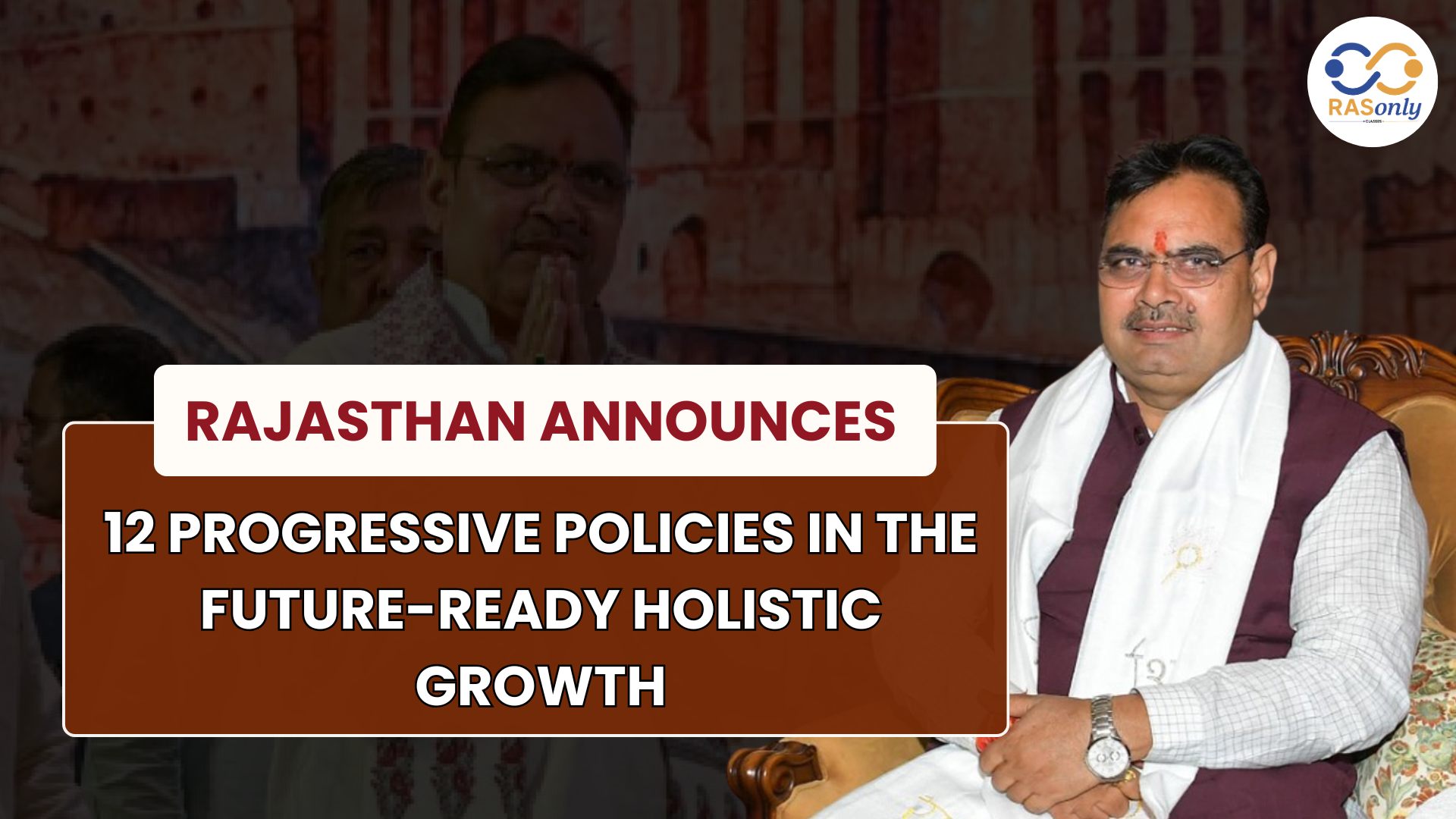
To jumpstart investment, innovation and inclusive development, Rajasthan through CM Bhajan Lal Sharma is developing a new generation of 12 progressive policies, some of which are to be rolled out by November ahead of the Pravasi Rajasthani Divas. The next framework is based on 22 previous reforms: an Industrial Policy to intensify manufacture and entrench large investments; a Trade Promotion Policy to elevate competitiveness; AI and ML and Global Capability Centre policies to lure knowledge based companies; Semiconductor and Space and Aero Defence policies to seed advanced manufacturing; and a New Tourism Policy with a push on a Green Growth Credit. The complementary moves comprise Sports, IT Outsourcing, Forest and Agro-Forestry, Agriculture and Food Processing as well as Vehicle Scrappage policy. All these are dedicated to ensuring that growth is sustainable, job oriented and globally competitive.
Key Highlights
- Reform cadence: 12 new policies after 22 previous EoDB & investment policies.
- Time to be launched: Choose policies focused on the implementation of the Pravasi Rajasthani Divas.
- Core industry thrust: industrial policy (depth of manufacturing), Trade Promotion Policy (exports and competitiveness).
- Marketing: Tech and services: AI/ML Policy; Global Capability Centre Policy to draw MNC knowledge hubs.
- High-tech manufacturing: Semiconductor Policy; Space & Aero Defence Policy of aerospace/defence value chains.
- New Tourism Policy: Green Growth Credit Policy to promote green projects; Sustainability and tourism: New Tourism Policy (heritage/eco/rural); Green Growth Credit Policy to incentivise green projects.
- Human capital and rural focus: Sports Policy (infrastructure and talent); IT Outsourcing, Forest and Agro- forestry, Agriculture and food processing (value addition, jobs).
- Clean mobility: Vehicle Scrappage Policy in order to disposition polluting vehicles and reduce emissions.
- Official note: Principal Secretary (Industries) Alok Gupta: policies to increase investment, innovation and job creation and cement the hub status of Rajasthan.
Policy Dashboard (at a glance)
- Investment & Jobs: Industrial, Trade Promotion, GCC, IT out Sourcing, Sports.
- This category is referred to as Innovation and Tech. This one is called Ai/ml, Semiconductor, Space and Aero Defence.
- Green and Sustainable: Forest and Agro-Forestry, Green Growth Credit, Vehicle Scrappage.
- Rural & Value Addition: Agriculture and Food Processing.
- Webpage: New Tourism (heritage, eco, rural circuits).
RAS Exam Pointers
- Focus on sunrise sectors) (AI/ML, semiconductor, space/aero-defence) + green transition (scrappage, green credit).
- GCC policy = services exports and a high level of skilled employment; Agriculture and Food Processing = farm-to-market value chains.
- Tourism specialization on heritage/eco/rural coincides with the comparative advantage of Rajasthan.
Conclusion
The 12-policy package of Rajasthan bodes a move towards sectoral adjustments to a whole-of-economy package that delivers an alliance between industrial intensity and technology leadership and green development. The state is located as a place of investment, innovation, jobs with specific incentives, talent growth, and sustainability tools, and guarantees connections to the countryside and smoother mobility.
MCQs (English)
1. Which two are most appropriate as far as the push by Rajasthan towards advanced manufacturing under the new package is concerned?
A. Tourism Policy + Sports Policy.
B. Semiconductor Policy + Space Aero Defence Policy.
C. Forest and Agro-Forestry Policy + IT outsource policy.
D. Agriculture and Food Processing Policy + Green Growth Credit Policy.
Answer: B
The Semiconductor Policy is used to establish electronics fabrication/ATMP ecosystems and the Space & Aero Defence Policy is used to establish aerospace/defence manufacturing- collectively forming the advanced-manufacturing thrust.
2. The main aim of the Global Capability Centre (GCC) Policy is:
A. Subsidise farm inputs in arid regions.
B. Host MNC knowledge/service centers and quality jobs.
C. Replace MSMEs with PSUs
D. Control mineral royalties.
Answer: B
Explanation : GCC policies are crafted with the aim of establishing multinational captive centres in technology, analytics, finance and shared services, which will generate employment and services exportation of high skill.
3. Which is the most directly related policy to the objective? The Vehicle Scrappage Policy?
A. Heritage tourism curation
B. Carbon and criteria pollutant reduction through modernisation of fleet.
C. Expansion of forest canopy
D. Promoting space R and D grants.
Answer: B
The objective of this policy is to retire old vehicles with high-emission levels, and to encourage replacements with cleaner vehicles to reduce the level of emissions and enhance the quality of the urban air in addition to the circle-economy performance
भविष्योन्मुख समग्र विकास हेतु राजस्थान ने 12 प्रगतिशील नीतियों की घोषणा की।
मुख्यमंत्री श्री भजन लाल शर्मा के नेतृत्व में राजस्थान 12 प्रगतिशील नीतियाँ ला रहा है—जिनमें से कुछ प्रवासी राजस्थानी दिवस से पहले लॉन्च की जा सकती हैं। 22 पूर्व नीतियों के आधार पर यह पैकेज निवेश, नवाचार और समावेशी विकास को गति देगा। औद्योगिक नीति से विनिर्माण व बड़े निवेश, ट्रेड प्रोमोशन से प्रतिस्पर्धात्मकता, AI/ML व GCC नीतियों से ज्ञान-आधारित उद्यम, सेमीकंडक्टर व स्पेस-एयरो डिफेन्स से उन्नत विनिर्माण को बढ़ावा मिलेगा। नई पर्यटन नीति (हेरिटेज/ईको/रूरल) को ग्रीन ग्रोथ क्रेडिट से बल मिलेगा। स्पोर्ट्स, IT आउटसोर्सिंग, फॉरेस्ट एवं एग्रो-फॉरेस्ट्री, कृषि एवं फूड प्रोसेसिंग तथा व्हीकल स्क्रैपेज नीतियाँ रोजगार, मूल्य संवर्धन और स्वच्छ गतिशीलता को साधेंगी। सामूहिक रूप से, यह ढाँचा सतत, प्रतिस्पर्धी और समावेशी विकास का रोडमैप प्रस्तुत करता है।
प्रमुख बिंदु
- सुधार निरंतरता: ईज ऑफ डूइंग बिज़नेस व निवेश हेतु 22 नीतियों के बाद 12 नई नीतियाँ।
- समयरेखा: कुछ नीतियाँ प्रवासी राजस्थानी दिवस से पहले।
- उद्योग व प्रतिस्पर्धा: औद्योगिक नीति, ट्रेड प्रोमोशन नीति।
- टेक-सेवाएँ: AI/ML नीति, GCC नीति (MNC ज्ञान/सेवा हब)।
- उन्नत विनिर्माण: सेमीकंडक्टर, स्पेस एवं एयरो डिफेन्स नीति।
- पर्यटन व हरित वृद्धि: नई पर्यटन नीति (हेरिटेज/ईको/ग्रामीण); ग्रीन ग्रोथ क्रेडिट से हरित परियोजनाएँ।
- मानव पूंजी/ग्रामीण फोकस: स्पोर्ट्स, IT आउटसोर्सिंग, फॉरेस्ट एवं एग्रो-फॉरेस्ट्री, कृषि एवं फूड प्रोसेसिंग।
- स्वच्छ गतिशीलता: व्हीकल स्क्रैपेज नीति से पुराने प्रदूषणकारी वाहनों का चरणबद्ध हटाना।
- आधिकारिक वक्तव्य: आलोक गुप्ता (प्रमुख सचिव, उद्योग)—नीतियाँ निवेश, नवाचार, रोजगार को बढ़ाएँगी और राजस्थान को सतत विकास का हब बनाएँगी।
आरएएस परीक्षा संकेत
- सनराइज़ सेक्टर्स + ग्रीन ट्रांजिशन पर फोकस (AI/ML, सेमीकंडक्टर, स्पेस/डिफेन्स; स्क्रैपेज, ग्रीन क्रेडिट)।
- GCC नीति = उच्च-कौशल सेवाएँ/निर्यात; कृषि-फूड प्रोसेसिंग = मूल्य-श्रृंखला मज़बूत।
- पर्यटन विविधीकरण: हेरिटेज, ईको, ग्रामीण सर्किट।
निष्कर्ष
12-नीति पैकेज राजस्थान को औद्योगिक गहराई, तकनीकी नेतृत्व और हरित विकास की संयुक्त दिशा देता है। लक्षित प्रोत्साहन, प्रतिभा-विकास व स्थिरता उपकरणों के साथ राज्य निवेश, नवाचार और रोजगार में राष्ट्रीय अग्रणी बनने के लिए तैयार है—साथ ही ग्रामीण संपर्क और स्वच्छ गतिशीलता सुनिश्चित करता है।
बहुविकल्पीय प्रश्न (हिन्दी)
1. उन्नत विनिर्माण (Advanced Manufacturing) को बढ़ाने हेतु सही जोड़ी कौन-सी है?
A. पर्यटन नीति + खेल नीति
B. सेमीकंडक्टर नीति + स्पेस एवं एयरो डिफेन्स नीति
C. फॉरेस्ट एवं एग्रो-फॉरेस्ट्री + IT आउटसोर्सिंग नीति
D. कृषि एवं फूड प्रोसेसिंग + ग्रीन ग्रोथ क्रेडिट नीति
उत्तर: B
व्याख्या: सेमीकंडक्टर उन्नत इलेक्ट्रॉनिक्स निर्माण को, जबकि स्पेस-एयरो डिफेन्स एयरोस्पेस/डिफेन्स विनिर्माण को बढ़ावा देती है—यह संयुक्त रूप से एडवांस्ड मैन्युफैक्चरिंग की धुरी हैं।
2. GCC ग्लोबल कैपेबिलिटी सेंटर) का प्रमुख डिलिवरेबल क्या है?
A. शुष्क जिलों में कृषि सब्सिडी बढ़ाना
B. बहुराष्ट्रीय कंपनियों के नॉलेज/सेवा हब आकर्षित कर उच्च-कौशल रोजगार सृजित करना
C. MSMEs को PSUs से प्रतिस्थापित करना
D. खनिज रॉयल्टी नियमन
उत्तर: B
व्याख्या: GCC नीति प्रौद्योगिकी, विश्लेषण, वित्त व साझा सेवाओं के लिए MNC कैप्टिव सेंटर लाने पर केंद्रित है, जिससे सेवाओं का निर्यात व उच्च-कौशल नौकरियाँ बढ़ती हैं।
3. व्हीकल स्क्रैपेज नीति का सबसे प्रत्यक्ष लक्ष्य क्या है?
A. हेरिटेज पर्यटन का क्यूरेशन
B. पुराने/प्रदूषणकारी वाहनों के चरणबद्ध हटाने से कार्बन व प्रदूषकों में कमी
C. वन आच्छादन में वृद्धि
D. अंतरिक्ष अनुसंधान अनुदान को प्रोत्साहन
उत्तर: B
व्याख्या: स्क्रैपेज नीति जीवन-अंत वाहनों को हटाकर स्वच्छ विकल्पों को बढ़ावा देती है, जिससे उत्सर्जन घटता है, वायु गुणवत्ता सुधरती है और परिपत्र अर्थव्यवस्था को बल मिलता है।