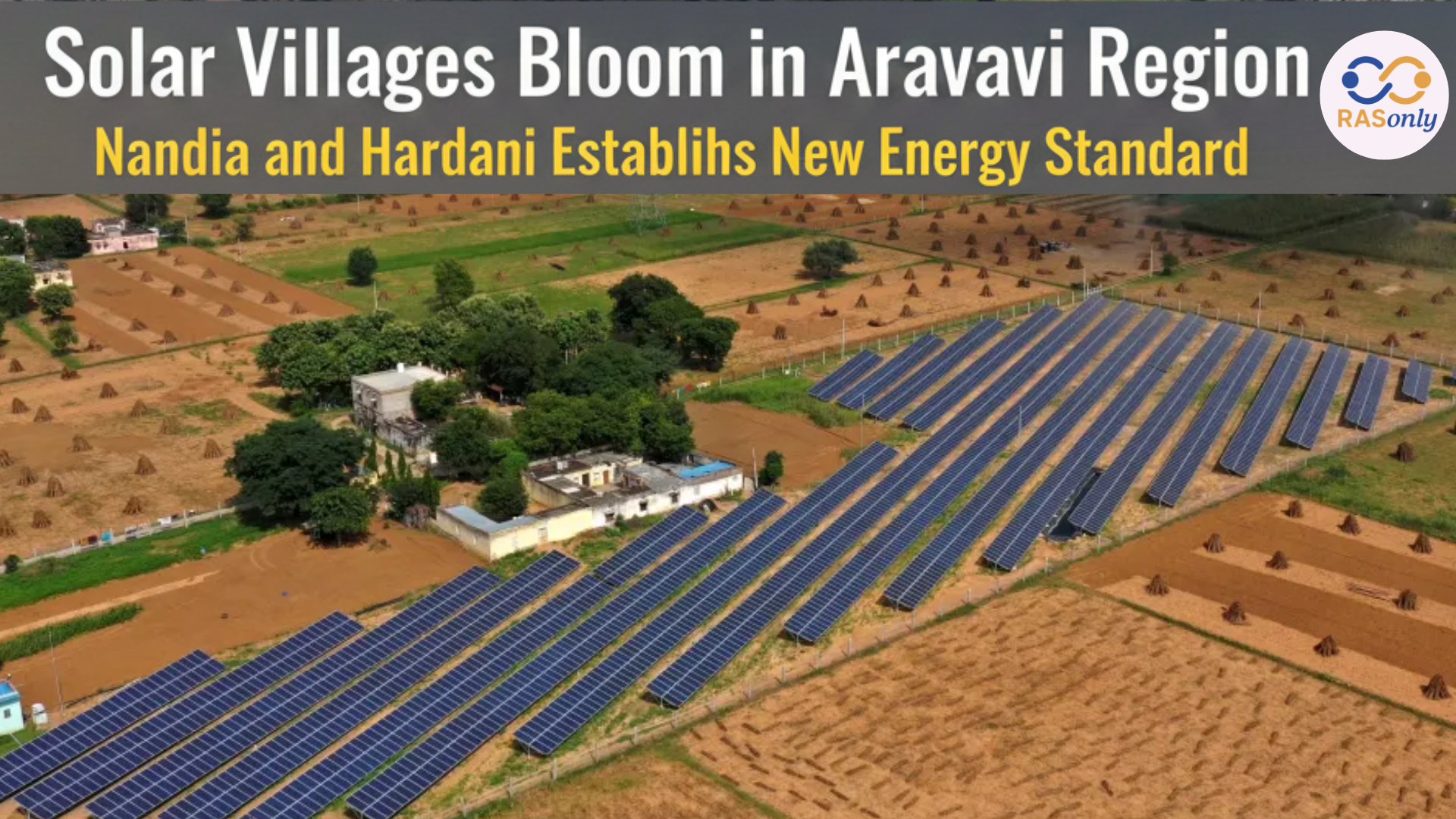
A new chapter in India’s solar energy revolution has begun in the rugged Aravalli hills. Despite the perception that solar parks require flat land, the villages of Nandia and Hardani in Jodhpur district have demonstrated a powerful transition by harnessing solar energy in rocky and uneven terrain. Solar power plants spread across nearly 2,000 bighas—with a total capacity of 100 megawatts—have transformed previously unproductive land into a major clean energy zone.
Key Highlights of the Solar Transformation
- Solar plants of 100 MW capacity have been installed across 2,000 bighas of rocky Aravalli land.
- The terrain was earlier considered unsuitable for any productive use.
- Solar developers stabilized rugged slopes, enabling erosion-free installation.
- The project is operated by a company based in Delhi.
- These villages now serve as a model for producing solar energy in difficult geographical landscapes.
- The transformation proves that clean energy potential is not limited to flat land; even hard rocky surfaces can become renewable energy hubs.
Objectives and Benefits
Objectives
- Expand solar energy production in geographically challenging regions.
- Convert barren, desert-like, or rocky land into productive energy villages.
- Support India's clean energy transition, especially in semi-arid zones.
Benefits
- Strengthens Rajasthan’s leadership in renewable energy.
- Enhances land utilization in areas once deemed non-productive.
- Prevents soil erosion through terrain stabilization.
- Generates rural development opportunities and local employment.
- Demonstrates scalability of solar installations in harsh terrains nationwide.
Conclusion
The solar villages of Nandia and Hardani reflect India's innovative vision for renewable energy growth. By turning the rugged Aravalli hills into a productive solar hub, Rajasthan has shown that clean energy can thrive even in difficult landscapes. This model offers valuable insights for future renewable energy projects across challenging terrains in the country.
MCQs (English)
1. What is the cumulative solar power capacity installed in Nandia and Hardani villages?
a) 50 MW
b) 75 MW
c) 100 MW
d) 150 MW
Answer :- C
Explanation:
Solar projects with a combined capacity of 100 megawatts have been installed over 2,000 bighas of rocky land, showcasing effective use of an area previously considered unproductive.
2. Which misconception does the Aravalli solar project disprove?
a) Solar parks require desert land
b) Solar parks require coastal areas
c) Solar parks require flat land
d) Solar parks require fertile soil
Answer :- C
Explanation:
The successful installation of solar plants in hilly, uneven, rocky terrain proves that solar parks are not limited to flat land. Nandia and Hardani demonstrate that renewable energy can be generated even in challenging geographies.
3. What was the earlier condition of the land where the solar park was constructed?
a) Fertile agricultural land
b) Industrial wasteland
c) Unusable rocky terrain
d) Wetland area
Answer :- C
Explanation:
The land in Nandia and Hardani villages was rocky and classified as unproductive. The solar project transformed this difficult terrain into a productive renewable energy site, highlighting innovative land utilization.
अरावली क्षेत्र में खिले सोलर गांव – नांदिया और हरदानी बने नई ऊर्जा के प्रतीक
भारत में सौर ऊर्जा क्रांति का एक नया अध्याय अरावली पर्वतमाला के कठिन और पथरीले भूभाग में लिखा जा रहा है। जहाँ यह माना जाता था कि सोलर पार्कों के लिए सपाट भूमि आवश्यक होती है, वहीं जोधपुर जिले के नांदिया और हरदानी गांवों ने पथरीले और ऊबड़-खाबड़ क्षेत्र में सौर ऊर्जा का अद्भुत उपयोग कर एक नया उदाहरण प्रस्तुत किया है। लगभग 2,000 बीघा भूमि पर 100 मेगावाट क्षमता के सोलर प्लांट स्थापित किए गए हैं, जिससे पहले अनुपयोगी मानी जाने वाली भूमि अब नवीकरणीय ऊर्जा का प्रमुख केंद्र बन गई है।
सोलर विकास की मुख्य विशेषताएँ
- 100 मेगावाट क्षमता के सोलर प्लांट 2,000 बीघा पथरीली अरावली भूमि पर स्थापित किए गए।
- यह क्षेत्र पहले किसी भी प्रकार के उत्पादक उपयोग के लिए अनुपयुक्त माना जाता था।
- सोलर डेवलपर्स ने ढलानों को स्थिर किया, कटाव रोका और पैनल स्थापना संभव बनाई।
- परियोजना का संचालन दिल्ली की एक कंपनी द्वारा किया जा रहा है।
- ये गांव अब कठिन भौगोलिक परिस्थितियों में भी सौर ऊर्जा उत्पादन के सफल मॉडल बन गए हैं।
- यह सिद्ध हो गया है कि स्वच्छ ऊर्जा केवल सपाट भूमि पर ही संभव नहीं, बल्कि पथरीले भूभाग भी नवीकरणीय ऊर्जा केंद्र बन सकते हैं।
उद्देश्य एवं लाभ
उद्देश्य
- भौगोलिक रूप से चुनौतीपूर्ण क्षेत्रों में सौर ऊर्जा उत्पादन को बढ़ाना।
- बंजर, पथरीली और मरुस्थलीय भूमि को ऊर्जा गांवों में बदलना।
- विशेषकर अर्ध-शुष्क क्षेत्रों में भारत की स्वच्छ ऊर्जा यात्रा को मजबूत करना।
लाभ
- राजस्थान की नवीकरणीय ऊर्जा नेतृत्व क्षमता और मजबूत होती है।
- पहले अनुपयोगी मानी जाने वाली भूमि का बेहतर उपयोग संभव हुआ।
- भू-कटाव रोकने में मदद मिली और ढलानों को स्थिर किया गया।
- ग्रामीण विकास और स्थानीय रोजगार को प्रोत्साहन मिला।
- यह मॉडल देशभर में कठिन भूभागों पर सौर ऊर्जा स्थापना की संभावनाओं को दर्शाता है।
निष्कर्ष
नांदिया और हरदानी के सोलर गांव भारत की नवीकरणीय ऊर्जा के प्रति नवाचारपूर्ण सोच का उत्कृष्ट उदाहरण हैं। अरावली की पथरीली पहाड़ियों को सौर ऊर्जा केंद्र में बदलकर राजस्थान ने साबित किया है कि स्वच्छ ऊर्जा कठिन भू-भागों में भी फल-फूल सकती है। यह मॉडल देशभर में चुनौतीपूर्ण भौगोलिक परिस्थितियों में भविष्य की ऊर्जा परियोजनाओं के लिए मार्गदर्शक बन सकता है।
बहुविकल्पीय प्रश्न
1. नांदिया और हरदानी गांवों में स्थापित सौर क्षमता कितनी है?
a) 50 मेगावाट
b) 75 मेगावाट
c) 100 मेगावाट
d) 150 मेगावाट
उत्तर :- c
व्याख्या:
लगभग 2,000 बीघा पथरीली भूमि पर 100 मेगावाट क्षमता के सोलर प्लांट स्थापित किए गए, जो पहले अनुपयोगी क्षेत्र को उपयोगी नवीकरणीय ऊर्जा स्थल में बदलते हैं।
2. अरावली सोलर परियोजना ने किस मिथक को गलत साबित किया?
a) सोलर पार्क के लिए मरुस्थल आवश्यक है
b) सोलर पार्क के लिए समुद्री तट चाहिए
c) सोलर पार्क के लिए सपाट भूमि जरूरी है
d) सोलर पार्क के लिए कृषि मिट्टी की आवश्यकता है
उत्तर :- c
व्याख्या:
अरावली के ऊबड़-खाबड़ और पथरीले इलाके में सफलतापूर्वक सोलर प्लांट स्थापित कर यह सिद्ध किया गया कि सोलर पार्क केवल सपाट भूमि पर ही संभव नहीं हैं। कठिन भूभाग भी ऊर्जा उत्पादन के लिए उपयुक्त बनाए जा सकते हैं।
3. जिस भूमि पर सोलर पार्क स्थापित किया गया, उसकी पूर्व स्थिति क्या थी?
a) उपजाऊ कृषि भूमि
b) औद्योगिक कचरा भूमि
c) अनुपयोगी पथरीला भूभाग
d) जलभराव क्षेत्र
उत्तर :- c
व्याख्या:
नांदिया और हरदानी गांवों की भूमि पथरीली और अनुपयोगी मानी जाती थी, लेकिन सोलर परियोजना ने इसे एक अत्यंत उत्पादक नवीकरणीय ऊर्जा केंद्र में बदल दिया