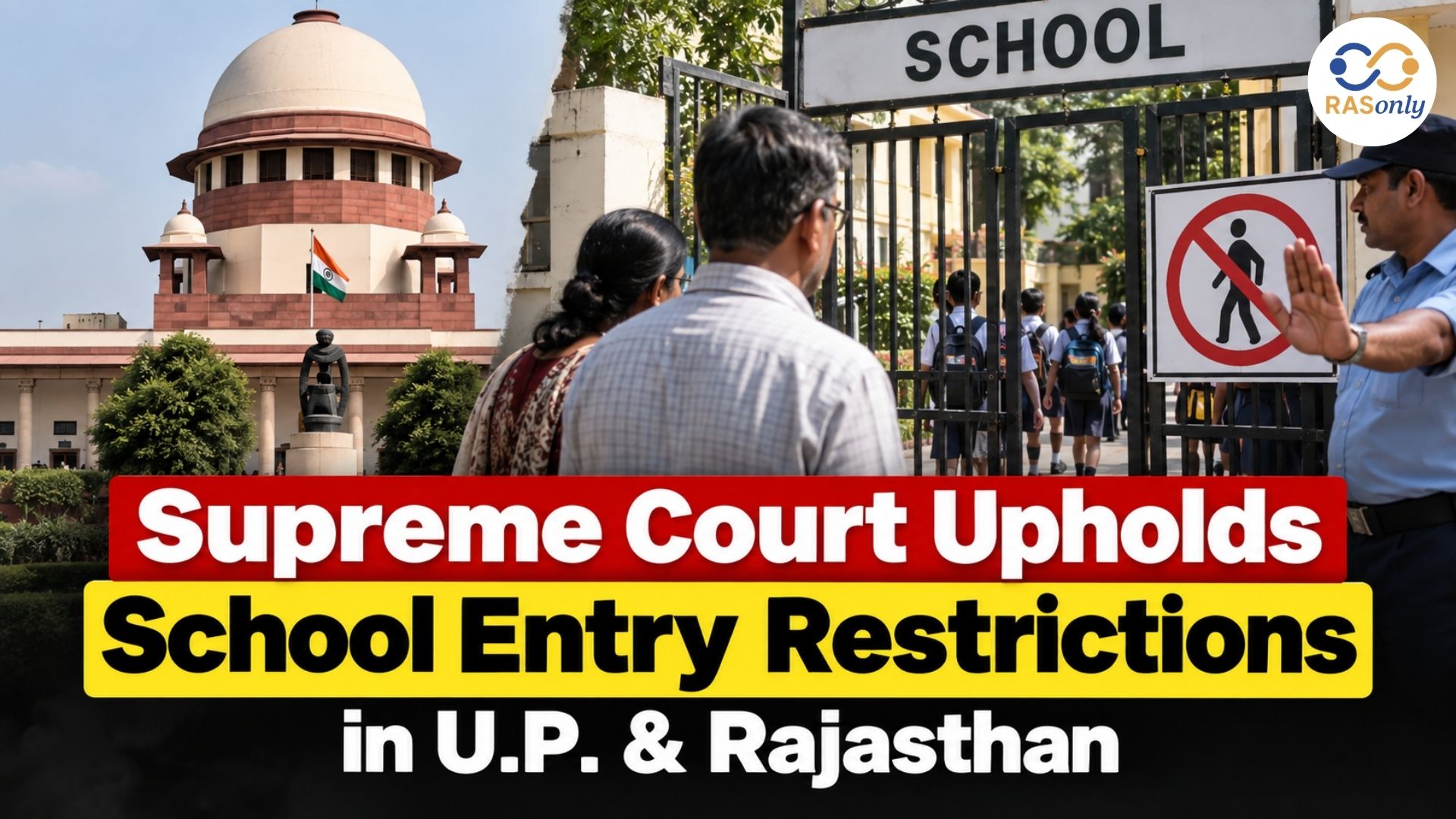
On September 3, 2026, the Supreme Court refused to address a petition against the Uttar Pradesh and Rajasthan governments' ban on journalists, social media influencers, and civil rights activists accessing government schools. The restrictions also cover photography, videography, interviews, audio recording, and livestreaming.
Key Highlights
|
|
|
|
|
|
|
|
|
|
|
|
|
|
|
|
|
|
|
|
|
Why Is It Important?
The concern is significant as it could impact independent reporting and public exposure of government schools. Documentation can help highlight the condition of classrooms, toilets, drinking-water facilities, electricity, and other basic infrastructure.
‘School Thik Karo’ Campaign
The plea came soon after the ‘School Thik Karo’ campaign by CJP, which seeks to audit and improve neglected infrastructure in government schools, especially in rural areas.
Conclusion
The Supreme Court's decision means that the challenged restrictions will continue for now. The issue is significant as it brings to light the balance between security at school and public accountability. Continuing to follow administrative rules with proper documentation can help identify infrastructure gaps.
MCQs
1. Which court declined to entertain the plea?
A. High Court
B. Supreme Court
C. District Court
D. NGT
Answer: B. Supreme Court
2. Which states imposed the restrictions?
A. Rajasthan and Haryana
B. U.P. and Bihar
C. U.P. and Rajasthan
D. Rajasthan and Gujarat
Answer: C. U.P. and Rajasthan
3. Under which Article was the petition filed?
A. Article 14
B. Article 19
C. Article 21
D. Article 32
Answer: D. Article 32
4. What is the aim of the ‘School Thik Karo’ campaign?
A. Teacher recruitment
B. School infrastructure improvement
C. Sports promotion
D. Digital examinations
Answer: B. School infrastructure improvement
सुप्रीम कोर्ट ने यू.पी. और राजस्थान में स्कूल प्रवेश प्रतिबंध बरकरार रखे
3 सितंबर, 2026 को सुप्रीम कोर्ट ने उत्तर प्रदेश और राजस्थान सरकारों द्वारा सरकारी स्कूलों में पत्रकारों, सोशल मीडिया इन्फ्लुएंसर्स और नागरिक अधिकार कार्यकर्ताओं के प्रवेश पर लगाए गए प्रतिबंध के खिलाफ दायर याचिका पर विचार करने से इनकार कर दिया। इन प्रतिबंधों में फोटोग्राफी, वीडियोग्राफी, इंटरव्यू, ऑडियो रिकॉर्डिंग और लाइवस्ट्रीमिंग भी शामिल हैं।
मुख्य बिंदु
|
|
|
|
|
|
|
|
|
|
|
|
|
|
|
|
|
|
|
|
|
यह महत्वपूर्ण क्यों है?
यह चिंता महत्वपूर्ण है क्योंकि इससे सरकारी स्कूलों की स्वतंत्र रिपोर्टिंग और सार्वजनिक जानकारी प्रभावित हो सकती है। दस्तावेजीकरण से कक्षाओं, शौचालयों, पेयजल सुविधाओं, बिजली और अन्य बुनियादी ढांचे की स्थिति को सामने लाने में मदद मिल सकती है।
‘स्कूल ठीक करो’ अभियान
यह याचिका CJP के ‘स्कूल ठीक करो’ अभियान के तुरंत बाद आई, जिसका उद्देश्य सरकारी स्कूलों, विशेष रूप से ग्रामीण क्षेत्रों में, उपेक्षित बुनियादी ढांचे का ऑडिट करना और उसमें सुधार करना है।
निष्कर्ष
सुप्रीम कोर्ट के फैसले का मतलब है कि फिलहाल चुनौती दिए गए प्रतिबंध जारी रहेंगे। यह मुद्दा महत्वपूर्ण है क्योंकि यह स्कूलों की सुरक्षा और सार्वजनिक जवाबदेही के बीच संतुलन को सामने लाता है। उचित दस्तावेजीकरण प्रशासनिक नियमों का पालन करते हुए बुनियादी ढांचे की कमियों की पहचान करने में मदद कर सकता है।
MCQs
1. याचिका पर विचार करने से किस न्यायालय ने इनकार किया?
A. हाई कोर्ट
B. सुप्रीम कोर्ट
C. जिला न्यायालय
D. NGT
उत्तर: B. सुप्रीम कोर्ट
2. किन राज्यों ने प्रतिबंध लगाए?
A. राजस्थान और हरियाणा
B. यू.पी. और बिहार
C. यू.पी. और राजस्थान
D. राजस्थान और गुजरात
उत्तर: C. यू.पी. और राजस्थान
3. याचिका किस अनुच्छेद के तहत दायर की गई थी?
A. अनुच्छेद 14
B. अनुच्छेद 19
C. अनुच्छेद 21
D. अनुच्छेद 32
उत्तर: D. अनुच्छेद 32
4. ‘स्कूल ठीक करो’ अभियान का उद्देश्य क्या है?
A. शिक्षक भर्ती
B. स्कूल के बुनियादी ढांचे में सुधार
C. खेलों को बढ़ावा देना
D. डिजिटल परीक्षाएं
उत्तर: B. स्कूल के बुनियादी ढांचे में सुधार