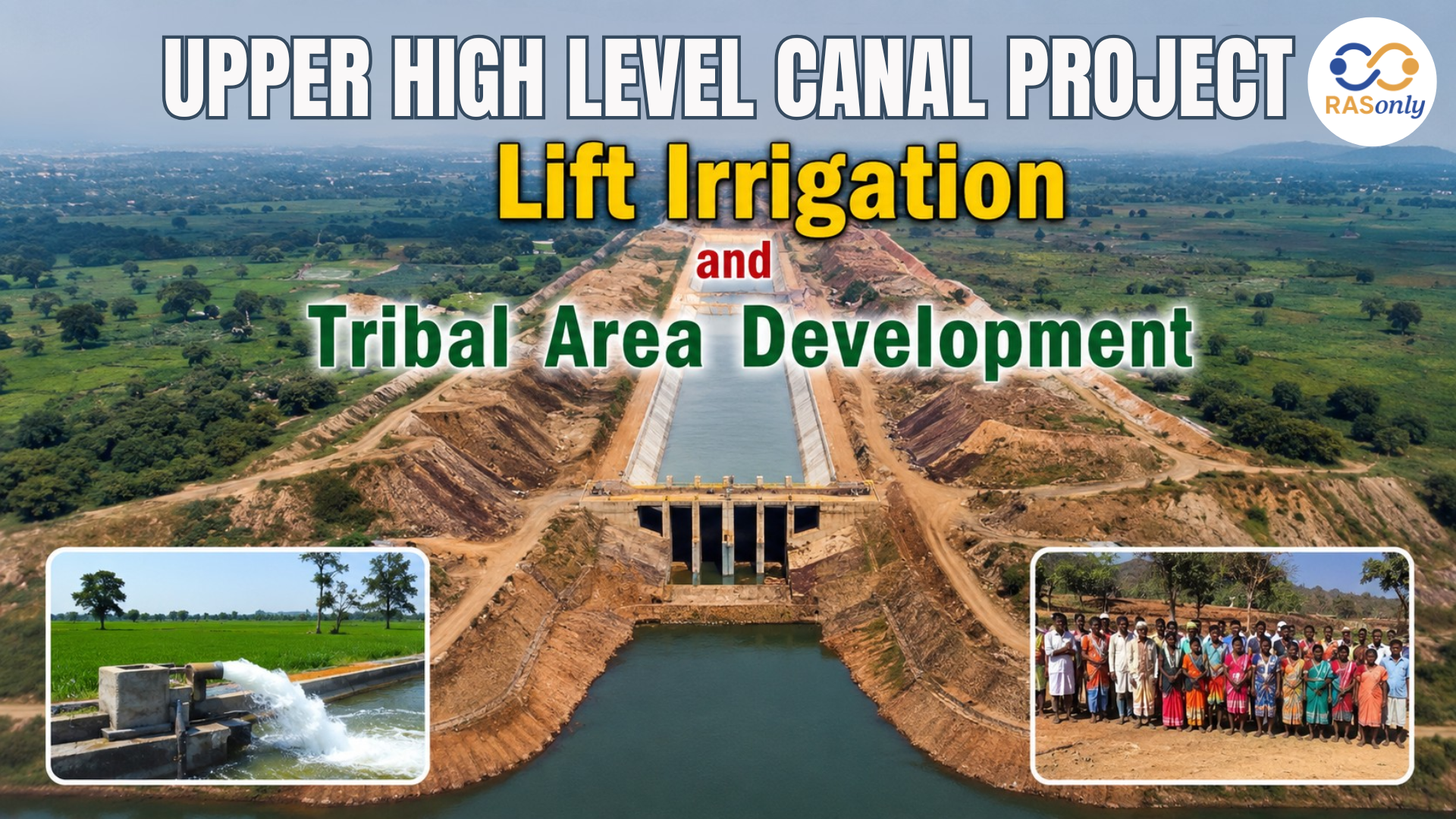
The Upper High Level Canal Project is an important irrigation project being developed in Rajasthan’s Banswara district. The project is expected to transform the Vagad region towards water self-reliance. It seeks to supply lift irrigation facilities to the tribal-controlled areas and enhance the agricultural production, rural economy and income of farmers. The project will be implemented in 338 villages in 6 tehsils of the Banswara district, with an estimated cost of ₹2,500 crore. It will be able to irrigate almost 42,000 hectares of agriculture land and directly or indirectly benefit around 3.5 lakh individuals.
The Upper High Level Canal Project's key features are:
The project cost is estimated to be approximately ₹2,500 crore.
It will boost 338 villages of Banswara district.
- Around 42,000 hectares of agricultural land will get irrigation water through the lift irrigation system.
- The project will be implemented in 3 Assembly constituencies of Banswara, Bagidora and Kushalgarh.
- It will encompass 6 tehsils – Banswara, Bagidora, Kushalgarh, Sajjangarh, Anandpuri and Gangadtalai.
- The length of the main canal is 102 kilometres.
- The construction of about 22.50 kilometres of tunnels, cut and cover structures, aqueducts and siphons is in progress.
- Nearly 230 other canal related structures including super passages, drainage siphons, road bridges, escape/cross regulators and head regulators are included.
Pressure-Based Irrigation System
The Command Area evolved as follows.
- Under the project, a modern command area is being developed by hydro pressure.
- Scientific and controlled irrigation will be assured right down to the farm.
- In each chak, around 200 storage tanks will be set up for every 200 hectares of irrigated area.
- These storage tanks will be fed with water from the main canal system by MS pipeline and DI pipeline.
- Of these storage tanks, almost 5,000 kilometres of underground piping, which is made of HDPE, will be built.
- This network will be used to provide water to fields via a pressurised irrigation system.
Hydrant-Based Water Supply
- Hydrants will be developed for every 1.25 to 1.50 hectares of land.
- Farmers will be able to use hydrant points to draw water for their irrigation.
- The system will assist in distributing water equally in the field.
- It will minimize the loss of water and enhance the efficiency of irrigation operations.
- The use of micro and pressurised irrigation will enable the irrigation of larger areas using smaller quantities of water.
SCADA-Based Automated Monitoring
The project will include the use of SCADA (Supervisory Control and Data Acquisition). This system will completely automate the operation and monitoring of the pressure-based irrigation network. It will assist with providing equal water distribution, automatic pressure and flow control, and live data monitoring. This will continuously monitor pumping stations, relief valves, hydrants and water flow branches.
The project is in its early stages and has not yet been completed.
- Work is currently going on in 42 kilometres of the canal.
- Almost all of the intake structure and sluice barrel work is finished.
- The construction of tunnel works, aqueducts, siphons, cut and cover constructions and underground pipeline network from canal to storage tanks is in progress at different points.
- There are regular checks on the progress of the project for prompt and transparent completion.
- Approximately 270 hectares of private land in 78 villages is being acquired based on the rules.
- Around ₹47 crore has been awarded for 211 ha of land in 67 villages.
- Already, approximately ₹15 crore compensation has been given.
- Also, the acquisition of land and transfer of forest areas are proceeding.
This is important to know for the RAS exam.
- The project is significant for the water resource management and irrigation development of Rajasthan.
- It is associated with devolution of tribal area development in the Vagad region.
- It helps in the growth of agriculture in Banswara district.
- It demonstrates the application of modern technology for irrigation including pressurised irrigation, underground HDPE pipelines and monitoring through SCADA system.
- It is applicable to issues such asWater Conservation, Rural Development, Agriculture, and Tribal Development and Regional Planning.
Expected Benefits
Agricultural Benefits
- Farmers will get irrigation facilities throughout the year after completion of the project.
- Agricultural production will be expected to rise.
- Maize, wheat, pulses, oilseeds and horticulture crops have a high chance of an increase in area.
- Improved irrigation will lead to improved farmers' income.
Social and Economic Benefits
- The project will boost rural economy in Banswara district.
- It will encourage social and economic development in tribal dominated areas.
- It will help to enhance groundwater quality and conserve water.
- It will make a contribution to the overall development of the Vagad region
Conclusion
The Upper High Level Canal Project is one of the biggest irrigation projects in Vagad, Rajasthan. It will promote water conservation, rural development and increase the capacity of agriculture through lift irrigation to 338 villages and 42,000 hectares of agricultural land. It is a modern and exam relevant project in the development model of Rajasthan with the use of SCADA and pressurised irrigation.
MCQs
MCQ 1: The Upper High Level Canal Project is mainly associated with which district of Rajasthan?
A. Udaipur
B. Banswara
C. Dungarpur
D. Pratapgarh
Answer: B. Banswara
Explanation : The Upper High Level Canal Project is being constructed in Banswara district of Rajasthan. It is expected to benefit 338 villages in 6 tehsils and lift irrigation facilities for about 42 thousand hectares of agricultural lands. The area of the project is particularly significant for the tribal dominated area of Vagad.
MCQ 2: Which of the following technologies is being used for automated monitoring in the Upper High Level Canal Project?
A. GIS
B. Blockchain
C. SCADA
D. LiDAR
Answer: C. SCADA
Explanation: The project will use SCADA, which stands for Supervisory Control and Data Acquisition. It will help in automated monitoring and control of the pressure-based irrigation system, including water flow, pressure regulation, pumping stations, relief valves and hydrants.
MCQ 3: The Upper High Level Canal Project is used for ?
A. It will irrigate almost 42 thousand hectares of agricultural land.
B. It is only being developed for drinking water supply in Jaipur.
C. The length of its main canal is 22.50 kilometres.
D. It will be beneficial only to one tehsil of Banswara.
Answer: A. It will water almost 42,000 ha of croplands.
Explanation: The project will provide lift irrigation to nearly 42,000 hectares of agricultural land in 338 villages of Banswara district. Its main canal length is 102 kilometres, while 22.50 kilometres refers to tunnels, cut-and-cover structures, aqueducts and siphons. It will cover 6 tehsils, not only one tehsil.
अपर हाई लेवल कैनाल परियोजना से वागड़ क्षेत्र में सिंचाई को बढ़ावा मिलेगा
अपर हाई लेवल कैनाल परियोजना राजस्थान के बांसवाड़ा जिले में विकसित की जा रही एक महत्वपूर्ण सिंचाई परियोजना है। यह परियोजना वागड़ क्षेत्र को जल आत्मनिर्भरता की दिशा में आगे बढ़ाने में महत्वपूर्ण भूमिका निभाएगी। इसका उद्देश्य जनजाति बहुल क्षेत्रों में लिफ्ट सिंचाई सुविधा उपलब्ध कराना और कृषि उत्पादन, ग्रामीण अर्थव्यवस्था तथा किसानों की आय को मजबूत करना है। लगभग ₹2,500 करोड़ की अनुमानित लागत वाली यह परियोजना बांसवाड़ा जिले की 6 तहसीलों के 338 गांवों में लागू होगी। इससे लगभग 42,000 हेक्टेयर कृषि भूमि की सिंचाई हो सकेगी और लगभग 3.5 लाख लोग प्रत्यक्ष या अप्रत्यक्ष रूप से लाभान्वित होंगे।
अपर हाई लेवल कैनाल परियोजना की प्रमुख विशेषताएं
परियोजना की लागत लगभग ₹2,500 करोड़ अनुमानित है।
यह बांसवाड़ा जिले के 338 गांवों को लाभ पहुंचाएगी।
लगभग 42,000 हेक्टेयर कृषि भूमि को लिफ्ट सिंचाई प्रणाली के माध्यम से सिंचाई जल मिलेगा।
यह परियोजना बांसवाड़ा, बागीदौरा और कुशलगढ़ नामक 3 विधानसभा क्षेत्रों में लागू होगी।
यह बांसवाड़ा, बागीदौरा, कुशलगढ़, सज्जनगढ़, आनंदपुरी और गांगड़तलाई नामक 6 तहसीलों को कवर करेगी।
मुख्य नहर की कुल लंबाई 102 किलोमीटर है।
लगभग 22.50 किलोमीटर लंबाई में सुरंगों, कट एंड कवर संरचनाओं, एक्वाडक्ट और साइफन का निर्माण प्रगति पर है।
लगभग 230 अन्य नहर संबंधी संरचनाएं भी शामिल हैं, जिनमें सुपर पैसेज, ड्रेनेज साइफन, सड़क पुल, एस्केप कम क्रॉस रेगुलेटर और हेड रेगुलेटर शामिल हैं।
दबाव आधारित सिंचाई प्रणाली
कमांड क्षेत्र का विकास
परियोजना के अंतर्गत आधुनिक दबाव आधारित कमांड क्षेत्र विकसित किया जा रहा है।
खेत स्तर तक वैज्ञानिक और नियंत्रित सिंचाई सुनिश्चित की जाएगी।
प्रत्येक 200 हेक्टेयर सिंचित क्षेत्र पर चक स्तर पर लगभग 200 भंडारण टैंक बनाए जाएंगे।
इन भंडारण टैंकों तक मुख्य नहर प्रणाली से एमएस और डीआई पाइपलाइन द्वारा पानी पहुंचाया जाएगा।
इन भंडारण टैंकों से लगभग 5,000 किलोमीटर लंबा भूमिगत एचडीपीई पाइपलाइन नेटवर्क विकसित किया जाएगा।
इस नेटवर्क के माध्यम से दबाव आधारित सिंचाई प्रणाली द्वारा खेतों तक पानी पहुंचाया जाएगा।
हाइड्रेंट आधारित जल आपूर्ति
प्रत्येक 1.25 से 1.50 हेक्टेयर भूमि के लिए हाइड्रेंट विकसित किए जाएंगे।
किसान सिंचाई के लिए हाइड्रेंट बिंदुओं से सीधे पानी प्राप्त कर सकेंगे।
यह प्रणाली खेत स्तर पर जल के समान वितरण में सहायता करेगी।
इससे जल हानि कम होगी और सिंचाई दक्षता बढ़ेगी।
सूक्ष्म और दबाव आधारित सिंचाई के उपयोग से कम पानी में अधिक क्षेत्र की सिंचाई संभव होगी।
पर्यवेक्षक नियंत्रण एवं आँकड़ा अधिग्रहण प्रणाली आधारित स्वचालित निगरानी
परियोजना में पर्यवेक्षक नियंत्रण एवं आँकड़ा अधिग्रहण प्रणाली का उपयोग किया जाएगा। यह प्रणाली दबाव आधारित सिंचाई नेटवर्क के संचालन और निगरानी को पूरी तरह स्वचालित बनाएगी। इससे जल का समान वितरण, दबाव और प्रवाह का स्वचालित नियंत्रण तथा वास्तविक समय में आँकड़ों की निगरानी संभव होगी। इस प्रणाली के माध्यम से पंपिंग स्टेशन, राहत वाल्व, हाइड्रेंट और जल प्रवाह की विभिन्न शाखाओं की लगातार निगरानी की जाएगी।
परियोजना की वर्तमान स्थिति
परियोजना अभी पूर्ण नहीं हुई है और इसका कार्य प्रगति पर है।
वर्तमान में नहर के 42 किलोमीटर हिस्से में कार्य चल रहा है।
इंटेक संरचना और स्लूइस बैरल का लगभग पूरा कार्य समाप्त हो चुका है।
सुरंग कार्य, एक्वाडक्ट, साइफन, कट एंड कवर संरचनाएं और नहर से भंडारण टैंकों तक भूमिगत पाइपलाइन नेटवर्क का निर्माण विभिन्न स्थानों पर प्रगति पर है।
परियोजना को समयबद्ध और पारदर्शी तरीके से पूरा करने के लिए नियमित निगरानी की जा रही है।
78 गांवों में लगभग 270 हेक्टेयर निजी भूमि का नियमों के अनुसार अधिग्रहण किया जा रहा है।
67 गांवों की 211 हेक्टेयर भूमि के लिए लगभग ₹47 करोड़ के अवार्ड पारित किए जा चुके हैं।
लगभग ₹15 करोड़ मुआवजा पहले ही वितरित किया जा चुका है।
शेष भूमि अधिग्रहण और वन भूमि हस्तांतरण की प्रक्रिया भी आगे बढ़ रही है।
आरएएस परीक्षा के लिए महत्व
यह परियोजना राजस्थान के जल संसाधन प्रबंधन और सिंचाई विकास के लिए महत्वपूर्ण है।
यह वागड़ क्षेत्र में जनजातीय क्षेत्र विकास से जुड़ी हुई है।
यह बांसवाड़ा जिले में कृषि विकास को सहायता देती है।
यह दबाव आधारित सिंचाई, भूमिगत एचडीपीई पाइपलाइन और स्वचालित निगरानी प्रणाली जैसी आधुनिक सिंचाई तकनीकों के उपयोग को दर्शाती है।
यह जल संरक्षण, ग्रामीण विकास, कृषि, जनजातीय विकास और क्षेत्रीय नियोजन जैसे विषयों से संबंधित है।
अपेक्षित लाभ
कृषि संबंधी लाभ
परियोजना पूर्ण होने के बाद किसानों को पूरे वर्ष सिंचाई सुविधा मिलेगी।
कृषि उत्पादन में वृद्धि की संभावना है।
मक्का, गेहूं, दलहन, तिलहन और बागवानी फसलों का क्षेत्र बढ़ने की संभावना है।
बेहतर सिंचाई से किसानों की आय में सुधार होगा।
सामाजिक और आर्थिक लाभ
यह परियोजना बांसवाड़ा जिले की ग्रामीण अर्थव्यवस्था को मजबूत करेगी।
यह जनजाति बहुल क्षेत्रों में सामाजिक और आर्थिक विकास को प्रोत्साहित करेगी।
यह भूजल स्तर सुधार और जल संरक्षण में सहायता करेगी।
यह वागड़ क्षेत्र के समग्र विकास में योगदान देगी।
निष्कर्ष
अपर हाई लेवल कैनाल परियोजना राजस्थान के वागड़ क्षेत्र की प्रमुख सिंचाई परियोजनाओं में से एक है। यह 338 गांवों और 42,000 हेक्टेयर कृषि भूमि को लिफ्ट सिंचाई सुविधा उपलब्ध कराकर जल संरक्षण, ग्रामीण विकास और कृषि क्षमता को बढ़ावा देगी। स्वचालित निगरानी प्रणाली और दबाव आधारित सिंचाई के उपयोग के कारण यह राजस्थान के विकास मॉडल की एक आधुनिक और परीक्षा की दृष्टि से महत्वपूर्ण परियोजना है।
प्रश्न
प्रश्न 1
अपर हाई लेवल कैनाल परियोजना मुख्य रूप से राजस्थान के किस जिले से संबंधित है?
A. उदयपुर
B. बांसवाड़ा
C. डूंगरपुर
D. प्रतापगढ़
उत्तर: B. बांसवाड़ा
व्याख्या: अपर हाई लेवल कैनाल परियोजना राजस्थान के बांसवाड़ा जिले में विकसित की जा रही है। इससे 6 तहसीलों के 338 गांवों को लाभ मिलेगा और लगभग 42,000 हेक्टेयर कृषि भूमि को लिफ्ट सिंचाई सुविधा उपलब्ध होगी। यह परियोजना वागड़ के जनजाति बहुल क्षेत्र के लिए विशेष रूप से महत्वपूर्ण है।
प्रश्न 2
अपर हाई लेवल कैनाल परियोजना में स्वचालित निगरानी के लिए निम्नलिखित में से किस तकनीक का उपयोग किया जा रहा है?
A. भौगोलिक सूचना प्रणाली
B. खंड-श्रृंखला तकनीक
C. पर्यवेक्षक नियंत्रण एवं आँकड़ा अधिग्रहण प्रणाली
D. प्रकाश पहचान एवं दूरी मापन तकनीक
उत्तर: C. पर्यवेक्षक नियंत्रण एवं आँकड़ा अधिग्रहण प्रणाली
व्याख्या: परियोजना में पर्यवेक्षक नियंत्रण एवं आँकड़ा अधिग्रहण प्रणाली का उपयोग किया जाएगा। यह दबाव आधारित सिंचाई प्रणाली की स्वचालित निगरानी और नियंत्रण में सहायता करेगी। इसके माध्यम से जल प्रवाह, दबाव नियंत्रण, पंपिंग स्टेशन, राहत वाल्व और हाइड्रेंट की सतत निगरानी संभव होगी।
प्रश्न 3
अपर हाई लेवल कैनाल परियोजना के संबंध में निम्नलिखित में से कौन-सा कथन सही है?
A. यह लगभग 42,000 हेक्टेयर कृषि भूमि की सिंचाई करेगी।
B. इसे केवल जयपुर में पेयजल आपूर्ति के लिए विकसित किया जा रहा है।
C. इसकी मुख्य नहर की लंबाई 22.50 किलोमीटर है।
D. यह बांसवाड़ा की केवल एक तहसील को लाभ पहुंचाएगी।
उत्तर: A. यह लगभग 42,000 हेक्टेयर कृषि भूमि की सिंचाई करेगी।
व्याख्या: अपर हाई लेवल कैनाल परियोजना से बांसवाड़ा जिले के 338 गांवों की लगभग 42,000 हेक्टेयर कृषि भूमि को लिफ्ट सिंचाई सुविधा मिलेगी। इसकी मुख्य नहर की लंबाई 102 किलोमीटर है, जबकि 22.50 किलोमीटर लंबाई सुरंगों, कट एंड कवर संरचनाओं, एक्वाडक्ट और साइफन से संबंधित है। यह परियोजना 6 तहसीलों को लाभ पहुंचाएगी।