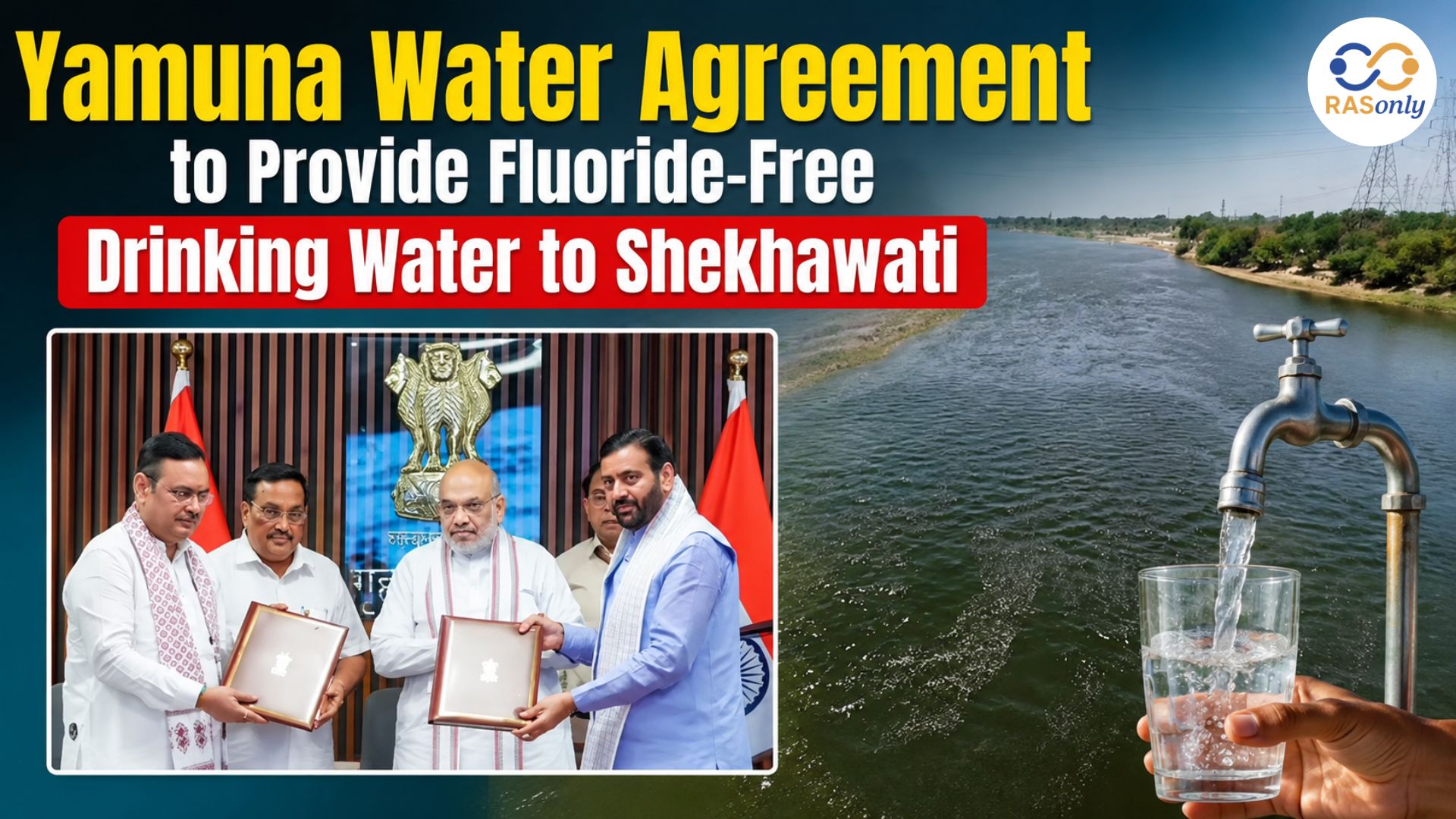
Shekhawati Foundation organized a civic felicitation for Rajasthan Chief Minister Bhajan Lal Sharma at the Birla Auditorium, Jaipur after the success of the long pending Yamuna Water Agreement. The Chief Minister during the event announced that the project will help in providing safe drinking water to the Shekhawati region and mitigate the fluoride contaminated groundwater issue, which has been a major concern for a long time.
Key Highlights
|
|
|
|
|
|
|
|
|
|
|
|
|
|
|
|
|
|
|
|
|
|
|
|
Background
The Yamuna Water Agreement is a historic project designed to address the issue of fluoride contamination in the drinking water supply in the Shekhawati region of Rajasthan, a problem that has been plaguing the area for many years. With scarce surface water, the residents have resorted to the use of underground water which is high in fluoride, causing health problems.
Major Announcement
In his address at the civic felicitation ceremony, the Chief Minister Bhajan Lal Sharma called Shekhawati a land with deep cultural roots, business acumen, and strong resilience. He said that the execution of the Yamuna Water Agreement has met the long pending demand of people and it will provide them drinking water that is cleaner and safer.The symbolic transfer of water from the Yamuna during the event was a tribute to the government's efforts to tackle the water scarcity and public health concerns of the region.
Significance of the Agreement
The project aims to reduce dependence on fluoride-rich groundwater by supplying treated Yamuna River water. This initiative is expected to:
- Provide safe and clean drinking water.
- Reduce the incidence of dental and skeletal fluorosis.
- Improve public health, especially among children and elderly citizens.
- Strengthen water security in drought-prone areas.
- Promote sustainable development across the Shekhawati region.
Public Health Importance
Fluoride contamination continues to be one of the biggest problems of drinking water in Rajasthan. Long-term exposure to water that contains too much fluoride may lead to:
- Dental Fluorosis – discoloration and damage to teeth.
- Skeletal Fluorosis – Stiffness in the joints, bone deformities and decreased mobility.
Sikar, Jhunjhunu and Churu are some of the worst affected districts as they are heavily dependent on groundwater.
Importance for Rajasthan
The Yamuna Water Agreement is another such inter-state water cooperation effort, emphasizing the need for shared river resources for the benefit of the public. Safe drinking water will enhance the health, education, productivity and quality of life in the region.
Conclusion
The Yamuna Water Agreement is a major milestone in the history of Shekhawati region of Rajasthan. The project will have a positive impact on public health by making drinking water cleaner and potentially less harmful to health, enhance water security, and contribute to the socio-economic development of one of the state's most water-stressed areas in the long-term.
MCQs
1. The Yamuna Water Agreement is expected to provide major relief to which region of Rajasthan?
A. Hadoti
B. Mewar
C. Shekhawati
D. Marwar
Answer: C. Shekhawati
2. What is the primary objective of the Yamuna Water Project?
A. Air pollution control
B. Soil conservation
C. Reducing fluoride contamination in drinking water
D. Industrial wastewater treatment
Answer: C. Reducing fluoride contamination in drinking water
3. Which districts are expected to benefit the most from the Yamuna Water Agreement?
A. Kota, Bundi and Baran
B. Jodhpur, Pali and Sirohi
C. Sikar, Jhunjhunu and Churu
D. Udaipur, Dungarpur and Banswara
Answer: C. Sikar, Jhunjhunu and Churu
4. Excess fluoride in drinking water primarily causes which diseases?
A. Malaria and Dengue
B. Typhoid and Cholera
C. Dental and Skeletal Fluorosis
D. Tuberculosis and Pneumonia
Answer: C. Dental and Skeletal Fluorosis
यमुना जल समझौते से शेखावाटी को फ्लोराइड युक्त पानी से मिलेगी राहत
शेखावाटी फाउंडेशन ने लंबे समय से लंबित यमुना जल समझौते के सफल क्रियान्वयन के बाद राजस्थान के मुख्यमंत्री भजनलाल शर्मा का बिड़ला सभागार, जयपुर में नागरिक अभिनंदन किया। इस अवसर पर मुख्यमंत्री ने घोषणा की कि यह परियोजना शेखावाटी क्षेत्र को सुरक्षित पेयजल उपलब्ध कराने और लंबे समय से चली आ रही फ्लोराइड युक्त भूजल की समस्या से राहत दिलाने में महत्वपूर्ण भूमिका निभाएगी।
मुख्य बिंदु
|
|
|
|
|
|
|
|
|
|
|
|
|
|
|
|
|
|
|
|
|
|
|
|
पृष्ठभूमि
यमुना जल समझौता राजस्थान के शेखावाटी क्षेत्र में पेयजल में फ्लोराइड की समस्या को दूर करने के उद्देश्य से शुरू की गई एक ऐतिहासिक परियोजना है। कई वर्षों से यह क्षेत्र सतही जल की कमी के कारण भूजल पर निर्भर रहा है, जिसमें फ्लोराइड की मात्रा अधिक होने से लोगों को गंभीर स्वास्थ्य समस्याओं का सामना करना पड़ता है।
प्रमुख घोषणा
नागरिक अभिनंदन समारोह को संबोधित करते हुए मुख्यमंत्री भजनलाल शर्मा ने शेखावाटी को समृद्ध सांस्कृतिक विरासत, व्यापारिक कौशल और संघर्षशील लोगों की भूमि बताया। उन्होंने कहा कि यमुना जल समझौते का क्रियान्वयन क्षेत्र के लोगों की वर्षों पुरानी मांग को पूरा करेगा और उन्हें स्वच्छ एवं सुरक्षित पेयजल उपलब्ध कराएगा।
समारोह के दौरान यमुना जल का प्रतीकात्मक रूप से शेखावाटी के कलश में जल अर्पित किया गया, जो क्षेत्र की जल समस्या और जनस्वास्थ्य संबंधी चुनौतियों के समाधान के प्रति सरकार की प्रतिबद्धता का प्रतीक था।
समझौते का महत्त्व
इस परियोजना का उद्देश्य फ्लोराइड युक्त भूजल पर निर्भरता कम करते हुए यमुना नदी का शुद्ध जल उपलब्ध कराना है। इससे निम्नलिखित लाभ होने की अपेक्षा है—
- स्वच्छ एवं सुरक्षित पेयजल की उपलब्धता।
- दंत एवं अस्थि फ्लोरोसिस के मामलों में कमी।
- विशेष रूप से बच्चों एवं बुजुर्गों के स्वास्थ्य में सुधार।
- सूखा प्रभावित क्षेत्रों में जल सुरक्षा को मजबूत करना।
- शेखावाटी क्षेत्र के सतत विकास को बढ़ावा देना।
जनस्वास्थ्य की दृष्टि से महत्त्व
राजस्थान में फ्लोराइड युक्त पेयजल आज भी सबसे बड़ी स्वास्थ्य चुनौतियों में से एक है। लंबे समय तक अधिक फ्लोराइड वाला पानी पीने से निम्नलिखित बीमारियाँ हो सकती हैं—
- दंत फ्लोरोसिस (Dental Fluorosis) – दाँतों का रंग बदलना एवं क्षति।
- अस्थि फ्लोरोसिस (Skeletal Fluorosis) – जोड़ों में जकड़न, हड्डियों में विकृति तथा चलने-फिरने में कठिनाई।
सीकर, झुंझुनूं एवं चूरू जिले भूजल पर अत्यधिक निर्भर होने के कारण इस समस्या से सबसे अधिक प्रभावित क्षेत्रों में शामिल हैं।
राजस्थान के लिए महत्त्व
यमुना जल समझौता अंतर्राज्यीय जल सहयोग का एक महत्वपूर्ण उदाहरण है, जो साझा नदी संसाधनों के बेहतर उपयोग और जनकल्याण की आवश्यकता को दर्शाता है। सुरक्षित पेयजल की उपलब्धता से स्वास्थ्य, शिक्षा, उत्पादकता और जीवन स्तर में सुधार होगा।
निष्कर्ष
यमुना जल समझौता राजस्थान के शेखावाटी क्षेत्र के लिए एक ऐतिहासिक उपलब्धि है। यह परियोजना स्वच्छ पेयजल उपलब्ध कराकर फ्लोराइड जनित स्वास्थ्य समस्याओं को कम करने, जल सुरक्षा को मजबूत बनाने तथा राज्य के सबसे अधिक जल संकट वाले क्षेत्रों में से एक के दीर्घकालिक सामाजिक एवं आर्थिक विकास को गति देने में महत्वपूर्ण भूमिका निभाएगी।
MCQs
1. यमुना जल समझौते से राजस्थान के किस क्षेत्र को सबसे अधिक लाभ मिलने की उम्मीद है?
A. हाड़ौती
B. मेवाड़
C. शेखावाटी
D. मारवाड़
उत्तर: C. शेखावाटी
2. यमुना जल परियोजना का मुख्य उद्देश्य क्या है?
A. वायु प्रदूषण नियंत्रण
B. मृदा संरक्षण
C. पेयजल में फ्लोराइड प्रदूषण को कम करना
D. औद्योगिक अपशिष्ट जल का उपचार
उत्तर: C. पेयजल में फ्लोराइड प्रदूषण को कम करना
3. यमुना जल समझौते से मुख्य रूप से किन जिलों को लाभ मिलेगा?
A. कोटा, बूंदी एवं बारां
B. जोधपुर, पाली एवं सिरोही
C. सीकर, झुंझुनूं एवं चूरू
D. उदयपुर, डूंगरपुर एवं बांसवाड़ा
उत्तर: C. सीकर, झुंझुनूं एवं चूरू
4. पेयजल में अत्यधिक फ्लोराइड होने से मुख्य रूप से कौन-सी बीमारियाँ होती हैं?
A. मलेरिया एवं डेंगू
B. टायफाइड एवं हैजा
C. दंत एवं अस्थि फ्लोरोसिस
D. तपेदिक एवं निमोनिया
उत्तर: C. दंत एवं अस्थि फ्लोरोसिस