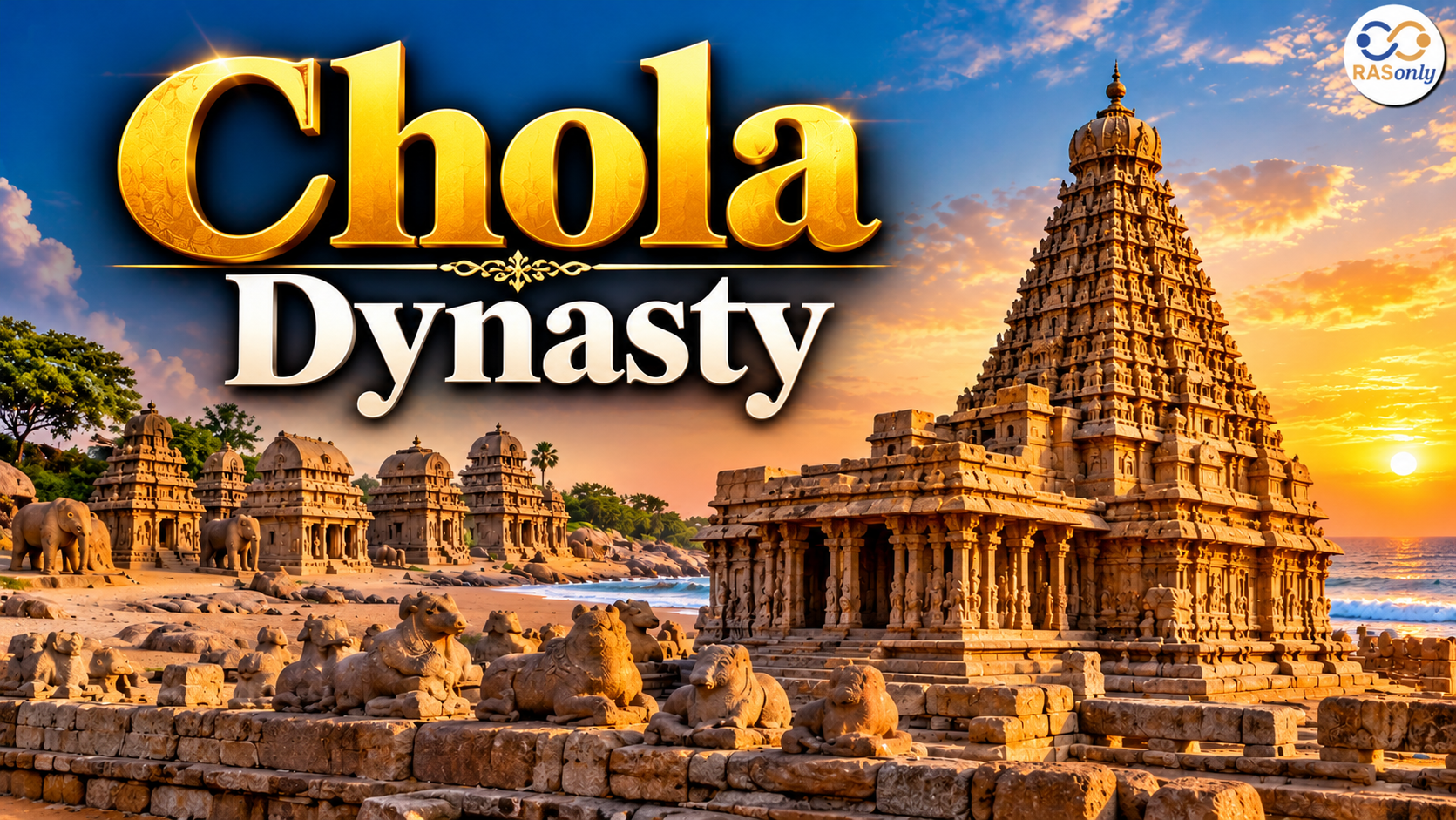
Chola Dynasty: Capital, Founder, Kings, Time Period and History
Indian Economy Topic-wise Questions for RAS 2026 (Prelims & Mains) | MCQs & Complete Preparation

Get in Touch with RASonly!

Practice Indian Economy topic-wise questions for RAS 2026 with important MCQs and concept-based coverage. This helps you build clarity, improve accuracy, and understand key economic topics easily. Stay consistent with revision and practice to score better in the RAS exam.

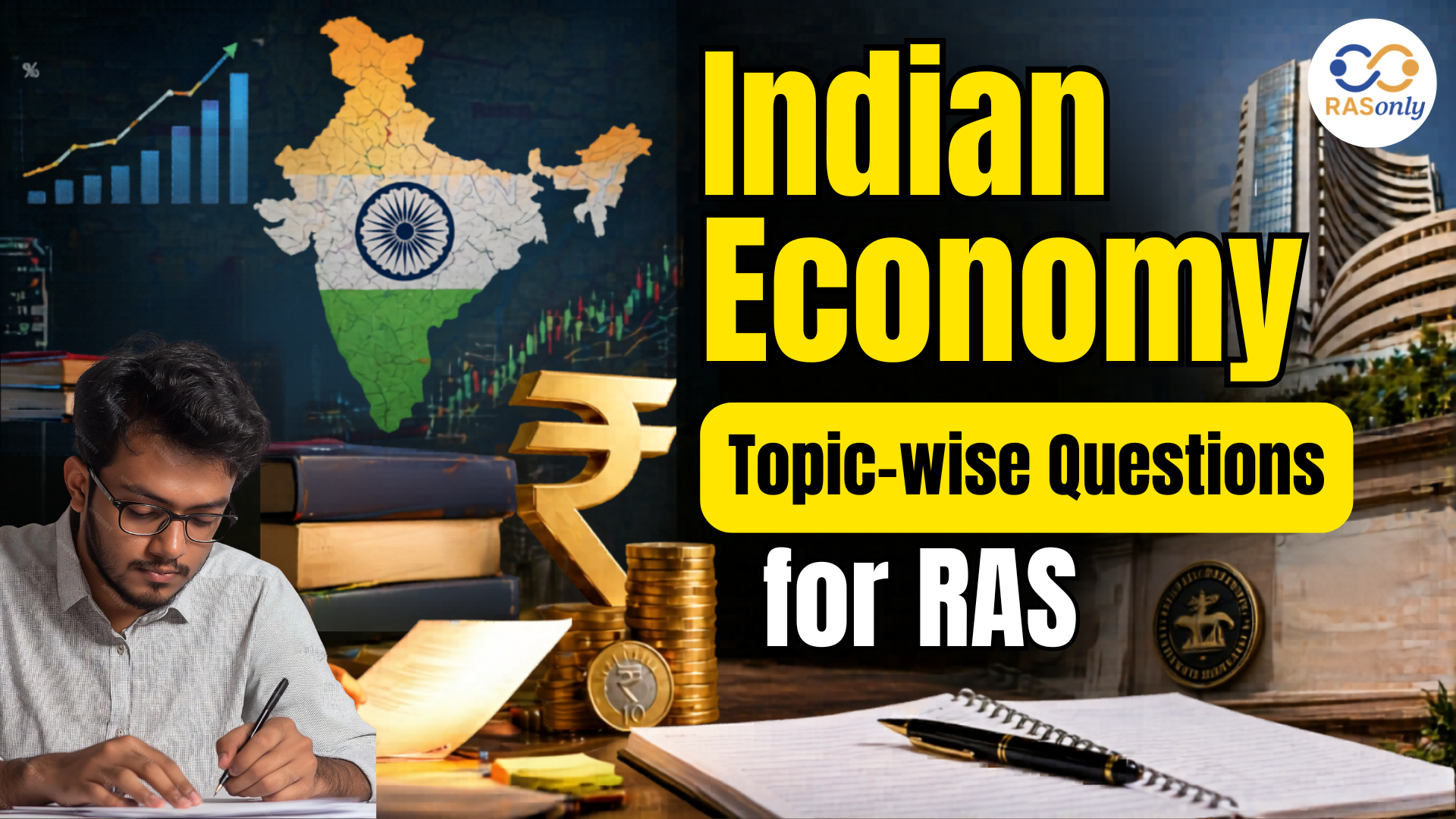
Indian Economy is one of the most important and dynamic topics for RAS 2026. It is an important subject for both the Preliminary and Mains examinations, as it is a mix of static and current affairs. GDP, inflation, banking, budget, and various government schemes are commonly asked about, so it is important to develop a good grasp. Solving Indian economy topic-wise questions and RAS Economy MCQs will help you gain clarity, speed, and accuracy.
A structured approach to the Indian Economy makes preparation more effective and less confusing. By solving RAS Economy MCQs and PYQs, you begin to get a feel for the types of questions asked and the topics that are more important. This will not only help you score more in Prelims but also help you in crafting better answers in RAS Mains.
Why Indian Economy is Important for RAS 2026
Indian Economy is a crucial and high-scoring paper for RAS 2026 as it is a part of both Prelims and Mains. It is not a theoretical subject but links to the economy in the real world, such as the budget, inflation, banking reforms, and policies. If you have a grasp of the fundamental concepts and keep an eye on the latest economic news, you can answer most questions.
The most important thing about the Indian Economy is that it helps in developing a thinking mindset, which is required for Mains answer writing. A lot of questions are on concepts applied to different cases, and so a clear understanding gives you an advantage over others.
Key Reasons to Focus on Economy
- High weightage in both Prelims and Mains
- A combination of static concepts and current affairs
- Helps in building analytical understanding for Mains
- Questions are often direct and concept-based
Important Areas Frequently Asked
- GDP and economic growth
- Inflation and monetary policy
- Banking system and financial institutions
- Budget and fiscal policy
- Government schemes and initiatives
Indian Economy Syllabus for RAS 2026 (Detailed Breakdown)
Knowing the Indian Economy syllabus for the Rajasthan Administrative Services (RAS) exam is important to study the right things and not get distracted by irrelevant topics. The RAS 2026 syllabus mainly covers basic economic principles and their application in practical scenarios such as banking, budgetary policy and government policies. Learning these topics systematically enhances your learning and keeps you on track with the exam.
| Topic | Key Areas |
|---|---|
| Basic Concepts | GDP, GNP, inflation |
| Banking | RBI, functions |
| Budget | Revenue, expenditure |
| Fiscal Policy | Deficit, taxation |
| Monetary Policy | Interest rates |
| Agriculture | Role in economy |
| Industry | Growth and policies |
| Schemes | Government initiatives |
Basic Economic Concepts
Before moving to advanced topics, it is important to understand the basic economic concepts clearly. Many questions in the RAS exam are directly based on these terms, and having a strong foundation helps you solve both conceptual and factual questions easily. Regular revision of these concepts will improve your clarity and confidence.
Important Economic Terms
| Term | Meaning |
|---|---|
| GDP | Total value of goods and services produced |
| Inflation | Rise in the general price level |
| Fiscal Deficit | Gap between government income and expenditure |
| Repo Rate | Rate at which RBI lends money to banks |
| CRR | Cash reserve that banks maintain with RBI |
Note: These basic concepts form the foundation of most Indian Economy questions in RAS exams, so revising them regularly is very important.
Detailed Topic-wise Coverage
Studying Indian Economy topic-wise helps you understand each concept well and makes it easier to revise. Rather than memorising all the topics at once, studying them in specific areas helps you identify and understand the important topics and boosts your marks in RAS Economy MCQs and even in Mains answers.
Key Topics & What to Focus On
| Topic | What to Focus On |
|---|---|
| National Income (GDP, GNP) | Concepts, growth rate, calculation basics |
| Inflation | Types, causes, impact on economy |
| Banking System | RBI, functions, financial institutions |
| Monetary Policy | Repo rate, CRR, inflation control |
| Fiscal Policy & Budget | Deficit, taxation, government spending |
| Agriculture Sector | Role, production, schemes, challenges |
| Industrial Sector | Growth, policies, contribution to GDP |
| Government Schemes | Objectives, beneficiaries, key features |
National Income (GDP, GNP)
- National income is an important topic in the Indian Economy and comes up in exams. Emphasise on GDP, GNP, and the measurement of economic growth.
Inflation
- Inflation reflects the rise in prices and directly impacts purchasing power. Questions are usually concept-based and sometimes data-oriented.
Banking System
- The banking system supports economic development through financial services. Understanding RBI and its functions is very important.
Monetary Policy
- Monetary policy is used by the RBI to control inflation and manage the money supply. Focus on tools like repo rate and CRR.
Fiscal Policy & Budget
- This is a very important chapter from where questions are asked about budget deficit, budget terms, and government expenditure.
Agriculture Sector
- Agriculture remains a key part of India’s economy. Focus on its role, major challenges, and government schemes.
Industrial Sector
- Industry drives economic growth and employment. Questions are asked about policies and industrial development.
Government Schemes
- Government schemes are frequently asked in exams and are mostly factual, so regular revision is important.
Most Important Topics for RAS 2026 (High Priority)
If you are short on time or want to revise smartly, focusing on the most important topics can help you cover a large portion of the syllabus quickly. In the Indian Economy, some areas are asked repeatedly in exams, and having clarity in these topics can significantly improve your score. Regular revision and MCQ practice from these sections will make your preparation more effective.
Focus on These High-Weightage Topics:
- GDP and basic economic concepts
- Inflation and monetary policy
- Banking system and RBI functions
- Budget and fiscal deficit
- Government schemes and initiatives
Indian Economy MCQs for RAS 2026
Practicing Indian Economy MCQs regularly helps you strengthen your concepts and improve both speed and accuracy. Since many questions are based on basic understanding and real-life application, solving topic-wise MCQs along with PYQs helps you identify important areas and avoid common mistakes.
Q1. Which of the following best explains GDP at current prices?
A. Value of goods at base year prices
B. Value of goods including inflation
C. Value of exports only
D. Net national income
Answer: B
Q2. If inflation rises sharply, what is the most immediate impact?
A. Increase in purchasing power
B. Decrease in the value of money
C. Increase in exports
D. Decrease in taxes
Answer: B
Q3. The primary objective of RBI’s monetary policy is:
A. Increase government spending
B. Control inflation and ensure liquidity
C. Promote exports only
D. Reduce taxes
Answer: B
Q4. Which of the following is NOT a component of the fiscal deficit?
A. Revenue expenditure
B. Capital expenditure
C. Borrowings
D. Direct tax collection
Answer: D
Q5. When RBI increases the repo rate, what is the likely effect?
A. Loans become cheaper
B. Borrowing increases
C. Loans become costlier
D. Inflation increases immediately
Answer: C
Q6. Which sector is known as the backbone of the Indian economy?
A. Services
B. Industry
C. Agriculture
D. Banking
Answer: C
Q7. Gross National Product (GNP) differs from GDP because it includes:
A. Only domestic production
B. Income from abroad
C. Government expenditure
D. Taxes only
Answer: B
Q8. Which of the following best describes CRR?
A. Loan interest rate
B. Reserve kept by banks with RBI
C. Tax on banks
D. Government borrowing
Answer: B
Q9. Which of the following is a direct tax?
A. GST
B. Customs duty
C. Income tax
D. Excise duty
Answer: C
Q10. A decrease in fiscal deficit indicates:
A. Increase in government borrowing
B. Better financial management
C. Increase in inflation
D. Decrease in GDP
Answer: B
Q11. Which of the following institutions regulates the banking system in India?
A. Finance Ministry
B. SEBI
C. RBI
D. NITI Aayog
Answer: C
Q12. Which sector is most affected by monsoon variability in India?
A. Industry
B. Services
C. Agriculture
D. Trade
Answer: C
Q13. Which of the following best defines economic growth?
A. Increase in population
B. Increase in tax collection
C. Increase in production of goods and services
D. Increase in imports
Answer: C
Q14. Which policy is mainly used to control inflation in the short term?
A. Fiscal policy
B. Trade policy
C. Monetary policy
D. Industrial policy
Answer: C
Q15. GST is classified as:
A. Direct tax
B. Indirect tax
C. Corporate tax
D. Wealth tax
Answer: B
Q16. Which of the following is NOT a function of RBI?
A. Issue of currency
B. Banker to the government
C. Regulating stock market
D. Controlling money supply
Answer: C
Q17. Which of the following best explains fiscal policy?
A. Control of money supply
B. Government spending and taxation policy
C. Trade regulations
D. Banking supervision
Answer: B
Q18. Increase in money supply generally leads to:
A. Deflation
B. Inflation
C. No change
D. Increase in exports
Answer: B
Q19. Which of the following is part of the tertiary sector?
A. Farming
B. Manufacturing
C. Banking
D. Mining
Answer: C
Q20. Economic planning in India aims at:
A. Only industrial growth
B. Balanced economic development
C. Only agricultural growth
D. Increasing imports
Answer: B
Common Mistakes to Avoid
The Indian Economy can be scoring, but many students lose marks because of basic mistakes in preparation. Most of the time, the issue is not lack of study but lack of clarity and consistency. Avoiding these common errors can help you improve both accuracy and confidence in RAS Economy MCQs.
Avoid these mistakes:
- Memorizing concepts without actually understanding them
- Ignoring current economic developments and budget updates
- Skipping regular MCQ practice
- Not solving PYQs to understand exam trends
How to Prepare Indian Economy for RAS 2026
Preparing the Indian Economy becomes much easier when you focus on understanding how concepts work in real life instead of just memorizing definitions. A balanced approach of concepts, current affairs, and practice is the key to scoring well.
Follow this approach:
- Build strong clarity of basic economic concepts
- Stay updated with current affairs (budget, schemes, RBI updates)
- Practice MCQs regularly to improve speed and accuracy
- Analyze PYQs to understand important topics and question patterns
Final Strategy for RAS 2026
Indian Economy can become one of your scoring subjects if you prepare it with the right strategy. Focus on concept clarity, revise regularly, and practice enough MCQs to build confidence. A consistent and smart approach will help you perform better in both Prelims and Mains.
Conclusion
Indian Economy is one of the most important and scoring subjects for RAS 2026 if you prepare it with the right approach. By focusing on core concepts like GDP, inflation, banking, and budget, along with regular practice of Indian Economy MCQs, you can build strong clarity and improve your accuracy. A balanced strategy that combines concept understanding, current affairs, and consistent revision will help you stay confident and perform well in both Prelims and Mains. With proper practice and smart preparation, Indian Economy can become one of your strongest subjects in the RAS exam.
FAQ
Yes, it is one of the most important subjects with high weightage in both Prelims and Mains.
Focus on basic concepts, follow current affairs, and practice MCQs regularly along with PYQs.
Both types are asked, but most questions can be solved easily if your concepts are clear.
You should practice at least 20–30 MCQs daily to improve speed and accuracy.
GDP, inflation, banking, monetary policy, budget, and government schemes are the most important topics.

BEST SELLER
🏆 PRELIMS
RAS Pass
Prelims focused Hindi & English
₹399
✓
Prelims Topic-Wise Tests
✓
Subject-Wise Tests
✓
Full-Length Prelims Tests
✓
Daily Current Affairs Tests
✓
Prelims PYQs Tests
✓
Detailed Solutions & Analysis
✓
All Rajasthan Ranking
✓
Unlimited Reattempts
✓
Mains Tests
✓
Hindi & English Tests
✓
All Rajasthan Ranking
Trusted by 5,000+ Students
Post Category
- RAS Salary
- Result
- RAS Admit Card
- RAS Job
- RAS Cutoff
- Preparation Tips
- RAS Answer Key
- RAS Exam Analysis
- RAS Syllabus
- RAS Previous Year Papers
- RPSC RAS Exam Pattern
- RAS Interview
- RAS Exam Date
- RAS Vacancy
- RAS Test Series
- RAS Best Books
- RAS Preparation Resources
- RAS Coaching Centre
- History
- Polity
- Geography
- Economics
- Science
- Art and Culture
- RPSC RAS Application Form
- RPSC RAS Notification
- RAS Eligibility Criteria
- UPSC Exam
- RPSC RAS Mains
Visit Our RASonly Offline Center
Our Expert Faculty

Bhunesh Sir
Current Affairs · 13+ Yrs

Aamir Khan Sir
RAS-2017 · IIM Ahm.

Akash Sir
Polity · 8+ Yrs
Free Resources
Official Mobile App

RASOnly App
by OTSAdda · Free
Full Video Lectures
Mock Tests & PYQs
Daily Current Affairs
AI Mock Interview
Free Download · No subscription needed to install
RAS 2024 Toppers — RASonly
Rank 2
Virendra Charan
Rank 9
Bhoopinder Singh
Rank 26
Aanchal Nagpal
Rank 33
Lokendra Singh
Rank 45
Amar Rathore
Rank 46
Manasvini Verma

Join RASonly WhatsApp Community
Get daily current affairs, exam alerts, free study material and tips from expert faculty — right on WhatsApp.
Join for Free →RASonly Interview Guidance Program

Mr. Ashok Jain
Ex-Chief Secretary Govt of Rajasthan
- IAS officer of the 1981 batch, Rajasthan cadre.
- Passionate about mentoring the next generation of RAS officers with real-world insights.
- Got retired in Dec 2017 from the post of Chief Secretary of the state of Rajasthan.

Mr. Guru Charan Rai
Ex-ASP / SP in Jaisalmer
- Guru Charan Rai, IPS (Retd), retired as Inspector General of Police (Security), Rajasthan, Jaipur in 2017.
- Served as ASP and SP in Jaisalmer, Nagaur, Sri Ganganagar, Sawai Madhopur, Dausa, Sikar, and Karauli.
- He also held key positions as DIGP and IGP in the Law and Order division.

Mr. Rakesh Verma
Ex-IAS Officer, B.Tech, MBA, and M.A. (Economics)
- IAS officer of the 1981 batch and retired in Chief Secretary Rank.
- Civil servant of high repute and vast experience.
- Has been teaching UPSC CSE subjects for the last six years.
Related Post
Daily Current Affairs for RAS Exam Preparation 2026

Ustad Bismillah Khan Yuva Puraskar
October 24, 2026
Marwar Festival 2026
October 24, 2026
Kundan Art Display in Hong Kong
October 23, 2026