Free Rajasthan GK One-Liner Notes for RAS
National Parks of Rajasthan: List, Wildlife, Location, and Features

Get in Touch with RASonly!

The National Parks of Rajasthan protect rare wildlife species and unique ecosystems across the state. These parks conserve animals like Bengal Tigers, Leopards, Great Indian Bustards, and migratory birds. Understanding Rajasthan’s national parks is important for RPSC RAS 2026, Rajasthan GK, and environment studies.

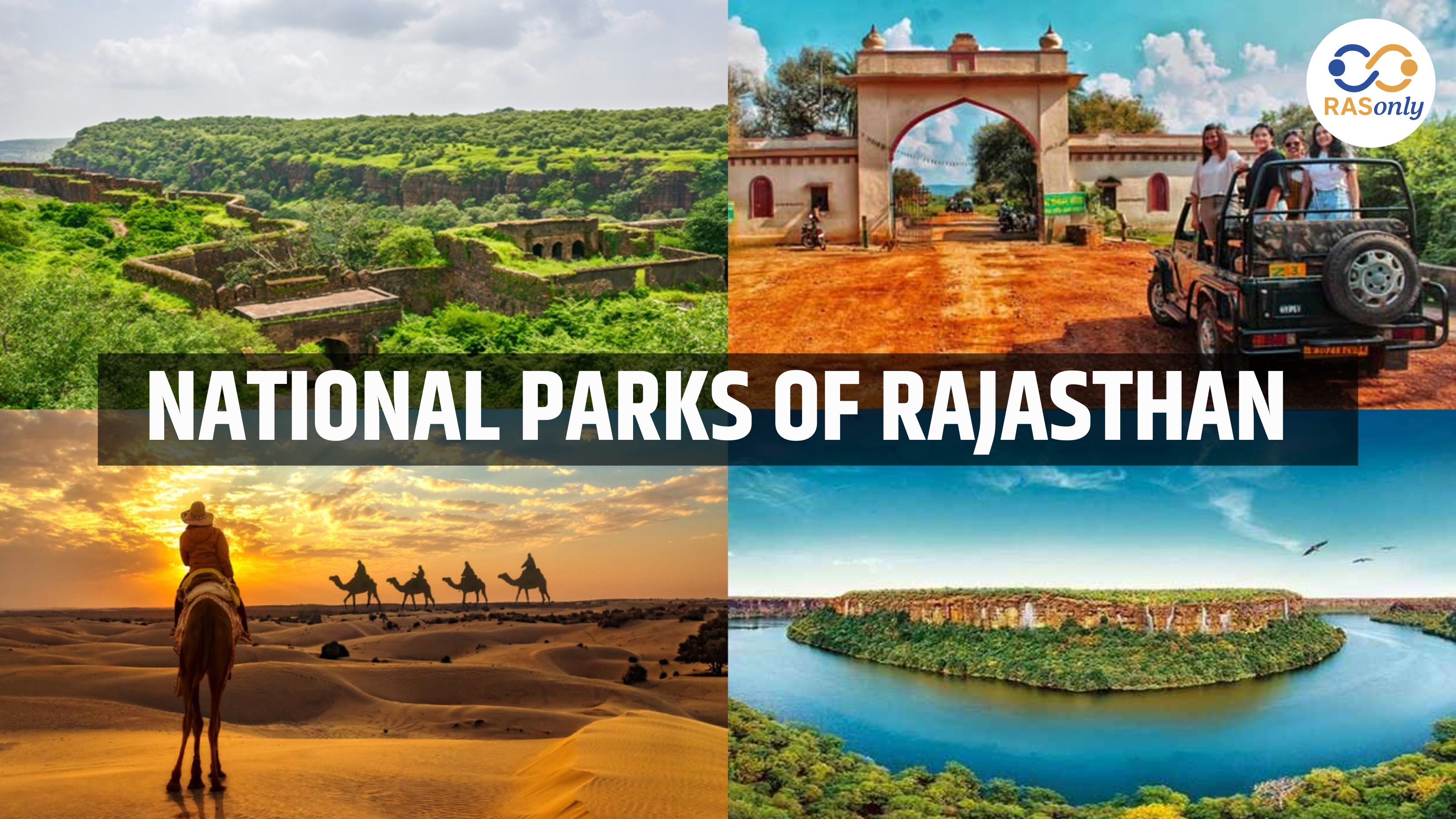
The National Parks of Rajasthan play an important role in protecting the state’s rich biodiversity, wildlife species, and natural ecosystems. Rajasthan is known for its unique landscapes including forests, wetlands, grasslands, and desert ecosystems, which support a wide variety of animals and birds.
Currently, Rajasthan has 5 major national parks, which are famous for wildlife conservation, tiger reserves, bird habitats, and ecological diversity. These national parks protect endangered species such as the Bengal Tiger, Leopard, Great Indian Bustard, and various migratory birds. Understanding the National Parks of Rajasthan, their location, wildlife species, and conservation importance is essential for students preparing for RPSC RAS Exam 2026, Rajasthan GK, Geography, and Environment studies.
Overview of National Parks of Rajasthan
The National Parks of Rajasthan are among the most important wildlife conservation areas in India. These protected regions preserve the state’s unique ecosystems including forests, wetlands, grasslands, and desert landscapes, making Rajasthan a significant center for biodiversity and wildlife protection.
Rajasthan currently has five major national parks, each known for protecting different types of wildlife species such as Bengal Tigers, Leopards, Great Indian Bustards, migratory birds, and desert animals. These national parks not only protect wildlife habitats but also promote eco-tourism, environmental awareness, and scientific research in Rajasthan.
| National Park | Location | Established | Major Wildlife |
|---|---|---|---|
| Ranthambore National Park | Sawai Madhopur | 1980 | Bengal Tiger |
| Sariska National Park | Alwar | 1992 | Tiger, Leopard |
| Keoladeo National Park | Bharatpur | 1982 | Migratory Birds |
| Desert National Park | Jaisalmer | 1981 | Great Indian Bustard |
| Mukundra Hills National Park | Kota | 2006 | Leopard, Tiger |
These Rajasthan wildlife parks attract thousands of tourists, wildlife photographers, researchers, and conservationists every year.
Ranthambore National Park
Ranthambore National Park is one of the most famous tiger reserves in India and is globally known for its high chances of Bengal Tiger sightings. The park is located in Sawai Madhopur district and forms an important part of the Ranthambore Tiger Reserve under Project Tiger.
Ranthambore is unique because it combines rich wildlife biodiversity with historical heritage, as the famous Ranthambore Fort, a UNESCO World Heritage Site, is located within the park. The landscape consists of dry deciduous forests, lakes, and rocky hills, creating an ideal habitat for many wildlife species.
Key Features of Ranthambore National Park
- Located in Sawai Madhopur district, Rajasthan
- Declared a national park in 1980
- Part of the Project Tiger conservation program
- One of the best places in India for tiger safari and wildlife photography
Major Wildlife
- Bengal Tiger
- Leopard
- Sloth Bear
- Sambar Deer
- Wild Boar
Keoladeo National Park (Bharatpur)
Keoladeo National Park, popularly known as Bharatpur Bird Sanctuary, is one of the most important bird conservation sites in the world. The park is located in Bharatpur district of Rajasthan and is internationally famous for its large population of migratory birds.
The park is recognized as a UNESCO World Heritage Site and is considered one of the best birdwatching destinations in Asia. Every winter, thousands of migratory birds from Siberia, Central Asia, and Europe arrive here, making it a paradise for bird lovers and wildlife researchers.
Key Features
- Located in Bharatpur district, Rajasthan
- Declared a national park in 1982
- UNESCO World Heritage Site (1985)
- One of the most famous bird sanctuaries in India
Major Bird Species
- Siberian Crane (historically recorded)
- Painted Stork
- Pelican
- Egret
- Heron
Sariska National Park
Sariska National Park is located in the Aravalli Hills of Alwar district and is one of the major wildlife reserves in northern India. The park is famous for its tiger conservation efforts and rich biodiversity.
Originally established as a wildlife sanctuary, Sariska was later declared a national park in 1992 and became part of the Sariska Tiger Reserve. The park is known for its dense forests, grasslands, and rocky terrain, which support a wide range of wildlife species.
Key Features
- Located in Alwar district, Rajasthan
- Declared national park in 1992
- Part of the Sariska Tiger Reserve under Project Tiger
- Located in the Aravalli mountain range
Major Wildlife
- Bengal Tiger
- Leopard
- Jungle Cat
- Hyena
- Chital
Desert National Park
Desert National Park is one of the largest national parks in India and represents the unique ecosystem of the Thar Desert in western Rajasthan. The park is located near Jaisalmer and Barmer districts and covers a vast area of sand dunes and desert plains.
This park is especially important for the conservation of the Great Indian Bustard, one of the most endangered bird species in the world. It also protects many desert-adapted animals and birds that survive in harsh climatic conditions.
Key Features
- Located in Jaisalmer and Barmer districts
- Established in 1981
- Represents the ecosystem of the Thar Desert
- Known for sand dunes and desert wildlife
Major Wildlife
- Great Indian Bustard
- Desert Fox
- Chinkara
- Desert Cat
Mukundra Hills National Park
Mukundra Hills National Park is located in Kota district of Rajasthan and forms an important wildlife habitat in the southeastern part of the state. The park lies along the Mukundra Hills range of the Aravalli Mountains.
The park was previously known as Darrah Wildlife Sanctuary and was declared a national park in 2006. Later it became part of the Mukundra Hills Tiger Reserve, which aims to expand tiger conservation efforts in Rajasthan.
Key Features
- Located in Kota district
- Declared national park in 2006
- Previously known as Darrah Wildlife Sanctuary
- Part of Mukundra Hills Tiger Reserve
Major Wildlife
- Tiger
- Leopard
- Wolf
- Sloth Bear
Importance of National Parks in Rajasthan
The National Parks of Rajasthan play a vital role in wildlife conservation, environmental protection, and sustainable tourism. These protected areas help preserve endangered species and maintain the ecological balance of the region.
Major Importance
- Conservation of endangered wildlife species
- Protection of natural habitats and ecosystems
- Promotion of eco-tourism and wildlife tourism
- Environmental education and research
These national parks help maintain Rajasthan’s biodiversity and ecological sustainability.
Wildlife Sanctuaries in Rajasthan (Related Protected Areas)
In addition to national parks, Rajasthan also has several important wildlife sanctuaries that protect forests, animals, and bird species. These sanctuaries play a key role in expanding wildlife conservation areas across the state.
| Wildlife Sanctuary | Location |
|---|---|
| Kumbhalgarh Wildlife Sanctuary | Rajsamand |
| Mount Abu Wildlife Sanctuary | Sirohi |
| Tal Chhapar Sanctuary | Churu |
| Keladevi Sanctuary | Karauli |
| Sajjangarh Sanctuary | Udaipur |
These sanctuaries help protect wild animals, bird habitats, and forest ecosystems in Rajasthan.
Significance of Rajasthan National Parks for Biodiversity
The National Parks of Rajasthan are extremely important for preserving rare wildlife species and protecting natural habitats. These parks also support research, environmental conservation programs, and wildlife tourism.
Key Conservation Goals
- Protection of tiger populations in Rajasthan
- Conservation of endangered birds like the Great Indian Bustard
- Preservation of desert ecosystems and forest habitats
- Promotion of wildlife research and conservation programs
These parks contribute significantly to wildlife conservation, tourism development, and biodiversity protection in Rajasthan.
Important Link
Conclusion
The National Parks of Rajasthan are vital for protecting the state’s diverse wildlife and maintaining ecological balance. These protected areas conserve important species such as the Bengal Tiger, Leopard, Great Indian Bustard, and numerous migratory birds, while also preserving unique ecosystems like forests, wetlands, and the Thar Desert landscape.
Rajasthan’s national parks not only support wildlife conservation and biodiversity protection but also promote eco-tourism, environmental awareness, and scientific research. Understanding the National Parks of Rajasthan, their wildlife, location, and conservation importance is essential for candidates preparing for RPSC RAS Exam 2026, Rajasthan GK, geography, and environment studies.
FAQ
There are five national parks in Rajasthan: Ranthambore National Park, Sariska National Park, Keoladeo National Park, Desert National Park, and Mukundra Hills National Park.
Ranthambore National Park is the most famous wildlife park in Rajasthan, known for its Bengal Tiger population and tiger safari tourism.
Keoladeo National Park in Bharatpur, also known as Bharatpur Bird Sanctuary, is famous for migratory birds and birdwatching and is a UNESCO World Heritage Site.
Desert National Park in Jaisalmer plays an important role in conserving the Great Indian Bustard, one of the most endangered bird species in the world.
The National Parks of Rajasthan help conserve wildlife, protect natural habitats, promote eco-tourism, and maintain biodiversity and ecological balance in the region.

BEST SELLER
🏆 PRELIMS
RAS Pass
Prelims focused Hindi & English
₹399
✓
Prelims Topic-Wise Tests
✓
Subject-Wise Tests
✓
Full-Length Prelims Tests
✓
Daily Current Affairs Tests
✓
Prelims PYQs Tests
✓
Detailed Solutions & Analysis
✓
All Rajasthan Ranking
✓
Unlimited Reattempts
✓
Mains Tests
✓
Hindi & English Tests
✓
All Rajasthan Ranking
Trusted by 5,000+ Students

Post Category
- RAS Salary
- Result
- RAS Admit Card
- RAS Job
- RAS Cutoff
- Preparation Tips
- RAS Answer Key
- RAS Exam Analysis
- RAS Syllabus
- RAS Previous Year Papers
- RPSC RAS Exam Pattern
- RAS Interview
- RAS Exam Date
- RAS Vacancy
- RAS Test Series
- RAS Best Books
- RAS Preparation Resources
- RAS Coaching Centre
- History
- Polity
- Geography
- Economics
- Science
- Art and Culture
- RPSC RAS Application Form
- RPSC RAS Notification
- RAS Eligibility Criteria
- UPSC Exam
- RPSC RAS Mains
Visit Our RASonly Offline Center
Our Expert Faculty

Bhunesh Sir
Current Affairs · 13+ Yrs

Aamir Khan Sir
RAS-2017 · IIM Ahm.

Akash Sir
Polity · 8+ Yrs
Free Resources
Official Mobile App

RASOnly App
by OTSAdda · Free
Full Video Lectures
Mock Tests & PYQs
Daily Current Affairs
AI Mock Interview
Free Download · No subscription needed to install
RAS 2024 Toppers — RASonly
Rank 2
Virendra Charan
Rank 9
Bhoopinder Singh
Rank 26
Aanchal Nagpal
Rank 33
Lokendra Singh
Rank 45
Amar Rathore
Rank 46
Manasvini Verma

Join RASonly WhatsApp Community
Get daily current affairs, exam alerts, free study material and tips from expert faculty — right on WhatsApp.
Join for Free →RASonly Interview Guidance Program

Mr. Ashok Jain
Ex-Chief Secretary Govt of Rajasthan
- IAS officer of the 1981 batch, Rajasthan cadre.
- Passionate about mentoring the next generation of RAS officers with real-world insights.
- Got retired in Dec 2017 from the post of Chief Secretary of the state of Rajasthan.

Mr. Guru Charan Rai
Ex-ASP / SP in Jaisalmer
- Guru Charan Rai, IPS (Retd), retired as Inspector General of Police (Security), Rajasthan, Jaipur in 2017.
- Served as ASP and SP in Jaisalmer, Nagaur, Sri Ganganagar, Sawai Madhopur, Dausa, Sikar, and Karauli.
- He also held key positions as DIGP and IGP in the Law and Order division.

Mr. Rakesh Verma
Ex-IAS Officer, B.Tech, MBA, and M.A. (Economics)
- IAS officer of the 1981 batch and retired in Chief Secretary Rank.
- Civil servant of high repute and vast experience.
- Has been teaching UPSC CSE subjects for the last six years.




Daily Current Affairs for RAS Exam Preparation 2026
Rajasthan Universities in the QS World University Rankings 2027
September 12, 2026
Rajasthan to Host Miss Ocean World 2026
September 12, 2026
PM-SETU Scheme Bhiwadi ITI Cluster Gets Approval
September 11, 2026
