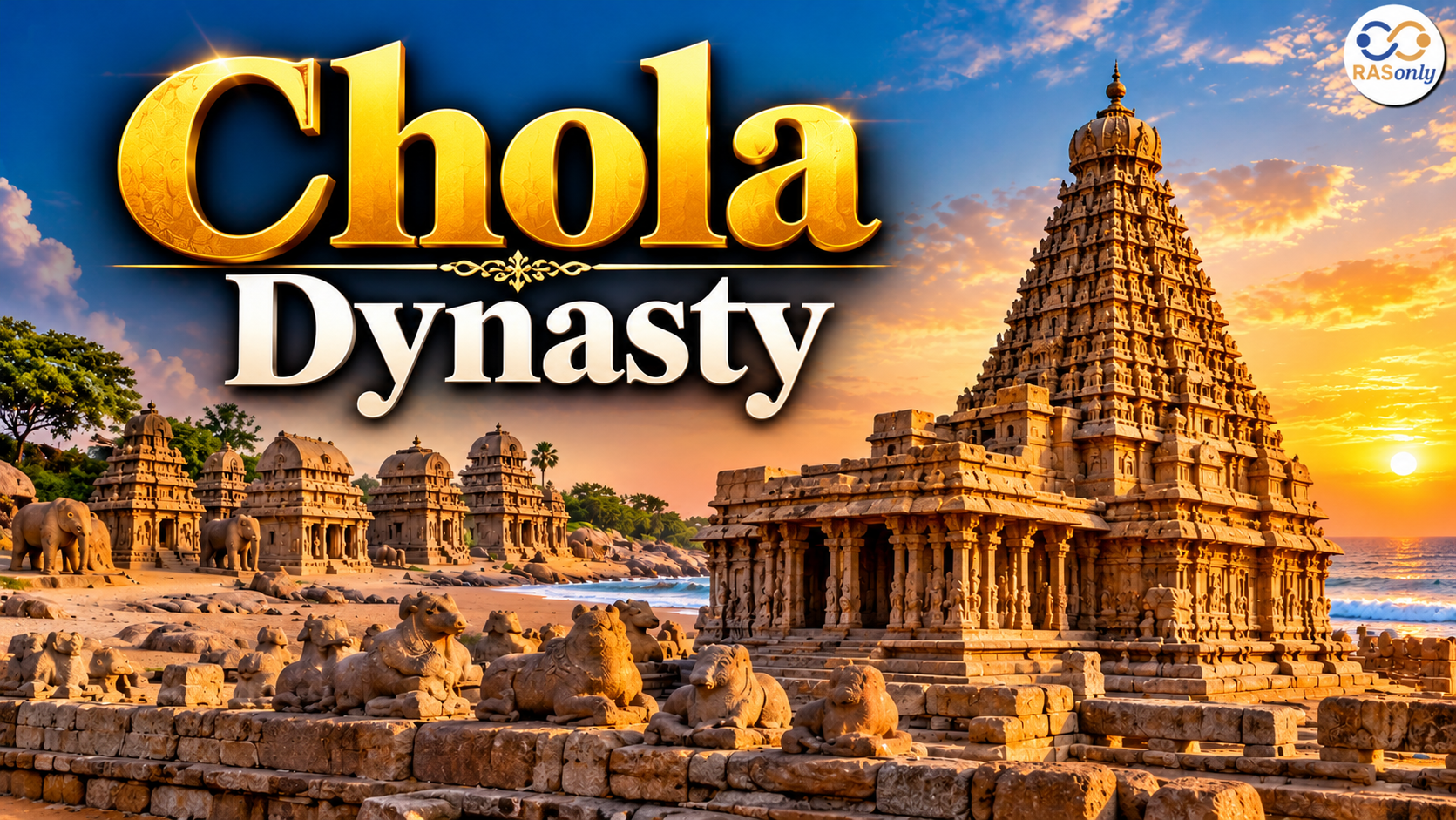
Chola Dynasty: Capital, Founder, Kings, Time Period and History
Biodegradable Polymers: Science, Uses, and Sustainability

Get in Touch with RASonly!



At its core, a polymer is a large molecule composed of repeating structural units, typically connected by covalent chemical bonds. These repeating units, known as monomers, can vary greatly in size, structure and composition, giving rise to a vast array of polymers with diverse properties and applications.
One of the key characteristics of polymers is their ability to be molded and shaped into different forms, making them highly versatile materials. This versatility stems from the diverse range of monomers that can be polymerized to form different types of polymers, each with its own unique properties.
What Are Polymers?
Polymers are large molecules made by joining many small repeating units called monomers. This process is known as polymerization.
They are found everywhere—in plastic bottles, clothes, rubber tires, toys, paints, and even DNA. In short, polymers are the foundation of modern materials science.
How Polymers Are Formed
As the monomers build up, they are capable of building up in two ways:
- Addition Polymerization- there is no released byproduct (e.g., Polyethylene, PVC).
- Condensation Polymerization- tiny molecules such as water are discharged (e.g., Nylon, Polyester).
It is this reaction that defines the strength, flexibility and properties of the final material.
Classification of Polymers
| Type | Examples | Key Features |
|---|---|---|
| Natural Polymers | Rubber, Cellulose, Silk | Found in nature |
| Synthetic Polymers | PVC, Nylon, Teflon | Man-made and versatile |
| Thermoplastics | Polyethylene, Polystyrene | Soften with heat; can be reshaped |
| Thermosetting Plastics | Bakelite, Melamine | Harden permanently after heating |
These variations allow polymers to be used in packaging, textiles, electronics, construction, and medicine.
The Environmental Problem
Although synthetic polymers have transformed the lives of the people in daily life, most of them are non-biodegradable, which implies that they are not easily degraded.
Plastic waste clogs drains, pollutes soil and oceans, and affects human and animal health.
The Future of Materials: Biodegradable Polymers
The biodegradable polymers are designed in such a manner that they are degraded through the activities of microorganisms. They have offered a long-term remedy to plastic pollution.
Examples:
- Polylactic Acid (PLA): made from cornstarch, used in food packaging.
- Polyhydroxyalkanoates (PHA): they are produced by bacteria and are used as medical sutures and agricultural products.
- Polycaprolactone (PCL): is used in drug delivery systems.
Such materials do not waste time and costs in the long run as well as on the environment
India’s and Rajasthan’s Initiatives
India’s Plastic Waste Management Rules (2016) encourage recycling, extended producer responsibility, and bans on single-use plastics.
Rajasthan has implemented statewide bans on certain plastic items and promotes awareness about biodegradable alternatives
Conclusion
Polymers have shaped modern civilization—from medicine to machinery. But to balance progress with sustainability, biodegradable polymers must replace traditional plastics.
BEST SELLER
🏆 PRELIMS
RAS Pass
Prelims focused Hindi & English
₹399
✓
Prelims Topic-Wise Tests
✓
Subject-Wise Tests
✓
Full-Length Prelims Tests
✓
Daily Current Affairs Tests
✓
Prelims PYQs Tests
✓
Detailed Solutions & Analysis
✓
All Rajasthan Ranking
✓
Unlimited Reattempts
✓
Mains Tests
✓
Hindi & English Tests
✓
All Rajasthan Ranking
Trusted by 5,000+ Students
Post Category
- RAS Salary
- Result
- RAS Admit Card
- RAS Job
- RAS Cutoff
- Preparation Tips
- RAS Answer Key
- RAS Exam Analysis
- RAS Syllabus
- RAS Previous Year Papers
- RPSC RAS Exam Pattern
- RAS Interview
- RAS Exam Date
- RAS Vacancy
- RAS Test Series
- RAS Best Books
- RAS Preparation Resources
- RAS Coaching Centre
- History
- Polity
- Geography
- Economics
- Science
- Art and Culture
- RPSC RAS Application Form
- RPSC RAS Notification
- RAS Eligibility Criteria
- UPSC Exam
- RPSC RAS Mains
Visit Our RASonly Offline Center
Our Expert Faculty

Bhunesh Sir
Current Affairs · 13+ Yrs

Aamir Khan Sir
RAS-2017 · IIM Ahm.

Akash Sir
Polity · 8+ Yrs
Free Resources
Official Mobile App

RASOnly App
by OTSAdda · Free
Full Video Lectures
Mock Tests & PYQs
Daily Current Affairs
AI Mock Interview
Free Download · No subscription needed to install
RAS 2024 Toppers — RASonly
Rank 2
Virendra Charan
Rank 9
Bhoopinder Singh
Rank 26
Aanchal Nagpal
Rank 33
Lokendra Singh
Rank 45
Amar Rathore
Rank 46
Manasvini Verma

Join RASonly WhatsApp Community
Get daily current affairs, exam alerts, free study material and tips from expert faculty — right on WhatsApp.
Join for Free →RASonly Interview Guidance Program

Mr. Ashok Jain
Ex-Chief Secretary Govt of Rajasthan
- IAS officer of the 1981 batch, Rajasthan cadre.
- Passionate about mentoring the next generation of RAS officers with real-world insights.
- Got retired in Dec 2017 from the post of Chief Secretary of the state of Rajasthan.

Mr. Guru Charan Rai
Ex-ASP / SP in Jaisalmer
- Guru Charan Rai, IPS (Retd), retired as Inspector General of Police (Security), Rajasthan, Jaipur in 2017.
- Served as ASP and SP in Jaisalmer, Nagaur, Sri Ganganagar, Sawai Madhopur, Dausa, Sikar, and Karauli.
- He also held key positions as DIGP and IGP in the Law and Order division.

Mr. Rakesh Verma
Ex-IAS Officer, B.Tech, MBA, and M.A. (Economics)
- IAS officer of the 1981 batch and retired in Chief Secretary Rank.
- Civil servant of high repute and vast experience.
- Has been teaching UPSC CSE subjects for the last six years.
Related Post


Daily Current Affairs for RAS Exam Preparation 2026

Ustad Bismillah Khan Yuva Puraskar
October 24, 2026
Marwar Festival 2026
October 24, 2026
Kundan Art Display in Hong Kong
October 23, 2026