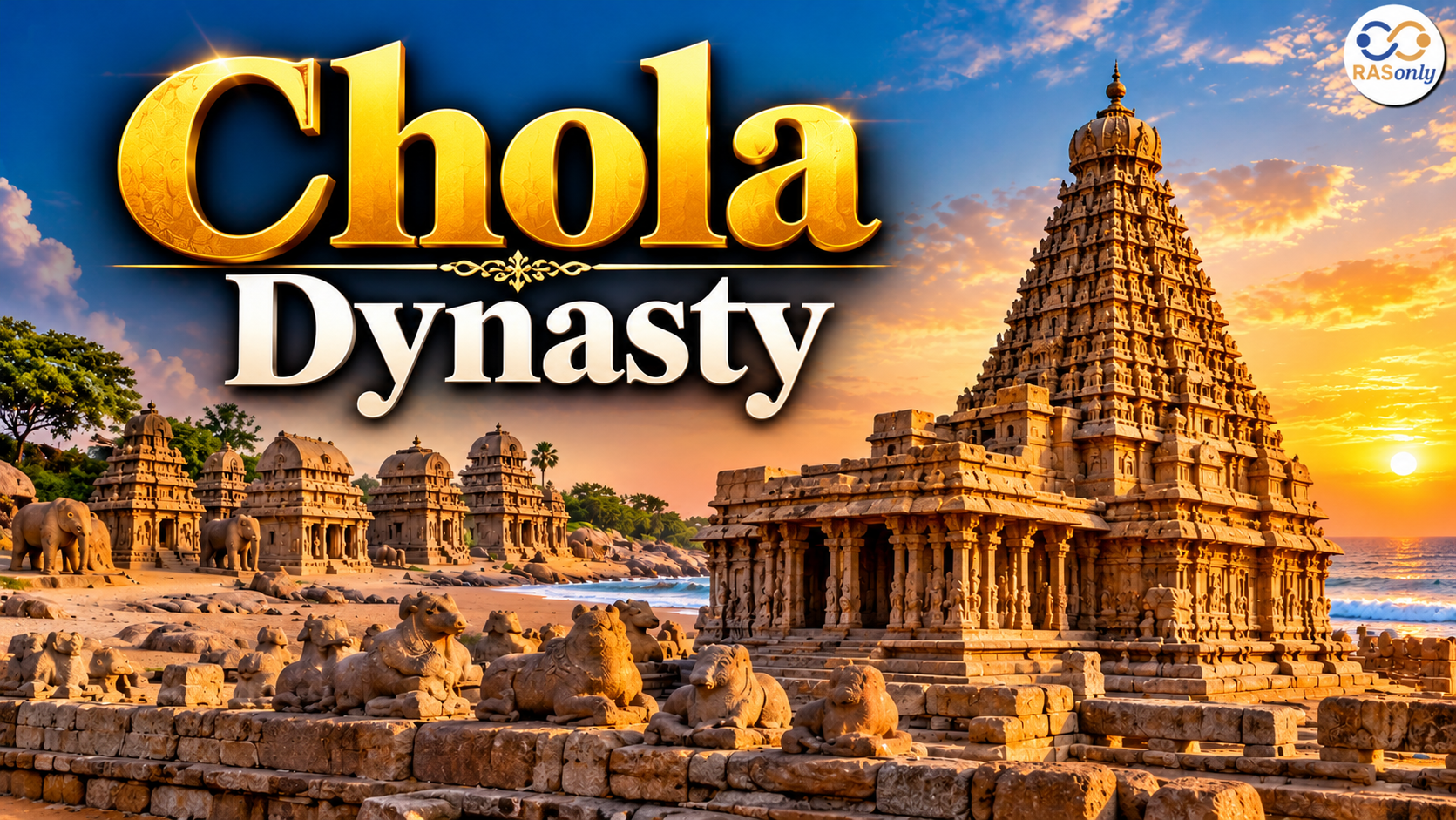
Chola Dynasty: Capital, Founder, Kings, Time Period and History
Environment & Ecology Topic-wise Questions for RAS 2026 (Prelims & Mains) | MCQs & Complete Preparation

Get in Touch with RASonly!

Practice Environment & Ecology topic-wise questions for RAS 2026 with important MCQs and concept-based coverage. This helps you build clarity, improve accuracy, and understand key environmental topics easily. Stay consistent with revision and practice to score better in the RAS exam.

Environment & Ecology is one of the most important sections for RAS 2026, particularly for the Prelims examination, where questions are often asked from both fundamental and current environmental events. This section is not like other topics, which are highly dependent on rote learning it's more about the functioning of the environment and human interference. Ecosystem, biodiversity, pollution, and climate change are not only significant for the exam but also for scoring if you have a strong understanding.
The environment is more relevant than ever because it has a strong overlap with current events. The questions are often based on real issues such as global warming, conservation management, and government policies. With the right preparation strategy and Environment MCQs and PYQs, you can increase your accuracy and confidence.
Why Environment & Ecology is Important for RAS 2026
Environment is one of those subjects where a smart approach can give you quick results. Many questions are direct and concept-based, which means you don’t need to memorize large amounts of information. Instead, a clear understanding of basic concepts can help you solve questions quickly in the exam.
It's also crucial for Mains, as environmental issues are often connected with development, governance, and sustainability. So, thorough preparation of this subject not only aids Prelims but also helps in the overall preparation.
Key Reasons to Focus on the Environment
- High weightage in Prelims
- Concept-based and easy to score
- Strong link with current affairs
- Useful for Mains answer writing
Important Areas Frequently Asked
- Ecosystem and ecological balance
- Biodiversity and conservation
- Climate change and global warming
- Pollution (air, water, soil)
- National parks and wildlife
Environment & Ecology Syllabus for RAS 2026 (Detailed Breakdown)
The knowledge of the Environment and Ecology syllabus will assist you in keeping your mind focused on what is really important in RAS 2026. A structured approach will enable you to better cover areas of high weightage (ecosystem, biodiversity, climate change, and conservation) than learning random subjects. Prelims are not the only important topics in these areas, but they are also helpful in creating a solid conceptual foundation in Mains.
Core Topics Covered
| Topic | Key Areas |
|---|---|
| Ecology | Ecosystem, food chain, food web |
| Biodiversity | Types, importance, conservation |
| Climate Change | Causes, impacts, mitigation |
| Pollution | Air, water, soil pollution |
| Environmental Laws | National policies, acts |
| Wildlife | National parks, conservation |
| Sustainable Development | Balance between growth & environment |
Basic Concepts
Before moving to advanced topics, it is important to build a strong foundation in basic concepts. Many questions in the RAS exam are directly based on these fundamentals, and once you understand them clearly, the subject becomes much easier to handle. These concepts also help you connect different topics instead of studying them in isolation.
Important Concepts
| Concept | Explanation |
|---|---|
| Ecosystem | Interaction between living and non-living components |
| Food Chain | Flow of energy from one organism to another |
| Food Web | An interconnected network of multiple food chains |
| Biodiversity | A variety of plants, animals, and microorganisms |
| Pollution | Harmful changes in the natural environment |
| Climate Change | Long-term changes in temperature and weather patterns |
Detailed Topic-wise Coverage
The topic-wise preparation of Environment and Ecology will assist you in splitting the syllabus into small sections and getting acquainted with each concept. This will be simpler to revise and enhance your accuracy in RAS Environment MCQs, since the majority of questions are based on these core areas.
Ecosystem
- Interaction between living and non-living components
- Food chain and food web concepts
- Energy flow in an ecosystem
- Ecological balance
Biodiversity
- Types of biodiversity (genetic, species, ecosystem)
- Importance of biodiversity
- Conservation methods (in-situ & ex-situ)
- Threats like deforestation and habitat loss
Climate Change
- Global warming and greenhouse gases
- Causes and effects of climate change
- Impact on environment and humans
- Basic mitigation and adaptation strategies
Pollution
- Types: Air, water, soil pollution
- Causes and effects
- Control measures
- Environmental impact
Environmental Laws & Policies
- Important environmental acts
- Government policies and programs
- Basic awareness of international agreements
- Focus on factual understanding
Wildlife & Conservation
- National parks and wildlife sanctuaries
- Conservation programs
- Protected areas
- Location-based questions
Sustainable Development
- Balance between development and the environment
- Use of resources without harming the future
- Real-world applications
- Concept-based understanding
Most Important Topics for RAS 2026 (High Priority)
If you are short on time or want to revise smartly, it’s important to focus on the topics that are asked most frequently in the RAS exam. In Environment & Ecology, some areas are repeated almost every year, and having clear concepts in these sections can help you attempt questions quickly and accurately. With proper revision and MCQ practice, you can cover a large portion of the syllabus through these topics alone.
High-Weightage Topics
- Ecosystem and energy flow
- Biodiversity and conservation methods
- Climate change and greenhouse effect
- Pollution (types, causes, effects)
- National parks, wildlife, and conservation efforts
Environment & Ecology MCQs for RAS 2026 (Exam-Level)
Regular practice in Environment MCQs would also enable you to reinforce your concepts and enhance speed and accuracy. The questions in this section are usually conceptual and easy to understand, and therefore, with basic knowledge, one can easily score well with practice.
Q1. In an ecosystem, energy flow follows which direction?
A. Consumers to producers
B. Producers to consumers
C. Decomposers to producers
D. Soil to atmosphere
Answer: B
Q2. Which of the following best defines biodiversity?
A. Variety of climate conditions
B. Variety of life forms
C. Types of soil
D. Water resources
Answer: B
Q3. The greenhouse effect is mainly caused by:
A. Oxygen
B. Carbon dioxide
C. Nitrogen
D. Hydrogen
Answer: B
Q4. Which layer of the atmosphere protects Earth from harmful UV radiation?
A. Troposphere
B. Stratosphere
C. Ozone layer
D. Mesosphere
Answer: C
Q5. Which of the following is an example of a renewable resource?
A. Coal
B. Petroleum
C. Solar energy
D. Natural gas
Answer: C
Q6. Which of the following activities leads to deforestation?
A. Afforestation
B. Industrialization
C. Conservation
D. Rainfall
Answer: B
Q7. Acid rain is mainly caused by emissions of:
A. Oxygen and nitrogen
B. Sulfur dioxide and nitrogen oxides
C. Hydrogen and helium
D. Carbon monoxide only
Answer: B
Q8. Which of the following represents a food web?
A. Single food chain
B. Linear energy flow
C. Interconnected food chains
D. Water cycle
Answer: C
Q9. Which of the following is NOT a cause of climate change?
A. Burning fossil fuels
B. Deforestation
C. Industrial emissions
D. Photosynthesis
Answer: D
Q10. National parks are primarily established for:
A. Tourism
B. Trade
C. Wildlife conservation
D. Agriculture
Answer: C
Q11. Which of the following is a primary consumer?
A. Tiger
B. Lion
C. Deer
D. Snake
Answer: C
Q12. Which gas is most responsible for ozone depletion?
A. Oxygen
B. Carbon dioxide
C. Chlorofluorocarbons (CFCs)
D. Nitrogen
Answer: C
Q13. Water pollution mainly affects:
A. Air quality
B. Soil fertility
C. Aquatic life
D. Climate
Answer: C
Q14. Sustainable development focuses on:
A. Rapid industrial growth
B. Resource exploitation
C. Balanced use of resources
D. Urbanization only
Answer: C
Q15. Which of the following is a non-renewable resource?
A. Wind energy
B. Solar energy
C. Coal
D. Water
Answer: C
Q16. Which ecosystem has the highest biodiversity?
A. Desert
B. Forest
C. Tundra
D. Polar region
Answer: B
Q17. Which of the following is an example of air pollution?
A. Plastic waste
B. Smoke from vehicles
C. Sewage discharge
D. Soil erosion
Answer: B
Q18. Which of the following best explains ecological balance?
A. Equal number of animals
B. Stable interaction of ecosystem components
C. High population growth
D. Industrial development
Answer: B
Q19. Which of the following is related to conservation of biodiversity?
A. Mining
B. Deforestation
C. Wildlife protection
D. Industrialization
Answer: C
Q20. Climate change leads to:
A. Stable temperatures
B. No rainfall change
C. Extreme weather conditions
D. Reduced sunlight
Answer: C
Common Mistakes to Avoid
Environment & Ecology may look simple, but many students lose marks because of small and avoidable mistakes. Most of the time, the problem is not lack of study but the wrong approach. Instead of just reading topics once, focus on understanding concepts and revising them regularly. Avoiding these common mistakes can significantly improve your accuracy in the exam.
Avoid these mistakes:
- Reading topics without properly understanding the concepts
- Ignoring current environmental issues and updates
- Not practicing MCQs regularly
- Skipping revision after studying once
How to Prepare Environment for RAS 2026
Preparing the environment becomes much easier when you follow a clear and consistent strategy. This is more of a subject that needs understanding than memorization. With good basics and revision, you can score well with minimal effort.
Follow this approach:
- Start with basic concepts like ecosystem, biodiversity, and pollution
- Link static topics with current affairs (climate change, policies, etc.)
- Practice MCQs regularly to improve speed and accuracy
- Revise important topics multiple times for better retention
Conclusion
One of the best-scoring and most reliable subjects to be prepared for RAS 2026 with the appropriate approach is Environment & Ecology. Of course, you can develop good clarity and enhance the accuracy by concentrating on the underlying concepts, such as ecosystem, biodiversity, climate change, and pollution, by being used to MCQs regularly.
A regular plan of concept learning, current affairs, and revision will make you feel confident in the exam. This is a very easy topic to make one of your strongest topics in Prelims and Mains with intelligent preparation and practice.
FAQ
Yes, it is a high-weightage subject, especially in Prelims, with many direct and concept-based questions.
Focus on basic concepts, link them with current affairs, and practice MCQs regularly along with PYQs.
Most questions are easy to moderate and can be solved quickly if your concepts are clear.
Practicing around 20–25 MCQs daily is enough to improve accuracy and speed.
Ecosystem, biodiversity, climate change, pollution, and wildlife conservation are the most important topics.

BEST SELLER
🏆 PRELIMS
RAS Pass
Prelims focused Hindi & English
₹399
✓
Prelims Topic-Wise Tests
✓
Subject-Wise Tests
✓
Full-Length Prelims Tests
✓
Daily Current Affairs Tests
✓
Prelims PYQs Tests
✓
Detailed Solutions & Analysis
✓
All Rajasthan Ranking
✓
Unlimited Reattempts
✓
Mains Tests
✓
Hindi & English Tests
✓
All Rajasthan Ranking
Trusted by 5,000+ Students
Post Category
- RAS Salary
- Result
- RAS Admit Card
- RAS Job
- RAS Cutoff
- Preparation Tips
- RAS Answer Key
- RAS Exam Analysis
- RAS Syllabus
- RAS Previous Year Papers
- RPSC RAS Exam Pattern
- RAS Interview
- RAS Exam Date
- RAS Vacancy
- RAS Test Series
- RAS Best Books
- RAS Preparation Resources
- RAS Coaching Centre
- History
- Polity
- Geography
- Economics
- Science
- Art and Culture
- RPSC RAS Application Form
- RPSC RAS Notification
- RAS Eligibility Criteria
- UPSC Exam
- RPSC RAS Mains
Visit Our RASonly Offline Center
Our Expert Faculty

Bhunesh Sir
Current Affairs · 13+ Yrs

Aamir Khan Sir
RAS-2017 · IIM Ahm.

Akash Sir
Polity · 8+ Yrs
Free Resources
Official Mobile App

RASOnly App
by OTSAdda · Free
Full Video Lectures
Mock Tests & PYQs
Daily Current Affairs
AI Mock Interview
Free Download · No subscription needed to install
RAS 2024 Toppers — RASonly
Rank 2
Virendra Charan
Rank 9
Bhoopinder Singh
Rank 26
Aanchal Nagpal
Rank 33
Lokendra Singh
Rank 45
Amar Rathore
Rank 46
Manasvini Verma

Join RASonly WhatsApp Community
Get daily current affairs, exam alerts, free study material and tips from expert faculty — right on WhatsApp.
Join for Free →RASonly Interview Guidance Program

Mr. Ashok Jain
Ex-Chief Secretary Govt of Rajasthan
- IAS officer of the 1981 batch, Rajasthan cadre.
- Passionate about mentoring the next generation of RAS officers with real-world insights.
- Got retired in Dec 2017 from the post of Chief Secretary of the state of Rajasthan.

Mr. Guru Charan Rai
Ex-ASP / SP in Jaisalmer
- Guru Charan Rai, IPS (Retd), retired as Inspector General of Police (Security), Rajasthan, Jaipur in 2017.
- Served as ASP and SP in Jaisalmer, Nagaur, Sri Ganganagar, Sawai Madhopur, Dausa, Sikar, and Karauli.
- He also held key positions as DIGP and IGP in the Law and Order division.

Mr. Rakesh Verma
Ex-IAS Officer, B.Tech, MBA, and M.A. (Economics)
- IAS officer of the 1981 batch and retired in Chief Secretary Rank.
- Civil servant of high repute and vast experience.
- Has been teaching UPSC CSE subjects for the last six years.
Related Post


Daily Current Affairs for RAS Exam Preparation 2026

Kundan Art Display in Hong Kong
October 23, 2026
Rajasthan International Folk Festival 2026
October 23, 2026
Inauguration of 100 New Kalika Patrolling Units in Rajasthan
October 21, 2026