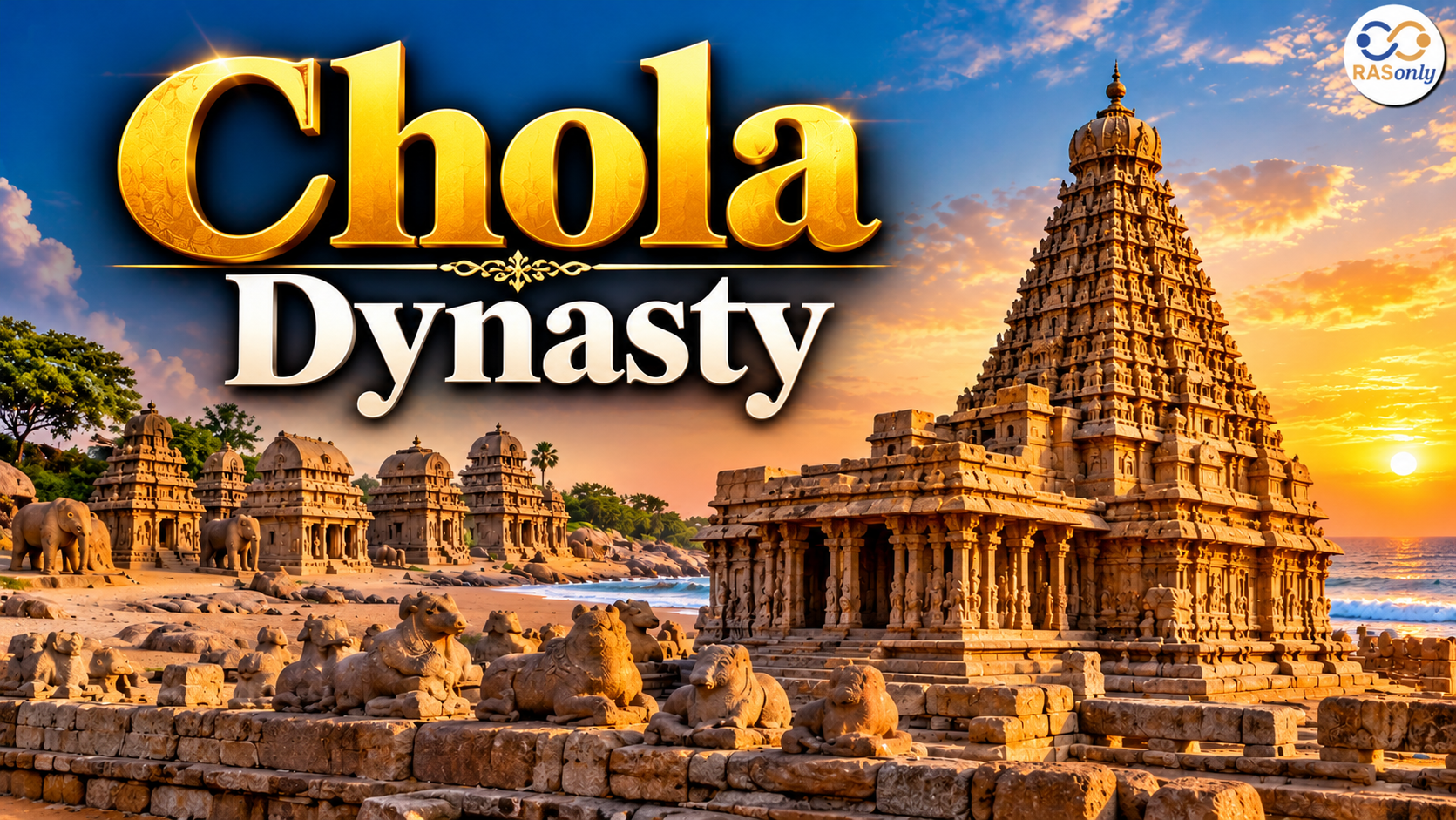
Chola Dynasty: Capital, Founder, Kings, Time Period and History
History of Sikhism: Ten Gurus of Sikhism, and The Five Ks

Get in Touch with RASonly!



Sikhism emerged in the late 15th century in the Punjab region of South Asia. It was founded by Guru Nanak Dev Ji (1469–1539), who taught a message of equality, compassion, and devotion to one God. At a time when society was divided by caste, ritual, and religious conflict, Guru Nanak emphasized that all humans are equal before God. His vision was of a just and honest life guided by truth and love rather than rituals or superstitions.
The Ten Gurus of Sikhism
The ten human Gurus influenced and molded Sikhism as a religion spanning over two hundred years. The teachings of each Guru were based on those of his predecessor, and the spiritual, social, and ethical bases of the religion have been reinforced. Sikhs across the world still have their lives and messages to guide them.
1. Guru Nanak Dev Ji (1469–1539)
Guru Nanak, the founder of Sikhism, believed in one God, equality for all human beings, and the renunciation of casteism and ritualism. He simply stated that he was neither Hindu nor Muslim, but a human being.
2. Guru Angad Dev Ji (1504–1552)
He standardized the Gurmukhi script that was to become the Sikh scripture. He stressed on physical health and discipline using education and exercise.
3. Guru Amar Das Ji (1479–1574)
Guru Amar Das reinforced the Langar practice, the community kitchen, and promoted equality of women, which contradicted ideas such as sati and purdah.
4. Guru Ram Das Ji (1534–1581)
He created the sacred city of Amritsar and wrote numerous hymns contained in the Guru Granth Sahib. His doctrine was based on service and humility.
5. Guru Arjan Dev Ji (1563–1606)
Guru Arjan put together the Adi Granth, the initial edition of the Sikh scriptures and constructed the Harmandir Sahib (Golden Temple). He became the first Sikh martyr, laying the foundation of courage in Sikhism.
6. Guru Hargobind Ji (1595–1644)
He came up with the notion of Miri and Piri, which represented the balance between the spiritual and temporal power. He put on two swords that symbolized these powers and urged Sikhs to protect justice.
7. Guru Har Rai Ji (1630–1661)
Guru Har Rai encouraged environmentalism and compassion. He kept an army on guard, but he was more of a peace-loving and healing kind, and he laid up dispensaries and gardens of curative herbs.
8. Guru Har Krishan Ji (1656–1664)
The youngest Guru, he became a symbol of selfless service. During a smallpox epidemic in Delhi, he cared for the sick and died at a young age, earning the title “Bal Guru” (Child Guru).
9. Guru Tegh Bahadur Ji (1621–1675)
He stood for freedom of faith, defending the rights of Hindus to practice their religion under Mughal rule. His martyrdom represents the Sikh principle of protecting the oppressed, regardless of creed.
10. Guru Gobind Singh Ji (1666–1708)
In 1699 Guru Gobind Singh established the Khalsa, the community of devoted Sikhs, the community of equality, courage and purity, as the last human Guru. He also announced that the Guru Granth Sahib was to be the everlasting Guru following him.
The Five Ks
Guru Gobind Singh established the Five Ks:
- Kesh - Uncut hair, which represents reverence to the creation of God.
- Kara - A simple iron or steel bracelet worn on the wrist, A Symbol of Faith, Unity, and Discipline.
- Kanga - A wooden comb, which symbolizes orderliness and cleanliness.
- Kachera Cotton shorts - the symbol of self-control.
- Kirpan - It is a ceremonial sword; it symbolizes bravery and the obligation to defend the weak.
Conclusion
Sikhism preaches equality, service and obedience to a single God. The Gurus inculcated a faith of truth, bravery and compassion. By following the Guru Granth Sahib with the Five Ks, Sikhs still live with integrity, humility, and solidarity spreading the universal message of peace and justice to everyone.

BEST SELLER
🏆 PRELIMS
RAS Pass
Prelims focused Hindi & English
₹399
✓
Prelims Topic-Wise Tests
✓
Subject-Wise Tests
✓
Full-Length Prelims Tests
✓
Daily Current Affairs Tests
✓
Prelims PYQs Tests
✓
Detailed Solutions & Analysis
✓
All Rajasthan Ranking
✓
Unlimited Reattempts
✓
Mains Tests
✓
Hindi & English Tests
✓
All Rajasthan Ranking
Trusted by 5,000+ Students
Post Category
- RAS Salary
- Result
- RAS Admit Card
- RAS Job
- RAS Cutoff
- Preparation Tips
- RAS Answer Key
- RAS Exam Analysis
- RAS Syllabus
- RAS Previous Year Papers
- RPSC RAS Exam Pattern
- RAS Interview
- RAS Exam Date
- RAS Vacancy
- RAS Test Series
- RAS Best Books
- RAS Preparation Resources
- RAS Coaching Centre
- History
- Polity
- Geography
- Economics
- Science
- Art and Culture
- RPSC RAS Application Form
- RPSC RAS Notification
- RAS Eligibility Criteria
- UPSC Exam
- RPSC RAS Mains
Visit Our RASonly Offline Center
Our Expert Faculty

Bhunesh Sir
Current Affairs · 13+ Yrs

Aamir Khan Sir
RAS-2017 · IIM Ahm.

Akash Sir
Polity · 8+ Yrs
Free Resources
Official Mobile App

RASOnly App
by OTSAdda · Free
Full Video Lectures
Mock Tests & PYQs
Daily Current Affairs
AI Mock Interview
Free Download · No subscription needed to install
RAS 2024 Toppers — RASonly
Rank 2
Virendra Charan
Rank 9
Bhoopinder Singh
Rank 26
Aanchal Nagpal
Rank 33
Lokendra Singh
Rank 45
Amar Rathore
Rank 46
Manasvini Verma

Join RASonly WhatsApp Community
Get daily current affairs, exam alerts, free study material and tips from expert faculty — right on WhatsApp.
Join for Free →RASonly Interview Guidance Program

Mr. Ashok Jain
Ex-Chief Secretary Govt of Rajasthan
- IAS officer of the 1981 batch, Rajasthan cadre.
- Passionate about mentoring the next generation of RAS officers with real-world insights.
- Got retired in Dec 2017 from the post of Chief Secretary of the state of Rajasthan.

Mr. Guru Charan Rai
Ex-ASP / SP in Jaisalmer
- Guru Charan Rai, IPS (Retd), retired as Inspector General of Police (Security), Rajasthan, Jaipur in 2017.
- Served as ASP and SP in Jaisalmer, Nagaur, Sri Ganganagar, Sawai Madhopur, Dausa, Sikar, and Karauli.
- He also held key positions as DIGP and IGP in the Law and Order division.

Mr. Rakesh Verma
Ex-IAS Officer, B.Tech, MBA, and M.A. (Economics)
- IAS officer of the 1981 batch and retired in Chief Secretary Rank.
- Civil servant of high repute and vast experience.
- Has been teaching UPSC CSE subjects for the last six years.
Related Post
Daily Current Affairs for RAS Exam Preparation 2026

Kundan Art Display in Hong Kong
October 23, 2026
Rajasthan International Folk Festival 2026
October 23, 2026
Inauguration of 100 New Kalika Patrolling Units in Rajasthan
October 21, 2026