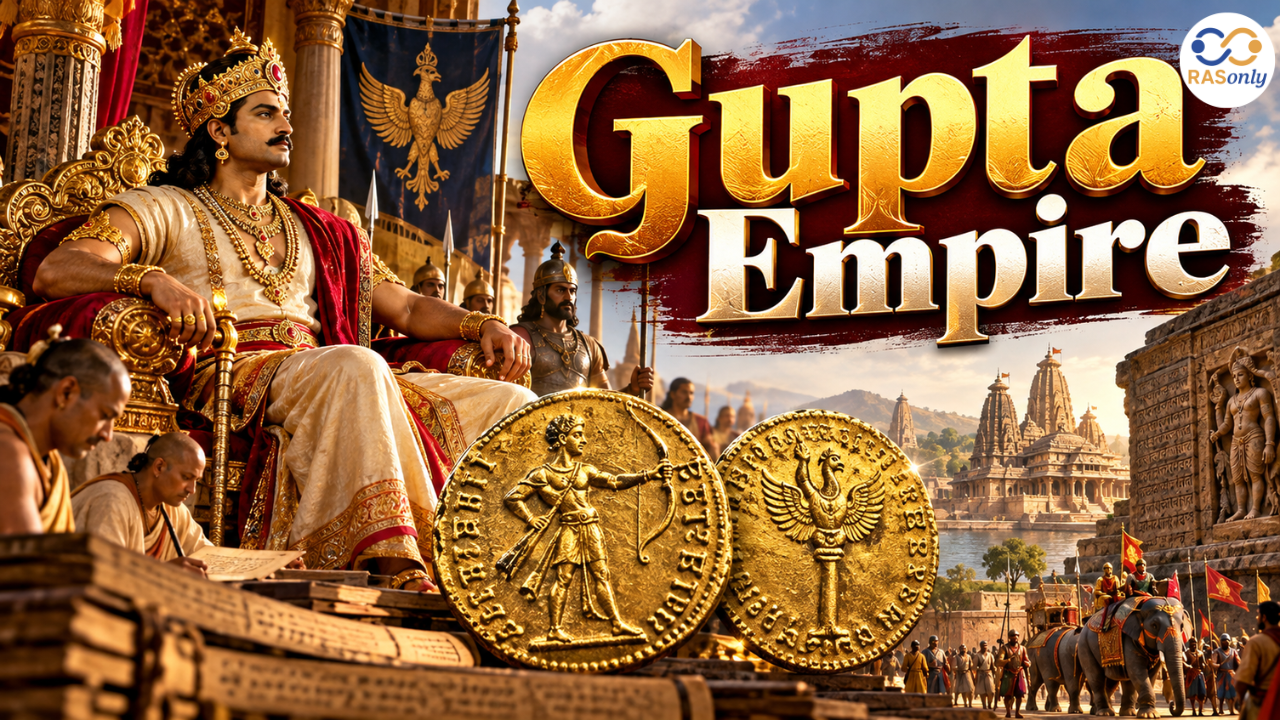
Gupta Empire, Founder, Time Period, Rulers, Map, Capital City
India’s Logistics & Economic Corridors Preparation Strategy for RAS Prelims 2026

Get in Touch with RASonly!

India’s Logistics & Economic Corridors are among the most important Economy and Geography topics for RAS 2026 preparation. Aspirants should focus on PM Gati Shakti, DMIC, Dedicated Freight Corridors, Bharatmala, Sagarmala, industrial corridors, and logistics infrastructure through maps, current affairs, and MCQ practice. Strong conceptual clarity in corridor-based development can significantly improve scoring potential in Economy, Geography, Infrastructure, and Rajasthan GK sections.

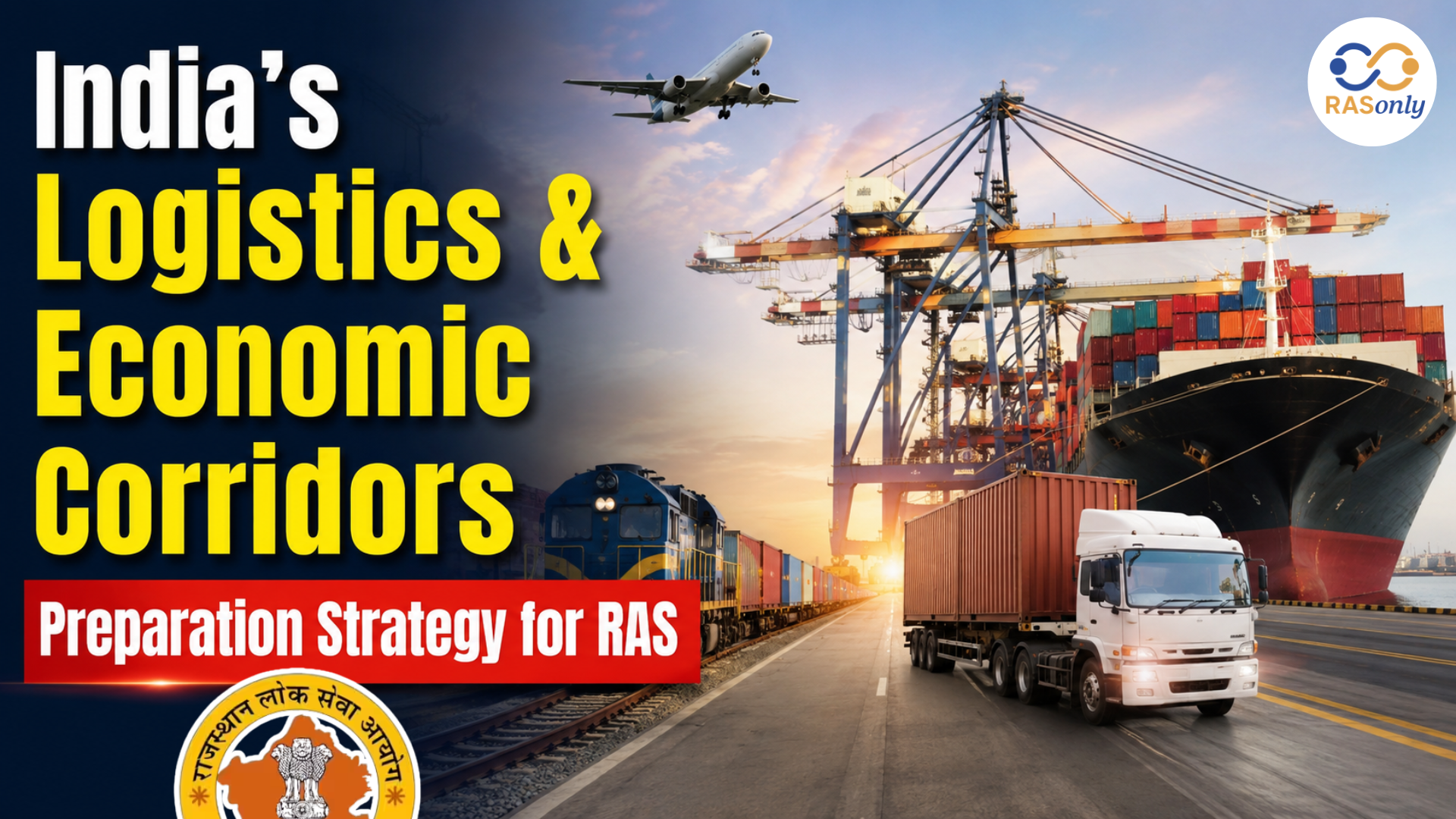
Logistics & Economic Corridors have become one of the most important emerging topics for RAS Prelims 2026, as there are more and more interlinkages with infrastructure development, industrial corridors, multimodal transport, economic growth, trade connectivity, manufacturing expansion, logistics efficiency, and government development initiatives. RAS has been giving a lot of emphasis on economy, geography, infrastructure, environment, Current affairs, and developmental projects of governance in recent years, and hence, Logistics & Economic Corridors has become a very important topic for serious aspirants.
India is witnessing a significant growth in the industrial and logistics sectors with the development of schemes like the Delhi-Mumbai Industrial Corridor (DMIC), Bharatmala Project, Sagarmala Programme, Dedicated Freight Corridors (DFC), PM Gati Shakti National Master Plan, and multimodal logistics parks. These projects are meant to cut down on logistics expenses, enhance connectivity, augment manufacturing, encourage exports, create jobs, and boost India's overall future economic development. Aspirants should have conceptual clarity for this topic, corridor mapping, integration with current affairs, repeated revision of MCQ's, and not rote memorisation only.
Why India’s Logistics & Economic Corridors are Important for RAS 2026
Logistics and Economic Corridors are directly linked with Economic Development, Infrastructure, Trade, Transportation, Industrial Growth, Urbanization, Environment, and Rajasthan Geography. Industrial corridors, freight corridors, transport infrastructure, logistics policies, and economic connectivity projects are common sources of questions.
Benefits of Strong Preparation
- Improves Economy & Geography preparation
- Helps in Infrastructure & Development topics
- Useful for current affairs integration
- Strengthens map-based understanding
- Helpful in both Prelims and Mains
- Scoring with conceptual clarity and revision
What are Logistics & Economic Corridors?
Economic Corridors are coherent infrastructure areas that are designed to enhance industrial development, transportation connectivity, trade efficiency, logistics infrastructure and regional economic development. Logistics Corridors prioritise primarily freight transport, multimodal transport, warehousing, and supply-chain efficiency.
Corridor-based development is India's strategy, which involves roads, railways, ports, airports, industrial estates, logistics hubs, and smart manufacturing ecosystems.
Major Components
- Industrial corridors
- Freight corridors
- Highways & expressways
- Ports & shipping
- Rail connectivity
- Logistics parks
- Warehousing systems
- Multimodal transport
- Export infrastructure
PM Gati Shakti National Master Plan Strategy for RAS 2026
PM Gati Shakti is one of the key infrastructure and logistics schemes under RAS 2026, as it is a digital platform for the coordinated development of transport infrastructure.
PM Gati Shakti is all about integrated infrastructure development, which aims at the inter-connectivity of roads, railways, ports, airports, logistics parks, industrial corridors, and economic zones through coordinated planning and accelerated project execution. Its purpose is to increase manufacturing and export competitiveness, enhance the supply-chain efficiency, and lower logistics costs.
Important Features
- Launched in 2021
- Integrated infrastructure planning
- Digital GIS-based platform
- Multimodal connectivity focus
- Faster project implementation
Important Objectives
- Reduce logistics cost
- Improve supply-chain efficiency
- Boost manufacturing competitiveness
- Improve connectivity
- Support economic growth
Smart Strategy
- Focus on multimodal connectivity
- Link with logistics efficiency
- Revise infrastructure current affairs
- Practice policy-based MCQs
Delhi-Mumbai Industrial Corridor (DMIC) Strategy
DMIC is one of the most important industrial corridor projects that are frequently asked in Economy and Geography sections. Delhi-Mumbai Industrial Corridor is a flagship industrial infrastructure initiative to create smart industrial cities, logistics hubs, manufacturing zones, and freight connectivity between Delhi and Mumbai. This corridor has a close connection with industrialization, urbanization, export growth, and economic modernization in India.
Important Features
- Industrial corridor project
- Western Dedicated Freight Corridor linkage
- Smart industrial cities
- Manufacturing ecosystem development
- Logistics infrastructure expansion
Important States Covered
- Delhi
- Haryana
- Rajasthan
- Gujarat
- Maharashtra
- Uttar Pradesh
- Madhya Pradesh
Rajasthan Linkage
- Khushkhera-Bhiwadi-Neemrana Investment Region
- Industrial development
- Logistics hubs
- Manufacturing growth
Smart Strategy
- Practice corridor mapping
- Focus on Rajasthan linkage
- Learn industrial region concepts
- Revise current affairs repeatedly
Dedicated Freight Corridor (DFC) Strategy for RAS 2026
Dedicated Freight Corridors are highly important because they improve freight transportation efficiency and reduce logistics costs.
Dedicated Freight Corridors are specialized railway freight routes designed to improve cargo transportation speed, reduce congestion on passenger rail lines, and strengthen industrial supply chains. These corridors are important for trade, manufacturing, logistics efficiency, and export competitiveness.
Important Freight Corridors
| Corridor | Route |
|---|---|
| Western DFC | Dadri to Mumbai |
| Eastern DFC | Ludhiana to Dankuni |
Important Benefits
- Faster freight movement
- Reduced logistics cost
- Better industrial connectivity
- Reduced rail congestion
- Improved export competitiveness
Smart Strategy
- Learn corridor routes carefully
- Practice freight mapping
- Link with industrial corridors
- Practice statement-based MCQs
Bharatmala Project Strategy for RAS 2026
Bharatmala Project is one of India’s largest highway infrastructure programmes and highly important for RAS preparation. Bharatmala emphasises on highway connectivity, border roads, economic corridors, coastal roads and logistics efficiency to enhance the country's transportation infrastructure. Its objective is to enhance the connectivity of the regions of India, minimise travel time and strengthen trade routes.
Important Features
- National highway expansion
- Economic corridor development
- Border road infrastructure
- Coastal connectivity roads
- Logistics efficiency improvement
Important Objectives
- Improve freight movement
- Reduce travel time
- Strengthen economic connectivity
- Enhance border infrastructure
Smart Strategy
- Focus on highway corridors
- Link roads with logistics
- Revise infrastructure current affairs
- Practice map-based MCQs
Sagarmala Programme Strategy
The Sagarmala is one of the major port-centric development initiatives in India. Sagarmala is about port modernization, development of coastal infrastructure, port connectivity, efficient logistics and coastal development. The programme is of great relevance to maritime trade, the Blue Economy and the development of logistics infrastructure.
Important Components
- Port modernization
- Port connectivity
- Coastal economic zones
- Coastal industrialization
- Inland waterways
Smart Strategy
- Link ports with logistics
- Focus on coastal trade
- Practice map-based revision
- Revise maritime infrastructure
Multimodal Logistics Parks Strategy
The significance and role of Multimodal Logistics Parks is increasing due to the need for integrated transportation systems in modern logistics. Multimodal Logistics Parks are defined as the integrated complex infrastructure for multimodal transportation which integrates road, rail, air and port infrastructure, warehousing and freight handling facilities that enhance the efficiency of transportation and lower logistics costs.
Important Features
- Integrated logistics hubs
- Warehousing systems
- Freight consolidation
- Multimodal transport
- Supply-chain management
Smart Strategy
- Learn logistics concepts carefully
- Focus on multimodal transport
- Practice infrastructure MCQs
- Link with PM Gati Shakti
Industrial Corridors of India Strategy
Industrial Corridor is an important topic of Economy and Geography as it leads to manufacturing, exports, urbanization and employment generation. Industrial corridors are infrastructure areas that are designed to attract manufacturing, industrial investment, logistics and smart urban development with integrated industrial ecosystems and transport networks.
Important Industrial Corridors
| Corridor | Main Region |
|---|---|
| DMIC | Delhi-Mumbai |
| CBIC | Chennai-Bengaluru |
| AKIC | Amritsar-Kolkata |
| BMEC | Bengaluru-Mumbai |
| VCIC | Visakhapatnam-Chennai |
Smart Strategy
- Compare corridors visually
- Practice corridor-state mapping
- Focus on industrial growth linkage
- Revise current affairs repeatedly
Rajasthan & Logistics Corridor Linkage
Rajasthan is highly important in India’s logistics and industrial corridor network because of its strategic location between North and Western India. Industrial corridors, freight connectivity, expressways, logistics hubs and manufacturing investment zones are of great value to the State of Rajasthan. Questions can relate to the state's industrial development, transport connectivity, and economic connectivity.
Important Rajasthan Linkages
- DMIC investment regions
- Expressway connectivity
- Industrial zones
- Logistics hubs
- Freight transportation
Important Rajasthan Regions
- Neemrana
- Bhiwadi
- Khushkhera
- Jaipur region
- Kishangarh logistics zone
Logistics & Economic Corridors and Environment Linkage
Large-scale infrastructure and logistics projects are more and more coupled with sustainable development, environmental management, and climate adaptation.
Economic corridors can help to enhance economic growth, but can also pose environmental problems such as deforestation, land degradation, pollution and ecological disturbance. Planning for sustainable infrastructure is thus becoming more and more significant.
Important Environmental Concerns
- Land acquisition issues
- Deforestation
- Air pollution
- Carbon emissions
- Habitat fragmentation
Smart Strategy
- Link development with sustainability
- Focus on green logistics
- Practice environment-based MCQs
- Revise climate linkage concepts
Important Organizations & Institutions
Various ministries and organizations are involved in logistics infrastructure, industrial corridor development, freight management, and transport planning in India.
| Organization | Main Role |
|---|---|
| Ministry of Road Transport & Highways | Highway infrastructure |
| Ministry of Railways | Freight corridors |
| NHAI | National highways |
| DFCCIL | Dedicated freight corridors |
| NICDIT | Industrial corridor development |
| Ministry of Commerce & Industry | Industrial policy |
Understanding institutional roles helps aspirants connect infrastructure governance, logistics management, and industrial development more effectively.
Map Practice Strategy for Logistics & Economic Corridors
Map Practice is very important as there are many direct map related and location based questions asked in RAS Geography and Economy. Industrial corridors, freight routes and logistics hubs, ports, highways and economic connectivity regions are retained through regular map revision.
Important Areas to Practice
- Industrial corridors
- Freight corridors
- Economic corridor highways
- Rajasthan logistics regions
- Major ports
- Expressways
Smart Map Practice Tips
- Practice blank India maps regularly
- Mark corridors repeatedly
- Revise freight routes visually
- Link industries with corridors
Logistics & Economic Corridors MCQ Practice Strategy
MCQ practice is essential because questions are mostly conceptual, statement-based, map-oriented, and current-affairs-linked.
Important Focus Areas
- PM Gati Shakti
- DMIC
- DFC
- Bharatmala
- Sagarmala
- Industrial corridors
- Multimodal logistics
Smart MCQ Strategy
- Solve topic-wise MCQs daily
- Practice infrastructure PYQs
- Analyze wrong answers carefully
- Revise corridor mapping repeatedly
Most Important Logistics & Economic Corridor Topics for RAS 2026
Some logistics and infrastructure topics are repeatedly asked in competitive exams because they connect Economy, Geography, Infrastructure, Trade, and Current Affairs together.
High-Weightage Topics
- PM Gati Shakti
- DMIC
- Dedicated Freight Corridors
- Bharatmala Project
- Sagarmala Programme
- Industrial Corridors
- Multimodal Logistics Parks
| Topic | Importance Level |
|---|---|
| PM Gati Shakti | Very High |
| DMIC | Very High |
| DFC | High |
| Bharatmala | High |
| Sagarmala | High |
Revision Strategy for Logistics & Economic Corridors
Revision is very crucial since there are many areas that get confused in the examination such as corridor names, routes, projects, ministries and infrastructure concepts. Long term retention and conceptual understanding is significantly increased with repeated revision using maps, comparison tables and MCQs.
Smart Revision Tips
- Revise corridor maps weekly
- Use comparison tables
- Practice current-affairs MCQs
- Revise logistics concepts repeatedly
- Focus on Rajasthan linkage
| Revision Stage | Focus Area |
|---|---|
| First Revision | Concepts & projects |
| Second Revision | Maps & corridors |
| Final Revision | MCQs & quick notes |
Conclusion
Logistics & Economic Corridors are one of the hottest new topics for RAS 2026 as it brings together Economy, Geography, Infrastructure, Manufacturing, Trade, Transportation and Current Affairs. The logistics efficiency, industrial growth, and connectivity landscape in India is undergoing a radical shift with projects like PM Gati Shakti, DMIC, Bharatmala, Sagarmala, Dedicated Freight Corridors, and Industrial Corridors.
Aspirants should prepare this topic through conceptual clarity, corridor mapping, infrastructure linkage, Rajasthan connectivity, current affairs integration, and repeated MCQ practice instead of rote memorization. Good preparation of logistics and economic corridor-related topics can boost the chances of the students to score well in Economy, Geography, Infrastructure, and Rajasthan GK.
FAQ
These topics are important because RAS frequently asks questions from infrastructure development, industrial corridors, freight connectivity, logistics policies, and economic growth projects.
PM Gati Shakti, Delhi-Mumbai Industrial Corridor (DMIC), Bharatmala Project, Dedicated Freight Corridors (DFC), and Sagarmala Programme are among the most important topics for RAS preparation.
DMIC is important because it focuses on industrial development, freight connectivity, smart industrial cities, logistics infrastructure, and manufacturing growth across multiple states including Rajasthan.
Many RAS questions are directly map-based and location-oriented, especially from industrial corridors, freight routes, ports, highways, and logistics regions.
Aspirants should focus on conceptual understanding, India map practice, corridor comparison tables, current affairs linkage, infrastructure policies, and repeated MCQ revision for effective preparation.
BEST SELLER
🏆 PRELIMS
RAS Pass
Prelims focused Hindi & English
₹399
✓
Prelims Topic-Wise Tests
✓
Subject-Wise Tests
✓
Full-Length Prelims Tests
✓
Daily Current Affairs Tests
✓
Prelims PYQs Tests
✓
Detailed Solutions & Analysis
✓
All Rajasthan Ranking
✓
Unlimited Reattempts
✓
Mains Tests
✓
Hindi & English Tests
✓
All Rajasthan Ranking
Trusted by 5,000+ Students
Post Category
- RAS Salary
- Result
- RAS Admit Card
- RAS Job
- RAS Cutoff
- Preparation Tips
- RAS Answer Key
- RAS Exam Analysis
- RAS Syllabus
- RAS Previous Year Papers
- RPSC RAS Exam Pattern
- RAS Interview
- RAS Exam Date
- RAS Vacancy
- RAS Test Series
- RAS Best Books
- RAS Preparation Resources
- RAS Coaching Centre
- History
- Polity
- Geography
- Economics
- Science
- Art and Culture
- RPSC RAS Application Form
- RPSC RAS Notification
- RAS Eligibility Criteria
- UPSC Exam
- RPSC RAS Mains
Visit Our RASonly Offline Center
Our Expert Faculty

Bhunesh Sir
Current Affairs · 13+ Yrs

Aamir Khan Sir
RAS-2017 · IIM Ahm.

Akash Sir
Polity · 8+ Yrs
Free Resources
Official Mobile App

RASOnly App
by OTSAdda · Free
Full Video Lectures
Mock Tests & PYQs
Daily Current Affairs
AI Mock Interview
Free Download · No subscription needed to install
RAS 2024 Toppers — RASonly
Rank 2
Virendra Charan
Rank 9
Bhoopinder Singh
Rank 26
Aanchal Nagpal
Rank 33
Lokendra Singh
Rank 45
Amar Rathore
Rank 46
Manasvini Verma

Join RASonly WhatsApp Community
Get daily current affairs, exam alerts, free study material and tips from expert faculty — right on WhatsApp.
Join for Free →RASonly Interview Guidance Program

Mr. Ashok Jain
Ex-Chief Secretary Govt of Rajasthan
- IAS officer of the 1981 batch, Rajasthan cadre.
- Passionate about mentoring the next generation of RAS officers with real-world insights.
- Got retired in Dec 2017 from the post of Chief Secretary of the state of Rajasthan.

Mr. Guru Charan Rai
Ex-ASP / SP in Jaisalmer
- Guru Charan Rai, IPS (Retd), retired as Inspector General of Police (Security), Rajasthan, Jaipur in 2017.
- Served as ASP and SP in Jaisalmer, Nagaur, Sri Ganganagar, Sawai Madhopur, Dausa, Sikar, and Karauli.
- He also held key positions as DIGP and IGP in the Law and Order division.

Mr. Rakesh Verma
Ex-IAS Officer, B.Tech, MBA, and M.A. (Economics)
- IAS officer of the 1981 batch and retired in Chief Secretary Rank.
- Civil servant of high repute and vast experience.
- Has been teaching UPSC CSE subjects for the last six years.
Related Post
Daily Current Affairs for RAS Exam Preparation 2026
CM Bhajan Lal Sharma Launches Rajasthan Portals
October 08, 2026
Rajasthani Film ‘Omlo’ Selected for Cannes Film Market
October 08, 2026
Rajasthan Initiative to Build India’s First UNESCO Global Geopark
October 07, 2026