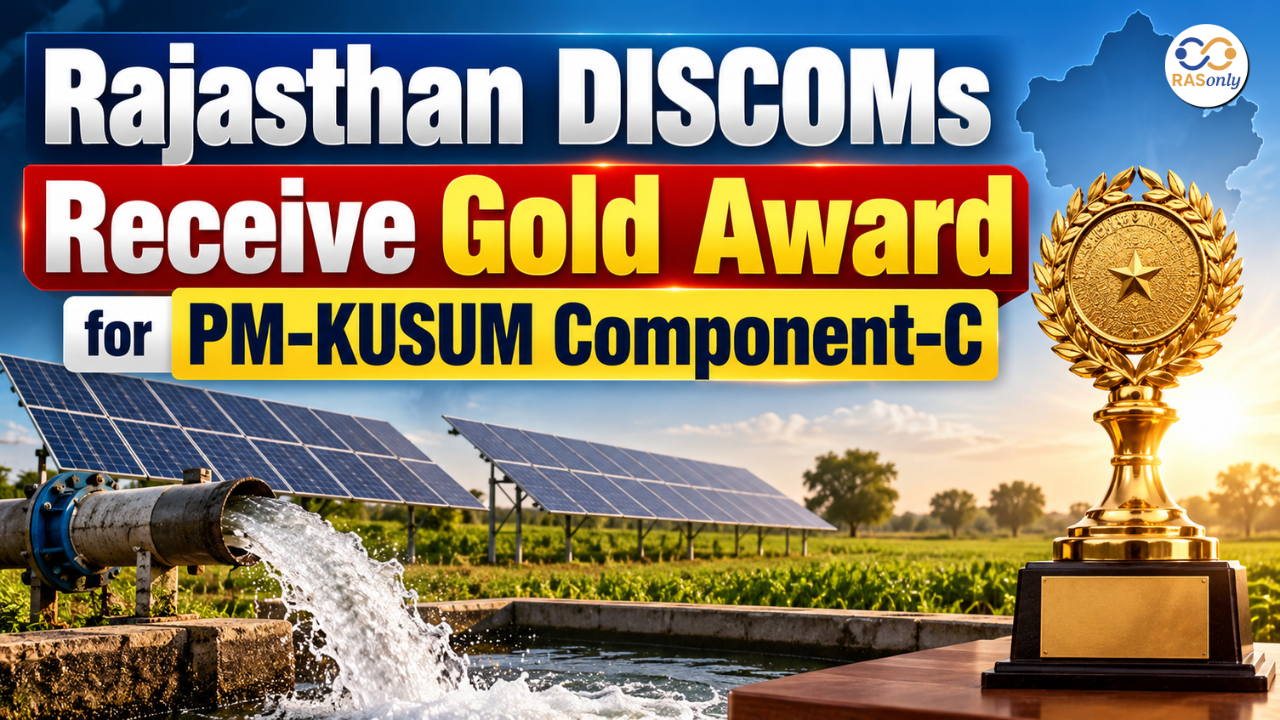
Kushan Empire: History, Rulers, Administration, Economy, Art, Decline
Indian Natural Vegetation Preparation Strategy for RAS 2026: Forests, Biodiversity, Ecology, Maps, MCQs & Revision Plan

Get in Touch with RASonly!

Indian Natural Vegetation is one of the most important Environment and Geography topics for RAS Prelims 2026. This complete preparation strategy covers Forest Types, Biodiversity, Mangroves, Rajasthan Vegetation, Mountain Vegetation, Maps, MCQs, and Revision Plan with conceptual clarity and map-based learning. Proper revision and MCQ practice can make this topic one of the highest-scoring sections in RAS preparation.

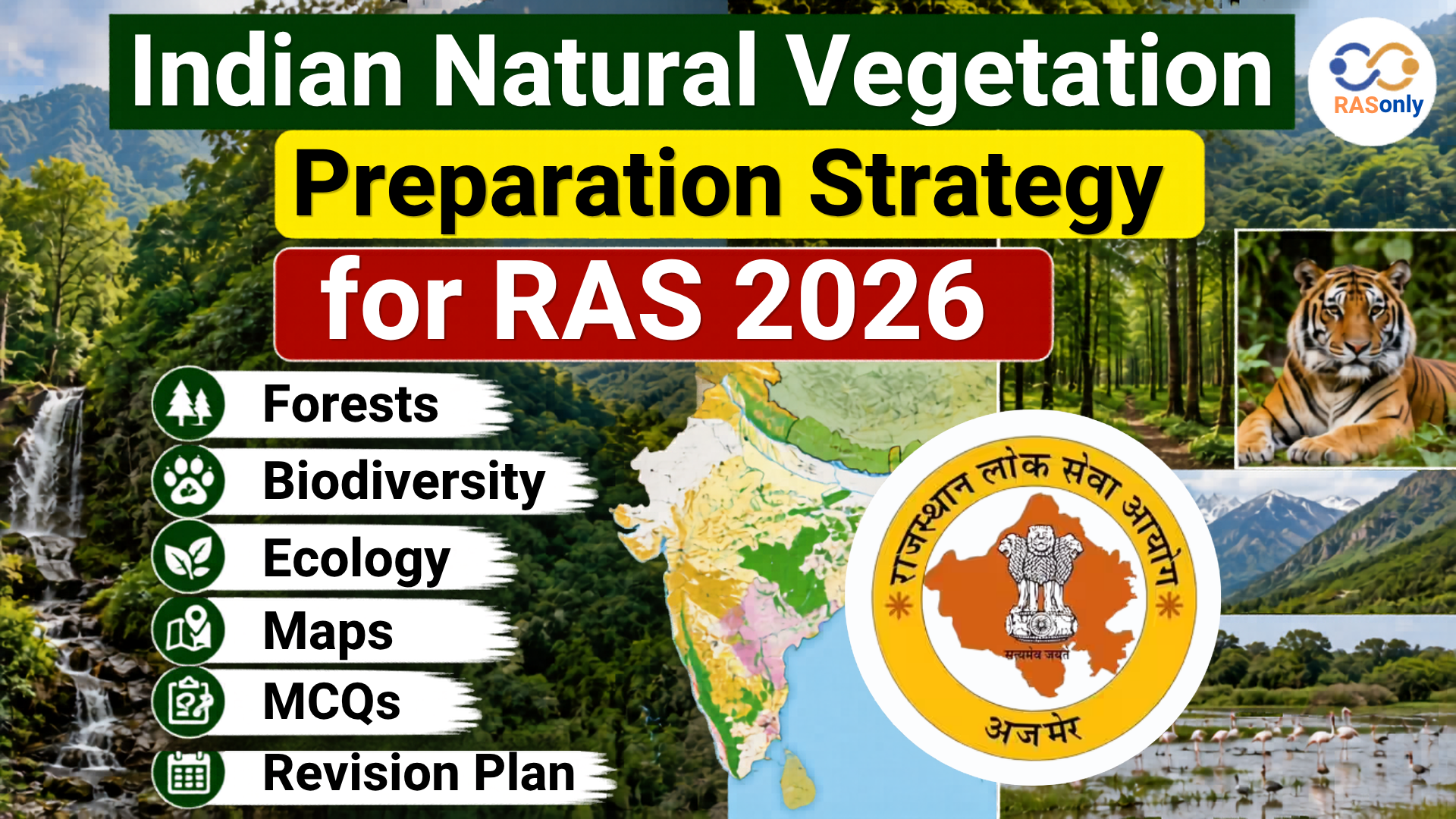
Indian Natural Vegetation is a major and most frequently asked topic in RAS Prelims 2026 in terms of the Forest types, Biodiversity, Climatic regions, Mangroves, Mountain vegetation, and Desert vegetation, Rajasthan ecology, etc. Weightage of Environment, Ecology, Biodiversity, Climate Change, and map-based Geography has been considerably enhanced in the RAS examinations in recent years and is very crucial for serious aspirants.
Natural Vegetation is a difficult topic for many aspirants as there are several interconnected concepts like forest types, climatic conditions, rainfall patterns, altitude-wise vegetation, and concepts of biodiversity. But by having conceptual clarity and revising the MCQs repeatedly, practicing the forest comparison table, preparing the map for Rajasthan vegetation, and practicing the same repeatedly, this section becomes one of the easiest and scoring sections of Geography and Environment preparation for RAS 2026.
Why Indian Natural Vegetation is Important for RAS 2026
Indian Natural Vegetation is a significant topic of Geography and Environment as it is directly related to Climate, rainfall, Soil, biodiversity, wildlife, ecology, and conservation systems. Conceptual questions and statement-based questions from forest types, distribution of vegetation, mountain vegetation, mangroves, and vegetation of Rajasthan are very common in RAS.
Benefits of Strong Natural Vegetation Preparation
- Improves the Environment & Ecology preparation
- Helps in Climate & Biodiversity topics
- Useful for map-based Geography questions
- Strengthens climate-vegetation concepts
- Helpful in both Prelims and Mains
- Scoring with proper revision and MCQ practice
Indian Natural Vegetation Syllabus for RAS 2026
Indian Natural Vegetation is a major topic of Indian Geography, Environment, Ecology, Biodiversity, Forest resources, and Rajasthan Geography in RAS syllabus. Usually, questions from forest classification, climatic conditions, distribution of vegetation, biodiversity conservation, and ecological importance.
Important Natural Vegetation Topics for RAS 2026
- Tropical Evergreen Forests
- Tropical Deciduous Forests
- Thorn & Scrub Forests
- Mountain Vegetation
- Mangrove Forests
- Forest Conservation
- Biodiversity Hotspots
- Forest Resources
- Rajasthan Vegetation
- Climate-Vegetation Linkage
- Natural Grasslands
- Environmental Conservation
Topic-Wise Importance Table
Climate linkage, rainfall pattern, maps, and species distribution make Indian Natural Vegetation preparation easy, rather than taking names in a random manner. The RAS questions are generally conceptual in nature and more likely to be map-based, hence aspirants should pay more attention to the relationship between vegetation and climate and the comparison of forests.
| Topic | Preparation Focus |
|---|---|
| Evergreen Forests | Rainfall & biodiversity |
| Deciduous Forests | Monsoon forest concepts |
| Thorn Forests | Desert vegetation |
| Mangroves | Coastal ecology |
| Mountain Vegetation | Altitude-based vegetation |
| Rajasthan Vegetation | Desert & scrub forests |
Natural Vegetation preparation becomes highly scoring when studied through maps, climatic linkage, biodiversity concepts, and repeated MCQ practice.
Best Indian Natural Vegetation Preparation Strategy for RAS 2026
Natural Vegetation should never be prepared as rote memorization, as these factors are interlinked with the distribution of vegetation, which includes climate, rainfall, soil, and altitude. There is no doubt that a systematic preparation strategy can enhance conceptual clarity and retention significantly.
Smart Preparation Approach
- Start with climate and rainfall basics
- Learn forest classification carefully
- Focus on the vegetation-climate linkage
- Revise forest maps repeatedly
- Link biodiversity with vegetation
- Practice map-based MCQs regularly
- Prepare short comparison notes weekly
Smart Natural Vegetation Preparation Flow
Aspirants can complete Natural Vegetation in a systematic manner by following the step-by-step preparation flow without getting confused with the same. Under the guidance of conceptual preparation, retention, and accuracy in solving MCQs for RAS Prelims 2026 will improve.
| Step | Focus Area |
|---|---|
| Step 1 | Climate & vegetation basics |
| Step 2 | Forest types of India |
| Step 3 | Mangroves & mountain vegetation |
| Step 4 | Rajasthan vegetation |
| Step 5 | MCQs & revision |
Tropical Evergreen Forest Strategy for RAS 2026
Tropical Evergreen Forests are one of the most significant vegetation topics as it is directly related to heavy rainfall, biodiversity, and ecological conservation. There are regular queries related to forest location, climatic conditions, and important species.
Important Features
- Dense evergreen forests
- Found in high rainfall regions
- Trees remain green throughout the year
- Multi-layered vegetation structure
- Very rich biodiversity
Important Regions
- Western Ghats
- Andaman & Nicobar Islands
- North-East India
Important Trees
- Ebony
- Rosewood
- Mahogany
- Rubber
Smart Strategy
- Learn rainfall linkage carefully
- Revise biodiversity hotspots
- Practice map-based forest questions
- Focus on Western Ghats and North-East India
Evergreen forests primarily grow in areas that have an annual precipitation of over 200 cm and high humidity all year round.
Tropical Deciduous Forest Strategy for RAS 2026
Tropical Deciduous Forests are the most prevalent forests in India and are one of the most important topics in Geography.
Important Features
- Trees shed leaves seasonally
- Monsoon-based vegetation
- Moderate rainfall regions
- Economically important forests
Types of Deciduous Forests
Moist Deciduous Forests
- Higher rainfall regions
- Teak and Sal dominant
Dry Deciduous Forests
- Lower rainfall regions
- Open forest structure
Important Trees
- Teak
- Sal
- Bamboo
- Shisham
Smart Strategy
- Compare moist vs dry deciduous forests
- Focus on rainfall differences
- Learn important states through maps
- Practice statement-based MCQs
Thorn & Scrub Forest Strategy for RAS 2026
Thorn and Scrub Forests are very important from Rajasthan Geography point of view as they cover the maximum area in arid and semi-arid areas.
Important Features
- Found in low rainfall areas
- Thorny vegetation common
- Xerophytic plant adaptation
- Sparse vegetation cover
Important Regions
- Rajasthan
- Gujarat
- Deccan Plateau dry regions
Important Plants
- Babool
- Khejri
- Cactus
- Acacia
Smart Strategy
- Focus on desert vegetation adaptation
- Revise Rajasthan vegetation carefully
- Compare thorn vs deciduous forests
- Practice Rajasthan-based MCQs
Thorn forests generally develop in regions receiving less than 75 cm of annual rainfall.
Mountain Vegetation Strategy for RAS 2026
Conceptual Geography preparation is very important as the vegetation in the mountains varies with the height and temperature.
Important Features
- Altitude-based vegetation variation
- Coniferous forests common
- Alpine vegetation at higher altitude
Vegetation Sequence
| Altitude | Vegetation Type |
|---|---|
| Lower Slopes | Subtropical forests |
| Middle Altitude | Temperate forests |
| Higher Altitude | Coniferous forests |
| Very High Altitude | Alpine vegetation |
Smart Strategy
- Learn altitude-based sequence carefully
- Practice Himalayan vegetation maps
- Revise coniferous forest concepts
- Focus on climatic linkage
Mangrove Forest Strategy for RAS 2026
Mangrove forests are one of the key coastal ecosystem issues related to biodiversity, coastal ecology and climate change.
Important Features
- Salt-tolerant vegetation
- Found in delta regions
- Dense root systems
- Coastal protection role
Important Mangrove Regions
- Sundarbans
- Mahanadi Delta
- Godavari Delta
- Krishna Delta
Smart Strategy
- Focus on delta linkage
- Learn mangrove adaptations
- Revise coastal ecology concepts
- Practice map-based MCQs
Rajasthan Vegetation Strategy for RAS 2026
Rajasthan Vegetation is of paramount importance as RAS asks a lot of questions about desert vegetation, scrub forests, grasslands, and ecological adaptation on a state basis.
Important Rajasthan Vegetation Types
- Thorn forests
- Desert vegetation
- Scrub vegetation
- Dry grasslands
Important Rajasthan Plants
- Khejri
- Rohida
- Babool
- Ber
Smart Strategy
- Focus on Thar Desert vegetation
- Learn drought-resistant plants
- Practice Rajasthan vegetation mapping
- Revise desert ecology repeatedly
Biodiversity Hotspots & Vegetation Linkage Strategy
Biodiversity Hotspots are very important because there is a close relationship between vegetation and biodiversity in Environment preparation.
Important Biodiversity Hotspots Related to India
- Western Ghats
- Eastern Himalayas
- Indo-Burma Region
- Sundaland (Nicobar region)
Smart Strategy
- Link forests with biodiversity
- Revise hotspot maps carefully
- Focus on endemic species concepts
- Practice conservation-based MCQs
India is one of the world’s mega-biodiverse countries and contains four biodiversity hotspots.
Forest Conservation Strategy for RAS 2026
There is a growing association of forest conservation issues with climate change, biodiversity loss, and environmental sustainability.
Important Topics
- Afforestation
- Social Forestry
- Joint Forest Management
- Forest Conservation Act
- Climate Change & Forests
Smart Strategy
- Link forests with climate change
- Revise conservation schemes
- Practice environment-based MCQs
- Focus on sustainable forestry concepts
Map Practice Strategy for Indian Natural Vegetation
Map Practice is very important as many of the RAS Geography Questions are directly map-oriented and location-based.
Important Areas to Practice
- Evergreen forest regions
- Mangrove regions
- Himalayan vegetation zones
- Desert vegetation areas
- Rajasthan vegetation regions
Smart Map Practice Tips
- Practice blank India maps regularly
- Mark forest regions repeatedly
- Revise rainfall-vegetation linkage visually
- Practice biodiversity hotspot mapping weekly
Indian Natural Vegetation MCQ Practice Strategy
The practice of MCQ is highly important as the questions of Environment and Geography are mostly conceptual, statement-based, and map-oriented.
Best MCQ Practice Method
- Solve topic-wise MCQs daily
- Practice PYQs regularly
- Analyze wrong answers carefully
- Revise weak forest types repeatedly
- Practice map-based questions consistently
Important Focus Areas
- Forest types
- Rainfall linkage
- Mangroves
- Mountain vegetation
- Rajasthan vegetation
- Biodiversity hotspots
Most Important Natural Vegetation Topics for RAS 2026
There are certain Natural Vegetation topics that are asked repeatedly in RAS Prelims, as it is the basis for Environment, Biodiversity, and Indian Geography preparation.
High-Weightage Topics
- Tropical Evergreen Forests
- Tropical Deciduous Forests
- Mangrove Forests
- Mountain Vegetation
- Rajasthan Vegetation
- Biodiversity Hotspots
- Thorn & Scrub Forests
Topic Priority Table
| Topic | Importance Level |
|---|---|
| Deciduous Forests | Very High |
| Mangrove Forests | Very High |
| Rajasthan Vegetation | High |
| Evergreen Forests | High |
| Mountain Vegetation | High |
Revision Strategy for Indian Natural Vegetation
Revision is extremely important because forest types, climatic conditions, vegetation regions, and biodiversity concepts are easy to confuse during the exam.
Smart Revision Tips
- Revise vegetation maps weekly
- Practice comparison charts regularly
- Use one-line factual notes
- Focus on repeated PYQ concepts
- Revise Rajasthan vegetation visually
Best Revision Cycle
| Revision Stage | Focus Area |
|---|---|
| First Revision | Forest concepts |
| Second Revision | Maps & biodiversity |
| Final Revision | MCQs & quick notes |
Conclusion
Indian Natural Vegetation is a very important and scoring section of Geography and Environment, which is directly related to Climate, Rainfall, Biodiversity, Forest, Ecology, and Rajasthan Geography, and is a part of RAS Prelims 2026. This is a very important topic for conceptual preparation as well as map-based preparation, with frequent questions from forest types, mangroves, mountain vegetation, biodiversity hotspots, and vegetation-climate linkage.
A smart preparation strategy should focus on forest comparison, climate linkage, biodiversity concepts, Rajasthan vegetation, map practice, and repeated MCQ revision instead of rote memorization. If you are aware of the concepts, diagrams, maps, and PYQ Analysis, then you can make Indian Natural Vegetation one of the easiest and highest-scoring areas of RAS Geography and Environment.
FAQ
Yes, Indian Natural Vegetation is a highly important topic because questions are regularly asked from forest types, biodiversity, mangroves, mountain vegetation, and Rajasthan ecology.
Tropical Evergreen Forests, Tropical Deciduous Forests, Mangrove Forests, Thorn & Scrub Forests, and Mountain Vegetation are among the most important topics.
Focus on climate-vegetation linkage, rainfall patterns, forest comparison tables, biodiversity hotspots, map practice, and repeated MCQ revision.
Yes, Rajasthan vegetation is highly important because RAS frequently asks questions from desert vegetation, thorn forests, scrub vegetation, and drought-resistant plants.
The best revision strategy includes weekly map practice, forest comparison charts, biodiversity linkage revision, short notes, and regular MCQ practice with PYQs.

BEST SELLER
🏆 PRELIMS
RAS Pass
Prelims focused Hindi & English
₹399
✓
Prelims Topic-Wise Tests
✓
Subject-Wise Tests
✓
Full-Length Prelims Tests
✓
Daily Current Affairs Tests
✓
Prelims PYQs Tests
✓
Detailed Solutions & Analysis
✓
All Rajasthan Ranking
✓
Unlimited Reattempts
✓
Mains Tests
✓
Hindi & English Tests
✓
All Rajasthan Ranking
Trusted by 5,000+ Students

Post Category
- RAS Salary
- Result
- RAS Admit Card
- RAS Job
- RAS Cutoff
- Preparation Tips
- RAS Answer Key
- RAS Exam Analysis
- RAS Syllabus
- RAS Previous Year Papers
- RPSC RAS Exam Pattern
- RAS Interview
- RAS Exam Date
- RAS Vacancy
- RAS Test Series
- RAS Best Books
- RAS Preparation Resources
- RAS Coaching Centre
- History
- Polity
- Geography
- Economics
- Science
- Art and Culture
- RPSC RAS Application Form
- RPSC RAS Notification
- RAS Eligibility Criteria
- UPSC Exam
- RPSC RAS Mains
Visit Our RASonly Offline Center
Our Expert Faculty

Bhunesh Sir
Current Affairs · 13+ Yrs

Aamir Khan Sir
RAS-2017 · IIM Ahm.

Akash Sir
Polity · 8+ Yrs
Free Resources
Official Mobile App

RASOnly App
by OTSAdda · Free
Full Video Lectures
Mock Tests & PYQs
Daily Current Affairs
AI Mock Interview
Free Download · No subscription needed to install
RAS 2024 Toppers — RASonly
Rank 2
Virendra Charan
Rank 9
Bhoopinder Singh
Rank 26
Aanchal Nagpal
Rank 33
Lokendra Singh
Rank 45
Amar Rathore
Rank 46
Manasvini Verma

Join RASonly WhatsApp Community
Get daily current affairs, exam alerts, free study material and tips from expert faculty — right on WhatsApp.
Join for Free →RASonly Interview Guidance Program

Mr. Ashok Jain
Ex-Chief Secretary Govt of Rajasthan
- IAS officer of the 1981 batch, Rajasthan cadre.
- Passionate about mentoring the next generation of RAS officers with real-world insights.
- Got retired in Dec 2017 from the post of Chief Secretary of the state of Rajasthan.

Mr. Guru Charan Rai
Ex-ASP / SP in Jaisalmer
- Guru Charan Rai, IPS (Retd), retired as Inspector General of Police (Security), Rajasthan, Jaipur in 2017.
- Served as ASP and SP in Jaisalmer, Nagaur, Sri Ganganagar, Sawai Madhopur, Dausa, Sikar, and Karauli.
- He also held key positions as DIGP and IGP in the Law and Order division.

Mr. Rakesh Verma
Ex-IAS Officer, B.Tech, MBA, and M.A. (Economics)
- IAS officer of the 1981 batch and retired in Chief Secretary Rank.
- Civil servant of high repute and vast experience.
- Has been teaching UPSC CSE subjects for the last six years.


Daily Current Affairs for RAS Exam Preparation 2026

Chandra Shekhar Sain Receives Lalit Kala Akademi National Award
October 01, 2026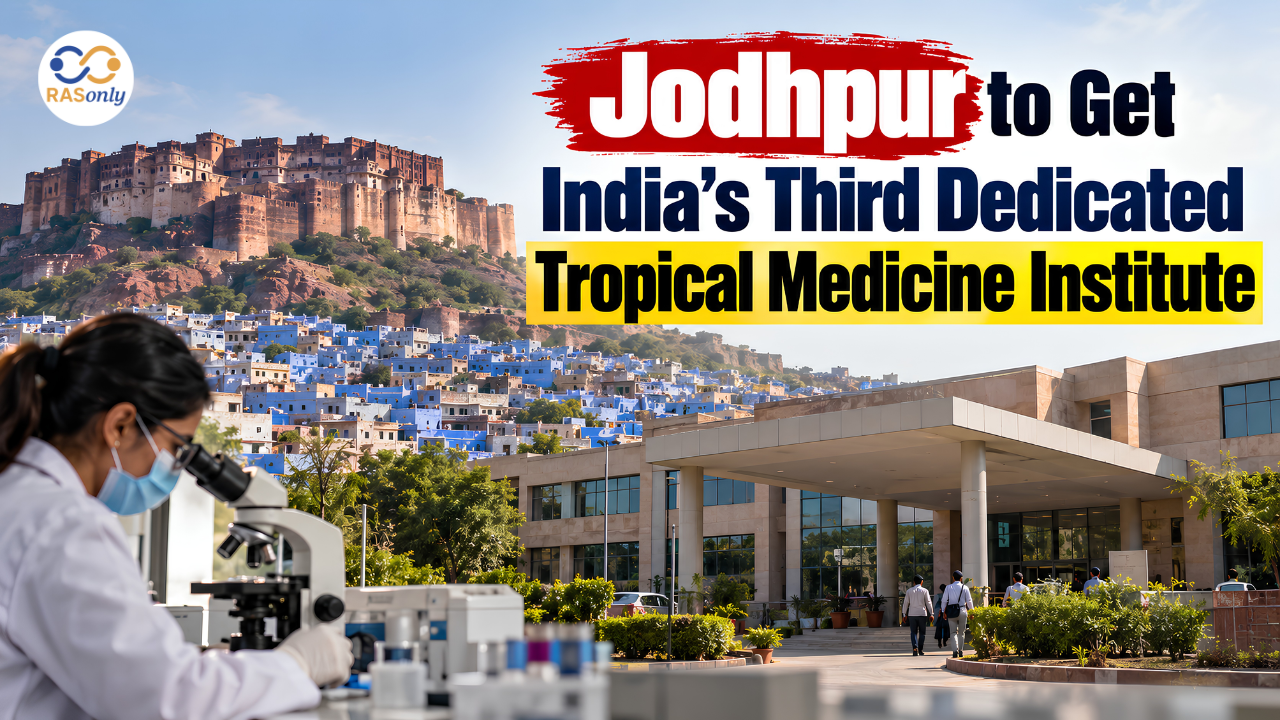
Jodhpur to Get India’s Third Dedicated Tropical Medicine Institute
October 01, 2026
Establishment of the Aesthetic Office
September 30, 2026