Jainism: Founder, Symbol, Teachings, Beliefs, History & Principles
Major Industrial Regions of the World: Map, Features & Importance

Get in Touch with RASonly!


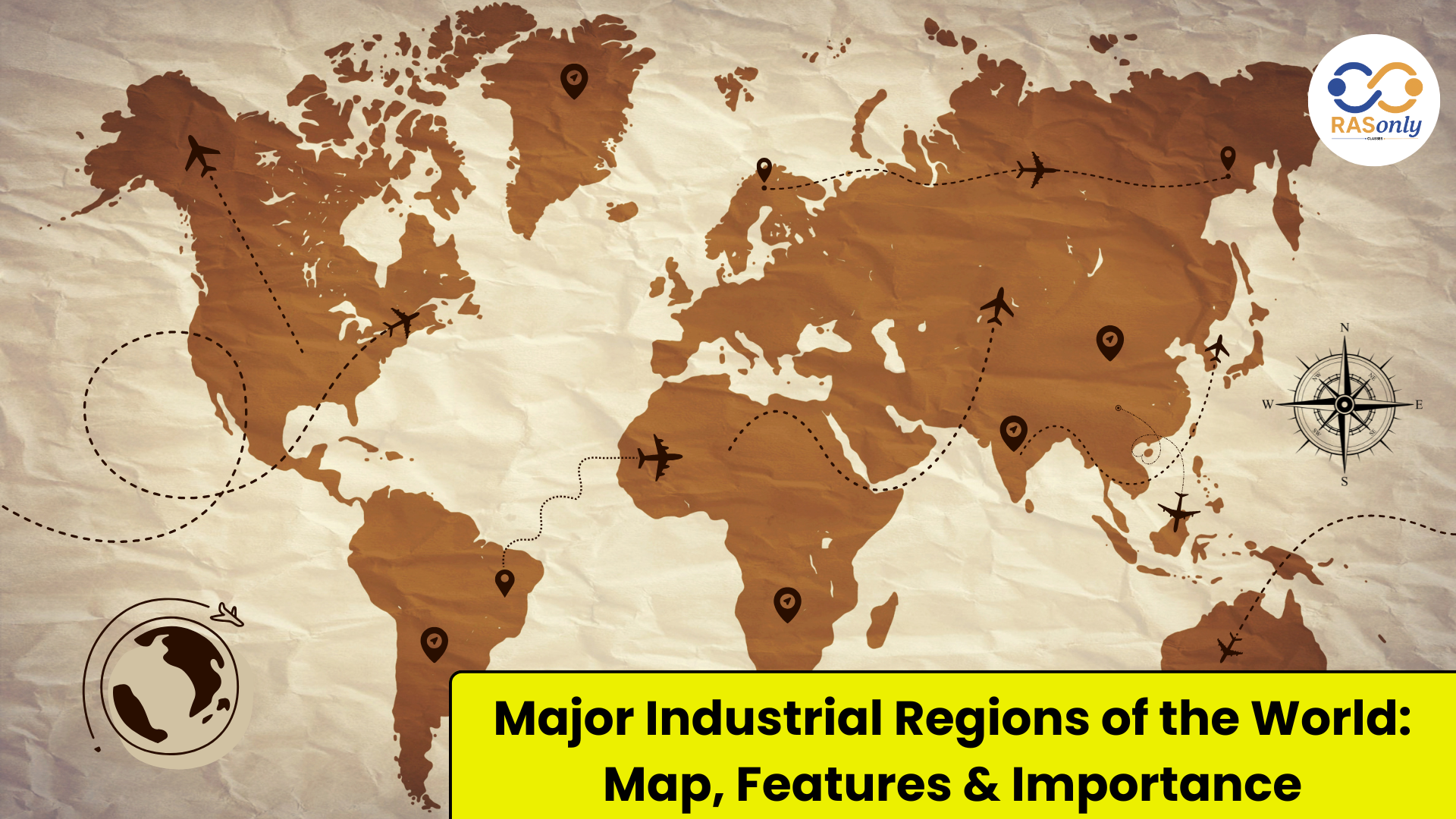
The large industrial sectors of the world are key economic centers that lead to the production of the world, as well as trade and innovation. The northeast and centered on regions such as the Ruhr (Germany), the Great Lakes (USA), Japan, and Eastern China, have been developed through an abundance of resources, infrastructure, and skilled labour. Their features, industries, and impact on the world are important to geography students, competitive exam candidates, and persons studying global economic trends.
North American Industrial Regions
North America possesses great industrial zones of the globe, which are located in the territory of the USA and Canada. The Rust Belt or the Great Lakes region grew based on the production of steel, automobiles, and heavy engineering. Whereas deindustrialization is experienced in some areas, there has been a trend towards innovation-driven industries with high-tech hubs emerging, such as California.
✅ Great Lakes Region (USA): Detroit, Chicago, Pittsburgh – steel, automobiles, and machinery
✅ North Eastern USA: Oldest industrial belt – textiles, finance, shipbuilding
✅ California (Silicon Valley): IT, semiconductors, green tech
✅ Toronto–Hamilton (Canada): Steel, chemicals, and automotive industries
✅ Factors: Abundant coal, iron, transport, and skilled labor
European Industrial Regions
Europe has played an important role in the great industrial areas of the world because it is the motherland of the Industrial Revolution. Locations such as the Ruhr in Germany and the Midlands in the UK were based on coal, steel, and production. Even though in recent years there has been a shift towards services, the regions are still important to engineering as well as chemicals, and exports.
✅ Ruhr Valley (Germany): Coal, steel, and heavy engineering hub
✅ Mid-Rhine & Stuttgart: Chemicals, pharmaceuticals, and automobile production
✅ UK Midlands (Birmingham–Manchester): Textiles, machinery, modern services
✅ Lorraine (France): Iron and steel, now shifting to tech and services
✅ Factors: Coalfields, navigable rivers, EU trade network, skilled workforce
East Asian Industrial Regions
East Asia is home to some of the fastest-developing and most prosperous areas amongst the large industrial regions of the globe. Japan, Korea, and Taiwan are examples of post-WWII industrial powerhouse factories and are concentrated on electronics, motor vehicles, robotics, and vessels. Highly strategic coastal sites, a well-developed infrastructure, and a competent workforce have established this region as an industrial leader in the world.
✅ Japan’s Keihin Region (Tokyo–Yokohama): Electronics, automobiles, shipping, finance
✅ Hanshin Industrial Belt (Osaka–Kobe): Steel, shipbuilding, textiles, engineering
✅ South Korea (Seoul–Incheon, Busan): Electronics (Samsung, LG), shipbuilding, steel
✅ Taiwan (Taipei, Hsinchu): Semiconductors, hardware, biotech
✅ Key Factors: Port access, innovation, export-oriented economies, government support
Other Key Industrial Regions
Other regions in the globe, besides North America, Europe, and East Asia, are the other key contributors of the major industrial regions in the world. These are South American and Russian emergent zones with resource potential as well as sections of Africa. These territories host such industries as metallurgy, petroleum, automobiles, and agro-processing, as well as being increasingly linked with the global supply chains.
| Region | Country | Key Industries | Notable Cities/Areas |
|---|---|---|---|
| São Paulo Industrial Belt | Brazil | Automobiles, textiles, food processing, chemicals | São Paulo, Campinas |
| Ural Industrial Region | Russia | Iron & steel, defense equipment, heavy machinery | Yekaterinburg, Chelyabinsk |
| Moscow Region | Russia | Electronics, consumer goods, aerospace | Moscow, Tula |
| Gauteng Industrial Zone | South Africa | Mining, steel, automotive, finance | Johannesburg, Pretoria |
| Western Canada Corridor | Canada | Oil refining, petrochemicals, agriculture | Calgary, Edmonton |
| ASEAN Growth Areas | Southeast Asia | Electronics, garments, palm oil, shipping | Bangkok, Jakarta, Kuala Lumpur |
Conclusion
The economic core of international trade and development relies on the major industrial areas of the world. Whether it is the traditional loci of power in the Ruhr and Great Lakes or the emerging centers of power in China and Southeast Asia, each region has its contribution to the industry of world industry. The knowledge of their features, resources, and difficulties contributes to a better understanding of the students, professionals, and exam-takers of the nature of the global geography and economy. Being the core industries, such areas are critical in innovation, job creation, and global collaboration as other industries mature.
FAQs
They include the Ruhr (Germany), the Great Lakes (USA), Japan’s Keihin region, China’s Yangtze Delta, and more.
It is one of Europe’s oldest and most developed industrial hubs, known for coal, steel, and engineering industries.
Key factors include availability of raw materials, transport, labor, capital, and access to markets.
Regions like the Yangtze Delta and Pearl River Delta are global leaders in manufacturing, electronics, and exports.
Traditional heavy industries are declining in some areas, while high-tech, service, and green industries are emerging in others.

BEST SELLER
🏆 PRELIMS
RAS Pass
Prelims focused Hindi & English
₹399
✓
Prelims Topic-Wise Tests
✓
Subject-Wise Tests
✓
Full-Length Prelims Tests
✓
Daily Current Affairs Tests
✓
Prelims PYQs Tests
✓
Detailed Solutions & Analysis
✓
All Rajasthan Ranking
✓
Unlimited Reattempts
✓
Mains Tests
✓
Hindi & English Tests
✓
All Rajasthan Ranking
Trusted by 5,000+ Students

Post Category
- RAS Salary
- Result
- RAS Admit Card
- RAS Job
- RAS Cutoff
- Preparation Tips
- RAS Answer Key
- RAS Exam Analysis
- RAS Syllabus
- RAS Previous Year Papers
- RPSC RAS Exam Pattern
- RAS Interview
- RAS Exam Date
- RAS Vacancy
- RAS Test Series
- RAS Best Books
- RAS Preparation Resources
- RAS Coaching Centre
- History
- Polity
- Geography
- Economics
- Science
- Art and Culture
- RPSC RAS Application Form
- RPSC RAS Notification
- RAS Eligibility Criteria
- UPSC Exam
- RPSC RAS Mains
Visit Our RASonly Offline Center
Our Expert Faculty

Bhunesh Sir
Current Affairs · 13+ Yrs

Aamir Khan Sir
RAS-2017 · IIM Ahm.

Akash Sir
Polity · 8+ Yrs
Free Resources
Official Mobile App

RASOnly App
by OTSAdda · Free
Full Video Lectures
Mock Tests & PYQs
Daily Current Affairs
AI Mock Interview
Free Download · No subscription needed to install
RAS 2024 Toppers — RASonly
Rank 2
Virendra Charan
Rank 9
Bhoopinder Singh
Rank 26
Aanchal Nagpal
Rank 33
Lokendra Singh
Rank 45
Amar Rathore
Rank 46
Manasvini Verma

Join RASonly WhatsApp Community
Get daily current affairs, exam alerts, free study material and tips from expert faculty — right on WhatsApp.
Join for Free →RASonly Interview Guidance Program

Mr. Ashok Jain
Ex-Chief Secretary Govt of Rajasthan
- IAS officer of the 1981 batch, Rajasthan cadre.
- Passionate about mentoring the next generation of RAS officers with real-world insights.
- Got retired in Dec 2017 from the post of Chief Secretary of the state of Rajasthan.

Mr. Guru Charan Rai
Ex-ASP / SP in Jaisalmer
- Guru Charan Rai, IPS (Retd), retired as Inspector General of Police (Security), Rajasthan, Jaipur in 2017.
- Served as ASP and SP in Jaisalmer, Nagaur, Sri Ganganagar, Sawai Madhopur, Dausa, Sikar, and Karauli.
- He also held key positions as DIGP and IGP in the Law and Order division.

Mr. Rakesh Verma
Ex-IAS Officer, B.Tech, MBA, and M.A. (Economics)
- IAS officer of the 1981 batch and retired in Chief Secretary Rank.
- Civil servant of high repute and vast experience.
- Has been teaching UPSC CSE subjects for the last six years.




Daily Current Affairs for RAS Exam Preparation 2026
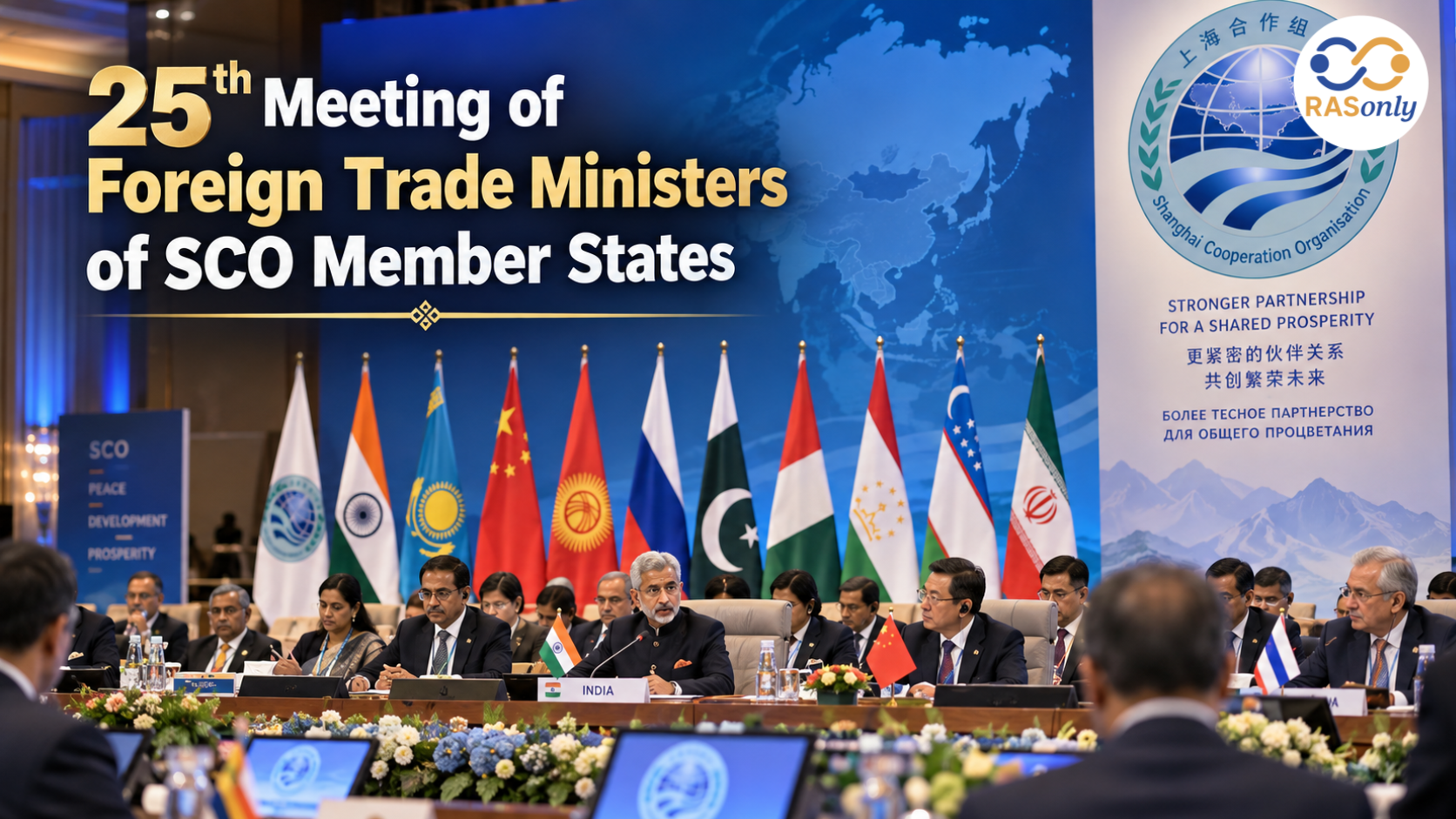
25th SCO Foreign Trade Ministers' Meeting
September 19, 2026
India’s flag bearer at the opening ceremony of the...
September 19, 2026
PM-YASASVI Scheme Update 2026
September 18, 2026